

React development solutions we offer
React development solutions we offer
From scalable web applications to powerful digital products, we use this technology to build fast, reliable, and business-focused solutions tailored to your needs.
React Web Applications
We develop high-performance React apps that integrate smoothly with your systems, ensuring reliability and scalability for your business.
Custom React Frontends
Our React solutions focus on building scalable, modular frontends with predictable state management and a streamlined development process.
Legacy Frontend Migration
With low coupling and a focus on future-proofing, our React migrations ensure seamless integration with your existing applications.
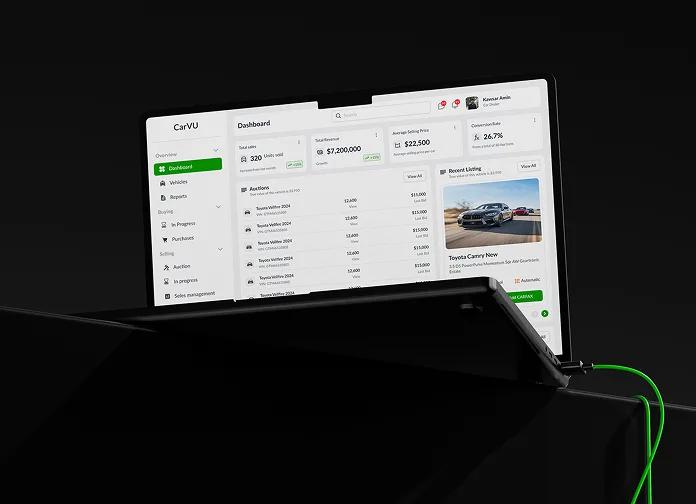
React Dashboards
Handling large datasets and complex interfaces is our specialty. We create React dashboards that provide reliable, efficient user experiences.
React Portals
Prioritizing encrypted API communications, we ensure your portal's security with audit-friendly access controls and compliance.
Reusable React Component
With reusable UI components, we create design systems that accelerate cross-team development and ensure faster, more efficient processes.
Why top tech companies trust our React teams
Why top tech companies trust our React teams
We choose technology with purpose—balancing performance, flexibility, scalability, and business impact to build digital products that are made to last.

Top 3% Experts
We only hire React developers with a minimum of 8 years of experience. Out of thousands of applications received each week, we select less than 3%. Our rigorous hiring process includes technical evaluations, architecture assessments, and real-world problem-solving challenges to ensure our developers possess the expertise to tackle any React project.
Industry-Specific React Solutions
Our React teams have successfully delivered complex applications across various industries, tailoring solutions to meet industry-specific requirements and bringing domain-specific expertise to each project. From secure healthcare portals and scalable fintech dashboards to high-traffic online storefronts, our React solutions are designed to meet your needs, no matter the industry.
Enterprise-Grade React Solutions for US Clients
Our React teams bring extensive experience to enterprise-level projects for US-based clients, ensuring top-tier security, compliance, and thorough documentation. With a deep pool of vetted senior engineers, we are able to scale teams quickly without sacrificing speed or quality.
The Ecosystem We Use for React Projects

Core Frameworks & Architecture
We depend on the React library along with established frameworks like Next.js and React Native to create modern web and mobile applications. By using proven technologies, we ensure the development of scalable, maintainable, and high-performance web solutions.
React
React Native (for cross-platform projects)
Next.js (for SSR and hybrid rendering)
State Management
State management is key to building efficient, predictable React applications. While it can be complex, we carefully choose libraries and state models based on your app’s scale, asynchronous needs, and team structure. Our approach ensures that state management is predictable, scalable, and future-proof.
Redux
React Context
React Query
Zustand
Recoil
Component & User Interface Development
We work with teams to codify design languages, accelerating delivery and simplifying onboarding. Using a wide range of UI tools, we create testable, reusable components that streamline development.
Tailwind CSS
Storybook
Material UI
Emotion
Chakra UI
Architecture & Rendering Strategy
We build scalable architectures and choose between server-side rendering (SSR), client-side rendering (CSR), or hybrid rendering based on your platform and specific needs. Our decisions are strategic, ensuring the most efficient approach from the outset.
TypeScript
Vite/Webpack
Next.js
React Native
Routing and Form Management
Efficient routing and form management are vital for user-driven interfaces. We utilize established libraries to manage navigation and user workflows, ensuring seamless, predictable interactions and form validation at scale.
React Router
React Hook Form
Formik
Developer Tooling & Code Quality
We use advanced transpilers, bundlers, linters, and formatters to ensure clean, efficient code. Our goal is to minimize manual overhead while maintaining code quality and adhering to best practices for maximum productivity.
TypeScript
Webpack/Vite/Parcel
Rollup
Babel
ESLint
Prettier
React Performance Optimization
Performance isn’t just about speed - it’s about responsiveness, hydration stability, and efficiency. We optimize by managing bundle size, reducing latency, and improving overall user interactions.
Code splitting & lazy loading
Memoization & render optimization
Virtualized rendering
Web Vitals analysis (Lighthouse and Core Web Vitals)
Advanced image optimization
Testing and Validation
We focus on testable code by design, integrating automated validation across the CI/CD pipeline to catch issues early. Our team uses multiple testing frameworks to ensure regression-free iterations and safe deployment.
React Testing Library
Cypress/Playwright
Jest
Storybook
ESLint/TypeScript
Supporting React Libraries
React’s flexibility allows us to enhance functionality with additional libraries and tools for complex, custom web apps. From data-heavy interfaces to localized applications, we use specialized libraries to address niche use cases.
Apollo
i18next/react-intl/LinguiJS
Framer Motion
TanStack Table
react-window/react-virtual
Digital. Outcomes.Delivered.
Digital. Outcomes. Delivered.
From strategy and design to development and delivery, we build digital products that align technology with business goals and create measurable, lasting impact.

Define solutions and team structure
Tell us about your project requirements. We'll discuss tailored solutions and build a team structure based on your success goals, timeline, budget, and necessary expertise.
Onboard your team and get started
Once your project details are finalized, we’ll assemble your dedicated team. We can have developers on board and ready to work within 2-4 weeks after signing the agreement.
Ongoing performance tracking
We continuously track and evaluate our team's progress to ensure they meet both your quantity and quality standards throughout the project.



Frequently Asked Questions
Frequently Asked Questions
Everything you need to know before building
React is a powerful library for building fast, scalable, and maintainable user interfaces. Its component-based architecture allows for reusable components, improving development efficiency. React also excels in handling highly dynamic and interactive UIs, making it ideal for both web and mobile applications.