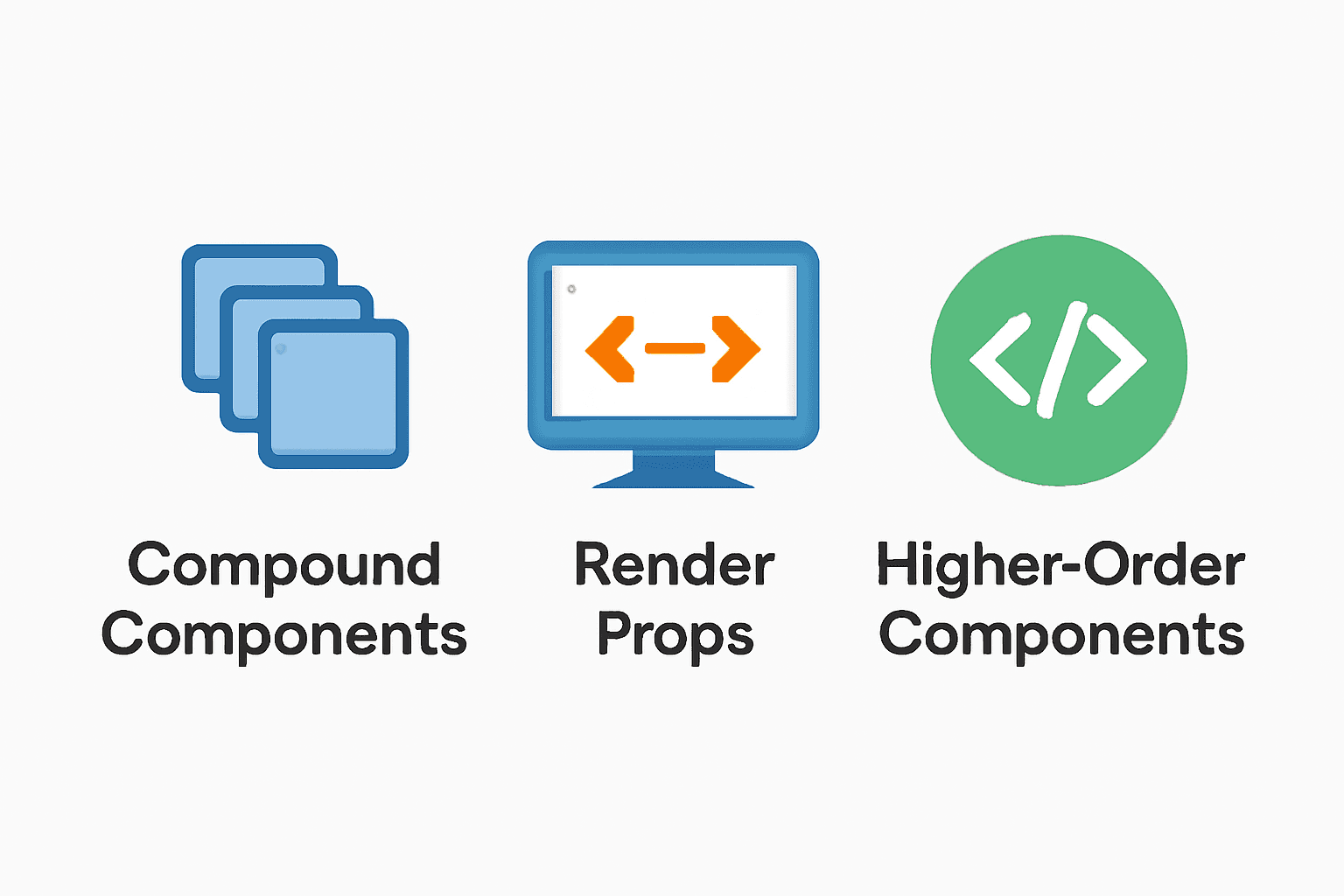
Compound Components and Higher-Order Components (HOCs) are both composition patterns, but they serve different purposes: 1. Compound Components are primarily used for creating a flexible API where multiple components work together and share state via context or props. They allow the user to compose components in a declarative way. An example is an accordion where the AccordionHeader and AccordionBody components work in unison within an Accordion parent. 2. HOCs, on the other hand, are used to wrap components and enhance them by injecting additional props or behavior, such as logging or authentication. HOCs are more about reusing logic across multiple components without changing their underlying structure.
-
Compound Components: Flexible, decoupled components that manage shared state, ideal for reusable UI libraries.
-
Render Props: A pattern for sharing behavior across components, allowing dynamic rendering based on internal state.
-
Higher-Order Components (HOCs): Enhance components with additional behavior or props without modifying the original code.
-
Best Practices: Master these patterns to create maintainable, scalable, and reusable React components.