- AI infrastructure provides scale, advantage comes from systems that execute tasks and deliver outcomes.
- Agent as a Service shifts AI from hosted models to autonomous workflows guided by human intent.
Why IaaS Is No Longer Enough in the AI Era
1 min read

You can have the best GPUs in the world and still fail to deliver results.
That’s the uncomfortable reality most teams are facing in 2026.
Over the past two years, companies rushed into AI infrastructure. They secured compute, scaled clusters, and optimized costs.
But somewhere along the way, a pattern emerged:
More infrastructure didn’t mean more outcomes.
If your AI investments feel heavy but underwhelming, this is likely why.
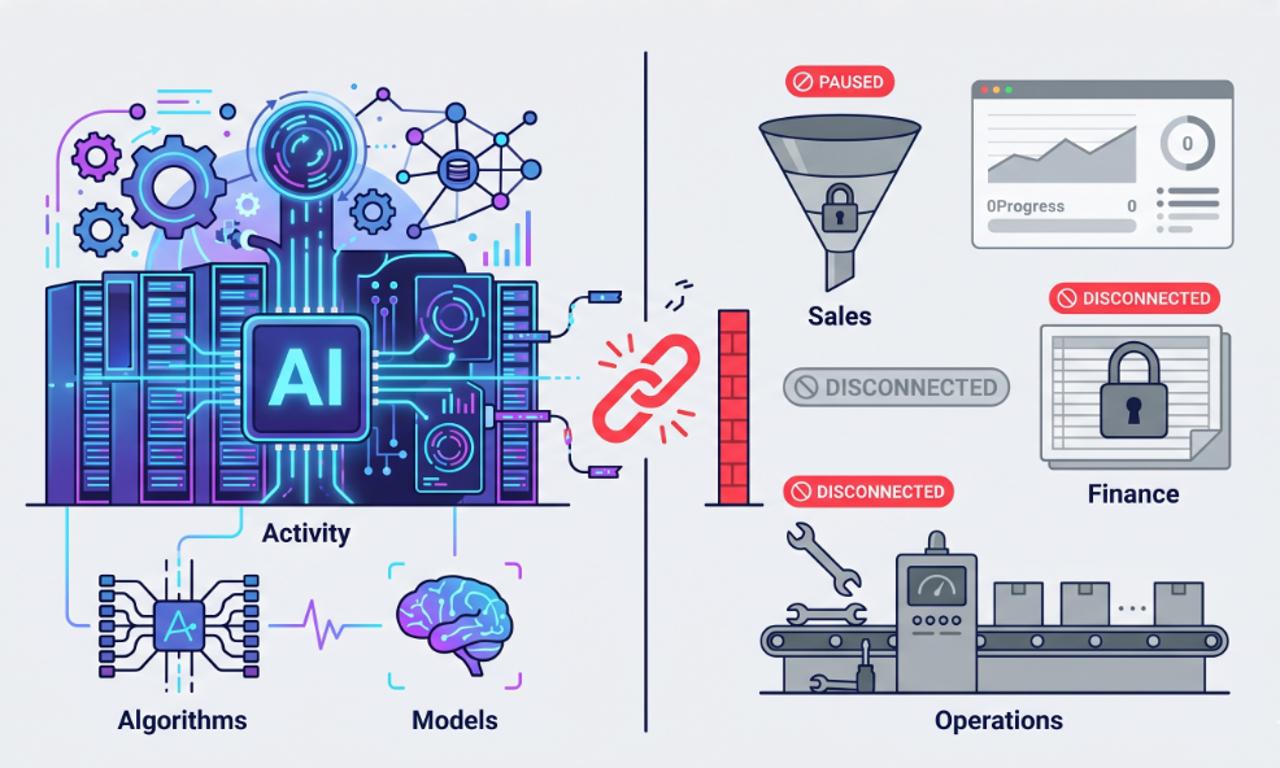
The Real Problem: Infrastructure Doesn’t Execute
IaaS was never designed to do work.
It was designed to host systems.
That difference matters more now than ever.
Today’s AI systems are expected to:
- Close leads
- Process data
- Trigger workflows
- Make decisions
But infrastructure doesn’t do any of that.
It waits.
And that waiting is where ROI quietly disappears.
Where Most Teams Hit the Ceiling
This isn’t theoretical. We see the same breakdown across teams scaling AI.
1. Cost Grows Faster Than Value
AI success is no longer measured in compute power.
It’s measured in output per cost.
- More tokens processed ≠ more value created
- Idle inference time still costs money
- Poor orchestration wastes expensive resources
A 2026 Lenovo TCO analysis showed cloud-heavy IaaS setups can cost up to 84% more than optimized execution-focused systems at scale.
The shift is simple:
You’re no longer paying to “run models.
You’re paying to “get work done.
2. Execution Latency Kills Momentum
Even with strong models, nothing happens automatically.
Your system still depends on:
- Manual triggers
- Human coordination
- Disconnected workflows
This creates invisible delays:
- Leads sit unprocessed
- Reports arrive late
- Decisions stall
And none of this shows up clearly in dashboards.
But it shows up in lost opportunities.
3. Teams Are Solving the Wrong Problem
Most hiring still looks like this:
- Cloud engineers
- GPU optimizers
- Infrastructure managers
But the real bottleneck has shifted.
You don’t need more people managing compute.
You need people designing execution systems.
According to Gartner, by 2027, 80% of engineering teams will need new skills around autonomous systems.
The Shift: From Infrastructure to Execution
This is where the model changes.
Leading teams are moving toward:
1. Agent as a Service (AaaS)
Not as a buzzword, but as a different way to think.
Instead of hosting models, you deploy agents that complete tasks.
Instead of paying for compute, you pay for outcomes.
2. IaaS vs AaaS
| Dimension | IaaS | AaaS |
| Core value | Compute & storage | Task execution |
| AI role | Passive | Autonomous |
| Human role | Manage systems | Define goals |
| Cost model | Usage-based | Outcome-driven |
| Success metric | Uptime | Task completion |
This shift reframes AI completely.
From:
We run models.
To:
Work gets done automatically.
What AaaS Actually Means
Think of AaaS as deploying digital workers.
Each agent:
- Has a defined role
- Receives structured input
- Executes tasks
- Produces measurable output
Examples:
- A sales agent qualifies leads
- A finance agent reconciles invoices
- A support agent resolves tickets
No dashboards.
No manual triggers.
Just execution.
How Smart Teams Are Transitioning
This is not a rebuild. It’s a shift in how you design systems.
1. Treat AI Like a Workforce
High-performing teams don’t see AI as infrastructure.
They treat it like:
- Employees with roles
- Systems with accountability
- Workflows with ownership
That changes how success is measured.
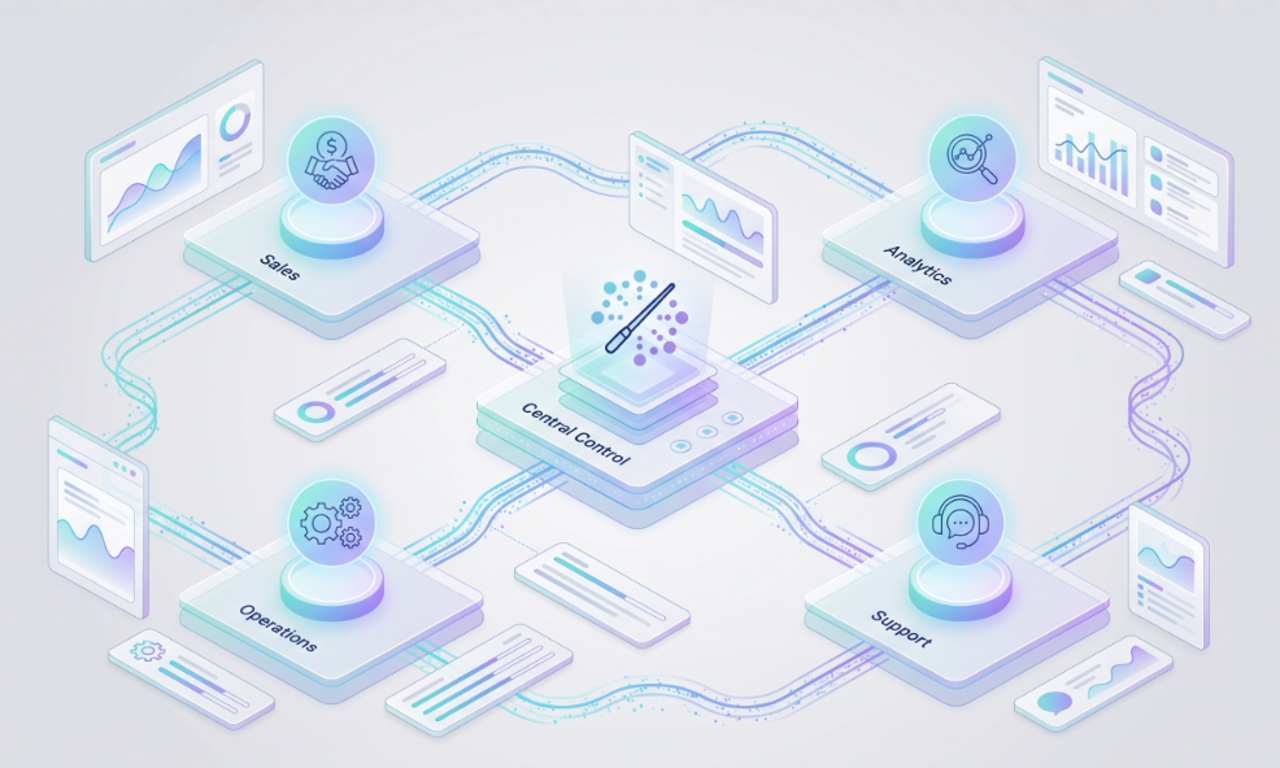
2. Build Multi-Agent Systems (Not One Big Model)
The trend isn’t bigger models.
It’s specialized agents working together.
Why this works better:
- Lower cost per task
- Easier debugging
- More reliable execution
We’ve seen this pattern repeatedly across production systems.
3. Tie Everything to ROI
Exploratory AI is fading.
Every system now needs to justify itself:
- Time saved
- Cost reduced
- Revenue generated
- Risk minimized
If it doesn’t move one of these, it doesn’t scale.
4. Fix Your Data First
Agents don’t fix bad systems.
They amplify them.
If your data is messy:
- Decisions get worse
- Errors scale faster
- Automation becomes chaos
A clean software foundation is non-negotiable.
Real-World Pattern We See
Across projects at Mediusware, one pattern is consistent:
When teams move from tool-based workflows → agent-based execution, results change fast.
For example:
Platforms like CRM Runner reduced manual operations through automation and real-time workflows, improving decision-making and efficiency.
This is the difference between:
Using software
vs
Letting systems operate themselves.
The Endgame: Intelligence Factories
In 2026, infrastructure is no longer the advantage.
It’s the baseline.
The real advantage comes from building systems where:
- Agents execute work
- Humans set direction
- Systems improve continuously
This is what we call an Intelligence Factory.
And this is where AI becomes a real business capability.
Frequently Asked Questions
IaaS provides compute, but it does not execute tasks. This creates a gap between running models and delivering real business outcomes.

We are the Mediusware Editorial Team, passionate about crafting insightful content on technology, software development, and industry trends. Our mission is to inform, inspire, and engage our audience with well-researched articles and thought leadership pieces. With a deep understanding of the tech landscape, we aim to be a trusted source of knowledge for professionals and enthusiasts alike.