- Enterprise chatbots reduce operational costs while delivering faster, always-available customer support.
- AI-powered chatbots improve lead conversion, customer experience, and operational efficiency.
10 Ways Enterprise Chatbots Are Driving Business ROI and Growth
1 min read
Most enterprises don’t struggle because they lack customer support.
They struggle because demand grows faster than their ability to respond.
More users.
More channels.
Higher expectations.
And suddenly, what used to work- email queues, support teams, ticket systems starts breaking down.
Hiring more agents helps for a while.
Then costs rise, response times slip again, and complexity increases.
This is where enterprise chatbots stop being “nice to have” and become infrastructure.
Why Enterprises Are Moving Toward Chatbots
The pressure is coming from three directions:
- Support volume keeps increasing
- Operational costs keep rising
- Customers expect instant responses
Traditional systems weren’t designed for this level of scale.
Modern chatbots are.
They don’t just answer questions.
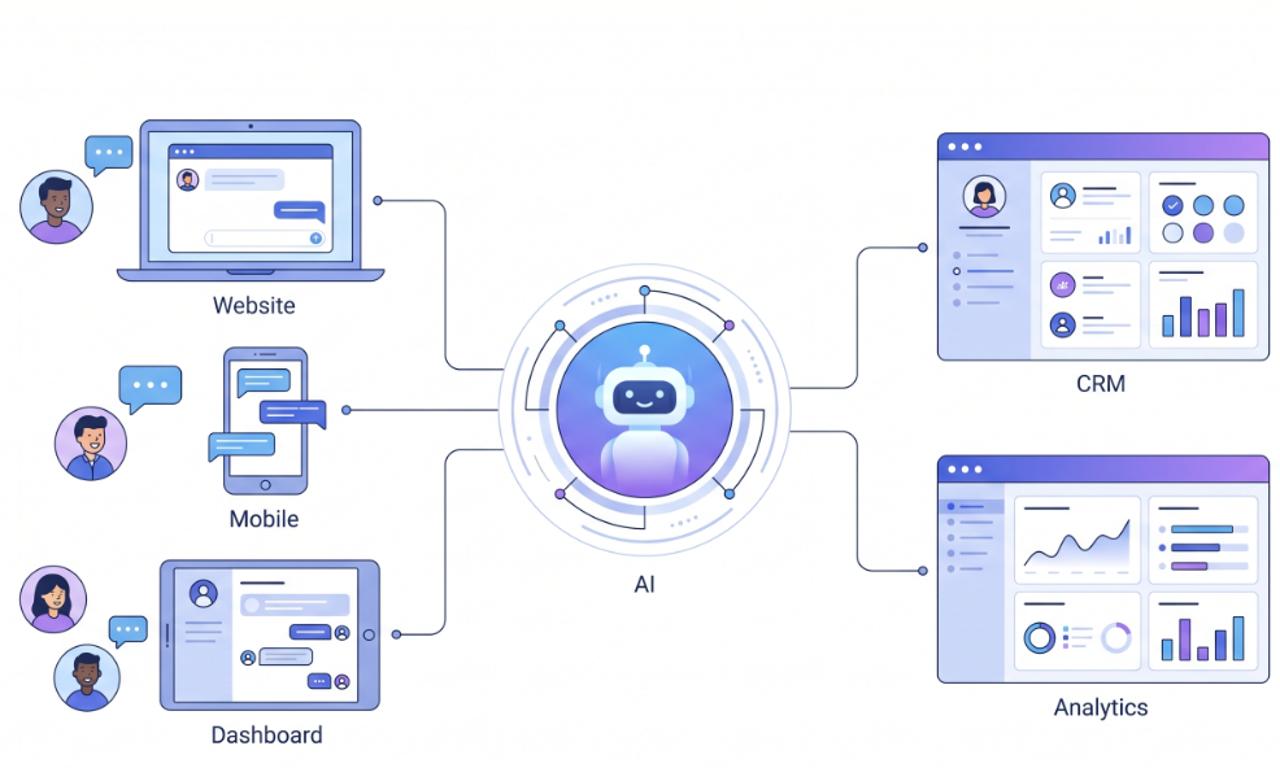
They integrate with CRM, product systems, payments, and analytics to actually complete tasks.
That shift from answering to executing is where real ROI comes from.
10 Ways Enterprise Chatbots Drive ROI and Growth
1. 24/7 Support Without Expanding Teams
Customers don’t think in business hours anymore.
Chatbots respond instantly, anytime, without adding headcount.
The result:
Faster support, lower cost, better coverage.
2. Lower Support Costs at Scale
A large portion of support is repetitive:
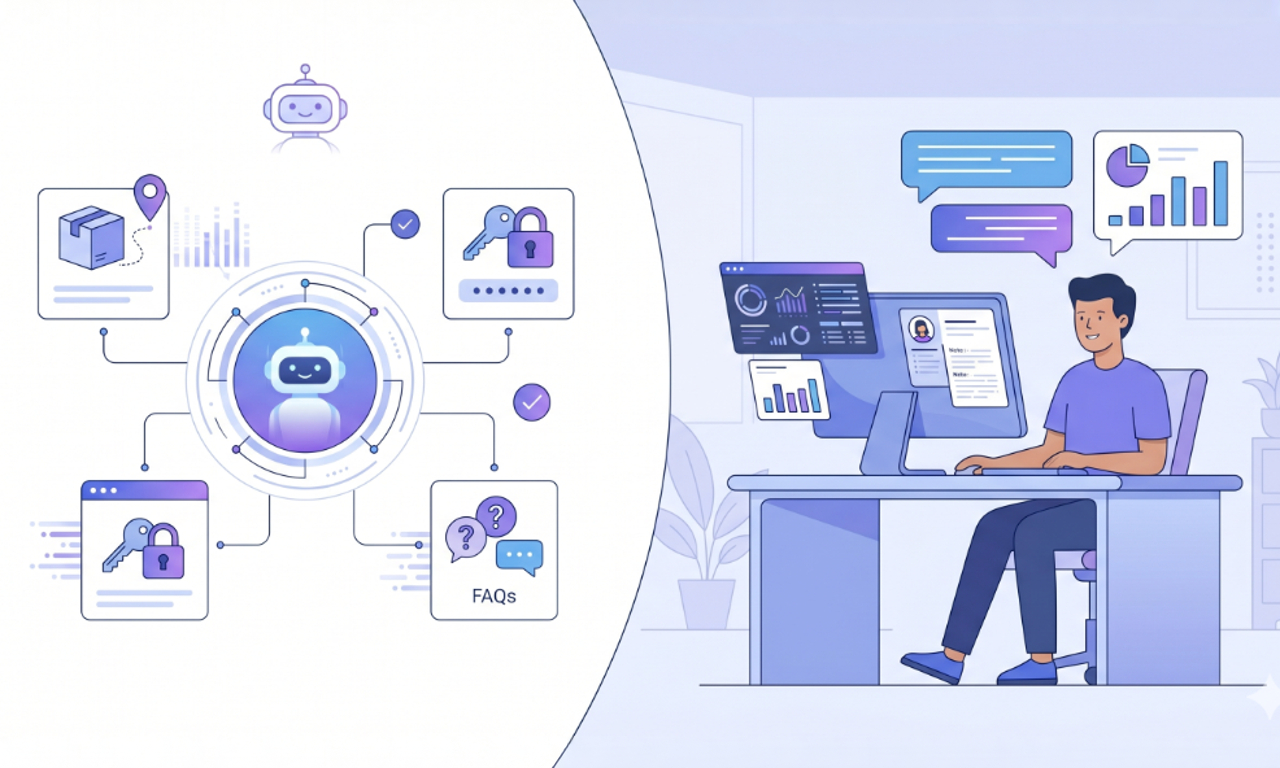
- Order tracking
- Password resets
- Product queries
Chatbots handle these automatically, reducing workload on human agents and cutting costs significantly.
3. Faster Resolution Times
Speed matters more than anything in support.
Chatbots remove waiting by:
- Instantly retrieving data
- Guiding users step-by-step
- Escalating only when needed
Faster resolution = higher satisfaction + stronger retention.
4. Higher Lead Conversion
Most websites lose visitors because no one engages them in real time.
Chatbots fix that instantly.
They can:
- Start conversations
- Answer objections
- Recommend solutions
- Capture leads
This turns passive traffic into active pipeline.
5. Better Customer Experience
Consistency is hard with human teams.
Chatbots deliver:
- Instant replies
- Consistent answers
- Personalized interactions
And when needed, they hand off smoothly to humans.
That combination creates a far better experience than either alone.
6. Built-In Upselling and Revenue Growth
Chatbots don’t just support, they sell.
Based on behavior and context, they can suggest:
- Upgrades
- Add-ons
- Relevant products
This increases average order value without adding sales pressure.
7. Real-Time Customer Insights
Every interaction becomes data.
Enterprises can learn:
- What customers struggle with
- What they ask repeatedly
- What drives decisions
These insights improve product, marketing, and support strategies simultaneously.
8. Scalable Operations Without Linear Costs
Growth usually means hiring more people.
Chatbots break that pattern.
They scale instantly to handle thousands of conversations without proportional cost increases.
That’s where margins improve.
9. Multilingual Global Support
Expanding globally usually requires hiring multilingual teams.
Chatbots remove that barrier.
They can handle multiple languages, making global support faster and more cost-efficient.
10. Internal Automation Across Departments
Chatbots aren’t limited to customers.
Chatbots aren’t limited to customers.
- HR queries
- IT support
- Employee onboarding
- Knowledge access
This reduces internal friction and improves overall productivity.
What This Looks Like in Practice
We’ve seen this pattern repeatedly across enterprise systems.
One example is Quiri, an AI-powered platform built by Mediusware.
Instead of navigating dashboards or running manual reports, users simply ask questions in natural language and get instant insights.
That shift from manual processes to conversational interfaces removes friction completely.
The same principle applies to chatbots:
Make interaction simple → reduce effort → increase speed → improve decisions.
The Future of Enterprise Chatbots
Chatbots are already evolving beyond support tools.
What’s coming next:
- AI agents that complete tasks end-to-end
- Deep integrations with enterprise systems
- Voice-enabled interactions
- Predictive support before users even ask
- AI copilots for internal teams
In other words, chatbots are becoming operational systems, not just interfaces.
Final Thought
Enterprise chatbots don’t just reduce costs.
They change how businesses operate.
They remove delays.
They reduce manual work.
They improve every interaction.
And over time, they become one of the highest-leverage systems inside an organization.
Frequently Asked Questions
An enterprise chatbot is an AI-powered conversational system designed to integrate with business platforms such as CRM, ERP, and knowledge bases. Unlike basic chatbots that only answer predefined questions, enterprise chatbots can automate workflows, retrieve real-time data, assist customers, and support internal operations across departments.

I work with founders and leadership teams when growth moves faster than their systems, teams, or decisions. I’ve led 850+ projects for 750+ clients across 20+ countries, working across 100+ technologies and counting. I care about ownership, clarity, and building things that last beyond the launch.
Featureblogs
Relatedblogs
Authorblogs
01
SaaS MVP Development: A Founder’s Guide for 202702
Zero Clicks, Falling Traffic: How to Win Back Revenue03
Ranking on Google in 2026: What Matters in the Age of AI Search04
How to Choose an API Development Company for Your SaaS Product05
Why Software Companies Are Turning to Strategic Partnerships for Faster Growth