Quick Summary
- Workflows: Understand before changing.
- Integrations: Clarify data ownership.
- Mobile: Design around user tasks.
- Scope: Prioritize by readiness.
Quick Summary
A property manager changes a rate. The interface updates but what happens in the connected booking channels?
Answering that question requires understanding where the value originates, which system can change it and what happens when an update fails.
For one vacation-rental management platform, these relationships became central to Mediusware’s work. The engagement involved assessing an existing product, documenting listing workflows, examining channel dependencies, and planning mobile improvements.
The product already had a web application, backend, administration features, mobile application, and booking-channel integrations. The challenge was to build an accurate understanding of how those parts worked together before deciding what to change.
This case study draws on the supplied project account. The client is anonymized. Documentation and analysis were presented for review, while final acceptance, production remediation, and measurable business improvements remain unconfirmed.
The platform supported vacation-rental operations involving properties, bookings, rates, availability, and guest communication.
Property owners and managers needed to coordinate these activities across their own system and external booking channels. Operational staff needed access to assigned work, while administrators managed users and oversight.
These responsibilities created dependencies that a feature list could not fully explain.
A listing could exist locally and also have related records in a channel-management service. A rate change could involve an outbound request. An incoming channel event could trigger local updates.
To improve the product responsibly, the team needed to understand those relationships at the level of actual behavior.
The supplied intake identifies gaps in existing documentation, particularly around cross-module dependencies and field-level effects across the platform, its channel-management provider, and downstream booking channels.
The client also wanted more product-specific analysis. General descriptions of how a property-management system should work did not sufficiently explain how this particular implementation behaved.
That distinction shaped the engagement: understanding the existing product became a prerequisite for recommending broader improvements.
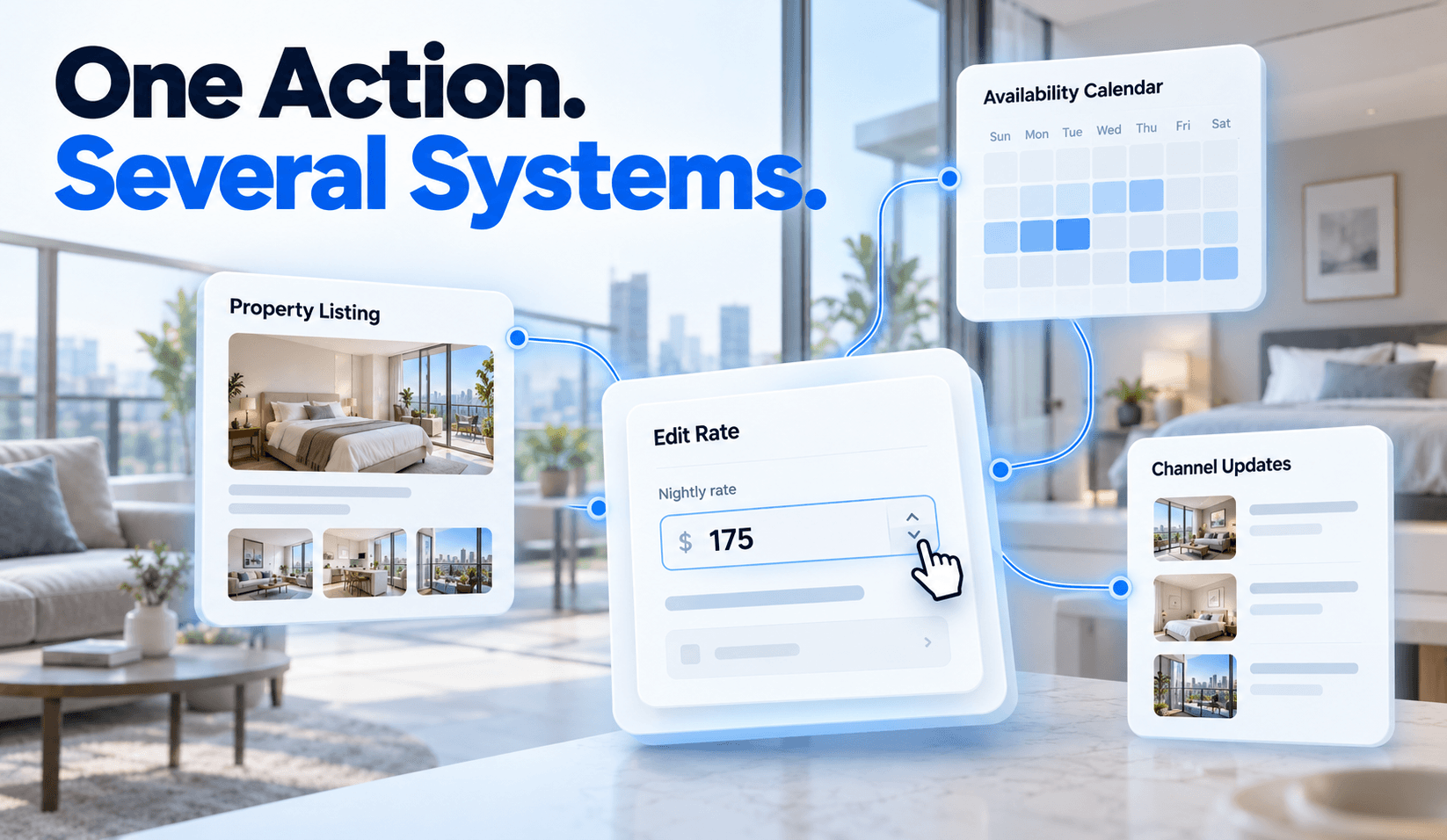
Mediusware’s involvement combined business analysis, technical documentation, audit work, mobile assessment and design planning.
The strongest evidenced outputs concern the listing module and its connected workflows.
| Work area | Reported contribution |
| Product research | Competitor research and business-process documentation |
| Business documentation | Listing-module workflows and a high-level process diagram |
| Technical documentation | Request flows, data impacts and sequence diagrams |
| Integration analysis | Property creation, channel connection, import, mapping, synchronization, rates and webhooks |
| Technical assessment | Audit findings and recommendations under review |
| Mobile assessment | Codebase review and an update list |
| Design planning | Branding and mobile UI/UX priorities |
The documentation presented in August covered several distinct operations rather than treating “listing management” as one feature.
These included creating a property, connecting a channel, importing and mapping listings, re-importing information, updating rates and availability, and handling webhooks.
The materials do not establish final client acceptance of all documentation or the production release of the proposed improvements.
The contribution is therefore best understood through the analysis and documented direction available for review.
One of the clearest lessons from the engagement was that static code and database review could not fully explain the product’s workflows.
A database field can show where information is stored. An endpoint can show where a request arrives. Neither necessarily explains the complete business action.
For a property manager changing availability, useful documentation needs to connect the visible action with the behavior behind it.
That can include questions such as:
These are practical review questions for an integrated product, rather than verified descriptions of every workflow in this engagement.
The project account describes a shift toward module-by-module documentation grounded in interface behavior, integration dependencies, and field-level effects.
That approach made the documentation more relevant to decisions about maintenance and improvement.
Instead of assuming that an existing screen explained the underlying process, the work examined what the action meant across the connected system.
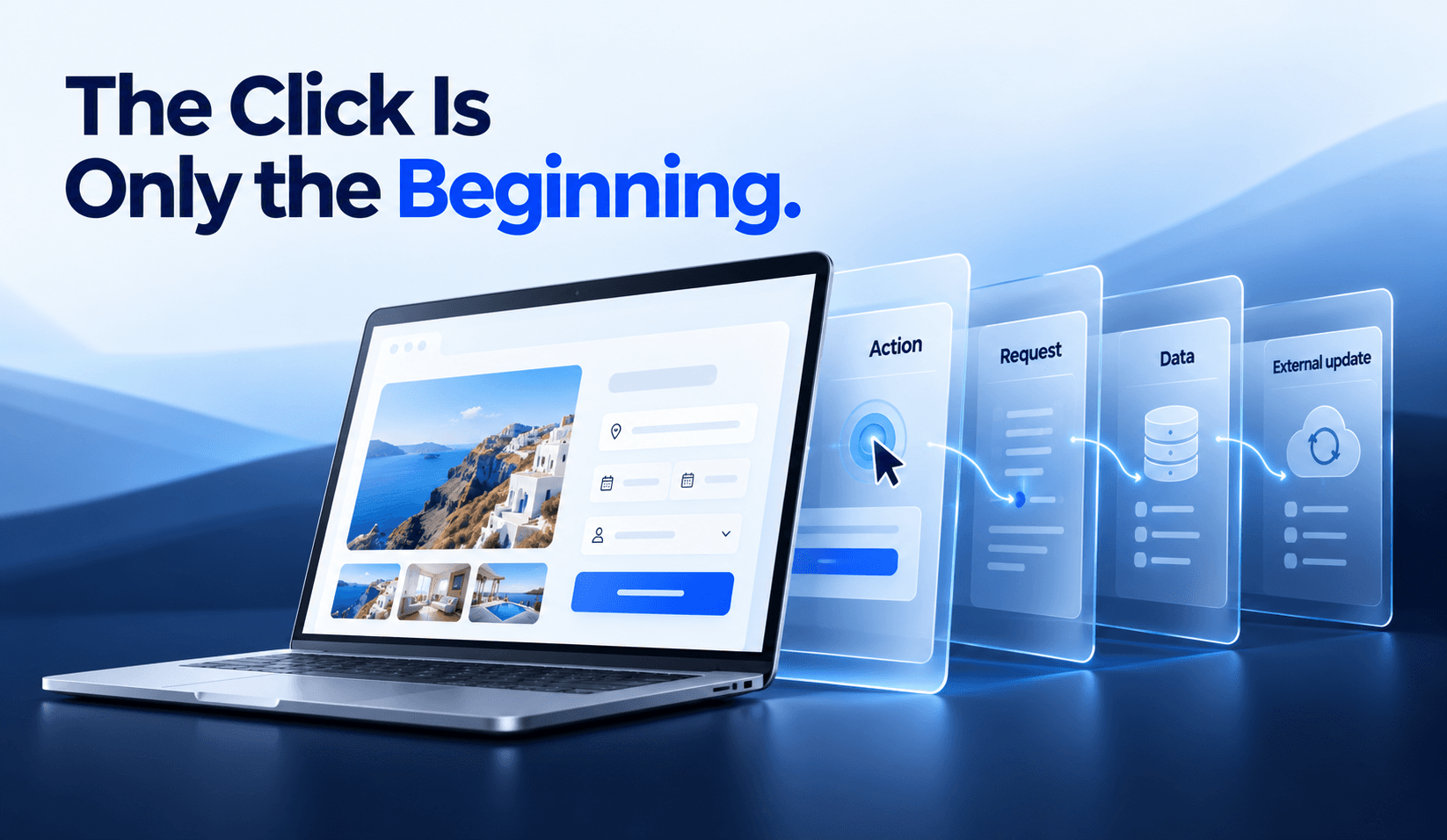
The platform used a channel-management layer to connect with external booking services.
That introduced an important distinction: information created locally did not necessarily follow the same path or rules as information imported from a booking channel.
The documentation needed to explain which system performed each responsibility.
| Workflow | Question to resolve |
| Property creation | What is created locally, and what is created externally? |
| Channel connection | Which system handles connection and authorization? |
| Listing import | What external information becomes a local record? |
| Mapping | How are the related records associated? |
| Rate updates | Where does the value originate, and where should it travel? |
| Availability updates | Which systems need to receive the change? |
| Webhooks | What event arrives, and what local behavior follows? |
These distinctions matter because similar-looking actions can have different consequences.
Creating a new local property and importing an existing channel listing may both produce a property in the interface. However, the relationships and dependencies behind those records need to be understood separately.
The same applies to updates. Knowing that a value appears in two systems does not establish which one can originate or override it.
For the engagement, the supported work is the examination and documentation of these relationships. The available material does not prove that all synchronization problems were resolved.
The broader product lesson is to make data ownership and movement explicit before changing integration behavior.
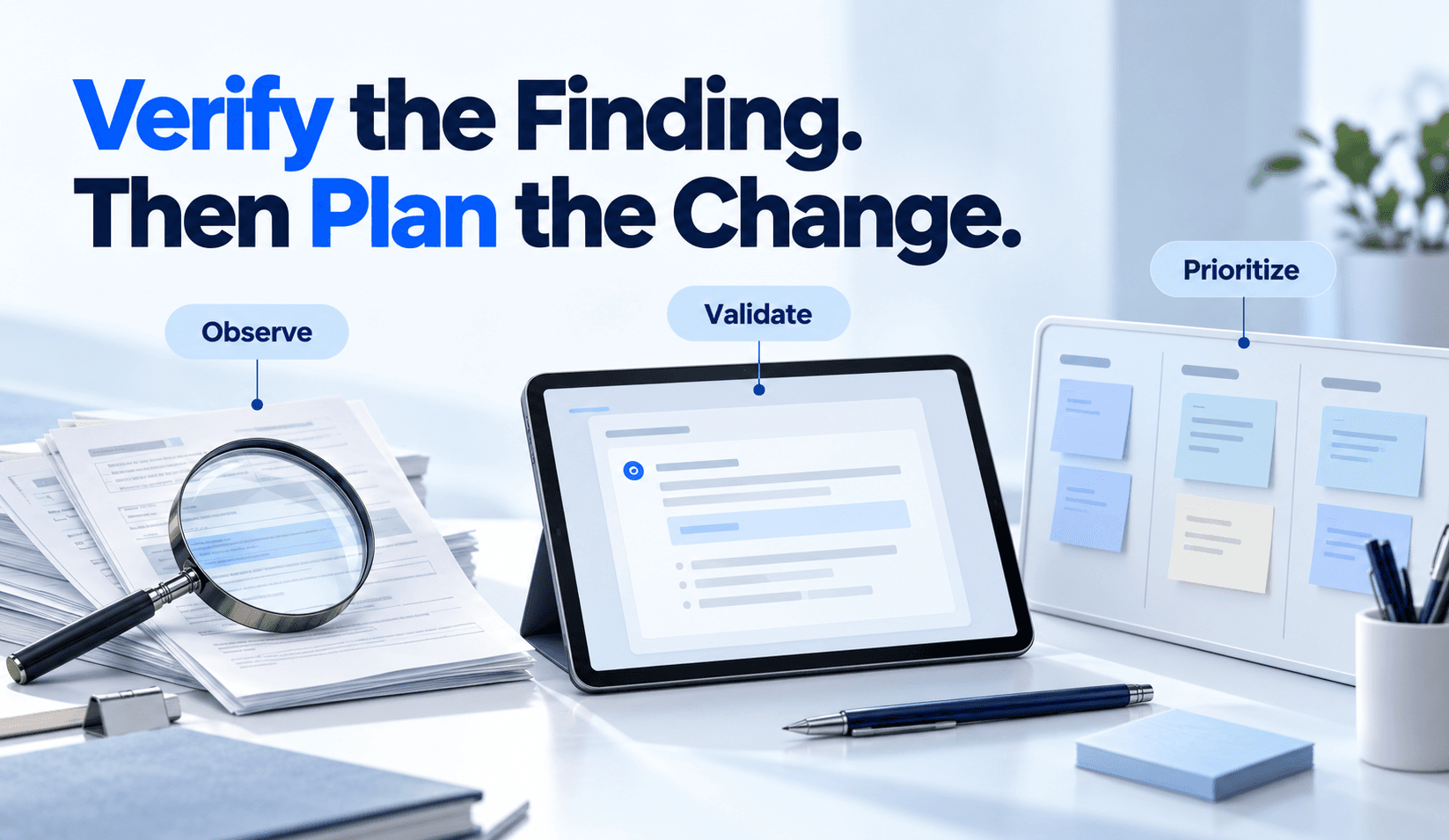
An audit recommendation depends on the accuracy of the reviewer’s understanding.
The intake records that some initial technical interpretations were disputed. In particular, assumptions about how the platform connected to booking channels did not match the client’s intended implementation.
That created a need to validate findings with the client team and examine the integration context more closely.
A recommendation can sound reasonable while addressing the wrong system boundary. For example, a review that assumes a direct connection may misunderstand responsibilities handled by an intermediary service.
The response described in the records was to prioritize a more accurate current-state account before broader changes.
For teams assessing inherited software, this suggests separating 3 questions:
This is a useful assessment method, not a claim that every finding in the engagement completed that validation cycle.
The available evidence supports an iterative review process. It does not establish that all initial findings were accepted or that every recommendation was implemented.
The mobile application introduced another set of improvement priorities.
The client identified inconsistent branding between web and mobile and wanted a more structured mobile UI/UX approach. The team also reviewed the mobile codebase, framework versions and dependencies.
During later design planning, branding and mobile UX were prioritized ahead of a web redesign.
The reasoning was specific to the product’s stage. The client considered the web business insufficiently mature for redesign and wanted mobile screens considered according to their purpose.
That raised practical questions about what belonged in the mobile experience.
A property manager checking a booking while away from a desk may have different needs from an administrator configuring the product. Operational staff may need a focused view of assigned work.
The appropriate scope depends on those tasks.
A smaller first mobile phase followed by advanced functionality was proposed. Final feature scope and production delivery were not confirmed in the supplied records.
The useful decision is the prioritization itself: define what mobile users need to accomplish before expanding the redesign.
Modernization planning also involves identifying work that should wait.
The supplied account describes several areas deferred during the discussed phases.
| Deferred work | Recorded reasoning |
| Full mobile rebuild or major refactoring during initial support | Focus on maintenance and smaller fixes. |
| Broad architectural changes | Establish accurate module and integration understanding first. |
| Immediate web redesign | Wait for greater business maturity. |
| Tenant website or booking engine | Backend and team readiness were insufficient for that phase |
These decisions show how readiness affected scope.
A booking engine could introduce additional customer-facing workflows. A broad refactor could affect behavior that had not yet been fully documented. A simultaneous web and mobile redesign could widen the work before the mobile priorities were clear.
The records support explaining those sequencing choices. They do not establish that the deferred work was permanently rejected.
For founders, the relevant question is, what needs to be understood or ready before this improvement becomes a sensible next step?
That question helps turn a broad wish list into work with clearer dependencies.
The value of current-state documentation depends on what it helps a team decide.
A general overview can introduce modules and terminology. More detailed documentation can help explain the effect of a particular action, the systems involved, and the questions still unresolved.
In this engagement, the listing work separated operations such as creation, connection, import, mapping, synchronization, and webhook handling.
That level of separation provides a more concrete basis for review than a single description of “channel integration.”
It allows the team to ask whether a proposed change affects one operation or several, which assumptions need validation, and what evidence is still missing.
The documentation was presented for client review. Its final approval and subsequent use in production changes remain unconfirmed.
The supported milestone is a more detailed account made available for review—not a measured reduction in maintenance effort.
The available evidence supports an assessment and documentation engagement around an inherited vacation-rental platform.
It identifies specific outputs and decisions while leaving production and business outcomes open.
| Area | What the evidence supports |
| Existing product | A platform with web, backend, administration, mobile, and channel integrations |
| Documentation | Listing business and technical workflows presented for review |
| Integration understanding | Examination of local, channel-management, and booking-channel responsibilities |
| Technical assessment | Findings and recommendations requiring validation |
| Mobile direction | Codebase assessment, branding concerns, and phased UX planning |
| Remaining uncertainty | Final acceptance, exact shipped changes, release dates and measurable outcomes |
No verified before-and-after evidence establishes faster onboarding, improved performance, reduced overbooking, or subscriber growth.
The approximately one-minute onboarding discussed in the records was an aspiration. It should not be presented as an achieved result.
A stronger outcomes assessment would require accepted deliverables, release records, validation results, and comparable operating measures.
Until those are available, the most useful account concerns the work performed and the reasoning behind its sequence.
For founders and technical leaders improving an existing product, this engagement highlights 5 questions:
For this vacation-rental platform, Mediusware’s reported work moved toward a more specific understanding of listing workflows and connected systems.
That understanding provided material for reviewing technical priorities and mobile direction. Confirming implementation and measuring its effect remain the next steps in evaluating the engagement.
The reported work included workflow documentation, integration analysis, technical assessment and mobile improvement planning.