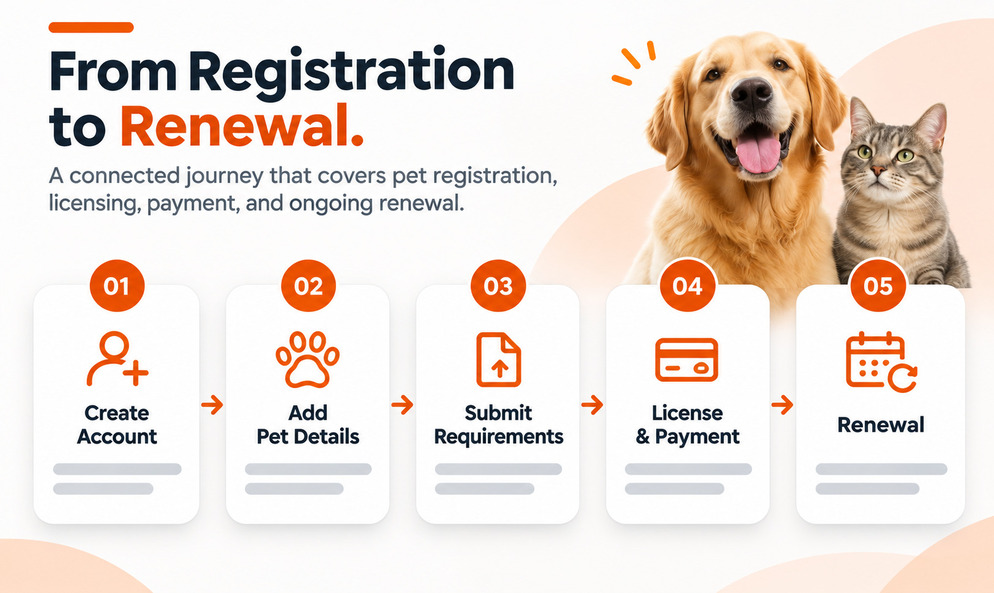
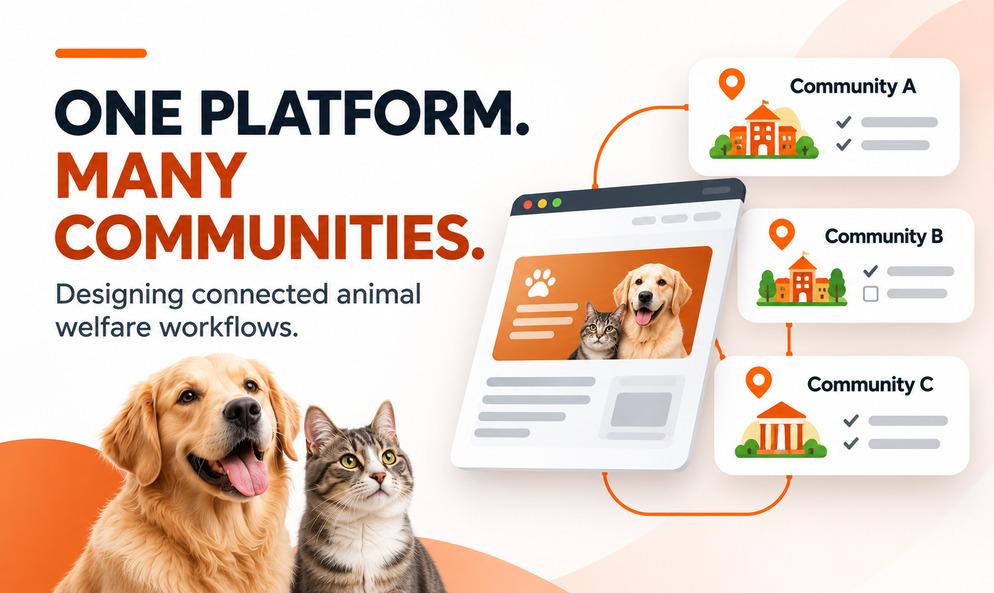
The licensing experience needs to make sense as one journey, not a collection of disconnected forms.
A pet owner may create an account, add a pet profile, complete local questions, provide a required document, review the licensing amount, and pay.
The product's documented MVP scope also included renewal functionality and supporting records.
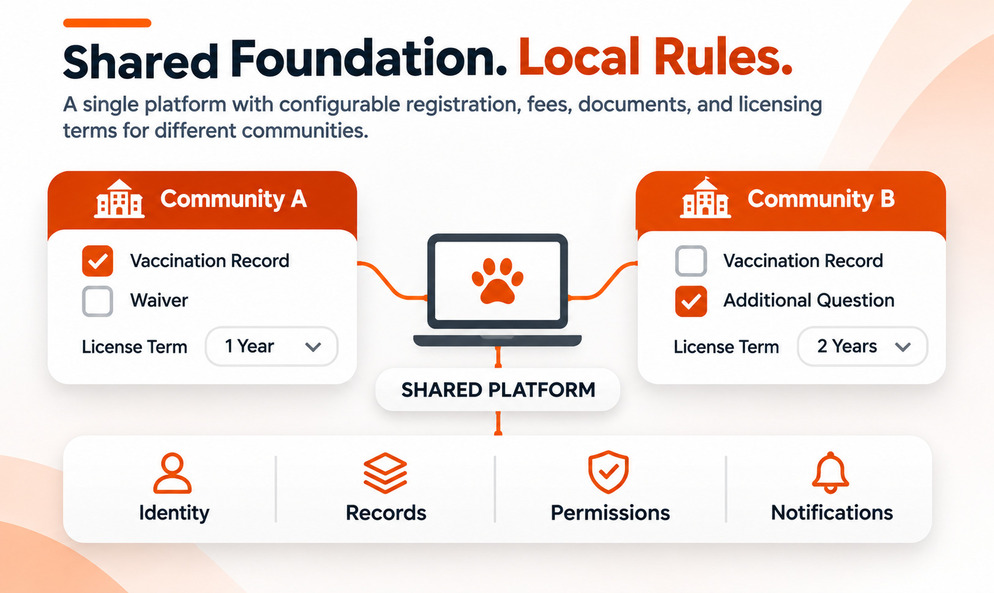
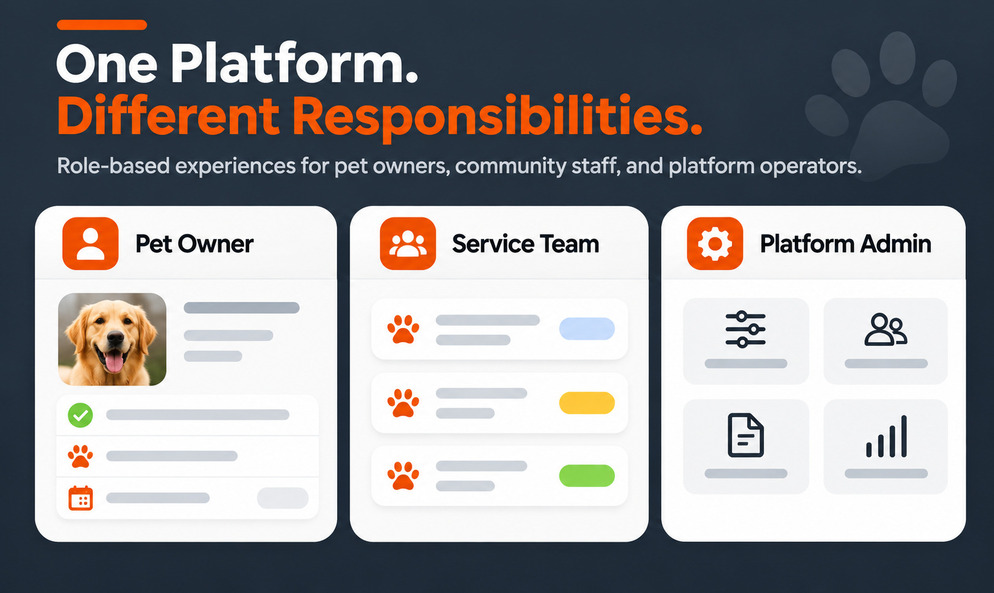
For administrators, the same journey creates a different need: understanding which owner and pet a licensing record belongs to and how the community's rules apply.
These connections make custom SaaS development more demanding than building a single payment page. Identity, registration data, licence periods, and transaction records must be considered together.
The available documentation supports the inclusion of payment and renewal workflows in the MVP. It does not verify the payment gateway, complete exception handling, or results from production transaction testing.
Planning for Renewal and Payment Exceptions
A successful payment is only the simplest case. Real products also need defined behavior for expired cards, failed payments, cancellation requests, refunds, duplicate-charge prevention, and changing eligibility rules.
Renewal consent and reminders need understandable wording. The right renewal date can depend on the community's rules and the owner's licence record.
The detailed project material identifies these as operational requirements. Without release and QA evidence, they should be treated as controls to verify not as guarantees that every edge case is already implemented.