- AI improves hospital efficiency through predictive patient flow, automation, and faster diagnostics.
- Intelligent healthcare systems streamline workflows, reduce wait times, and improve patient care.
Rethinking Health Care: The Impact of AI on Hospital Efficiency in 2026
1 min read
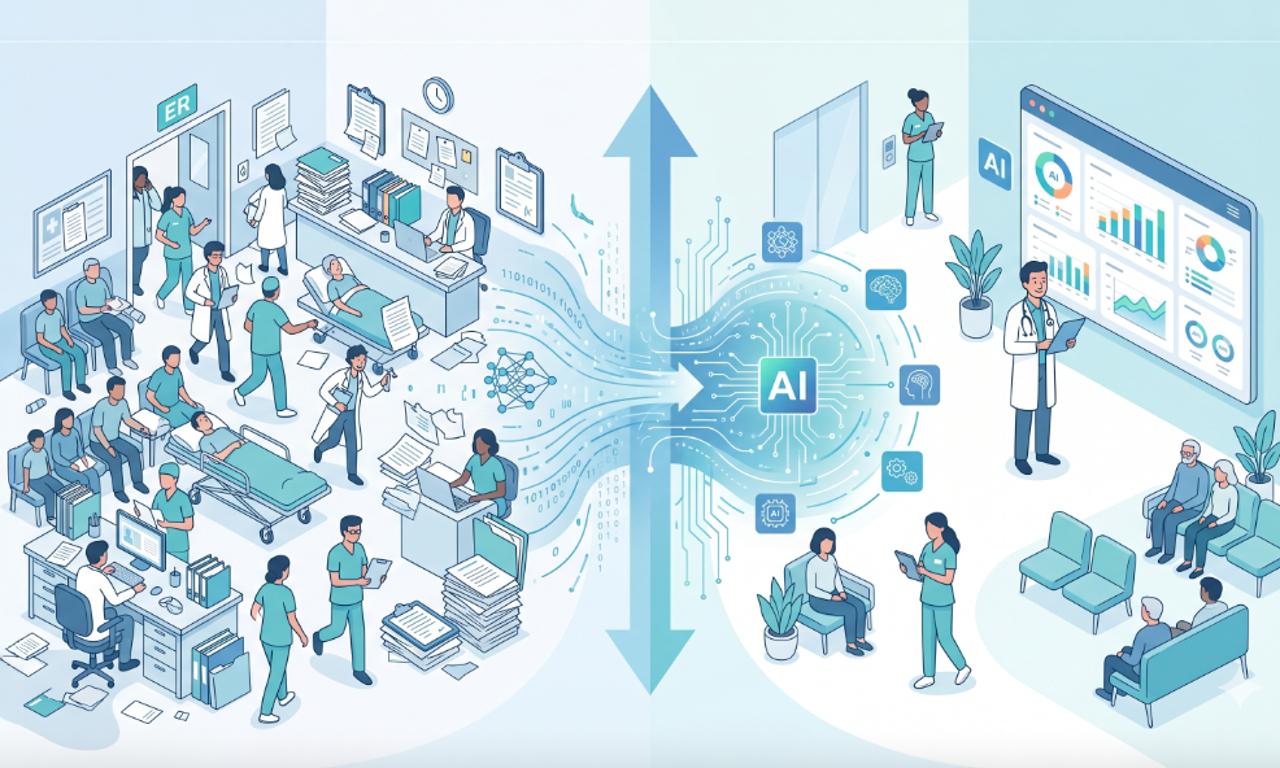
AI is improving hospital efficiency through predictive patient flow, automation, and faster diagnostics.
Intelligent systems are reducing wait times, cutting administrative load, and improving patient care delivery.
The Problem No One Should Accept Anymore
Imagine sitting in an emergency room for hours.
Not because doctors don’t care.
But because the system can’t keep up.
Nurses are overwhelmed.
Doctors are switching between patients and paperwork.
And behind the scenes, outdated systems are slowing everything down.
You don’t question the people.
You question the system.
And that’s the real issue.
Hospital inefficiency isn’t just frustrating.
It delays treatment, burns out staff, and wastes billions every year.
The Real Cost of Inefficiency
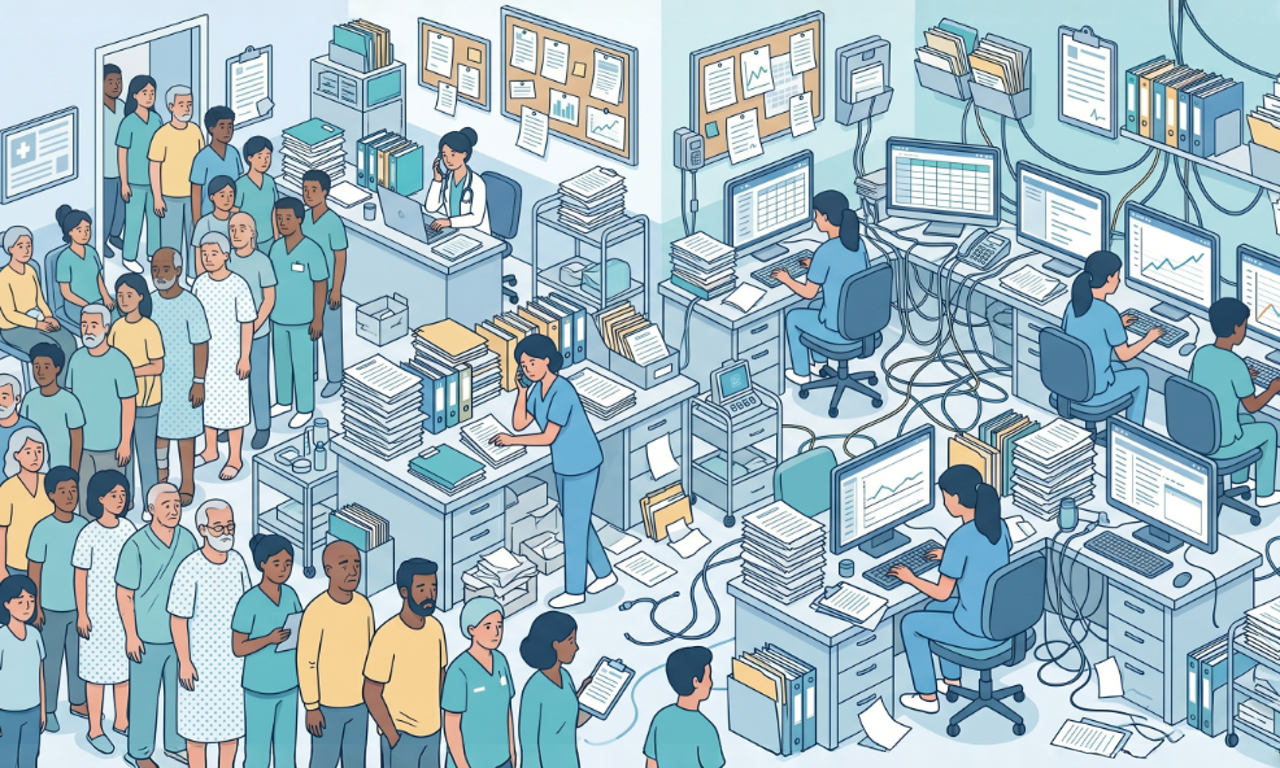
Most hospitals aren’t failing because of a lack of medical expertise.
They’re struggling because operations haven’t evolved at the same pace as demand.
Here’s what that looks like:
- Fragmented patient data across systems
- Manual documentation workflows
- Disconnected scheduling tools
- Delayed insurance approvals
The result?
- Nurses spend up to 35% of their time on documentation instead of patients
- Billions are lost globally due to operational inefficiencies
- Patient experience continues to decline
This isn’t a staffing problem.
It’s a system design problem.
Why Traditional Hospital Systems Break
Healthcare systems were not built for today’s complexity.
They rely on:
- Reactive decision-making
- Manual coordination
- Isolated tools
As patient volume increases, these systems don’t scale.
They collapse under pressure.
That’s why simply hiring more staff doesn’t solve the problem.
It just adds cost without fixing the root issue.
Where AI Is Actually Making a Difference
AI isn’t replacing doctors.
It’s fixing the system around them.
Here’s where it’s creating the biggest impact.
1. Predictive Patient Flow
Hospitals no longer need to guess demand.
AI analyzes:
- Historical admission patterns
- Seasonal trends
- Real-time hospital data
This allows hospitals to:
- Allocate beds earlier
- Schedule staff proactively
- Reduce ER congestion
Hospitals using predictive systems have already seen double-digit reductions in waiting times.
The difference is simple:
They move from reacting → to anticipating.
2. Faster, AI-Assisted Diagnostics
Diagnostics used to be a bottleneck.
Now AI can:
- Analyze medical imaging
- Detect anomalies early
- Flag high-risk cases instantly
This doesn’t replace doctors.
It gives them a head start.
In many cases, hospitals have reduced diagnostic turnaround time by up to 30%.
Faster diagnosis → Faster treatment → Better outcomes.
3. Administrative Automation
This is where the biggest efficiency gains happen.
Hospitals are using AI to automate:
- Appointment scheduling
- Insurance verification
- Billing workflows
- Discharge documentation
And this matters more than most people realize.
Because every minute saved from admin work is a minute returned to patient care.
We’ve seen this pattern repeatedly across industries:
automation doesn’t just reduce cost, it unlocks capacity.
That’s exactly how platforms like CRM Runner streamline operations by removing manual workflows and centralizing systems.
Healthcare is now following the same shift.
Case Insight: Fixing Emergency Room Bottlenecks
A large hospital network faced a familiar problem:
- Unpredictable patient spikes
- Poor bed allocation
- Long ER wait times
- Staff burnout
Instead of increasing staffing, they changed the system.
They implemented AI-driven patient flow management.
Results within a year:
- 22% reduction in ER waiting times
- 18% better bed utilization
- 15% reduction in staff overtime
The key shift?
They started predicting demand 72 hours in advance.
That’s what changes everything.
The Human Side of AI in Healthcare
Whenever AI enters healthcare, the same question comes up:
Will it replace doctors?
Short answer: No.
Long answer: It changes how they work.
AI handles:
- Data analysis
- Pattern detection
- Repetitive processes
The real shift isn’t replacement.
It’s augmentation.
And the hospitals that adopt this early gain a serious advantage.
What the Future of Hospitals Looks Like
Efficient hospitals won’t be defined by how many staff they have.
They’ll be defined by how well their systems work.
The future hospital:
- Predicts patient demand before it happens
- Automates operational workflows
- Reduces cognitive load on medical staff
- Delivers faster, more responsive care
This isn’t a technology upgrade.
It’s an operational redesign.
Final Thoughts
Hospital inefficiency isn’t caused by people.
It’s caused by outdated systems.
AI doesn’t fix healthcare by adding more tools.
It fixes it by connecting everything that was previously disconnected.
The real advantage isn’t adopting AI.
It’s building the right system around it.
Frequently Asked Questions
AI helps automate administrative tasks, assist diagnostics, and predict patient demand, improving both efficiency and care delivery.

I work with founders and leadership teams when growth moves faster than their systems, teams, or decisions. I’ve led 850+ projects for 750+ clients across 20+ countries, working across 100+ technologies and counting. I care about ownership, clarity, and building things that last beyond the launch.
Featureblogs
Relatedblogs
Authorblogs
01
SaaS MVP Development: A Founder’s Guide for 202702
Zero Clicks, Falling Traffic: How to Win Back Revenue03
Ranking on Google in 2026: What Matters in the Age of AI Search04
How to Choose an API Development Company for Your SaaS Product05
Why Software Companies Are Turning to Strategic Partnerships for Faster Growth