AI search has not made Google's core SEO fundamentals irrelevant. What has changed is the way information is discovered, combined, and presented before a user ever reaches a website.
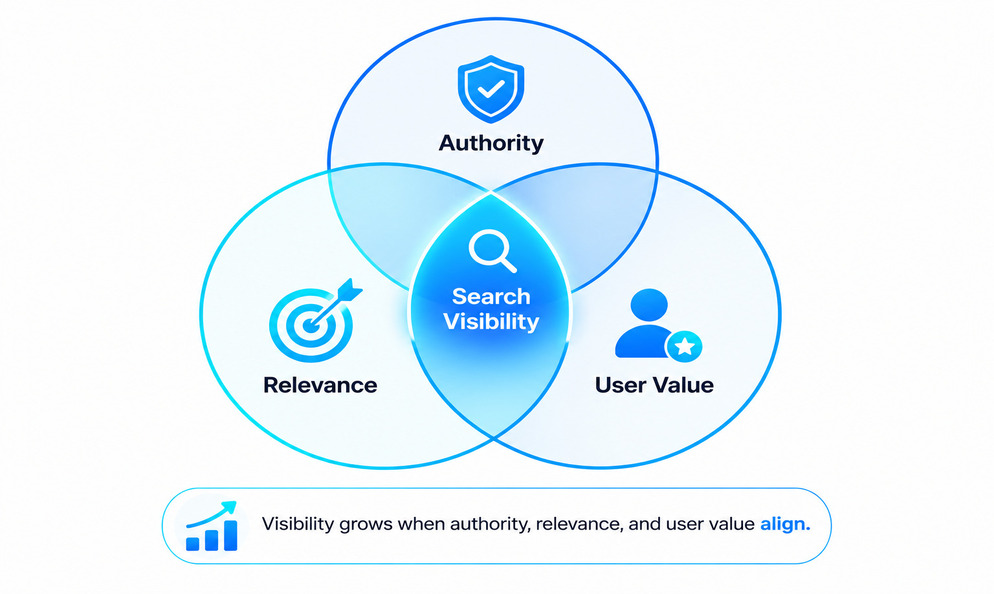
That changes the job of SEO. A page now needs to do more than rank for one keyword. It needs to answer the right intent, contribute something worth retrieving, cover the surrounding topic, and connect that visibility to a business outcome.
1. Match the Real Search Intent
Keywords tell you what someone typed. Intent tells you what they are trying to accomplish.
A founder searching “SaaS development cost” may actually need pricing ranges, team options, timeline trade-offs, and a way to compare vendors. A page that defines SaaS development without helping with those decisions technically covers the keyword but misses the search.
Google continues to emphasize useful, people-first content that leaves readers feeling they have learned enough to achieve their goal.
So before optimizing a page, ask: What decision is the searcher trying to make next?
2. Increase Information Density
More words do not automatically create more value. The goal is to make the useful information easy to find without removing the context a reader needs. Put the answer close to the question.
Use descriptive headings, concise explanations, comparison tables, bullets, and supporting evidence where they improve understanding.
3. Create Genuine Information Gain
If your article only reorganizes information already available across the top-ranking pages, there is little reason for readers to remember it.
Google's own quality guidance asks whether content provides original information, research, reporting, or analysis, rather than simply summarizing what other sources say.
Ahrefs describes this additional value as information gain, while also noting that Google's use of a literal information-gain score is unconfirmed.
For a software company, that additional value could come from:
- real project outcomes
- anonymized delivery data
- expert observations
- failed and successful experiments
- client decision patterns
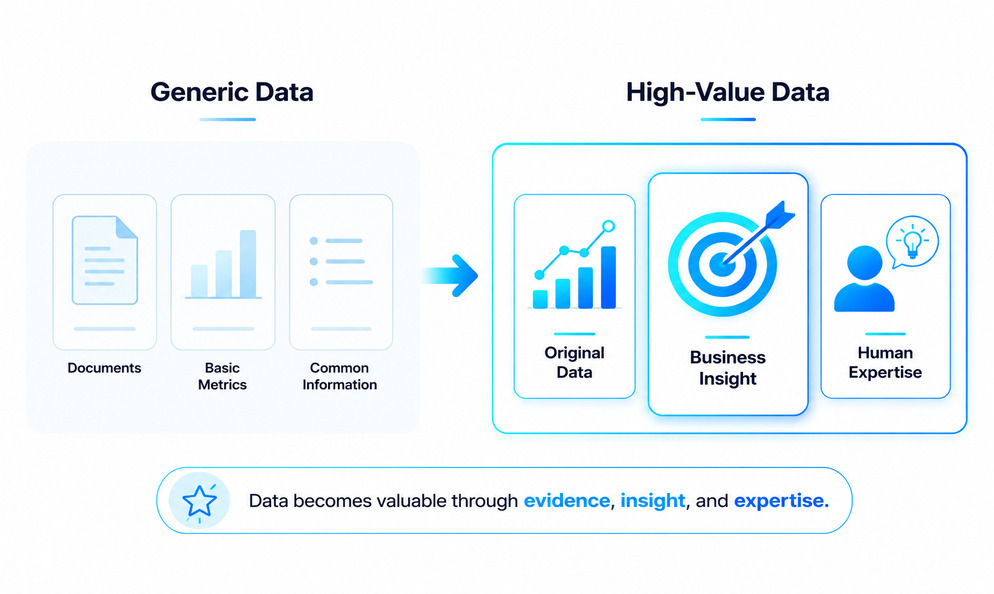
AI can summarize common knowledge. It cannot originate your experience.
4. Cover the Query Fan-Out, Not Just the Keyword
This is one of the biggest changes AI search introduces.
A single question can expand into multiple related searches, Ahrefs describes this shift as moving search from a one-query model toward one-to-many discovery.
Instead of planning content around: Primary keyword → article
think: Primary question → related questions → evidence → comparisons → decision
Google Search Console queries, People Also Ask, related searches, customer conversations, and AI Mode follow-ups can all help uncover those surrounding questions.
5. Connect Visibility to Revenue
Getting found is only the beginning. Similarweb found a brand recommendation from ChatGPT were 2.5× more likely to visit that brand's website within 7 days, also 55.9% of AI-influenced visits arrived through search.
Think of modern search performance as a progression: Found → Understood → Referenced → Remembered → Chosen
Technical SEO remains the foundation underneath all 5. Google still needs to crawl, index, and understand the page. But technical health alone does not create differentiation.
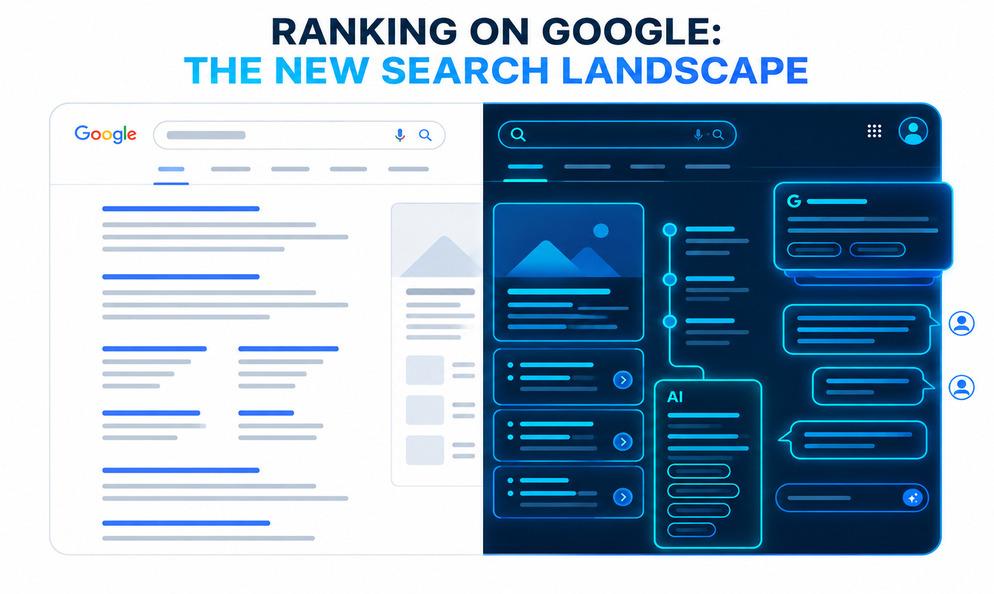
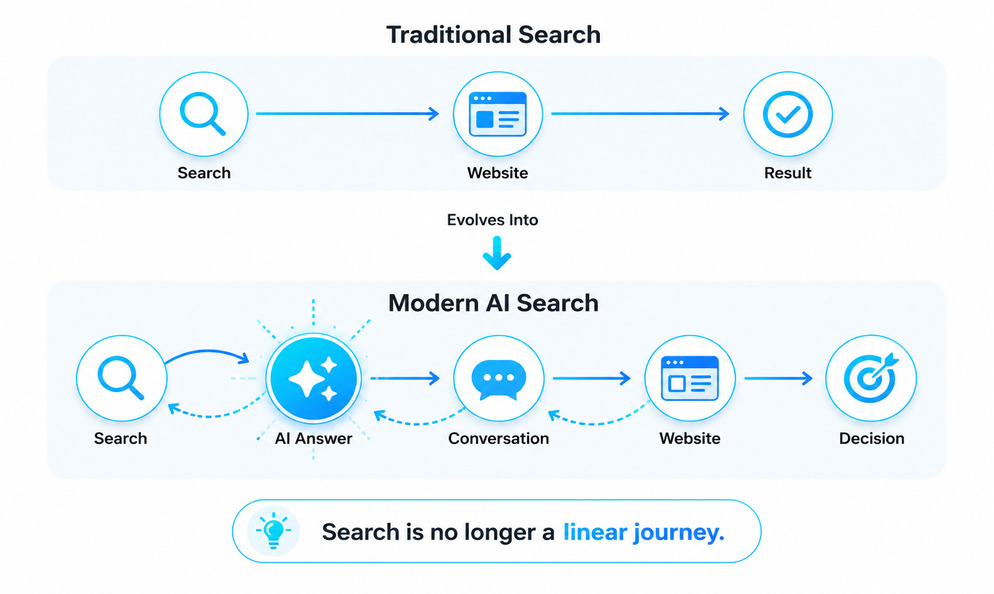 Google AI Mode goes further by turning search into a conversational experience. Users can ask a question, compare options, refine the request, and continue with follow-up questions instead of repeatedly returning to a traditional results page.
 The easiest way to understand the difference is by looking at the outcome each discipline emphasizes: