- Save time and scale efficiently by automating key processes in your SaaS MVP.
- Identify key automation opportunities to improve user experience and streamline operations.
How to Identify Automation Opportunities in Your SaaS MVP Product
1 min read
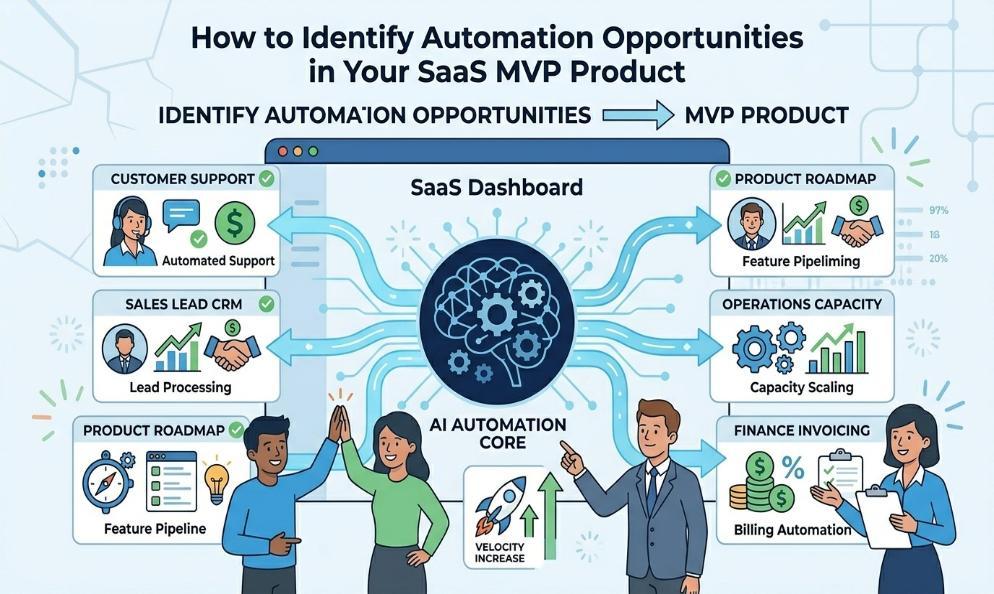
As a SaaS founder, your time is incredibly valuable. You're juggling a multitude of responsibilities, from managing your product to ensuring customer satisfaction.
But as your business scales, one of the best ways to grow efficiently and stay ahead of the competition is by integrating automation into your SaaS MVP.
In this post, I’ll break down how you can pinpoint key areas within your MVP that are perfect for automation, saving you time and making your product more efficient.
This isn’t just about implementing shiny tools, it’s about making smart decisions that’ll make your product scalable, user-friendly, and ultimately, more profitable.
Let's dive in.
1. Automate Repetitive Tasks
The first step in automating your SaaS MVP is to identify repetitive tasks that consume a lot of time but don’t add value.
These are the tasks that are perfect candidates for automation.
For example:
- Customer Support: As your product gains more users, you won’t be able to manually respond to every customer inquiry.
Tools like Zendesk or Intercom can help automate responses for common questions, allowing your team to focus on more complex issues. - Onboarding: Instead of manually guiding new users through your product, automate the onboarding process with tools like WalkMe or Userlane.
You can create automated tutorials, email sequences, and in-app guidance to help users get started.
By automating these repetitive tasks, you can reduce your team’s workload and provide a smoother, faster experience for your users.
2. Leverage AI for Personalized Experiences
AI isn’t just for large enterprises, it’s incredibly valuable for SaaS MVPs, too. You can use AI to personalize the user experience without manual intervention.
Here’s how:
- AI-Driven Recommendations: Whether your SaaS is in e-commerce, content, or service-based, AI can offer personalized recommendations based on user behavior.
Integrating a tool like AWS Personalize or Algolia can help automate this process and keep users engaged. - AI-Powered Chatbots: AI chatbots can handle basic customer support, making the process faster and more efficient. Chatbots can answer frequently asked questions, provide help with navigation, and even suggest actions based on user behavior.
Tools like Drift or Chatfuel can be integrated into your product easily.
By integrating AI, you’ll enhance the user experience, provide personalized interactions, and save valuable time for your team.
3. Automate Billing and Subscriptions
Managing subscriptions and payments manually is time-consuming and prone to errors. Luckily, automating this process is simple and highly effective.
- Automated Billing: Integrate platforms like Stripe or Chargebee to handle subscription management, invoices, and payment processing automatically.
These tools also handle taxes, renewals, and failed payments without any manual intervention. - Plan Upgrades/Downgrades: When users upgrade or downgrade their plans, you can set up automation to ensure their subscription is updated correctly and they receive the relevant information.
Chargebee and Recurly make this process seamless.
Automating billing and subscription management ensures accuracy and saves your team time, so you can focus on growing your product.
4. Automate Reporting and Analytics
You likely already know the importance of tracking key metrics like user activity, churn, and conversion rates. But pulling these metrics manually is not scalable. Automation allows you to gather insights without doing the heavy lifting.
- Automated Dashboards: Tools like Google Data Studio, Tableau, or Power BI can help you create real-time dashboards that pull data directly from your product.
This means you can access the data you need without having to manually generate reports. - Alerts for Key Metrics: Set up automatic alerts to notify you when important metrics shift. For example, if your churn rate increases or if a user cohort stops engaging with the product, you’ll receive an alert immediately, allowing you to act quickly.
Automated reporting gives you the data you need to make informed decisions without wasting time on manual processes.
5. Automate Marketing Campaigns
Marketing automation is essential as your SaaS MVP scales. Rather than manually sending emails or managing campaigns, use tools to set up automated marketing workflows.
- Email Automation: Use tools like Mailchimp or HubSpot to set up automated email sequences for onboarding, re-engagement, or nurturing leads.
These emails can be personalized based on user behavior, ensuring that users receive the right messages at the right time. - Behavior-Based Triggers: With tools like ActiveCampaign, you can automate actions based on user behavior.
For example, if a user hasn’t logged in for a while, you can automatically send them a re-engagement email offering a special deal or reminding them of a feature they haven't used yet.
Automating your marketing allows you to engage with users consistently and effectively, without adding manual work.
6. Automate Security and User Management
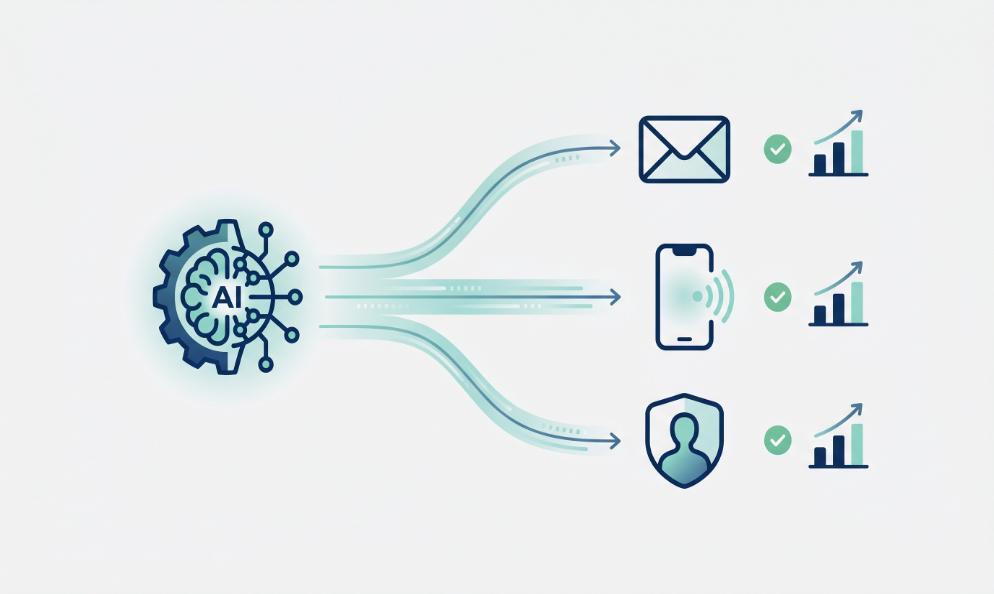
Security is a top priority for any SaaS product, and automation can help you manage user access and protect your platform without constant oversight.
- User Authentication: Use identity management tools like Auth0 or Okta to automate user sign-ups and role management.
These tools ensure that only the right users have access to specific areas of your platform, reducing manual intervention. - Security Monitoring: Set up automated security alerts with tools like AWS CloudWatch or Splunk.
These systems monitor for unusual activity and automatically alert your team if something looks suspicious, ensuring your platform stays secure.
Automating security tasks ensures your product remains compliant and protected, while saving time on manual checks.
7. Streamline the User Journey
The user journey is crucial for retention, and automation can make it smoother and more personalized. Instead of manually guiding users through every step, use automation to enhance the experience.
- Personalized Content Delivery: Tools like Segment or Mixpanel can help you automate the delivery of personalized content based on user behavior.
If a user hasn’t completed a task, send them an automated reminder or tutorial to help them get started. - Self-Help Resources: Allow users to help themselves by automating access to FAQs, guides, and tutorials.
If a user asks a common question, direct them to the appropriate self-serve resource automatically.
Automation enhances the user experience by providing timely, relevant content and reducing friction in the journey.
Conclusion: Automate to Scale
Automation is a game-changer for SaaS MVPs. By identifying areas like support, billing, marketing, and security to automate, you can scale efficiently and provide a seamless experience for your users.
Start with simple automations like customer support chatbots and automated billing, then expand into more advanced areas like AI-powered personalization and real-time reporting. Automation doesn’t just save time, it positions your product for long-term growth.
Frequently Asked Questions
Start by focusing on repetitive tasks like support, billing, and onboarding. These areas have a big impact when automated.

I work with founders and leadership teams when growth moves faster than their systems, teams, or decisions. I’ve led 850+ projects for 750+ clients across 20+ countries, working across 100+ technologies and counting. I care about ownership, clarity, and building things that last beyond the launch.
Featureblogs
01
Is Golang Still the Right Choice in 2025?02
Why Software Companies Are Turning to Strategic Partnerships for Faster Growth03
Top 8 Python GUI Frameworks for Developers04
C# vs. Java: Key Differences, Advantages, and Future Prospects05
Haptic Feedback: Why Touch is Becoming the Most Powerful Experience in Tech01
Is Golang Still the Right Choice in 2025?02
Why Software Companies Are Turning to Strategic Partnerships for Faster Growth03
Top 8 Python GUI Frameworks for Developers04
C# vs. Java: Key Differences, Advantages, and Future Prospects05
Haptic Feedback: Why Touch is Becoming the Most Powerful Experience in TechRelatedblogs
01
Introduction to System Design | System Design Course Pro | Part 102
The Art of Simplicity - How Minimalism Improved UI/UX Design03
The Software Development Life Cycle (SDLC): A Complete Guide04
Which Approach Is Best for Your Software Development Team: Scrum vs. Kanban05
How to adapt the Agile process to modern software developmentAuthorblogs
01
SaaS MVP Development: A Founder’s Guide for 202702
Zero Clicks, Falling Traffic: How to Win Back Revenue03
Ranking on Google in 2026: What Matters in the Age of AI Search04
How to Choose an API Development Company for Your SaaS Product05
Why Software Companies Are Turning to Strategic Partnerships for Faster Growth