Putting several views behind one navigation system does not guarantee that the application behaves coherently. Users also depend on data rules, integration boundaries, permissions, and error handling that may be invisible in the UI.
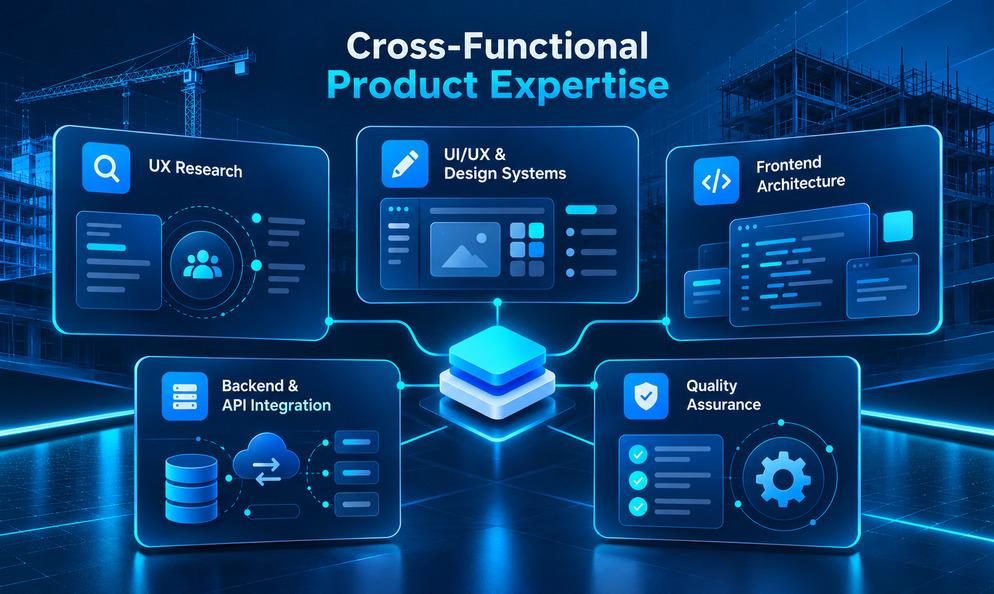
The underlying Mediusware engagement publicly documents frontend architecture, backend development, API integration, and QA workstreams. It does not provide shareable evidence for a named tech stack, specific integrations, deployment topology, or a particular engineering tradeoff. Those details are deliberately excluded.
1. Define Information and Integration Boundaries
Before engineering teams connect business functions, they should identify which component owns which information, what happens when an update fails, and how related records remain consistent.
That can involve questions about API contracts, validation, permissions, asynchronous updates, reconciliation, and maintainability. These are technical considerations for buyers, not a description of the confidential application's architecture.
Mediusware's custom software development services cover the engineering disciplines relevant to these decisions, including backend systems, frontend development, and enterprise integrations.
2. Treat Quality Assurance as Part of Product Delivery
Quality assurance should examine how connected workflows behave, not only whether individual screens render. For example, teams should test important user paths, errors, permissions, and changes that may affect neighboring modules.
The OWASP Application Security Verification Standard is a publicly available framework for web application security verification requirements. It is cited here as general guidance. It does not imply that a confidential client application was certified or tested against ASVS.