- Modern cyber attacks reveal how vulnerable fast-growing startups can be without strong security architecture.
- Founders must treat cybersecurity as a core product capability to protect user trust and platform growth.
What Startups Must Learn from Modern Cyber Attacks
1 min read
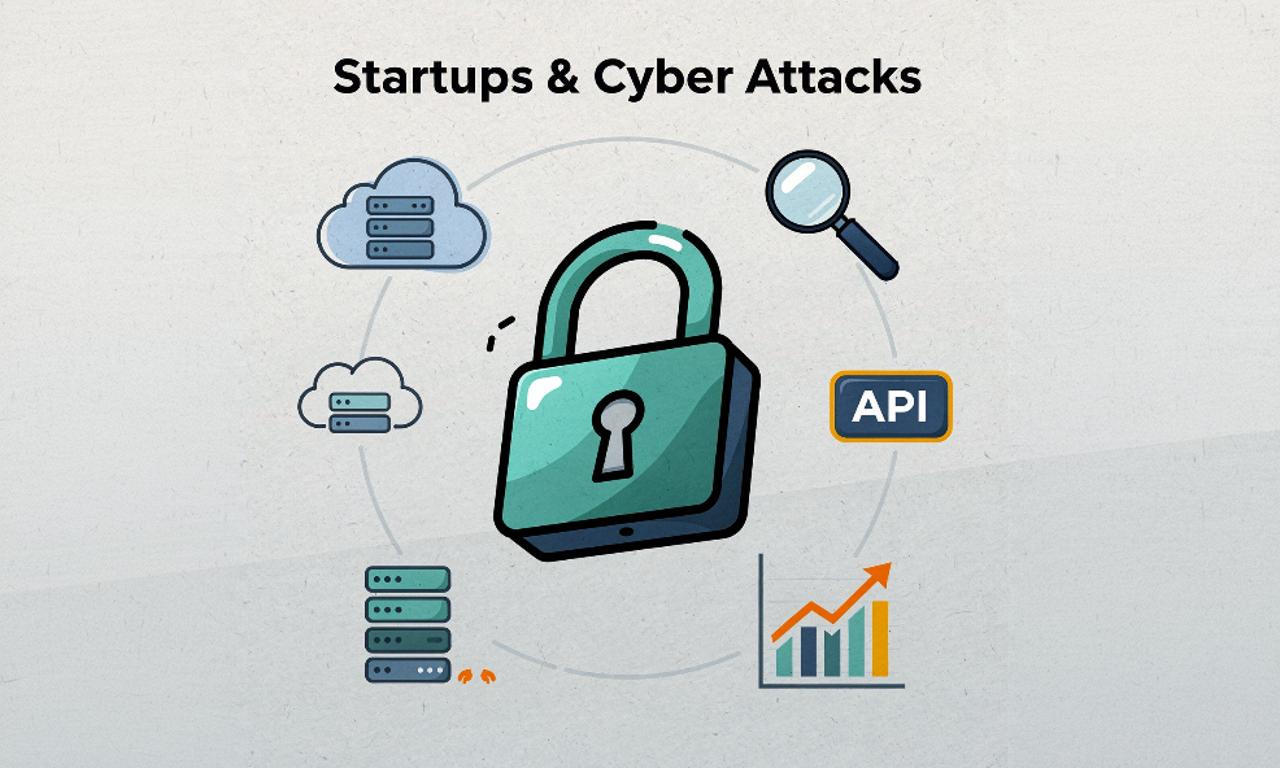
Most startups don’t think about cybersecurity
Until something breaks.
A leaked database.
A compromised API.
A customer email saying, Is your system safe?
That’s usually when security becomes urgent.
But by then, the damage is already done.

The Reality Most Founders Miss
Cyber attacks are not just targeting governments or banks anymore.
They’re targeting opportunity.
And startups often have the highest exposure.
According to Cybersecurity Ventures, global cybercrime damages are expected to reach $10.5 trillion annually.
That number tells a simple story:
- Security is no longer a technical issue.
- It’s a business survival issue.
Why Cyber Attacks Are Increasing Fast
This isn’t random.
There are structural reasons behind the rise.
1. Expanding Cloud Infrastructure
Modern products run on:
- Cloud services
- APIs
- Third-party integrations
- Distributed teams
Each connection adds a new entry point.
More speed → more exposure.
2. AI Is Changing the Game
Attackers are no longer working manually.
They now use AI to:
- Scan vulnerabilities faster
- Launch large-scale phishing campaigns
- Automate exploitation
As Microsoft researchers pointed out:
Cyber attacks are becoming faster, automated, and harder to detect.
Which means:
Traditional “fix later” security no longer works.

Why Startups Are the Easiest Targets
Here’s the dangerous assumption:
Hackers only go after big companies.
That’s not how it works.
Attackers look for:
- Easy access
- Weak systems
- Low resistance
And startups often have all three.
Common Weak Points We See
Across growing SaaS platforms, the same patterns show up:
- Weak API authentication
- Outdated dependencies
- Misconfigured cloud environments
- Exposed databases
- No real monitoring
This isn’t a talent problem.
It’s a priority problem.
The Real Cost of a Breach
Most founders think in terms of money.
But the real cost is deeper.
IBM estimates the average data breach cost at $4.45 million.
But for startups, the bigger risks are:
- Loss of customer trust
- Investor hesitation
- Legal exposure
- Product downtime
Sometimes, recovery isn’t just difficult.
It’s impossible.
What Strong Security Actually Looks Like
Security isn’t about tools.
It’s about how your system is designed.
From what we’ve seen across platforms, it comes down to a few core principles.
1. Secure API Architecture
APIs are the backbone of modern products.
If they’re weak, everything else becomes irrelevant.
Strong API security includes:
- Token-based authentication
- Rate limiting
- Encrypted communication
- Role-based access control
This is your first line of defense.
2. Continuous Vulnerability Monitoring
One-time audits don’t work anymore.
Security needs to be continuous.
Modern platforms use automated scanning to:
- Detect risks early
- Prioritize vulnerabilities
- Reduce exposure time
For example, systems like Mediusware’s Lensix vulnerability scanner are designed to identify threats in real-time and reduce breach risks by over 50% through continuous monitoring.
3. DevSecOps Integration
Security should not sit outside development.
It should be part of it.
That means:
- Dependency checks during development
- Security validation in CI/CD
- Container-level scanning
The goal is simple:
Find issues before attackers do.
4. Real-Time Infrastructure Monitoring
You can’t protect what you can’t see.
Monitoring systems help detect:
- Unusual login behavior
- Traffic spikes
- Suspicious activity patterns
Early detection is often the difference between:
A minor incident
And a major breach
The Shift: AI-Driven Cyber Defense
Just like attackers use automation
Defenders are doing the same.
AI-powered security systems now:
- Detect anomalies in real-time
- Analyze massive data logs
- Automate incident response
Gartner predicts this will soon become standard.
Which means:
- Security is no longer optional architecture
- It is core product infrastructure
What Founders Should Really Ask
The wrong question is:
Will we get attacked?
Because the answer is:
Yes.
The real question is:
How prepared are we when it happens?
Final Thought
Startups that survive cyber incidents don’t react faster.
They prepare earlier.
They treat security as:
- Part of engineering
- Part of product design
- Part of company culture
Not just compliance.
Let’s Continue the Conversation
If your product is scaling, your attack surface is scaling too.
This is exactly where most systems start breaking.
At Mediusware, we help SaaS companies build secure, scalable architectures with modern frameworks like Laravel, React, and cloud-native infrastructure.
Frequently Asked Questions
Cyber attacks are attempts by malicious actors to access, disrupt, or damage systems, data, or networks.

I work with founders and leadership teams when growth moves faster than their systems, teams, or decisions. I’ve led 850+ projects for 750+ clients across 20+ countries, working across 100+ technologies and counting. I care about ownership, clarity, and building things that last beyond the launch.
Featureblogs
Relatedblogs
01
How to Create a Stunning WordPress Website in 2024: Step-by-Step Tutorial02
How Mediusware Empowered Protesters, Strengthened the Economy & Showcased Employee Resilience in the 2024 Movement03
Mastering Error Handling in Rust with Essential Techniques04
Best Practices for Writing Clean Code05
Let's Deep Dive Into Threads with RustAuthorblogs
01
SaaS MVP Development: A Founder’s Guide for 202702
Zero Clicks, Falling Traffic: How to Win Back Revenue03
Ranking on Google in 2026: What Matters in the Age of AI Search04
How to Choose an API Development Company for Your SaaS Product05
Why Software Companies Are Turning to Strategic Partnerships for Faster Growth