Freelancers help agencies move fast, but without a structured delivery system, they quietly introduce risks that break consistency, scalability, and client trust.
The Hidden Risks of Relying on Freelance Developers for Agency Projects
1 min read
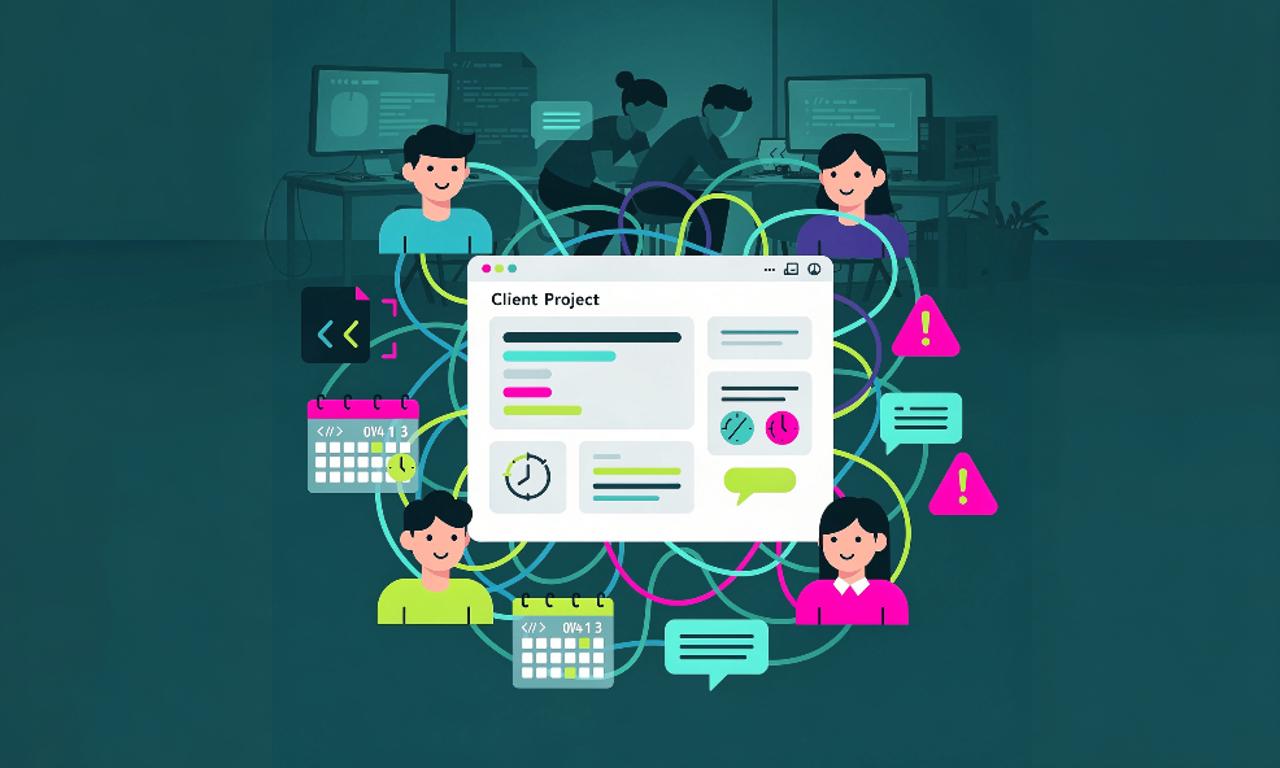
Most agencies don’t lose clients because they lack talent. They lose them because delivery becomes unpredictable. And one of the fastest ways that happens is overreliance on freelance developers for core client work.
On the surface, freelancers feel like the perfect solution. Lower cost. Faster onboarding. Flexible scaling. But after working with agencies across multiple markets and growth stages, one pattern keeps repeating:
Freelance dependency doesn’t break projects immediately. It breaks them under pressure. And by the time that pressure shows up, deadlines, revisions, and client expectations, the damage is already in motion.
Why Agencies Rely on Freelancers And Why It Feels Right
There’s a reason this model is so common.
Freelancers offer:
- Immediate capacity
- Specialized skills
- No long-term commitment
- Lower perceived risk
In the early stages, this works. A project comes in → assign → deliver → done.
But agency delivery isn’t linear. It evolves. Clients change direction. Scope expands. Timelines tighten. Feedback loops get messy. And that’s where the model starts to fail, not because freelancers are bad, but because the system isn’t built for complexity.
The Real Problem: Freelancers Solve Tasks — Not Delivery Systems
This is the core misunderstanding. Freelancers are optimized for:
- Completing defined tasks
- Delivering isolated outputs
Agencies are judged on:
- Consistency
- Responsiveness
- Ownership
- Long-term reliability
Those are fundamentally different models. And when agencies try to scale using a task-based structure for system-level delivery, friction is inevitable.

Risk 1: Fragmented Ownership
Everything works fine… until something breaks.
Then the questions start:
- Who owns the architecture?
- Who made that decision?
- Why was this implemented this way?
- Who fixes this now?
When multiple freelancers touch a project over time, ownership disappears. And when ownership disappears, accountability follows.
Your client doesn’t care who built what. They care that it works.
Risk 2: Knowledge Walk-Out (The Invisible Cost)
Freelancers don’t just leave. They take context with them.
That includes:
- Architecture decisions
- Integration logic
- Workarounds
- Assumptions
- Client-specific nuances
The code remains. The understanding doesn’t. And that creates a dangerous situation:
You own the product, but not the knowledge behind it. When a client asks for updates later, your team is forced to reverse-engineer instead of build forward. That’s where timelines stretch and trust starts eroding.
Risk 3: Communication Drag (Where Projects Slow Down)
Freelancers are output-focused. Agencies are communication-driven.
That gap creates friction in:
- Feedback loops
- Revisions
- Urgency handling
- Timezone alignment
- Real-time collaboration
The result isn’t immediate failure. It’s a slower delivery. Less clarity. More back-and-forth.
And eventually, Client confidence starts dropping.
Risk 4: Inconsistent Quality = Inconsistent Brand
Different freelancers bring different:
- Coding standards
- Testing discipline
- Documentation habits
- Attention to detail
Individually, each may be acceptable. Collectively, it creates inconsistency. And here’s the key truth: Clients don’t evaluate developers. They evaluate your agency.
One inconsistent experience is enough to damage perception.
Risk 5: Security & Access Exposure
Every freelancer you onboard increases your exposure:
- Codebase access
- API keys
- Client data
- Infrastructure permissions
Without structured control, this becomes a growing risk surface. And the stakes are real.
IBM reports that the global average cost of a data breach has reached millions of dollars, with recent figures around $4.88 million per breach. This isn’t theoretical. It’s operational risk.
Risk 6: Scalability Breaks Exactly When You Need It Most
Freelancers scale individually. Agencies need to scale structurally.
When you land a bigger client or project:
- You need more developers
- Faster onboarding
- Aligned processes
- Coordinated delivery
Freelancers can’t scale like a system. And that’s when agencies hit a ceiling. Not because demand is low. But because delivery can’t keep up.
What This Looks Like in Real Life?
This is how it usually unfolds:
- Projects start strong
- Small delays begin appearing
- Knowledge gaps slow down updates
- Communication becomes reactive
- Clients start asking more questions
- Teams start firefighting
Nothing breaks at once. But everything starts weakening.
And eventually, Delivery becomes stressful instead of scalable.
When Freelancers Actually Make Sense
To be clear, freelancers are not the enemy. They work well when:
- Scope is clearly defined
- Tasks are isolated
- Dependencies are minimal
- Risk is low
- Internal team owns the system
The mistake is using freelancers as the foundation of delivery.
The Real Shift: From Resource-Based Thinking to System-Based Thinking
The agencies that scale successfully don’t just hire more people. They build better systems.
That means:
- Shared documentation
- Consistent teams
- Defined workflows
- Accountability structures
- Long-term knowledge retention
Because at scale, the question isn’t: Can this get done?
It’s: Can this be done consistently under pressure?
The Better Alternative: A Dedicated Development Partner
The goal isn’t to eliminate flexibility. It’s to stabilize delivery. That’s where structured development partnerships come in.
Instead of:
- Rotating freelancers
- Fragmented ownership
- Reactive delivery
You get:
- Consistent team continuity
- Shared context across projects
- SLA-backed accountability
- Scalable capacity on demand
- Aligned communication workflows
In real-world implementations, centralized platforms and structured teams consistently outperform fragmented setups.
Systems like CRM Runner and Vida Dynamics Projects were specifically designed to eliminate operational fragmentation and unify delivery under one cohesive structure, not scattered contributors.
The Strategic Reality Most Agencies Realize Too Late
Freelancers don’t break agencies. Unstructured delivery models do.
Freelancers simply expose the weakness faster. And the longer an agency operates without a stable delivery system, the harder scaling becomes.
Final Thought
Relying on freelancers for core agency work may seem like a cost-effective solution, but it often leads to unpredictable delivery, fragmented ownership, and missed growth opportunities.
To scale efficiently and ensure long-term success, agencies need a reliable development partner that provides consistent teams, accountability, and seamless communication. Don’t let delivery gaps hold your agency back. Partner with Mediusware and scale with confidence.
Ready to Build a Scalable, Reliable Delivery System? Book a free consultation with us today and discover how Mediusware can help you scale your agency's development without the risks of freelancers.
Frequently Asked Questions
The biggest risk is a lack of continuity. Freelancers may deliver tasks, but they don’t own the long-term system. When they leave, they take context, decisions, and undocumented knowledge with them. This creates delays, rework, and ultimately affects client trust.

I work with founders and leadership teams when growth moves faster than their systems, teams, or decisions. I’ve led 850+ projects for 750+ clients across 20+ countries, working across 100+ technologies and counting. I care about ownership, clarity, and building things that last beyond the launch.
Featureblogs
Relatedblogs
01
Integrating Redux with React: A Comprehensive Guide02
Laravel pagination and filtering with already loaded data as array in memory03
React + Three.js + React Three Fiber: Crafting Interactive 3D views in Web Applications04
Advanced Caching Strategies for Django Applications05
Implementing Roles and Permissions in Laravel Using Guard-LaravelAuthorblogs
01
SaaS MVP Development: A Founder’s Guide for 202702
Zero Clicks, Falling Traffic: How to Win Back Revenue03
Ranking on Google in 2026: What Matters in the Age of AI Search04
How to Choose an API Development Company for Your SaaS Product05
Why Software Companies Are Turning to Strategic Partnerships for Faster Growth