-
Improve performance with low-level caching for expensive database queries.
-
Use Redis for distributed caching across multiple servers to ensure consistency.
-
Implement fragment caching for faster rendering of complex sections.
-
Manage cache invalidation to prevent serving stale data.
Advanced Caching Strategies for Django Applications
10 min read
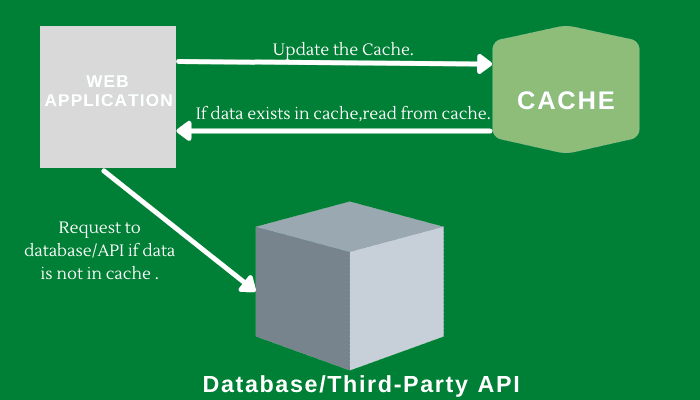
In high-traffic web applications, performance is key. One of the most effective ways to improve performance in Django applications is through caching. While Django offers built-in caching tools, advanced caching strategies allow developers to scale applications and handle complex scenarios more efficiently. In this blog, we will dive into advanced caching techniques that can significantly reduce database load and improve response times.
1. Low-Level Caching
Low-level caching in Django gives you direct control over what you want to cache and for how long. Instead of caching entire views or templates, you can cache individual results of expensive database queries or computations.
Example:
data = cache.get('expensive_data_key')
if not data:
    # If not in cache, perform the expensive operation
    data = perform_expensive_operation()
    # Cache the result for future requests
    cache.set('expensive_data_key', data, timeout=3600)  # Cache for 1 hour
In this example, if the data isn't cached, it will perform the expensive operation and then cache the result for 1 hour. This way, subsequent requests within the hour retrieve the cached result rather than recomputing.
2. Distributed Caching with Redis
Distributed caching is essential when you scale your Django application across multiple servers. Instead of each server having its own cache, using a distributed cache backend like Redis allows all instances of your application to share the same cache. This not only improves performance but also ensures cache consistency across servers.
Why Redis?
Redis is a fast, in-memory key-value store that supports a variety of data structures. It is commonly used for distributed caching because it offers persistence and can handle high request rates.
Setting up Redis in Django:
-
Install the
django-redispackage by running:pip install django-redis - Configure your Django project to use Redis as the cache backend. In the settings file, add the following configuration:
CACHES = {
    'default': {
        'BACKEND': 'django_redis.cache.RedisCache',
        'LOCATION': 'redis://127.0.0.1:6379/1',
        'OPTIONS': {
            'CLIENT_CLASS': 'django_redis.client.DefaultClient',
        }
    }
}
By using Redis, multiple instances of your Django app can access the same cache, improving consistency and performance in a distributed environment.
3. Fragment Caching in Templates
Fragment caching is beneficial when only certain sections of a web page take significant time to render, allowing you to cache just those parts to improve performance.
Example:
{% load cache %}
{% cache 3600 sidebar %}
    <!-- Expensive sidebar rendering logic here -->
{% endcache %}
In this example, the block inside the {% cache %} tag is cached for 500 seconds. This is particularly useful for parts of your page that don’t change frequently, such as sidebars or footers.
4. Cache Invalidation Strategies
Caching can lead to stale data if not managed properly, which is why cache invalidation is important. Cache invalidation ensures that outdated content is removed from the cache when the underlying data changes. There are several ways to manage cache invalidation:
- Time-based expiration: Set a timeout (TTL) for cache entries.
- Manual invalidation: Explicitly delete cache entries when data is updated.
- Cache versioning: Use version numbers to manage cache freshness.
Expiry Time (TTL):
Each cache entry can have a timeout (TTL – Time to Live) that defines how long it should remain in the cache. This ensures that outdated data automatically expires.
Manual Invalidation:
You can manually clear cache entries when data is updated.
Example of manual cache invalidation:
# Clear cache for a specific key when data changes
cache.delete('expensive_data_key')
This ensures that the cache entry is cleared whenever the data changes, forcing the application to fetch fresh data.
Cache Versioning:
For complex applications where data structures change often, you can version your cache keys. By appending a version number to the cache key, you can avoid serving old data without having to manually invalidate every key.
Example of cache versioning:
cache.set('product_v1', product_data, timeout=3600)
When the data structure changes, simply update the key to product_v2, and the old cache will automatically be ignored.
5. Cache Throttling for Rate-Limiting
For rate-limiting user actions (like login attempts or API requests), caching can be used to throttle users based on predefined limits.
Example:
from django.core.cache import cache

def throttle_user_action(user):
    cache_key = f"user_{user.id}_actions"
    action_count = cache.get(cache_key, 0)

    if action_count > 10:
        raise Exception("Too many actions, try again later.")

    # Increment the user's action count
    cache.set(cache_key, action_count + 1, timeout=60)  # Cache count for 1 minute
In this example, the user’s action count is cached and incremented on each action. If they exceed the allowed limit (e.g., 10 actions per minute), an exception is raised.
6. Session Caching
Caching session data can be a huge performance boost for applications with a high volume of authenticated users. By default, Django stores session data in the database, but you can configure Django to store sessions in the cache to reduce database load. For high-traffic applications, this is a great way to improve performance.
Example:
SESSION_ENGINE = 'django.contrib.sessions.backends.cache'
SESSION_CACHE_ALIAS = 'default'
By using the cache backend for sessions, you ensure fast retrieval of session data, which is especially useful for applications where users are constantly authenticated.
7. Queryset Caching for Expensive Queries
For database-heavy Django applications, caching entire querysets is crucial. Querysets that involve complex joins or aggregations can be cached to avoid repetitive database hits.
Example:
def get_expensive_queryset():
    cache_key = 'expensive_queryset_key'
    queryset = cache.get(cache_key)

    if not queryset:
        queryset = MyModel.objects.filter(large_filter_criteria).select_related('related_model')
        cache.set(cache_key, queryset, timeout=86400)  # Cache for 1 day

    return queryset
By caching the queryset, we prevent the database from executing the same query multiple times for each user request. This method is especially useful for queries that don’t change often.
8. Django View Caching with Varying Parameters
If your view’s response depends on URL parameters or query strings (e.g., search results or filtered content), you can use Django’s vary_on mechanism to cache different responses for different parameters.
Example:
from django.views.decorators.cache import cache_page
from django.views.decorators.vary import vary_on_headers

@cache_page(60 * 15)  # Cache for 15 minutes
@vary_on_headers('User-Agent')  # Cache different versions based on the user agent
def my_view(request):
    ...
This allows you to cache multiple versions of a view for different user agents, ensuring users with different browsers or devices get cached responses tailored to their setup.
Final Thoughts
Django's advanced caching techniques enable developers to optimize complex queries, reduce database load, and enhance the scalability of their applications. Techniques such as low-level caching, distributed caching with Redis, template fragment caching, and proper cache invalidation allow you to maintain high performance even under heavy traffic while keeping response times low.
By thoughtfully implementing these techniques and keeping your cache up-to-date, your Django application can scale efficiently while providing a smooth user experience.
Frequently Asked Questions
Low-level caching in Django gives developers direct control over caching specific data, such as expensive database queries or computations. Instead of caching entire views or templates, you can cache arbitrary data using cache keys. This is useful for situations where certain calculations or queries are needed across multiple views or requests.

I work at the point where product decisions, system architecture, and engineering execution meet. At Mediusware, I’m accountable for how technology choices affect reliability, scale, and long-term delivery for our clients.
Featureblogs
01
C# vs. Java: Key Differences, Advantages, and Future Prospects02
Why Software Companies Are Turning to Strategic Partnerships for Faster Growth03
Top 8 Python GUI Frameworks for Developers04
12 Best AI Tools to Outperform ChatGPT05
Haptic Feedback: Why Touch is Becoming the Most Powerful Experience in Tech01
C# vs. Java: Key Differences, Advantages, and Future Prospects02
Why Software Companies Are Turning to Strategic Partnerships for Faster Growth03
Top 8 Python GUI Frameworks for Developers04
12 Best AI Tools to Outperform ChatGPT05
Haptic Feedback: Why Touch is Becoming the Most Powerful Experience in TechRelatedblogs
01
Integrating Redux with React: A Comprehensive Guide02
Laravel pagination and filtering with already loaded data as array in memory03
React + Three.js + React Three Fiber: Crafting Interactive 3D views in Web Applications04
Implementing Roles and Permissions in Laravel Using Guard-Laravel05
Building a Fast, Typo-Tolerant Search Engine in Python with TypesenseAuthorblogs
01
How Digital Agencies Can Deliver Custom Software Without Hiring Developers02
AI in FinTech: Build, Buy, or Integrate? A Founder's Decision Framework03
How to Choose a SaaS MVP Development Company04
How Seed-Stage SaaS Teams Add Engineering Capacity Without Hiring Chaos05
Why Seed-Stage SaaS Startups Struggle to Ship Fast