- Efficient, smaller teams help startups scale sustainably in high-cost environments.
- Smart engineering and automation increase output without increasing headcount.
Why High Inflation Is Changing How Startups Build Teams
1 min read
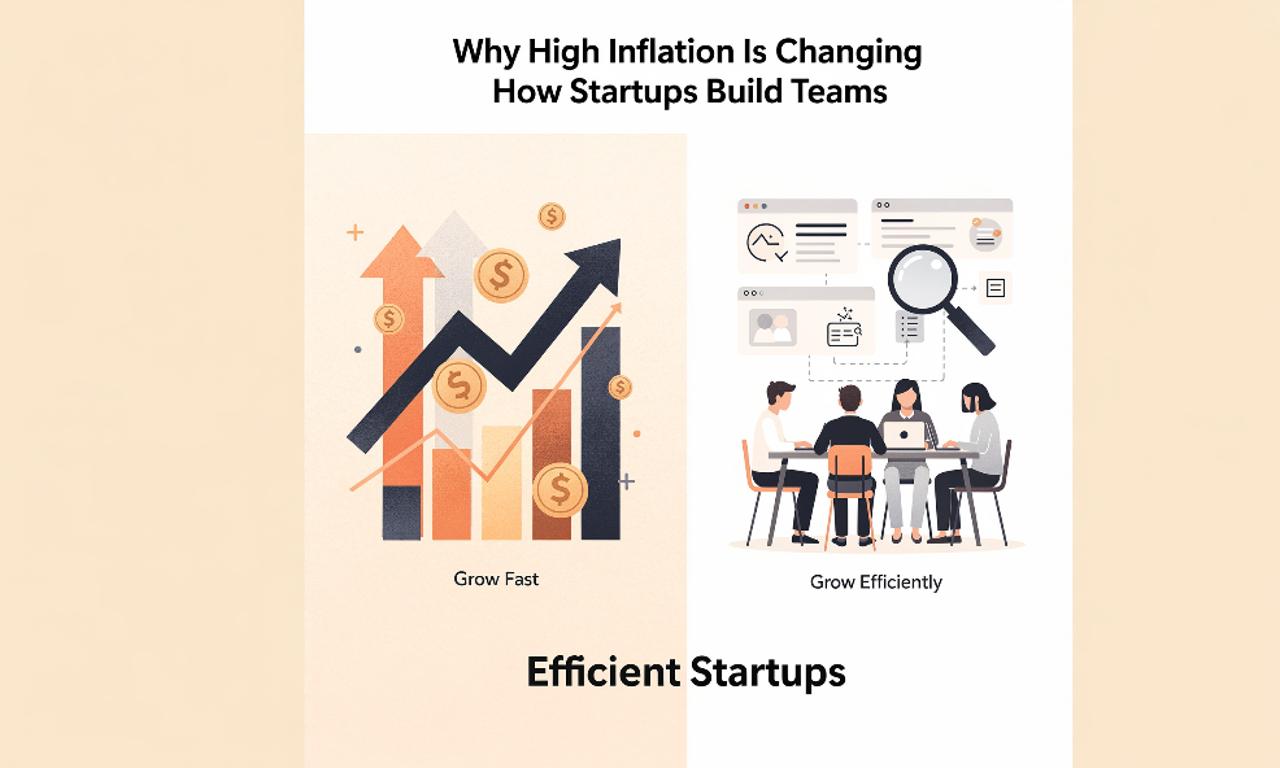
Most startups don’t break because of bad ideas.
They break because their cost structure grows faster than their output.
That gap is easy to ignore when capital is cheap.
But in a high-inflation environment, it becomes impossible to hide.
Over the last few years, I’ve seen a clear shift:
Startups are no longer asking,
How fast can we grow?
They’re asking,
How efficiently can we survive and grow?
And that shift is quietly rewriting how teams are built.
The Real Problem: Inflation Doesn’t Just Raise Costs, It Exposes Weak Systems
Inflation is often framed as a pricing problem.
It’s not.
It’s a pressure multiplier.
Everything becomes more expensive at the same time:
- Hiring
- Infrastructure
- Marketing
- Operations
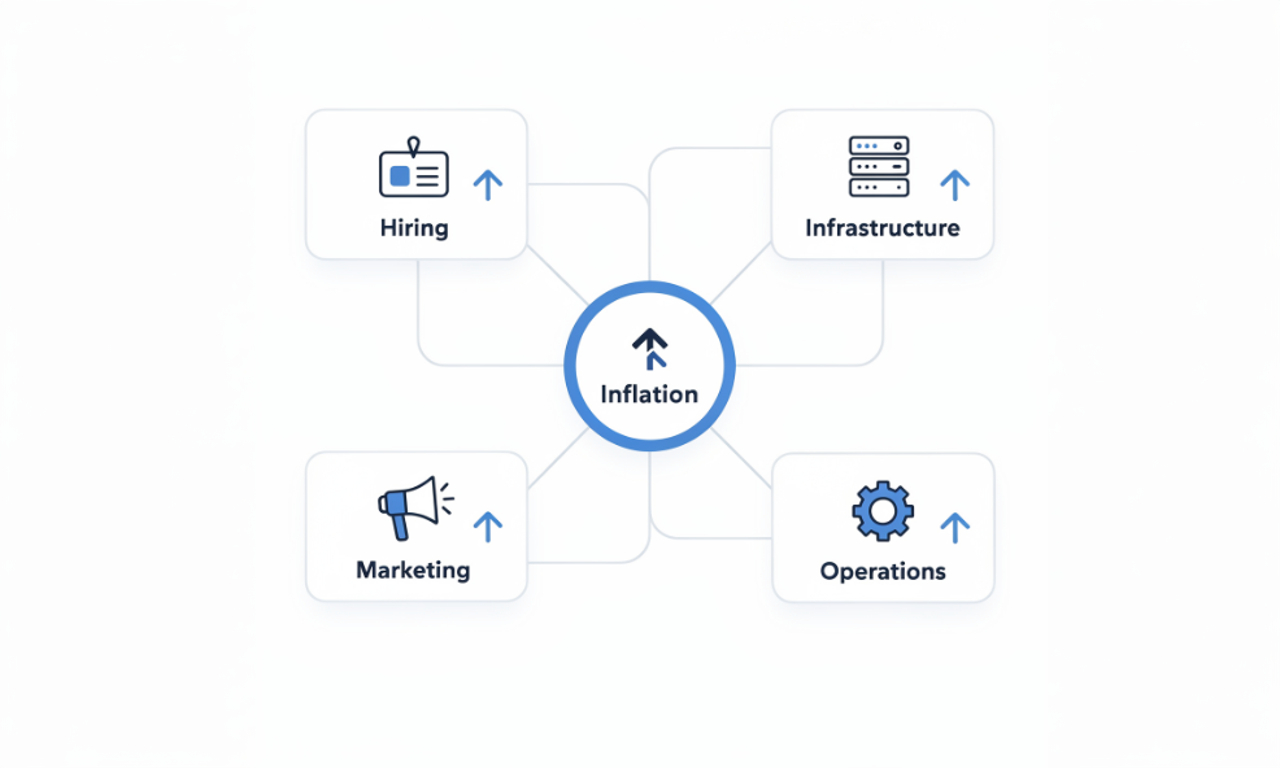
And when all of those rise together, weak systems start breaking.
According to the World Bank, Inflation has remained elevated globally in recent years, increasing operational pressure across startups and growth-stage companies.
This is where most startups get it wrong.
They assume growth will fix inefficiency.
In reality, inflation punishes inefficiency faster.
If you’ve ever seen engineering teams slow down as they grow, this pattern becomes even clearer when you look at how teams scale without the right systems in place.
Where Startups Feel the Pressure First
From what I’ve seen, the impact shows up in three predictable places.
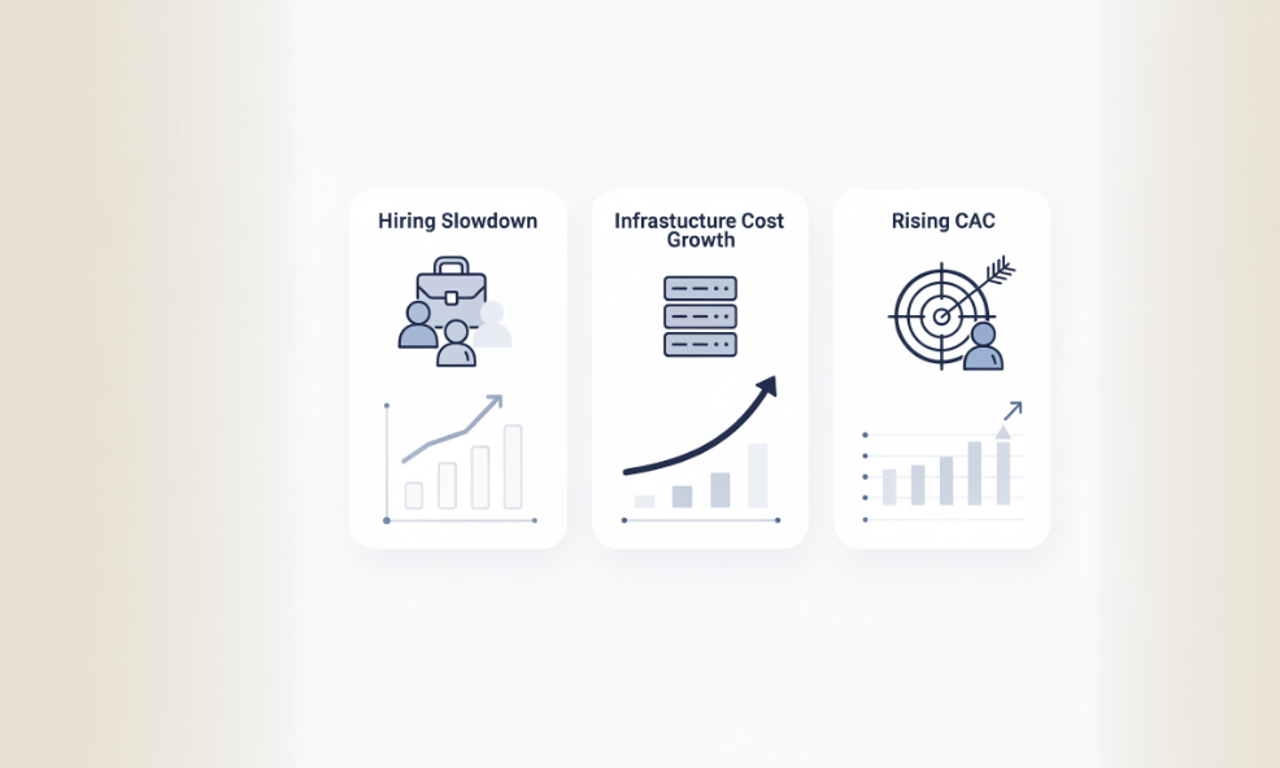
1. Hiring Slows Down Before Growth Does
Hiring used to be the default solution.
More work → hire more engineers.
But now:
- Salaries are higher
- Hiring cycles are longer
- Retention is harder
So instead of accelerating growth, hiring starts delaying it.
This creates a silent bottleneck most founders don’t immediately notice.
2. Infrastructure Costs Scale Without Permission
Cloud costs don’t spike overnight.
They creep.
Then compound.
Without strong architecture:
- Unused resources stay active
- Systems are overbuilt
- Costs grow faster than revenue
This is where many startups lose control, not because of traffic, but because of inefficiency.
3. Customer Acquisition Becomes Less Predictable
When inflation rises, everyone tightens budgets.
That affects you indirectly:
- Ads cost more
- Conversion rates drop
- CAC increases
So startups are forced into a tougher game:
Spend more → for the same result.
That’s when growth strategies start breaking.
The Shift: From Scaling Teams → Scaling Output
This is the real transition happening right now.
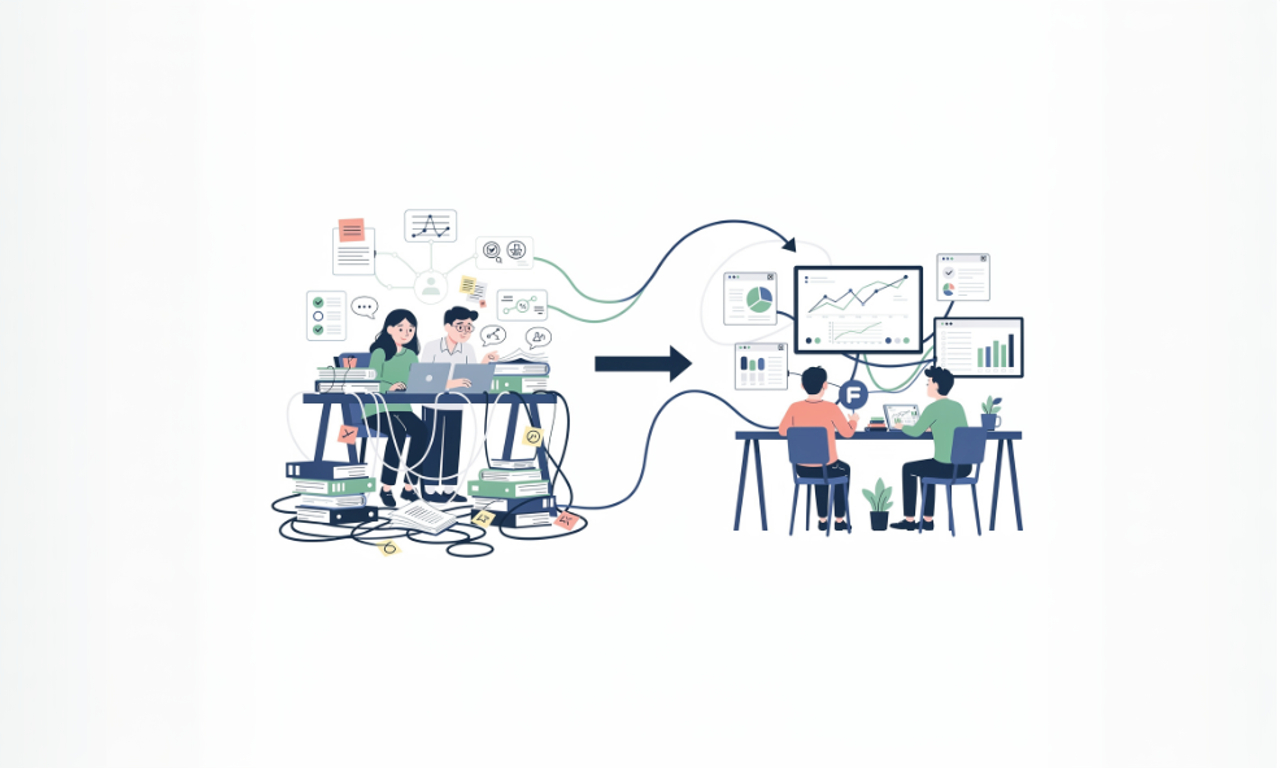
Smart startups are not asking:
How do we build bigger teams?
They’re asking:
How do we get more output from fewer people?
This is a fundamental mindset shift.
And it changes everything.
What Efficient Startups Are Doing Differently
1. Smaller Teams, Higher Impact
Instead of large teams with average output, they build:
- Lean teams (5–8 engineers)
- High ownership
- Faster decisions
Why it works:
- Less coordination overhead
- Clear accountability
- Faster execution cycles
2. AI and Automation as Force Multipliers
Automation is no longer optional.
It’s leverage.
Teams are using AI to:
- Reduce repetitive tasks
- Assist development
- Speed up delivery
The result isn’t just cost savings.
It’s output expansion without headcount expansion.
3. Engineering Efficiency Over Headcount
This is where most startups still struggle.
Old thinking:
How many developers do we need?
New thinking:
How efficient is our system?
Efficient teams focus on:
- Clean architecture
- Scalable systems
- Maintainable code
Because inefficient systems scale problems, not progress.
4. Flexible Team Structures (Instead of Fixed Costs)
This is one of the biggest shifts.
Instead of committing to full-time hiring, startups are:
- Extending teams with external experts
- Using dedicated developers
- Scaling capacity when needed
This reduces:
- Long-term cost risk
- Hiring delays
- Management overhead
And increases adaptability.
What This Means for Founders
If you’re building right now, this is the reality:
You don’t need a bigger team.
You need a better system.
Focus on:
- Output per engineer
- System scalability
- Operational efficiency
Because growth today is no longer about speed alone.
It’s about controlled, sustainable speed.
A Smarter Way to Scale Without Increasing Risk
If you’re feeling pressure from rising costs, you’re not alone.
But the solution isn’t to slow down.
It’s to remove inefficiencies from how you scale.
This is exactly where we see startups struggle and where structured engineering systems make the biggest difference.
At Mediusware, we work with teams that are already growing but starting to feel these constraints.
Whether it’s:
- Improving architecture
- Extending teams without hiring delays
- Increasing development velocity
The goal is simple:
Help startups grow efficiently, not just aggressively.
If you’re starting to notice these pressure points, it’s worth taking a step back and looking at how your current team is structured and where inefficiency is quietly holding you back.
Frequently Asked Questions
It increases salary expectations and slows hiring cycles, making scaling teams more expensive and time-consuming.

I work with founders and leadership teams when growth moves faster than their systems, teams, or decisions. I’ve led 850+ projects for 750+ clients across 20+ countries, working across 100+ technologies and counting. I care about ownership, clarity, and building things that last beyond the launch.
Featureblogs
Relatedblogs
01
Integrating Redux with React: A Comprehensive Guide02
Laravel pagination and filtering with already loaded data as array in memory03
React + Three.js + React Three Fiber: Crafting Interactive 3D views in Web Applications04
Advanced Caching Strategies for Django Applications05
Implementing Roles and Permissions in Laravel Using Guard-LaravelAuthorblogs
01
Building a Financial SaaS Around Real Business Cash Decisions02
Critical PHP Security Update (October 2026): What SaaS Owners Must Check Now03
SaaS MVP Development: A Founder’s Guide for 202704
Zero Clicks, Falling Traffic: How to Win Back Revenue05
Ranking on Google in 2026: What Matters in the Age of AI Search