- Enterprise voice agents enable automated 24/7 customer conversations at scale.
- Voice AI combines speech recognition, NLP, and enterprise systems for intelligent automation.
The Future of CRM: Implementing Artificial Intelligence in Sales and Marketing
1 min read
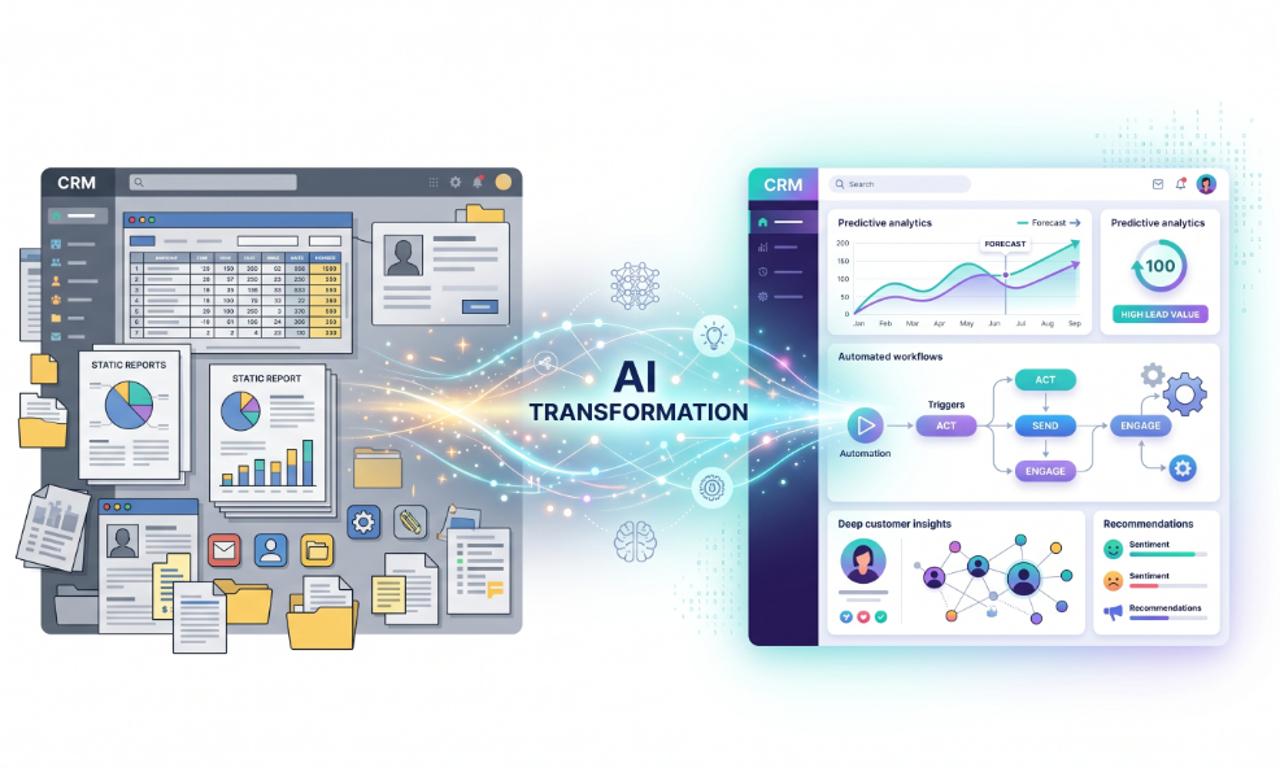
Customer relationships used to be manageable.
A spreadsheet.
A few follow-ups.
Some intuition.
That system breaks the moment you scale.
Today, customers interact across dozens of touchpoints: email, ads, chat, product usage, and behavior you don’t even directly see.
And here’s the real issue:
Most companies have more data than ever…
But less clarity than they think.
That’s why CRM is evolving.
From storage → to intelligence.
Why Traditional CRM Systems Are No Longer Enough
Most CRM platforms were built to record information.
Not to understand it.
Here's why:
1. Data Without Insight
Businesses collect massive amounts of customer data.
But extracting patterns manually is slow and often incomplete.
According to McKinsey,
companies that use customer data effectively can generate up to 40% more revenue from personalization.
Without AI, that opportunity stays locked.
2. Reactive Sales Cycles
Traditional CRM shows history.
AI shows intent.
Without predictive insight, sales teams react late, after competitors have already engaged.
3. Generic Marketing
Customers expect relevance.
Yet many campaigns still follow:
One message → mass distribution.
A study by Accenture found that 91% of consumers prefer brands that deliver personalized experiences.
This gap is where most conversions are lost.
How AI Is Reshaping CRM Systems
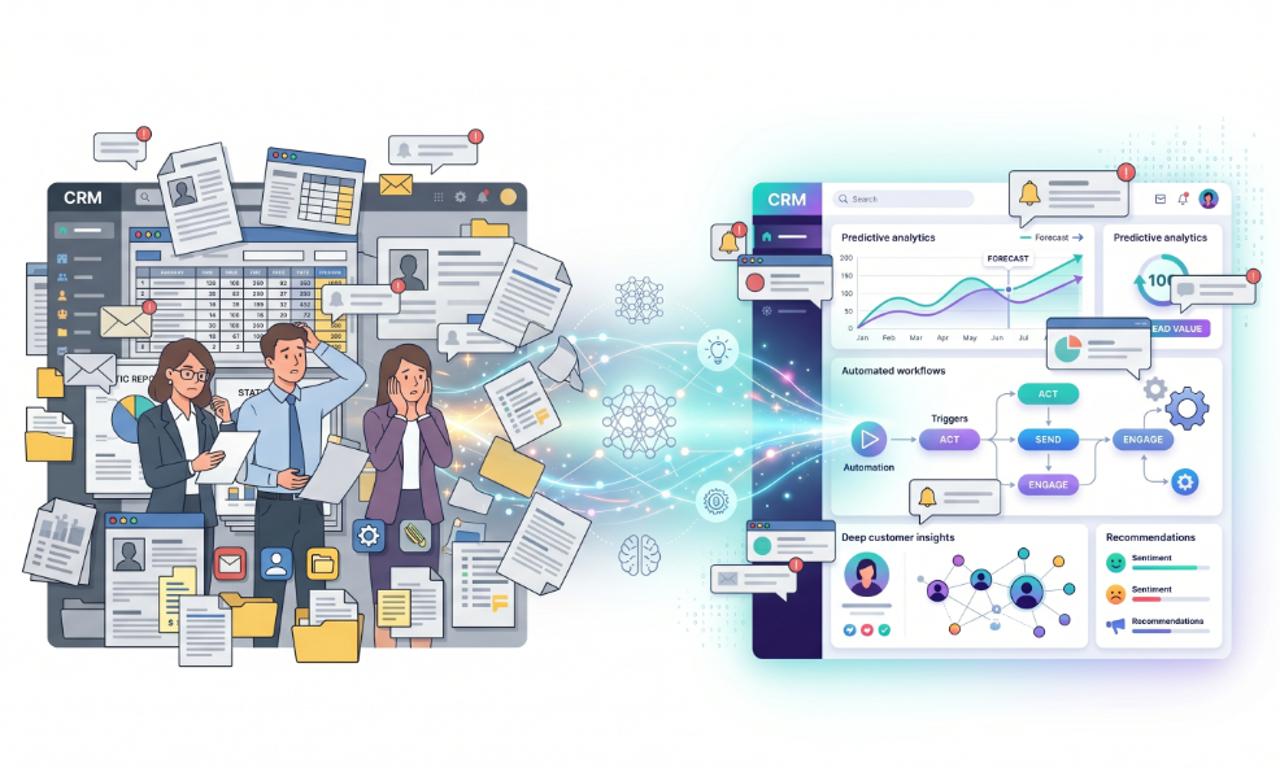
AI introduces intelligence across the entire customer lifecycle.
Here's how:
1. Predictive Sales Intelligence
AI evaluates:
- Website behavior
- Email engagement
- Purchase signals
- Product usage
And identifies which leads are most likely to convert.
Instead of chasing every lead, teams focus on the right ones.
2. Automated Customer Insights
AI processes millions of interactions instantly.
It answers questions like:
- Why are customers leaving?
- What drives retention?
- Which messaging performs best?
According to Harvard Business Review,
AI-driven analytics can improve customer retention by up to 25%.
3. Intelligent Personalization
This is where the real shift happens.
AI enables:
- Dynamic recommendations
- Personalized messaging
- Behavior-driven campaigns
4. Conversational AI Integration
Modern CRM systems now include AI assistants.
They can:
- Qualify leads
- Answer queries
- Book meetings
- Route conversations
5. Sales Process Automation
Sales reps spend a surprising amount of time on admin work.
AI reduces that by automating:
- Lead scoring
- Follow-ups
- Data entry
- Pipeline forecasting
Result?
More time for actual selling.
Real-World Example: AI-Powered CRM Platforms
We’ve seen this shift firsthand.
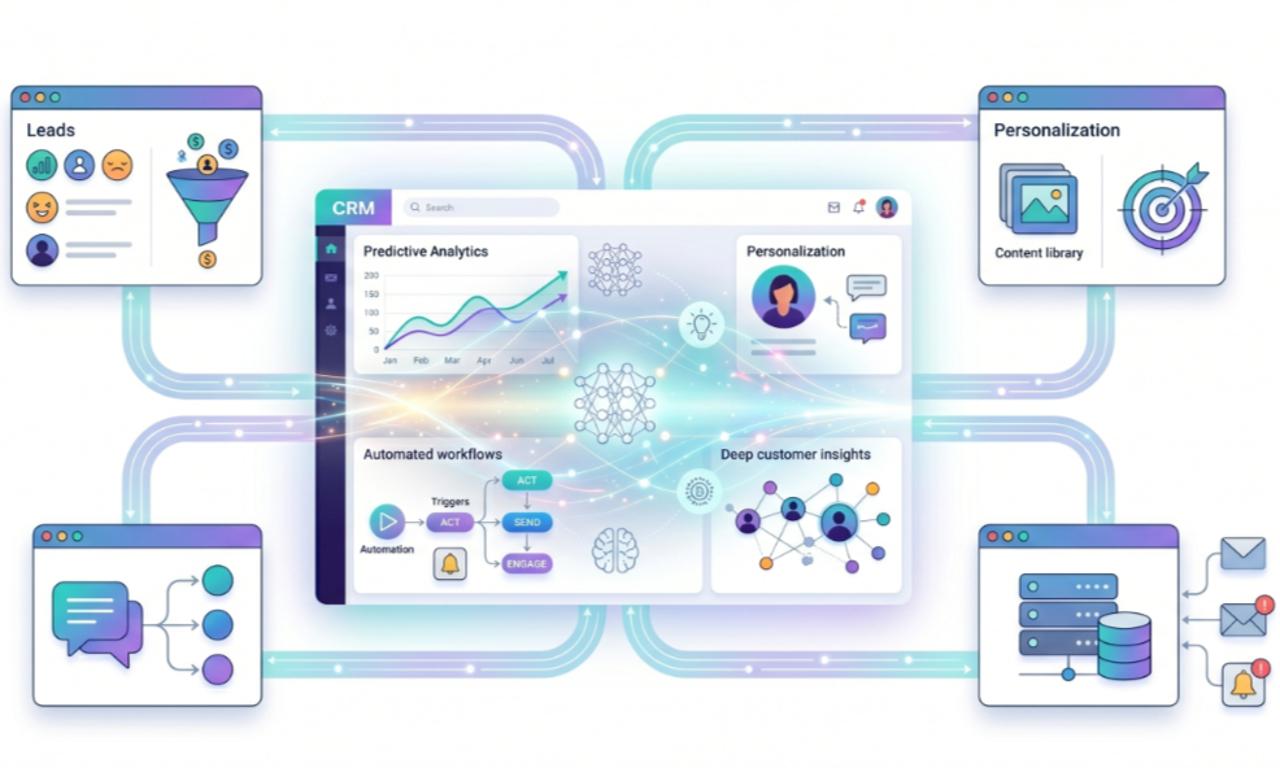
Platforms like CRM Runner, developed by Mediusware, bring CRM, sales tracking, and automation into a single unified system.
Instead of switching tools, teams operate from one dashboard, with real-time insights driving decisions.
This reduces friction and speeds up execution across teams.
Key Benefits of AI-Powered CRM
When implemented correctly, the impact is measurable.
- Higher conversion rates (better timing + prioritization)
- Improved retention (early churn detection)
- Operational efficiency (less manual work)
- Smarter decisions (real-time insights)
Challenges to Consider
AI in CRM is powerful, but not plug-and-play.
1. Data Quality
AI depends on clean, structured data.
Bad data → bad decisions.
2. Integration Complexity
Disconnected tools limit AI effectiveness.
Your CRM must connect across marketing, sales, and support.
3. Change Management
Teams must adapt to new workflows.
Without adoption, even the best system fails.
The Future of CRM: From Storage to Intelligence
CRM is no longer just a database.
It’s becoming a system that:
- Predicts customer behavior
- Suggests next actions
- Automates decisions
As Satya Nadella said:
Every company is becoming a data company, and AI is the engine that turns that data into intelligence.
Companies that adopt this early will have a structural advantage.
Not just a technical one.
Final Thoughts
Most companies don’t struggle because they lack data.
They struggle because they can’t act on it fast enough.
AI fixes that.
It transforms CRM from passive tracking → to active decision-making.
And once that shift happens:
Everything improves.
Sales.
Marketing.
Customer experience.
Frequently Asked Questions
AI-powered CRM uses artificial intelligence to analyze customer data, automate workflows, predict behavior, and personalize sales and marketing interactions.

I work with founders and leadership teams when growth moves faster than their systems, teams, or decisions. I’ve led 850+ projects for 750+ clients across 20+ countries, working across 100+ technologies and counting. I care about ownership, clarity, and building things that last beyond the launch.
Featureblogs
Relatedblogs
Authorblogs
01
SaaS MVP Development: A Founder’s Guide for 202702
Zero Clicks, Falling Traffic: How to Win Back Revenue03
Ranking on Google in 2026: What Matters in the Age of AI Search04
How to Choose an API Development Company for Your SaaS Product05
Why Software Companies Are Turning to Strategic Partnerships for Faster Growth