-
RPO can streamline your hiring process, cutting costs and reducing time-to-hire.
-
Partnering with an RPO provider can help businesses scale recruitment based on fluctuating needs.
-
Full-cycle, partial-cycle, and AI-driven RPO services cater to different business requirements.
-
A strategic RPO partner can improve candidate quality while ensuring cultural fit.
Choosing the Right RPO for Your Hiring Needs
1 min read
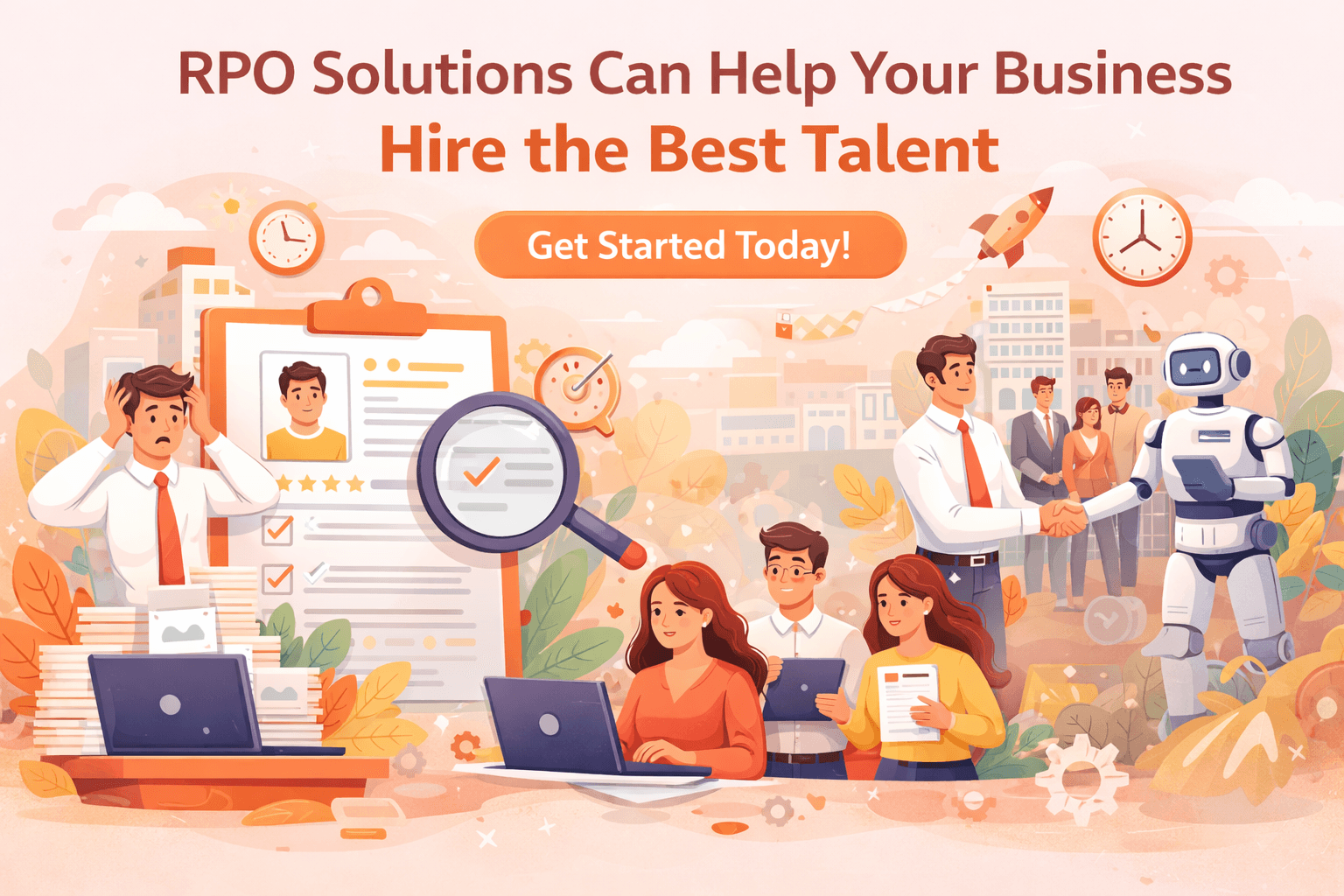
You’ve been trying to fill a key role for weeks. But no matter how many resumes you go through, the right person just doesn’t seem to appear. Your team is getting overwhelmed, and deadlines are slipping. The longer the position stays open, the harder it is to keep things running smoothly.
It’s frustrating. And it’s a problem that many businesses face. Hiring can be slow, expensive, and stressful, especially when you don’t have the right resources or support.
But there’s a solution. Recruitment Process Outsourcing (RPO) can help you speed up the hiring process, reduce costs, and bring in the right talent. With an RPO partner, you can take the pressure off your team and get the help you need to hire the best people, faster.
In this guide, we’ll show you how RPO works and why it’s the smart choice for businesses looking to improve their hiring process.

The Benefits of Using RPO for Your Hiring Process
When it comes to hiring, every business wants to make the right decision—quickly, efficiently, and cost-effectively. But let's face it, recruitment can be overwhelming. Endless resumes, countless interviews, and the pressure to find the best talent before your competitors do. So, what if you could streamline this process and make it work for you instead of against you?
Here’s how Recruitment Process Outsourcing (RPO) can help your business overcome common hiring challenges and improve the overall process:
1. Cost Savings
Recruiting is an expensive and time-consuming process. The cost of hiring the wrong candidate can be steep—not just financially, but in terms of productivity and team morale. On average, it costs companies around $4,683 to hire a new employee, and this number can increase significantly for executive roles.
RPO providers help reduce these costs by speeding up the hiring process and providing access to a pool of pre-vetted candidates. Instead of spending time and money on job postings, background checks, and sourcing talent, RPO companies take these tasks off your plate, allowing you to focus on scaling your business.
2. Faster Time-to-Hire
The longer a role stays open, the more it impacts your business. Deadlines slip, existing employees become overburdened, and team productivity declines. With an RPO provider, you can significantly reduce time-to-hire by tapping into their network of ready candidates, using their efficient hiring processes, and leveraging their recruitment technology.
The best RPO companies can fill positions in as little as 20 days, compared to the industry average of 30-40 days. This speed helps ensure that your business keeps running smoothly, without delays that impact your bottom line.
3. Scalability and Flexibility
Your hiring needs aren’t always predictable. You might need to fill one position today and 20 positions next month. With an RPO provider, you get the flexibility to scale your recruitment efforts according to your needs. Whether you're hiring for a temporary project or planning long-term growth, RPO services can adapt to any situation without the cost of maintaining an in-house recruitment team.
This flexibility is especially valuable in industries with fluctuating demand or during periods of rapid expansion, as you can adjust your recruitment process based on your current goals.
4. Improved Quality of Hires
The goal of any recruitment process is to find the right fit—someone who not only has the skills but also aligns with your company culture. An RPO provider has experience sourcing high-quality candidates and a deep understanding of what makes a successful hire for your business.
With access to advanced screening tools, extensive candidate pools, and specialized recruitment expertise, RPO companies are able to match candidates to roles with precision. This leads to better long-term hires who are more likely to stay and succeed in the role, reducing turnover and ensuring stability within your teams.
5. Access to Advanced Recruitment Technology
RPO providers are equipped with state-of-the-art technology that can automate time-consuming tasks like candidate screening and data analysis. This helps improve the efficiency of your hiring process while providing valuable insights into your talent pool.
With AI-driven tools, applicant tracking systems (ATS), and predictive analytics, RPO companies ensure that you are hiring with the most up-to-date and effective recruitment technology available. This is especially important in today’s fast-paced business environment, where technology is reshaping the way we work and hire.
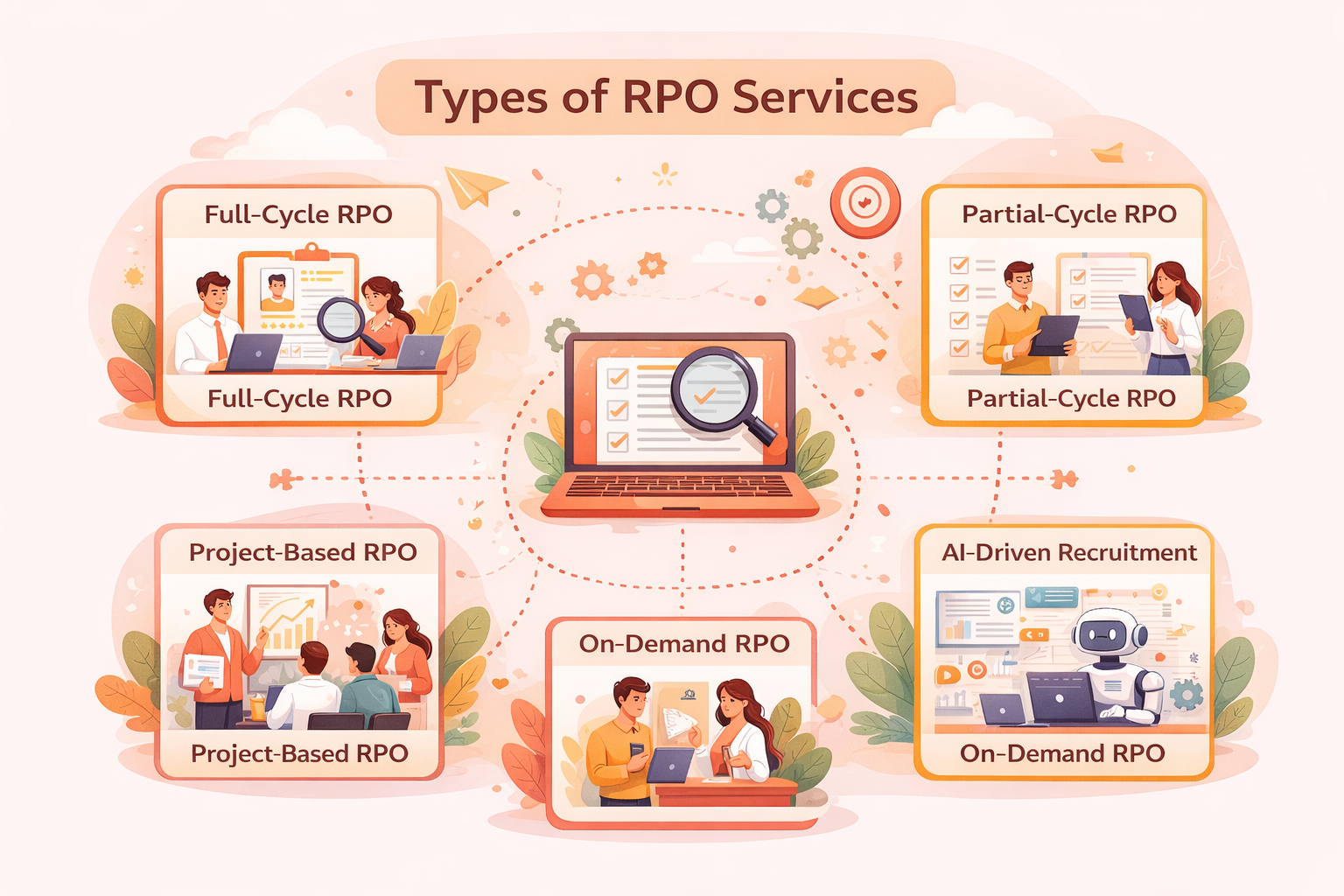
Types of RPO Services
Not all businesses have the same hiring needs. Some may need help with specific parts of the recruitment process, while others might prefer a complete end-to-end solution. RPO providers offer a range of services that can be customized to meet your specific requirements. Let’s break down the most common types of RPO services to help you understand which one might be right for your business:
1. Full-Cycle RPO
Full-cycle RPO is the most comprehensive service. With this option, the RPO provider takes care of the entire recruitment process from start to finish. This includes everything from job postings, candidate sourcing, initial screenings, conducting interviews, and handling all the administrative tasks associated with hiring.
This service is ideal for businesses that want to fully outsource their recruitment process and free up their internal resources. It’s a great choice if you’re looking for a seamless, hands-off approach to hiring while ensuring that every aspect is handled by professionals.
For example, a fast-growing tech company might use full-cycle RPO to fill multiple technical roles, allowing their HR team to focus on employee development rather than recruitment logistics.
2. Partial-Cycle RPO
In partial-cycle RPO, businesses partner with the RPO provider for specific stages of the recruitment process, rather than the entire cycle. For example, you might need an RPO to help with candidate sourcing and screening, but your team will handle the interviews and final hiring decisions.
This approach is ideal for companies that already have a dedicated HR team but want to streamline certain aspects of the recruitment process, such as finding candidates quickly for hard-to-fill roles.
For example, a manufacturing company needing help sourcing candidates for a seasonal surge might use partial-cycle RPO to find qualified workers, while keeping the interview process in-house.
3. Project-Based RPO
Project-based RPO is a flexible solution for businesses that need to fill a specific set of roles in a short period, often due to special projects or business expansion. The RPO provider focuses exclusively on filling the required roles for a defined period. Once the project is complete, the service ends.
This is the perfect solution for businesses experiencing a sudden, large-scale hiring need, such as a product launch, office opening, or system migration.
For example, a company expanding into a new market might use project-based RPO to quickly staff up their new office with local talent for a specific project, such as a product launch or customer support team.
4. AI-Driven Recruitment
AI-driven recruitment services leverage technology to automate aspects of the hiring process, from resume screening to interview scheduling. AI-powered RPO solutions can significantly reduce time-to-hire and improve the quality of candidates by using predictive analytics and machine learning algorithms to identify top talent faster.
This service is beneficial for high-volume hiring needs, where speed and efficiency are critical.
For example, a retail company looking to hire hundreds of seasonal workers can use AI-driven RPO to automatically screen resumes and shortlist candidates based on predefined criteria, making the process faster and more efficient.
5. On-Demand RPO
On-demand RPO is a flexible and scalable solution that allows businesses to access recruitment support as needed. Rather than committing to a long-term contract, companies can tap into the provider's resources when demand arises—whether it's to fill one role or multiple positions over a short period.
This option works well for companies with fluctuating recruitment needs or those who prefer to pay for recruitment services on an as-needed basis.
For example, a startup hiring for a single, key position, such as a senior developer, could use on-demand RPO to get access to specialized talent without needing a long-term commitment.
How to Choose the Right RPO Provider for Your Business
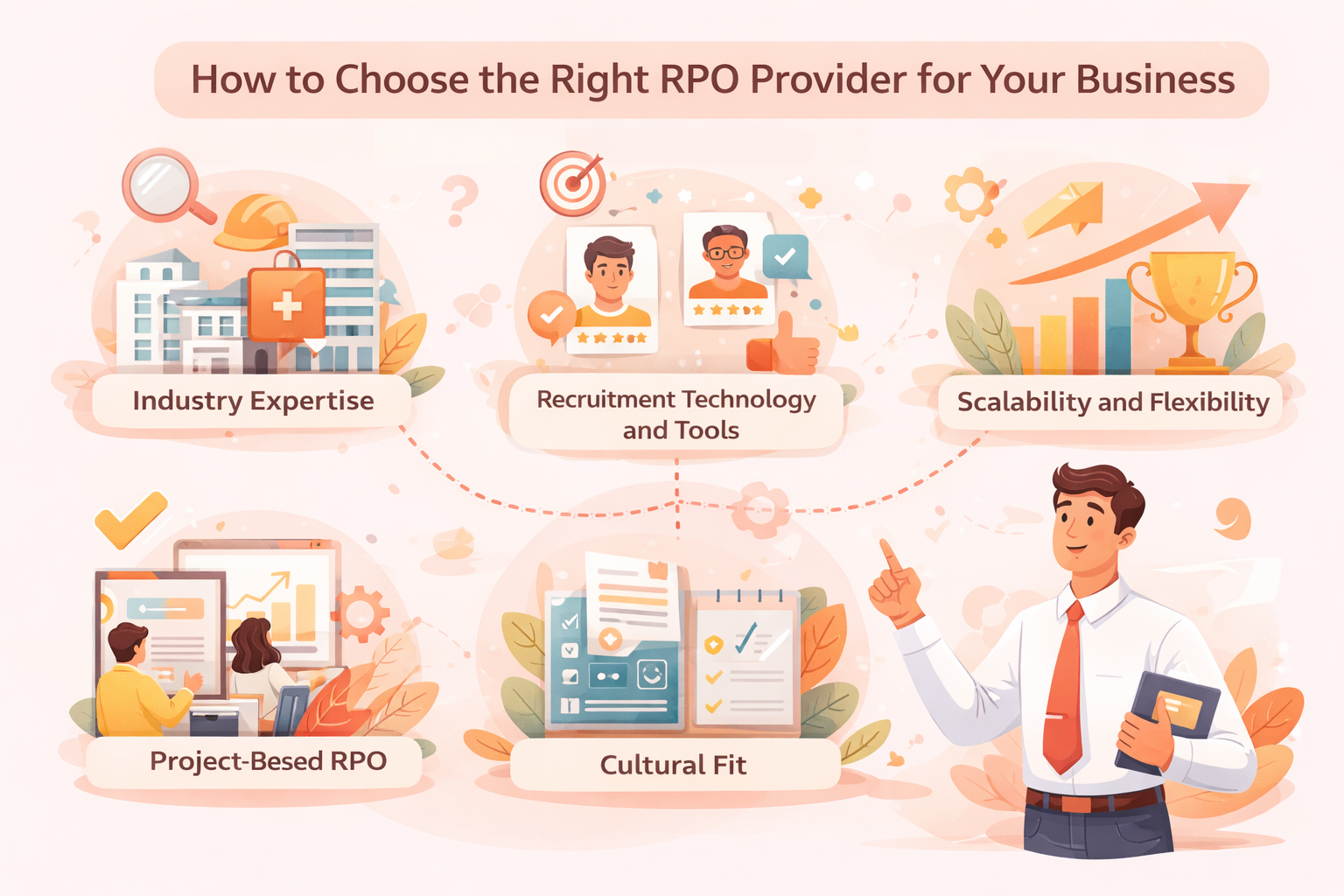
Choosing the right RPO provider is a crucial step toward improving your hiring process. With so many options available, it’s important to ensure that you select a partner who aligns with your business goals, hiring needs, and culture.
According to Forbes,
Recruitment Process Outsourcing (RPO) is no longer just a solution for large corporations. Small and mid-sized businesses are finding value in RPO providers, using them to streamline hiring, cut costs, and bring in top talent.
Here’s what to keep in mind when making your decision:
1. Industry Expertise
An RPO provider with experience in your industry will understand the specific challenges and requirements you face when it comes to recruitment. Whether you’re in tech, healthcare, retail, or any other field, having a provider who knows your sector will make a significant difference.
For example, if you’re hiring for a tech startup, you’ll want an RPO with expertise in sourcing developers, engineers, and other tech talent. They should be familiar with the specific skill sets you’re looking for, as well as the unique culture of your industry.
2. Recruitment Technology and Tools
As the recruitment landscape becomes more tech-driven, it’s essential that your RPO provider uses the latest tools to optimize the hiring process. This includes applicant tracking systems (ATS), AI-powered screening tools, and predictive analytics. These technologies can streamline candidate sourcing, improve the accuracy of hiring decisions, and ensure a more efficient process overall.
Make sure the RPO provider you choose uses advanced recruitment technology to automate manual tasks and provide valuable insights throughout the hiring process. This will not only save you time but also help you make smarter, data-driven decisions.
3. Cultural Fit
While technical skills are important, hiring someone who fits well within your company culture is just as crucial. A successful RPO provider should not only focus on the qualifications of the candidates but also ensure that they align with your company’s values and work environment.
Ask potential RPO providers about their approach to cultural matching. Do they use personality assessments or conduct in-depth interviews to assess how well candidates will integrate with your team? A provider who understands the importance of cultural fit will help you build stronger, more cohesive teams.
4. Scalability and Flexibility
Your hiring needs will change over time. Whether you’re expanding into new markets or facing a surge in demand, your RPO provider should be able to scale their services accordingly. Look for a partner who offers flexible solutions that can adapt to your business's changing needs.
For example, during peak hiring seasons, you may need to scale up your recruitment efforts quickly. A good RPO provider will have the resources to handle these fluctuations without compromising quality or speed.
5. Proven Track Record
Before selecting an RPO provider, take the time to review their track record. How successful have they been in helping other companies fill positions? Do they have case studies or testimonials that demonstrate their ability to deliver results?
Ask for specific metrics, such as time-to-hire, cost-per-hire, and employee retention rates. These numbers will give you a clear picture of how effective the provider’s services are and whether they can meet your hiring goals.
Common Mistakes to Avoid When Choosing an RPO Provider
Choosing the right RPO provider can be a game-changer for your recruitment process. However, it’s easy to get caught up in the excitement of finding a solution and overlook key factors that could lead to disappointment down the line.
Here are some common mistakes businesses make when choosing an RPO provider and how to avoid them:
1. Not Defining Clear Expectations
One of the biggest mistakes businesses make is not clearly defining their hiring goals and expectations before partnering with an RPO provider. Without a clear understanding of what you need, it's easy to end up with a provider who doesn’t fully meet your requirements.
Solution: Before you begin your search for an RPO partner, take the time to clearly outline your hiring needs. What positions are you hiring for? What is the desired time-to-hire? What qualities and skills do you want in your candidates? Setting these expectations upfront will help you choose the right partner and ensure alignment throughout the recruitment process.
2. Overlooking Cultural Fit
It’s easy to get caught up in the technical aspects of recruitment, like the tools an RPO uses or their track record. However, overlooking the cultural fit between the provider and your business can be a costly mistake. An RPO provider who doesn’t understand your company culture may bring in candidates who aren’t the right fit for your team, leading to high turnover and dissatisfaction.
Solution: Make sure the RPO provider you choose takes cultural fit into account. Ask about their methods for assessing candidates’ compatibility with your company’s values and work environment. A provider who understands your company culture will help you find candidates who will thrive in your organization.
3. Choosing Based Only on Cost
While cost is an important factor when selecting an RPO provider, it shouldn’t be the only consideration. Choosing the cheapest provider might save you money upfront, but it could lead to lower-quality candidates, longer time-to-hire, or poor service quality in the long run.
Solution: Instead of focusing solely on price, consider the overall value a provider brings to the table. Look at factors like their experience, technology stack, cultural fit, and success rate with companies in your industry. It’s worth investing in a higher-quality provider who will deliver long-term results.
4. Ignoring Scalability and Flexibility
Your hiring needs will likely change over time, and a rigid RPO provider who can’t scale with your business may not be the right fit. Whether you need to ramp up recruitment during peak seasons or adjust to a slow hiring period, choosing a provider that offers flexibility is crucial.
Solution: Ensure the RPO provider you select can scale their services according to your business’s changing needs. Ask about their ability to handle fluctuating hiring volumes and whether they have the resources to support you during periods of rapid growth or contraction.
5. Failing to Measure Success
It’s easy to partner with an RPO provider and assume everything is going well, but without measuring success, you can’t be sure. Without key metrics like time-to-hire, cost-per-hire, and candidate quality, you won’t be able to evaluate whether the partnership is delivering the expected results.
Solution: Work with your RPO provider to set clear performance metrics and establish regular check-ins. Track key performance indicators (KPIs) such as the time it takes to fill roles, the cost of each hire, and the quality of candidates. Regular performance reviews will help you identify areas for improvement and ensure your RPO partnership stays on track.
Final Thoughts: Making the Right Choice for Your Business
Choosing the right RPO provider is a crucial decision that can have a lasting impact on your business's hiring process. It’s not just about filling positions quickly; it’s about finding the right talent that aligns with your company culture, drives growth, and supports long-term success.
The right RPO partner will help you save time, reduce hiring costs, and improve the quality of your hires. By leveraging their expertise, technology, and flexibility, you can take the stress out of recruitment and focus on what really matters—growing your business.
If you’re ready to streamline your hiring process and bring in top-tier talent faster, partnering with an RPO provider could be the solution you need. Start by identifying your business’s specific needs and goals, and find a provider who aligns with your vision.
Looking to optimize your hiring process and find the best talent for your business? Contact us today to learn how Mediusware’s RPO solutions can help you streamline recruitment and build a stronger team. Let’s get started on building the future of your business!

My role as an HR and Employee Experience Manager starts with listening and understanding what helps employees feel comfortable, confident, and motivated at work. I believe when employees feel supported, respected, and valued, they do their best work, and that impact reaches every client we serve.
Featureblogs
Relatedblogs
01
Staff Augmentation vs Outsourcing02
Charting Your QA Career: Pathways to Growth and Expertise in Software Quality Assurance03
The Role of QA in API Integration Testing04
Top 10 Soft Skills Every Software Developer Should Master05
Looking for the Best Outstaffing Mobile App Partner? Here Are the Top 11 in the USA!