Hiring developers one by one doesn’t scale, it creates fragmented systems, slows delivery, and adds hidden complexity. As teams grow without structure, bottlenecks increase and momentum drops. Real growth comes from building aligned teams, not just adding more people.
Why Hiring Developers One by One Slows Down Product Growth
1 min read
Most founders think scaling a product is simple.
Hire one developer.
Then another.
Then another when things get busy.
It feels safe.
But in reality, this approach quietly slows your product down.
I’ve seen this pattern again and again:
The product doesn’t break because of lack of talent.
It breaks because the system behind the team was never designed to scale.
So the real question is:
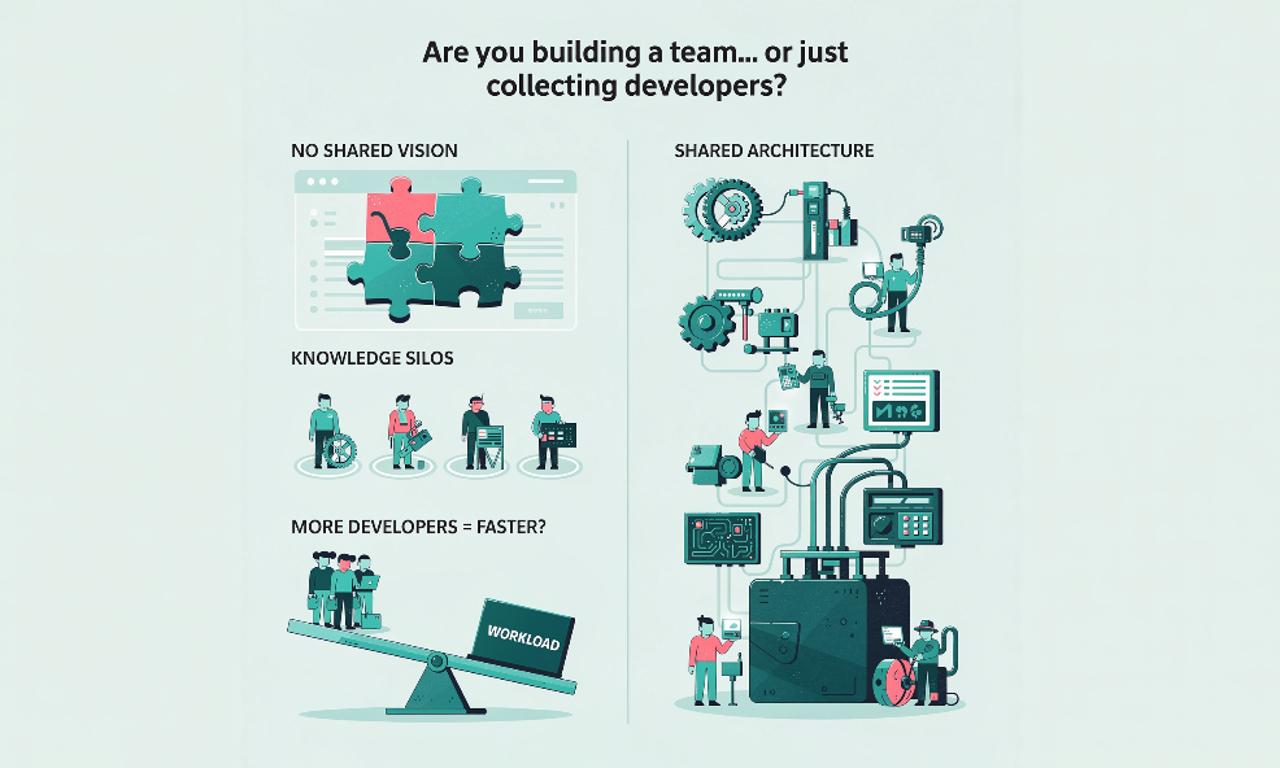
Are you building a team… or just collecting developers?
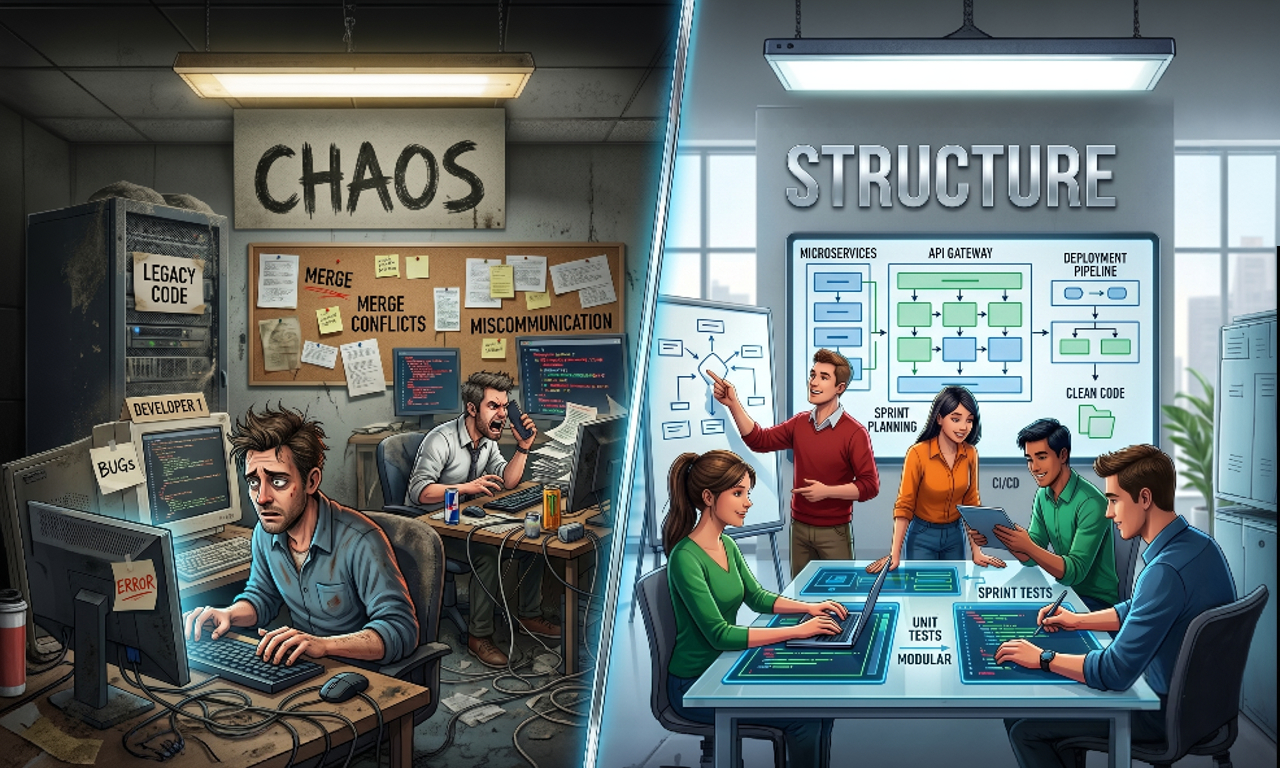
The Real Problem: Fragmented Teams Create Fragmented Products
When developers are hired one by one, something subtle happens.
Everyone builds…
But no one aligns.
At first, it works.
Later, it becomes expensive.
And eventually, it slows everything down.
Here’s Where Things Start Breaking
1. No Shared Architecture
The first developer defines the foundation.
The next adapts to it.
The third works around it.
Now your system is no longer designed.
It’s patched together.
According to the Standish Group, 31% of software projects struggle due to poor planning and architectural misalignment.
What this leads to:
- Inconsistent code structure
- Duplicate logic across features
- Slower onboarding for new developers
At some point, you stop building forward
and start fixing backward.

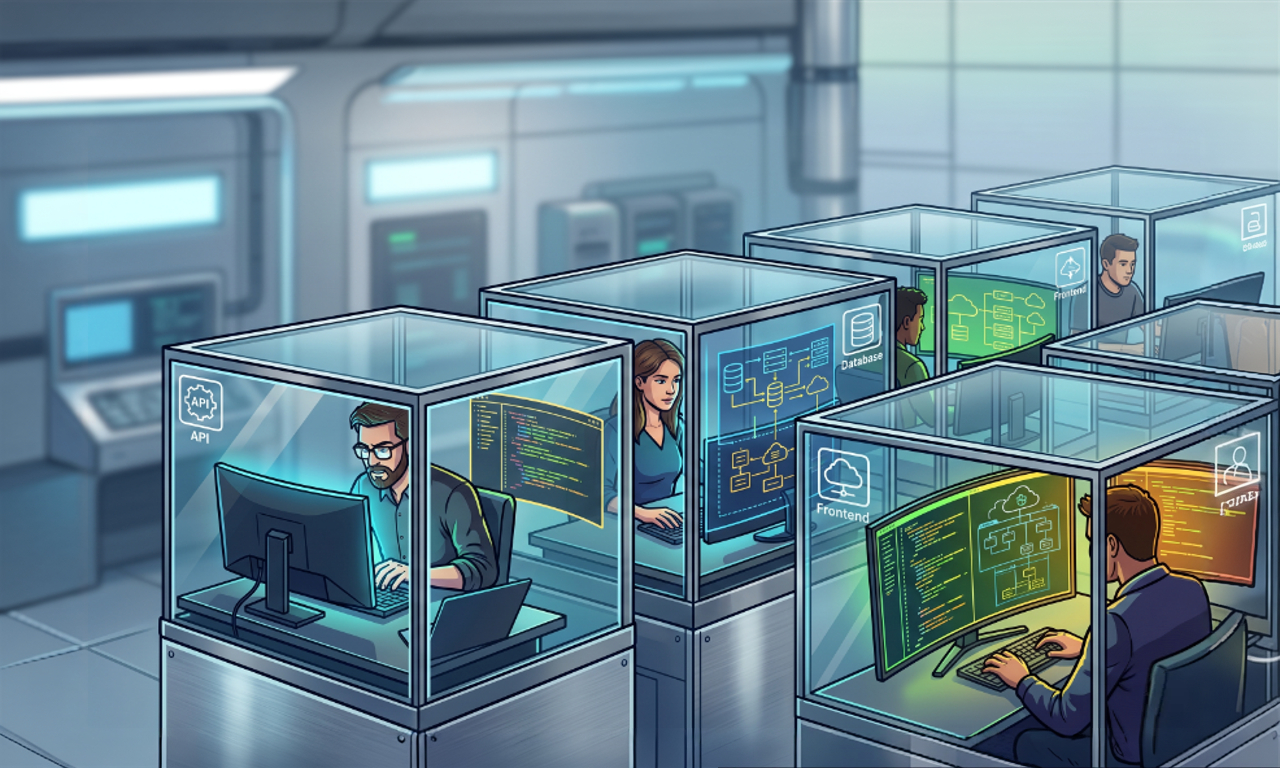
2. Knowledge Silos Form Fast
When developers work independently, knowledge doesn’t spread.
It gets locked.
One person understands payments.
Another knows infrastructure.
Another handles authentication.
Everything works until one of them leaves.
A Stack Overflow survey found 52% of developers say knowledge silos significantly slow teams down.
What follows:
- Slower debugging
- Longer onboarding
- Heavy reliance on individuals
Strong teams share ownership.
Weak systems create dependency.
3. More Developers Don’t Increase Speed
This is the biggest misconception.
More people don’t automatically mean faster delivery.
Because every new developer needs to understand:
- Existing architecture
- Past decisions
- Code patterns
That takes time.
As Fred Brooks famously said:
Adding manpower to a late software project makes it later.
Instead of accelerating progress
You increase complexity.
4. Bottlenecks Start Multiplying
A product isn’t just built by developers.
It’s a system involving:
- Backend
- Frontend
- DevOps
- QA
When hiring is unstructured, these areas evolve unevenly.
Frontend moves faster.
Backend lags.
Infrastructure struggles.
Testing becomes reactive.
Now your team is busy
But delivery slows down.
What High-Performing Teams Do Differently
They don’t build teams randomly.
They design them.
Instead of isolated developers, they use cross-functional product teams.
A typical structure includes:
- Backend developer
- Frontend developer
- DevOps engineer
- QA engineer
- Technical lead
This creates alignment from day one.
What changes:
- Architecture decisions are shared
- Development flows without dependency delays
- Code quality improves naturally
- Delivery becomes predictable
This is how real scalability works.
The Real Cost: Lost Product Momentum
The biggest risk isn’t technical debt.
It’s lost time.
Startups operate in narrow windows where speed matters.
You need to:
- Launch quickly
- Validate ideas
- Iterate fast
- Scale when growth hits
If your development slows down
Someone else moves faster.
And that opportunity disappears.
A Smarter Way to Scale Development
Instead of assembling developers over time
Smart companies deploy ready systems.
That’s why many now work with:
- Dedicated development teams
- Structured engineering pods
- Staff augmentation with aligned workflows
Because these setups already include:
- Collaboration systems
- Shared standards
- Clear ownership
- Proven processes
You’re not starting from zero.
You’re starting with momentum.
Final Thoughts
Hiring developers one by one feels safe.
But over time, it creates:
- Fragmented architecture
- Slower delivery
- Hidden complexity
And most importantly,
it slows your product when it should be accelerating.
The companies that scale successfully don’t just add people.
They design how people work together.

I work at the point where product decisions, system architecture, and engineering execution meet. At Mediusware, I’m accountable for how technology choices affect reliability, scale, and long-term delivery for our clients.
Featureblogs
Relatedblogs
01
Integrating Redux with React: A Comprehensive Guide02
Laravel pagination and filtering with already loaded data as array in memory03
React + Three.js + React Three Fiber: Crafting Interactive 3D views in Web Applications04
Advanced Caching Strategies for Django Applications05
Implementing Roles and Permissions in Laravel Using Guard-LaravelAuthorblogs
01
How Digital Agencies Can Deliver Custom Software Without Hiring Developers02
AI in FinTech: Build, Buy, or Integrate? A Founder's Decision Framework03
How to Choose a SaaS MVP Development Company04
How Seed-Stage SaaS Teams Add Engineering Capacity Without Hiring Chaos05
Why Seed-Stage SaaS Startups Struggle to Ship Fast