- Scale SaaS delivery by fixing bottlenecks before adding more developers.
- Add focused dev pods with clear ownership, workflow, and communication.
How Fast-Growing SaaS Teams Add Dev Capacity Without Chaos
1 min read
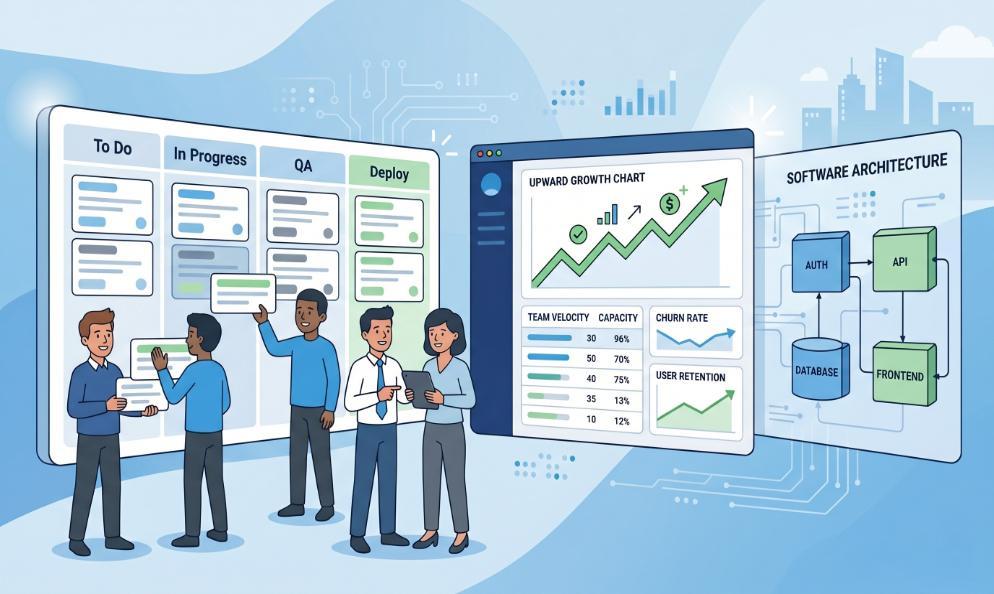
Fast-growing SaaS teams do not slow down because developers are lazy.
They slow down because the product grows faster than the team structure.
As users grow, the roadmap gets heavier. Bugs affect retention. Sales asks for integrations. Senior engineers get pulled into every decision.
That is when many SaaS companies say:
We need more developers.
Sometimes they do.
But after working with SaaS platforms and product teams across different growth stages, we have seen one pattern repeatedly:
Adding developers without clear ownership, workflow, and communication creates chaos, not speed.
This blog explains how to add dev capacity without slowing down the team you already have.
Because scaling development is not about hiring faster.
It is about adding capacity with clarity.
Why SaaS Teams Need More Dev Capacity
SaaS growth creates pressure from many sides.
The team has to ship new features, fix bugs, improve performance, build integrations, reduce technical debt, and support customers at the same time.
The problem is not only “too much work.”
The real problem is that developers lose focus.
Cortex’s 2024 State of Developer Productivity report found that 55% of highly productivity-focused teams lose 5–15 hours per developer per week to unproductive work. For an 8-person team, that can mean 40–120 lost hours every week.
So before adding more developers, SaaS leaders should ask:
Are we short on people, or are we losing capacity through poor structure?
The Risk of Hiring Too Fast
Hiring quickly feels like progress.
But new developers do not become productive on day one.
They need product context, codebase knowledge, tool access, clear requirements, review support, and release guidance.
If senior engineers are already overloaded, new developers can slow them down first.
This is where many SaaS teams get stuck.
They hire to increase output.
But output drops because the team has no clear delivery system.
Gartner reports that 58% of organizations consider developer experience key to improved productivity and software quality.
That matters because productivity does not come from hiring alone.
It comes from removing friction around the people doing the work.
Signs Your SaaS Team Needs More Capacity
Not every delay means you need more developers.
Sometimes you need better planning.
Sometimes you need clearer priorities.
Sometimes you need stronger architecture.
But these signs usually show a real capacity problem.
1. Your roadmap keeps slipping
If important features keep moving to the next sprint, your team may be overloaded.
This often happens when the same developers handle new features, bugs, refactoring, DevOps issues, and customer requests.
One delayed sprint is normal.
Repeated delay is a warning sign.
2. Senior engineers are becoming blockers
Senior engineers should solve hard problems.
But in growing SaaS teams, they often become the approval point for everything.
They review every pull request.
They explain every technical decision.
They fix the hardest bugs.
They answer every developer question.
This creates a bottleneck.
Even if you add junior developers, the senior team still becomes the limit.
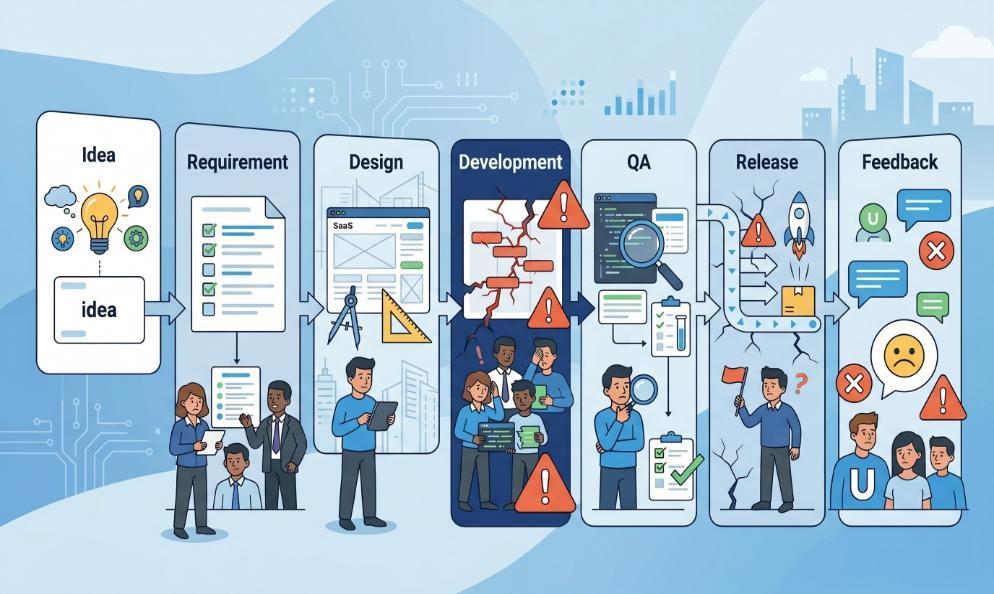
3. Bugs increase after every release
When teams rush without enough support, quality drops.
The roadmap may move, but every release creates more cleanup work.
That creates a dangerous loop:
Ship fast → create bugs → fix bugs → delay roadmap → rush again.
That matters because SaaS customers do not only care about new features.
They care about a product that works.
4. Engineering becomes a revenue blocker
In SaaS, development speed affects sales and retention.
You may hear:
- This integration is blocking a deal.
- This bug is hurting renewal.
- This feature is needed for expansion.
- Enterprise users keep asking for this.
At that point, dev capacity is not only a technical issue.
It becomes a business growth issue.
The Wrong Way to Add Dev Capacity
Many SaaS companies try to scale development in ways that create more confusion.
The first mistake is hiring without role clarity.
A backend bottleneck is different from a frontend bottleneck.
A QA bottleneck is different from a DevOps bottleneck.
A delivery problem is different from an architecture problem.
If the gap is unclear, the hiring decision will also be unclear.
The second mistake is adding juniors when the work needs ownership.
Junior developers can be useful. But if your team needs architecture, complex debugging, or independent delivery, junior hiring may increase the load on senior engineers.
The third mistake is outsourcing random tasks.
Task-based outsourcing may work for small jobs. But SaaS product development needs context.
External developers must understand user flows, business rules, code standards, release process, and customer impact.
Without that context, they may complete tickets but miss the product logic.
That is why dev capacity should feel like an extension of your internal team, not a disconnected vendor.
A Better Way to Add Dev Capacity
Fast-growing SaaS teams need a simple model.
The goal is not to add more people.
The goal is to remove the delivery bottleneck.
| Bottleneck | What It Looks Like | Capacity Needed |
| Unclear backlog | Tickets need too much explanation | Product or BA support |
| Frontend delay | Designs are ready, UI is slow | Frontend developers |
| Backend delay | APIs and logic are blocked | Backend developers |
| QA delay | Bugs are found late | QA engineers |
| DevOps delay | Releases are risky | DevOps support |
| Architecture issue | Product slows under growth | Senior engineers |
This keeps the decision practical.
You are not hiring randomly.
You are solving a specific delivery problem.
Build a Focused Delivery Pod
One extra developer can help.
But a small delivery pod often works better.
A SaaS delivery pod may include:
- 1 senior or lead developer
- 1–2 frontend or backend developers
- 1 QA engineer
- Part-time project coordinator
- Optional DevOps support
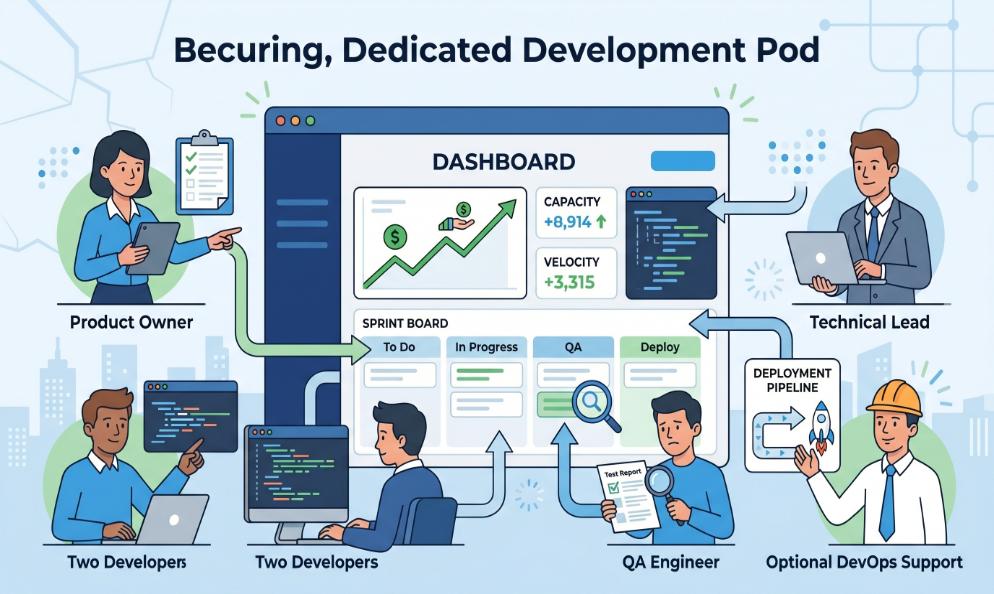
This structure gives the team enough ownership to deliver.
They are not waiting for random tasks.
They can own a product area.
For example:
- Billing module
- Reporting dashboard
- Customer portal
- Admin panel
- Integration layer
- QA automation
This reduces confusion and improves accountability.
Mediusware’s dedicated development team service helps businesses add skilled developers for tailored technology needs.
Keep Ownership Clear
Do not assign scattered tasks from five different parts of the product.
That creates context switching.
Instead, give the added team one clear area.
Example:
This team owns the reporting module for the next 8 weeks.
Now the team understands the user flow, codebase, business rules, and quality expectations.
This also follows a simple Gestalt principle:
Related things should stay grouped together.
The same idea works inside engineering teams.
When related work stays together, people make better decisions.
Keep Communication Simple
More developers should not mean more meetings.
A simple communication system is better.
Use:
- One product owner
- One technical owner
- One sprint board
- One documentation space
- One release checklist
- One weekly planning rhythm
- One async daily update
No decision should live only in private chat.
No requirement should stay only in someone’s head.
No release should depend on memory.
Fast SaaS teams do not communicate more.
They communicate more clearly.
Where Mediusware Fits In
At Mediusware, we often see the same pattern.
A SaaS product has traction.
The internal team is capable.
The roadmap is full.
But delivery starts slowing down.
The issue is not talent.
The issue is capacity and structure.
Mediusware has worked on software platforms such as Bulk.ly, Linktiva, and SaaS MVP checklist for more product delivery context.
This experience matters because SaaS development is not only about writing code.
It needs product understanding, clean communication, scalable architecture, QA discipline, UX thinking, and long-term maintainability.
That is the difference between adding developers and adding real capacity.
Final Thoughts: Don’t add developers just to stay busy.
If your SaaS team is missing deadlines, delaying roadmap items, or overloading senior engineers, the real problem may be delivery structure, not headcount.
Mediusware’s Software Development Team helps SaaS companies add the right dev capacity with clear ownership, smoother workflows, and less chaos.
Frequently Asked Questions
Dev capacity means how much product development work a team can handle without hurting speed, quality, or focus.

I work at the point where product decisions, system architecture, and engineering execution meet. At Mediusware, I’m accountable for how technology choices affect reliability, scale, and long-term delivery for our clients.
Featureblogs
Relatedblogs
01
Introduction to System Design | System Design Course Pro | Part 102
The Art of Simplicity - How Minimalism Improved UI/UX Design03
The Software Development Life Cycle (SDLC): A Complete Guide04
Which Approach Is Best for Your Software Development Team: Scrum vs. Kanban05
How to adapt the Agile process to modern software developmentAuthorblogs
01
How Digital Agencies Can Deliver Custom Software Without Hiring Developers02
AI in FinTech: Build, Buy, or Integrate? A Founder's Decision Framework03
How to Choose a SaaS MVP Development Company04
How Seed-Stage SaaS Teams Add Engineering Capacity Without Hiring Chaos05
Why Seed-Stage SaaS Startups Struggle to Ship Fast