- E-commerce enables global reach, scalable operations, and data-driven growth for modern businesses.
- Combining E-commerce and physical retail creates powerful omnichannel commerce opportunities.
Ecommerce vs Traditional Business: Pros, Cons, and Future Opportunities
1 min read
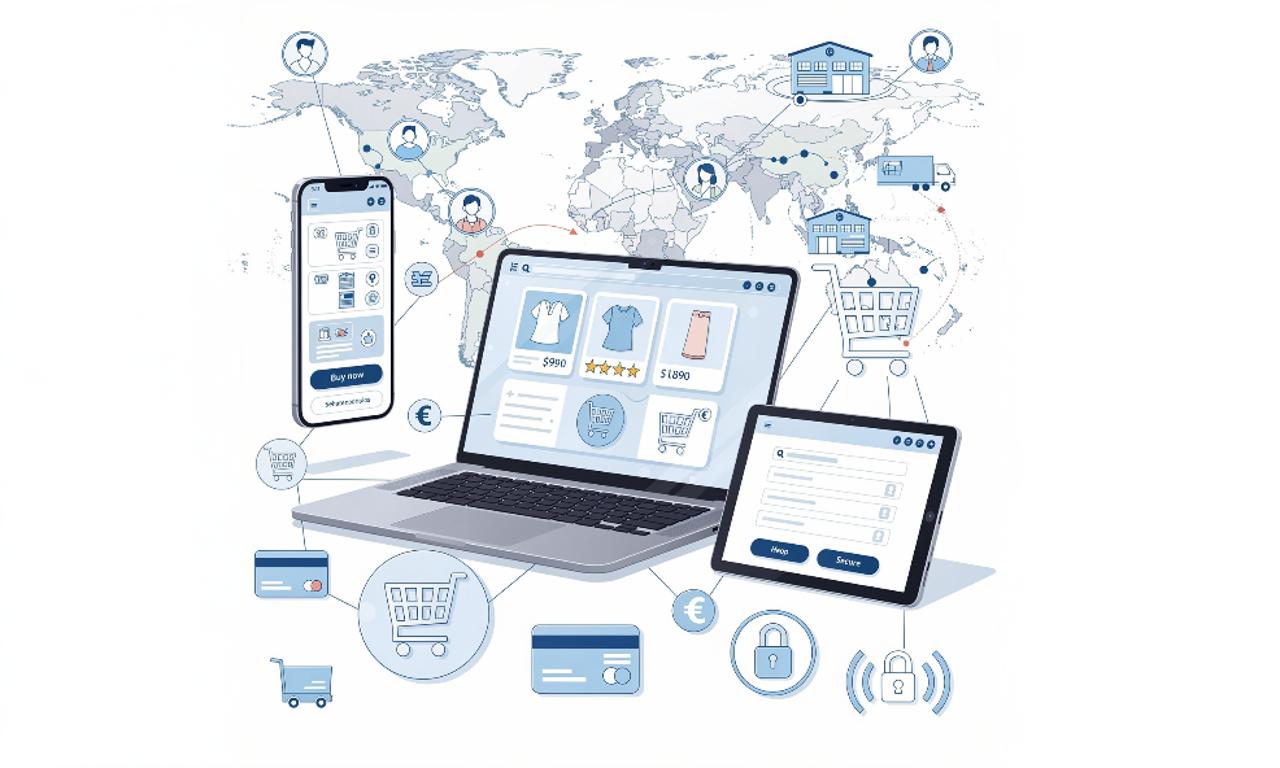
Starting a business is already hard.
Not because of ideas.
Not because of effort.
But because every early decision shapes what your business becomes.
And one of the biggest decisions today is this:
Do you go ecommerce, traditional… or something in between?
I’ve seen founders overthink this.
Some go fully online too early. Others stay offline too long.
The reality is simpler:
- This is not a “which one is better” question.
- It’s a “which model fits your growth strategy” question.
Let’s break it down properly.
The Rise of E-commerce
Over the last 20 years, ecommerce didn’t just grow.
It rewired how people buy.
According to Statista, global ecommerce sales are expected to exceed $8 trillion by 2027.
That’s not a trend. That’s a structural shift.
Today’s customers expect:
- Fast, mobile-first experiences
- Personalized recommendations
- One-click checkout
- Same-day or next-day delivery
And most importantly:
Zero friction
That’s why companies like Amazon didn’t just scale, they dominated.
As Jeff Bezos once said:
We see our customers as invited guests to a party, and we are the hosts.
That mindset is what ecommerce enables at scale.
What Traditional Business Still Does Better
Now here’s where many people get it wrong.
They assume traditional business is outdated.
It’s not.
Physical businesses still win in one key area:
Trust through experience
Think about it:
- You can touch the product
- You can talk to someone
- You can decide instantly
That removes uncertainty.
And in many industries (retail, food, services), that still matters a lot.
E-commerce: Where It Wins And Why It Scales Faster
Let’s simplify this.
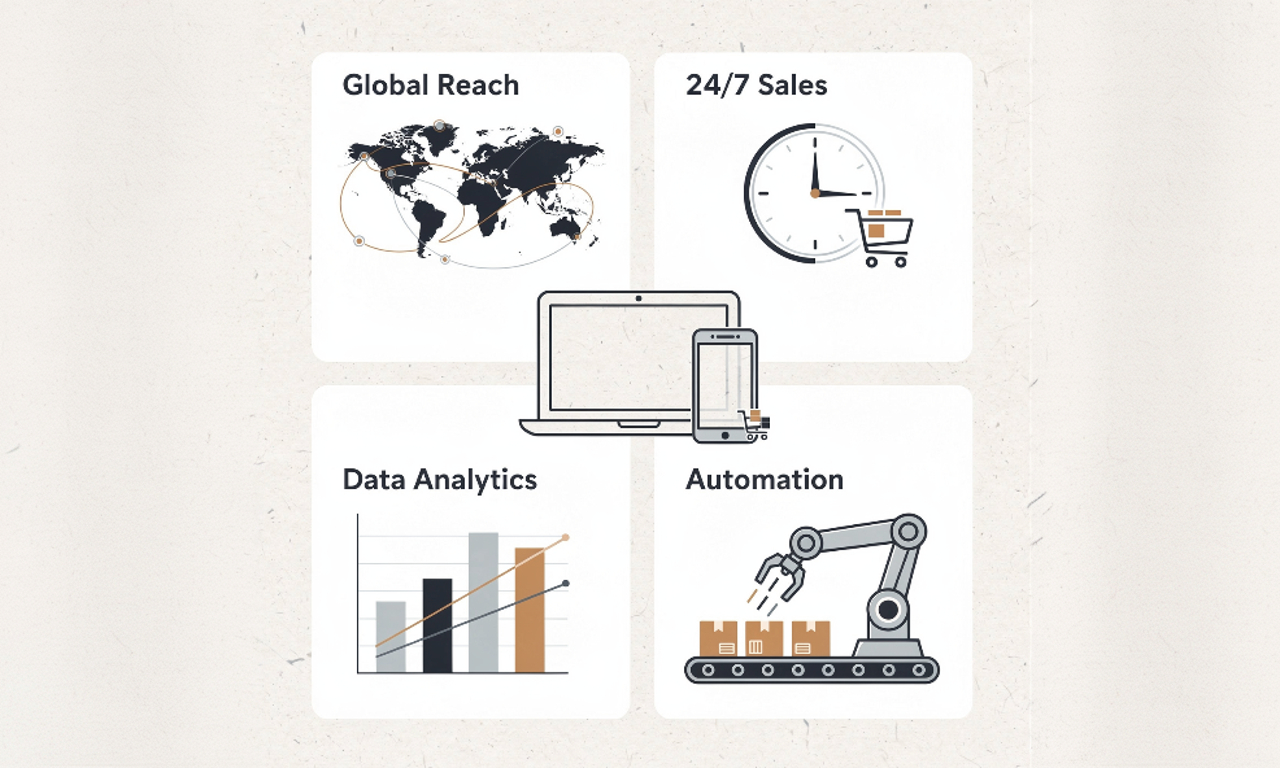
1. Global Reach Without Physical Expansion
You don’t need multiple stores.
You need one good system.
That’s the biggest leverage.
2. Lower Startup Cost
No rent.
No physical infrastructure.
Smaller teams.
Which means:
Faster launch, lower risk.
3. Data Becomes Your Advantage
Every click, scroll, and purchase tells you something.
You can track:
- Customer behavior
- Conversion rates
- Product demand
That’s something traditional businesses struggle with.
4. 24/7 Revenue Engine
Your store doesn’t close.
Which means:
You earn even when you’re not working.
Ecommerce: Where It Breaks
Now the reality check.
Ecommerce is not easy.
1. Competition Is Brutal
Low barrier = crowded market.
If your branding and experience are weak, you disappear.
2. Logistics Can Kill You
Shipping delays.
Returns.
Inventory issues.
These are not small problems.
They directly impact customer trust.
3. No Physical Experience
Customers can’t touch or test.
So you must replace that with:
Trust signals, reviews, UX, and brand credibility.
Traditional Business: Where It Still Wins
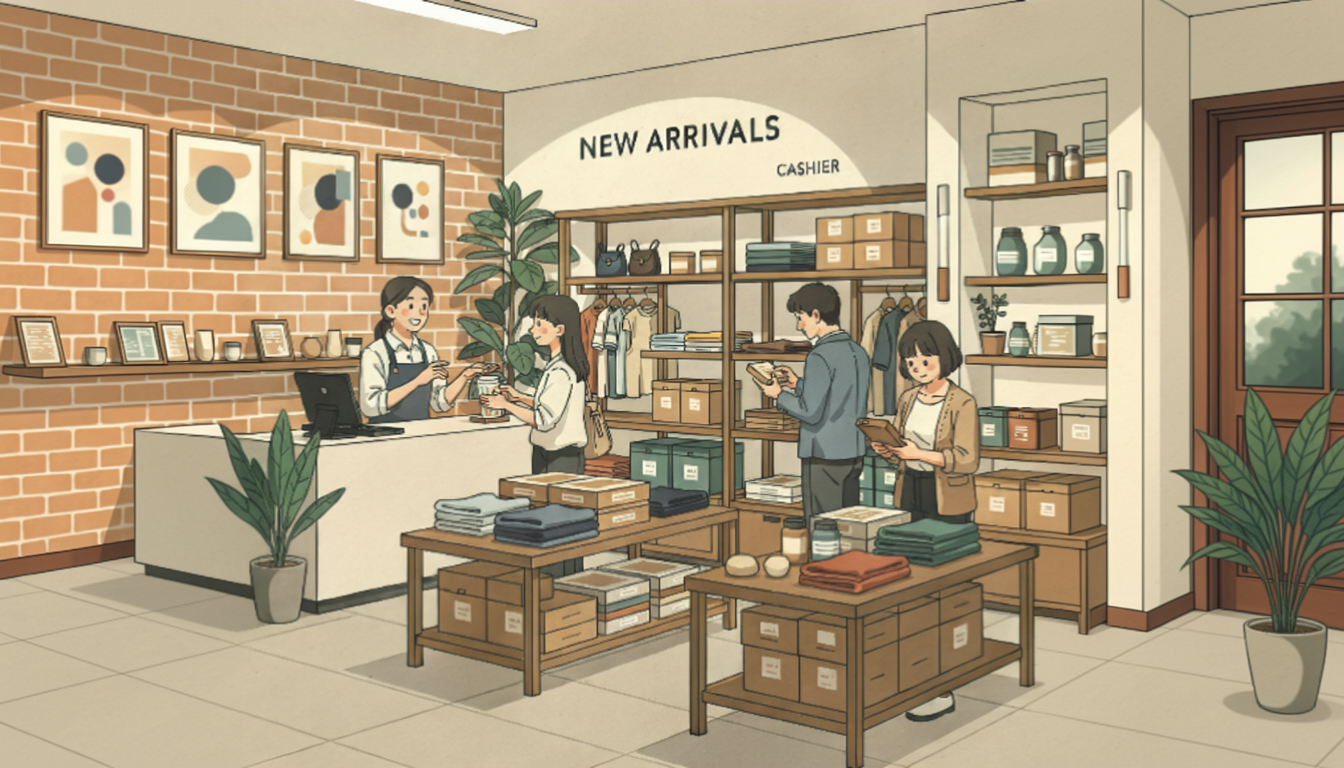
Let’s be fair.
1. Instant Trust
Seeing is believing.
And that reduces hesitation.
2. Strong Customer Relationships
Face-to-face interaction builds loyalty faster than ads ever can.
3. Immediate Fulfillment
No waiting. No delivery anxiety.
Buy → take → done.
Traditional Business: Where It Struggles
1. High Fixed Costs
Rent. Staff. Maintenance.
These don’t scale efficiently.
2. Limited Reach
You’re restricted by location.
Growth requires physical expansion.
3. Weak Data Visibility
You don’t fully know:
- Why customers buy
- What they compare
- Where they drop off
That limits optimization.
The Real Answer: It’s Not Ecommerce vs Traditional
It’s both.
The companies winning today are not choosing one.
They are combining both.
This is called:
Omnichannel commerce
What That Looks Like in Practice
- Buy online → pick up in store
- Visit store → order online later
- Same brand → same experience everywhere
This reduces friction and increases conversion.
And it aligns with how modern users behave.
Where Technology Changes the Game
This is where things get interesting.
Modern e-commerce is not just “online stores” anymore.
It’s powered by:
- AI recommendations
- Real-time analytics
- Automated workflows
- Personalized storefronts
We’ve seen this directly in platforms like EasyAsk, where:
- Businesses integrate ERP systems
- Track real-time data
- Customize storefront experiences
- Automate operations
The result?
Faster scaling without increasing complexity.
Quick Comparison (Keep It Simple)
| Factor | Ecommerce | Traditional |
| Reach | Global | Local |
| Cost | Lower | Higher |
| Experience | Digital | Physical |
| Data | Strong | Limited |
| Scalability | High | Slower |
What the Future Actually Looks Like
Commerce is not splitting.
It’s merging.
Jack Ma predicted it well:
In the future, ecommerce will not be called ecommerce. It will just be commerce.
What’s Coming Next
- AI shopping assistants
- Augmented reality product previews
- Smart logistics systems
- Autonomous (agentic) commerce
The businesses that invest in digital infrastructure now will have a massive advantage later.
Final Thoughts
This isn’t about choosing a model.
It’s about understanding how customers behave today.
They want:
- Convenience
- Speed
- Personalization
- Trust
And no single model delivers all of that alone.
The real winners are the ones who combine systems, not choose sides.
Frequently Asked Questions
No. Many successful companies combine online and physical channels through omnichannel strategies.

I work with founders and leadership teams when growth moves faster than their systems, teams, or decisions. I’ve led 850+ projects for 750+ clients across 20+ countries, working across 100+ technologies and counting. I care about ownership, clarity, and building things that last beyond the launch.
Featureblogs
Relatedblogs
01
From Complexity to Clarity: Organizing Variant-Wise Product Storage for Your Online Store02
The Ultimate Framework to Boost Your e-commerce Business03
Shopify vs WooCommerce: Which Platform Is Right for You?04
Custom Retail Software Development: The Must-Have Guide You Need05
Everything You Need to Know About AI-Driven Inventory Management SystemsAuthorblogs
01
SaaS MVP Development: A Founder’s Guide for 202702
Zero Clicks, Falling Traffic: How to Win Back Revenue03
Ranking on Google in 2026: What Matters in the Age of AI Search04
How to Choose an API Development Company for Your SaaS Product05
Why Software Companies Are Turning to Strategic Partnerships for Faster Growth