- AI-driven inventory systems optimize stock levels and supply chains using predictive analytics.
- Businesses use AI inventory tools to reduce stockouts, improve forecasting, and streamline operations.
Everything You Need to Know About AI-Driven Inventory Management Systems
1 min read
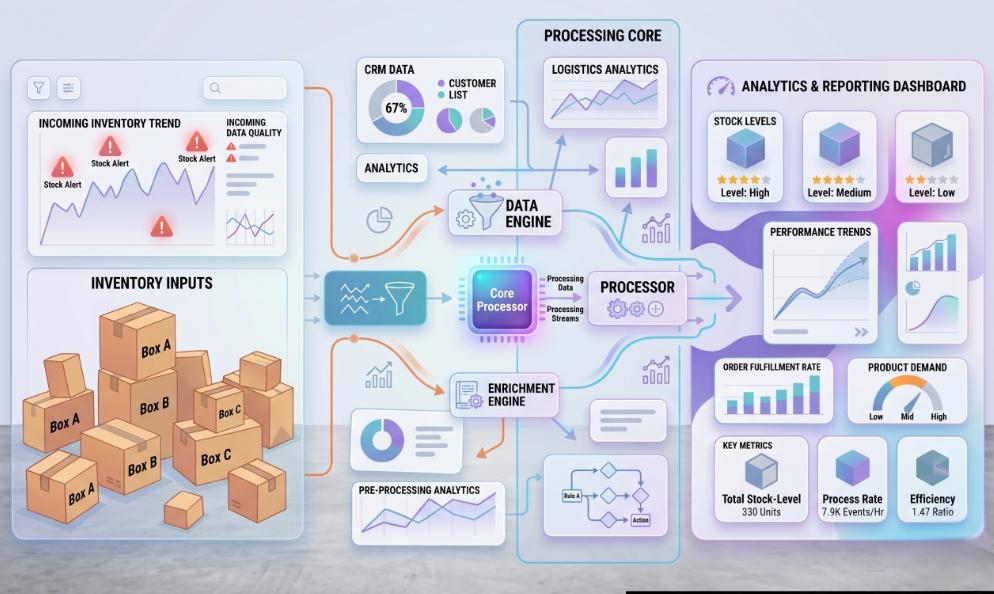
Inventory management used to be simple.
You looked at last month’s sales, added some buffer, and reordered stock.
That approach doesn’t work anymore.
Demand shifts daily. Supply chains break without warning. One viral product can wipe out your inventory overnight.
And when that happens, you don’t just lose stock.
You lose revenue, customer trust, and momentum.
This is exactly why more businesses are moving toward AI-driven inventory systems.
Not because it’s “innovative” but because manual and rule-based systems can’t keep up anymore.
What Is an AI-Driven Inventory Management System?
An AI-driven inventory system isn’t just software that tracks stock.
It’s a system that learns, predicts, and acts.
Instead of relying on fixed rules, it continuously analyzes data like:
- Past sales trends
- Seasonal demand shifts
- Supplier performance
- Shipping delays
- Customer behavior
- Market signals
Based on this, it doesn’t just report what happened.
It tells you what’s about to happen and what to do next.
That shift from reactive → predictive is the real difference.
Why Traditional Inventory Systems Break Down
Most inventory systems were built for slower, more predictable environments.
The problem is your business isn’t operating in that world anymore.
Here's how:
1. Demand Changes Faster Than Your Forecast
Promotions, trends, and external events can spike demand overnight.
Static models can’t adapt in time.
2. Supply Chains Are More Complex
Multiple suppliers, warehouses, and logistics layers create constant coordination challenges.
3. Customers Expect Availability Always
If a product is out of stock, they don’t wait.
They switch.
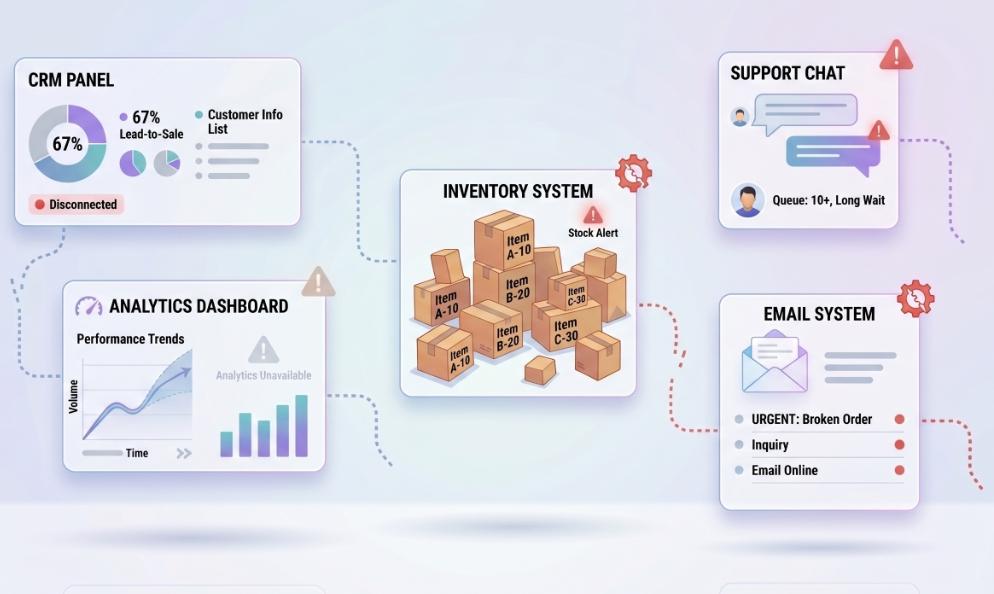
4. Data Exists But Isn’t Used Properly
Most companies already have the data.
They just don’t have systems that can actually interpret it.
That’s the gap AI fills.
How AI Actually Improves Inventory Management
AI doesn’t just automate tasks.
It improves decision-making across the entire system.
1. Predictive Demand Forecasting
This is where AI creates the biggest impact.
Instead of guessing, it uses patterns across multiple variables to predict demand more accurately.
That means fewer surprises, fewer stockouts, and less dead inventory.
2. Automated Replenishment
Traditional systems rely on fixed reorder points.
AI doesn’t.
It adjusts reorder levels dynamically based on:
- Real-time demand predictions
- Supplier lead times
- Safety stock requirements
So inventory stays balanced without constant manual intervention.
3. Multi-Warehouse Optimization
If you operate across locations, placement matters.
AI decides where inventory should live, not just how much you need.
It considers:
- Regional demand
- Delivery speed
- Shipping costs
- Warehouse capacity
This reduces logistics cost while improving delivery performance.
4. Real-Time Visibility
One of the biggest operational gaps we see is fragmented data.
AI systems solve this by connecting:
- Warehouse systems
- E-commerce platforms
- POS systems
- Logistics providers
The result is a single, real-time view of inventory.
No delays. No blind spots.
5. Waste Reduction
AI helps identify slow-moving or dead stock early.
Instead of reacting late, it recommends actions like:
- Discounts
- Bundles
- Stock redistribution
This directly reduces storage costs and losses.
Where We See AI Inventory Systems Working Best
This isn’t limited to one industry anymore.
We’re seeing adoption across:
- E-commerce & retail → demand forecasting and seasonal stock control.
- Manufacturing → raw material planning and production alignment.
- Logistics → warehouse optimization and distribution.
- Healthcare → critical inventory availability.
The common thread is simple:
Any system dealing with uncertainty benefits from prediction.
The Technology Behind It
You don’t need to overcomplicate this.
Most AI inventory systems rely on four core layers:
- Machine Learning → finds patterns in data
- Predictive Analytics → forecasts future demand
- IoT / Data Inputs → tracks real-time inventory movement
- Cloud Infrastructure → connects everything at scale
Individually, these aren’t new.
But combined, they create adaptive systems that improve over time.
What Actually Breaks During Implementation
Here’s something most blogs won’t tell you.
The hardest part isn’t AI.
It’s data and integration.
In real projects, we see the same pattern:
- Data is scattered across systems
- Formats don’t match
- Workflows aren’t aligned
So even the best AI model fails because the inputs are unreliable.
The companies that succeed focus on:
- Unifying their data first
- Aligning workflows
- Then layering AI on top
That’s what makes the system actually work.
Where This Is Going Next
AI inventory systems are still evolving.
But the direction is clear.
We’re moving toward:
- Autonomous supply chain decisions
- Real-time supplier risk detection
- AI-driven procurement
- Digital twins of warehouse operations
At that point, inventory won’t just be managed.
It will be continuously optimized without human intervention.
Final Thoughts
Inventory is no longer just an operational function.
It’s a competitive advantage
The companies that win are not the ones with the most stock.
They’re the ones with the most accurate decisions about stock.
AI makes that possible, but only if the system behind it is built correctly.
Frequently Asked Questions
It’s a system that uses machine learning and predictive analytics to forecast demand, automate stock decisions, and optimize inventory across operations.

I work at the point where product decisions, system architecture, and engineering execution meet. At Mediusware, I’m accountable for how technology choices affect reliability, scale, and long-term delivery for our clients.
Featureblogs
01
Why Software Companies Are Turning to Strategic Partnerships for Faster Growth02
Is Golang Still the Right Choice in 2025?03
The 12 Most Powerful LLMs: Powering Tomorrow’s Tech Landscape04
C# vs. Java: Key Differences, Advantages, and Future Prospects05
Haptic Feedback: Why Touch is Becoming the Most Powerful Experience in Tech01
Why Software Companies Are Turning to Strategic Partnerships for Faster Growth02
Is Golang Still the Right Choice in 2025?03
The 12 Most Powerful LLMs: Powering Tomorrow’s Tech Landscape04
C# vs. Java: Key Differences, Advantages, and Future Prospects05
Haptic Feedback: Why Touch is Becoming the Most Powerful Experience in TechRelatedblogs
01
From Complexity to Clarity: Organizing Variant-Wise Product Storage for Your Online Store02
The Ultimate Framework to Boost Your e-commerce Business03
Shopify vs WooCommerce: Which Platform Is Right for You?04
Custom Retail Software Development: The Must-Have Guide You Need05
Agentic E-Commerce: Implementing Low-Code for Personalized Shopping ExperiencesAuthorblogs
01
How Digital Agencies Can Deliver Custom Software Without Hiring Developers02
AI in FinTech: Build, Buy, or Integrate? A Founder's Decision Framework03
How to Choose a SaaS MVP Development Company04
How Seed-Stage SaaS Teams Add Engineering Capacity Without Hiring Chaos05
Why Seed-Stage SaaS Startups Struggle to Ship Fast