- How modern retail software connects systems, reduces operational friction, and supports scalable growth across channels.
- When and why growing retailers move from off-the-shelf tools to custom retail software built around real workflows.
Custom Retail Software Development: The Must-Have Guide You Need
1 min read

As the retail landscape evolves, staying ahead isn’t just about keeping up with customers. It’s about keeping your operation connected so growth doesn’t turn into chaos.
Retail today is bigger, faster, and more digital than ever.
Forrester forecasts $24.9 trillion in global retail sales by 2025, with $5.3 trillion coming from online channels alone.
At that scale, even small inefficiencies become expensive. Growth creates opportunity, but it also multiplies complexity.
And complexity is where most retail teams start feeling the strain first.
- Inventory stops matching reality
- Reports stop being trusted
- Customer experience starts slipping, even when teams are working hard
This isn’t a people problem.
It’s a systems problem.
That pressure is exactly why retailers are investing so heavily in technology.
According to Gartner,
Global retail sector technology spending is expected to grow 8.2% to reach $466 billion, with similar growth projected in the coming years.
Businesses with connected, scalable foundations move faster and grow with control. Those without them spend more time fixing issues than building momentum.
That’s why custom retail software matters. It’s not “another tool.” It’s the connected foundation that brings sales, inventory, customer data, operations, and reporting into a single flow so you can scale without losing control.
In this guide, we’ll break down:
- Where retail systems fail
- What modern retail software should actually do
- How leading retailers scale without losing control
If your business is growing but your systems feel fragile, this guide is for you.
When Retail Growth Starts Creating Problems
Growth is usually the goal. More customers. More orders. More channels.
But in retail, growth often exposes problems faster than it creates wins.
Many businesses reach a point where sales are increasing, but operations start feeling heavier instead of smoother. Teams work harder, yet results feel less predictable. Reporting takes longer. Inventory accuracy drops. Customer complaints quietly increase.
This is the stage where retailers begin searching for retail software development solutions not because something is broken, but because the business is outgrowing the systems it relies on.
How operations get complicated faster than expected
Early on, running a retail business is manageable. A POS system, a basic inventory management software, maybe an ecommerce platform.
Everything feels under control.
Then growth happens.
You add more SKUs. More suppliers. More locations or fulfillment points. Online sales start competing with in-store demand. Suddenly, the same setup that worked before becomes fragile.
What usually follows:
- Multiple systems tracking the same data differently
- Manual reconciliation between sales and inventory
- Separate dashboards for online and offline performance
- Decisions delayed because numbers don’t line up
At this stage, many retailers realize they don’t just need another tool. They need to build retail software that connects operations instead of stacking more systems on top of each other.
This is especially common in SME retail, where early growth happens quickly, but systems aren’t designed to scale with it.
The hidden cost of manual work and guess-based decisions
Manual work doesn’t always look expensive at first. It hides in small tasks:
- Exporting reports into spreadsheets
- Adjusting inventory counts at the end of the day
- Manually reconciling online and in-store sales
- Double-checking numbers before making decisions
But these small tasks compound.
The real cost shows up as:
- Stockouts caused by delayed inventory updates
- Overstocking due to outdated demand assumptions
- Missed sales opportunities during peak demand
- Teams spending time fixing data instead of improving operations
When data isn’t reliable, decisions turn into educated guesses. And guess-based decisions are risky at scale.
This is one of the main reasons retailers eventually explore custom retail software development. Not for features, but for accuracy, speed, and confidence.
Why customer experience usually suffers first
Customers are often the first to feel system problems even when the root cause is internal.
Disconnected systems lead to:
- Products shown as “available” but actually out of stock
- Delayed fulfillment or pickup confusion
- Inconsistent pricing across channels
- Loyalty and personalization that feels random
From the customer’s perspective, it feels like poor service.
From the retailer’s perspective, it’s usually a systems gap.
What Retail Software Really Means for a Business
According to Brian Cornell, Chairman and CEO of Target,
The future of retail is about embracing technology that enhances customer experience and drives efficiency across every touchpoint.
Retail software isn’t about installing tools or chasing features. It’s about how smoothly your business operates when everything is connected from the moment a customer browses a product to the moment leadership reviews performance.
At its core, retail software exists to remove friction:
- Friction between sales and inventory
- Friction between channels
- Friction between teams trying to make decisions
When that friction builds up, growth feels heavy. When it’s removed, growth feels controlled.
This is where many retailers misunderstand retail software. They think in terms of systems. Successful retailers think in terms of flows.
Let’s break that down.
What is retail software? Explained in simple terms
Retail software is the system that helps a retail business run day to day without relying on manual work, guesswork, or disconnected tools.
In simple terms, it helps you:
- Sell products
- Track inventory
- Understand customers
- Manage operations
- Make better decisions with real data
Instead of handling these things in separate tools, retail software brings them together into one connected environment.
According to Shopify, Most modern retail operations rely on a combination of these core components:
- Point-of-sale (POS) systems
- Payment processing software
- Customer relationship management (CRM) software
- Inventory management software
- Marketing automation software
- Ecommerce platforms
- Loyalty program
- Vendor management
- Warehouse management
Retail software makes everything easier by keeping all your important business information in one place, helping you make better decisions, and improving the experience for your customers.
How retail software supports daily operations and long-term decisions
Good retail software works on two levels at the same time.
First: daily operations
This is where immediate value shows up.
- Inventory updates automatically when a sale happens
- Orders move from checkout to fulfillment without manual handoffs
- Sales data is available instantly, not at the end of the day
Teams stop spending time reconciling numbers and start trusting the system.
Second: long-term decision-making
Because data is consistent and connected, leaders can:
- Spot demand trends early
- Plan inventory with confidence
- Adjust pricing and promotions based on real performance
- Forecast growth instead of reacting to it
What used to be intuition becomes insight.
What used to be delayed becomes real time.
Retail software turns operational data into decision fuel.
Why retail software is a connected system, not a single tool
One of the biggest mistakes retailers make is treating retail software as a checklist:
- POS?
- Inventory tool?
- Ecommerce platform?
But disconnected tools don’t create a system. They create more work.
A connected retail system means:
- A sale updates inventory everywhere instantly
- Customer purchases feed loyalty and personalization automatically
- Reports reflect reality, not yesterday’s exports
When systems are connected, every action triggers the next without manual effort.
That’s the difference between:
- Managing retail
- And operating retail
Custom retail software focuses on this connection layer, how data flows, how systems talk to each other, and how decisions happen without friction.
And once that foundation is in place, everything else AI, automation, omnichannel, scalability becomes possible.
How Retail Software Works Across the Entire Operation
According to Jack Ma, Founder of Alibaba Group
In today’s retail landscape, success relies on connecting the digital and physical worlds with seamless, scalable systems.
Retail no longer happens in one place. Customers move fluidly between online and offline. Orders start in one channel and finish in another. Returns, loyalty, fulfillment, and support all overlap. When systems aren’t built to reflect this reality, friction shows up everywhere.
Modern retail software works when it treats the business as one continuous operation, not a collection of tools.
Connecting sales, inventory, and customer data
In a connected retail system, sales, inventory, and customer data are part of the same flow, not separate records.
When a sale happens:
- Inventory updates instantly across all channels and locations
- The customer’s profile captures the purchase automatically
- Sales data becomes available for reporting and forecasting in real time
Nothing waits for end of day updates. Nothing depends on manual reconciliation.
This is how retail software turns transactions into usable intelligence.
Real-time data visibility across channels and locations
Retail decisions lose value the moment data goes stale.
Connected retail software ensures that:
- In-store sales reflect online availability instantly
- Online orders update store-level inventory automatically
- Returns and exchanges adjust stock and reporting in real time
Instead of reacting to yesterday’s numbers, teams operate on what’s happening right now.
Real-time visibility prevents overselling, reduces stockouts, and keeps customer expectations aligned with reality.
The importance of integrations in retail software
None of this works without strong integrations.
In many retail environments, integrations are added later using fragile connectors or partial syncs. That approach creates hidden risk and limits scalability.
Modern retail software is built integration-first:
- POS systems connect directly to inventory and accounting
- Ecommerce platforms sync with warehouses and fulfillment partners
- Customer data flows automatically into marketing and support tools
This architecture allows the system to grow without breaking.
When a retailer adds a new payment method, fulfillment partner, or sales channel, the system adapts instead of requiring a rebuild. Data models stay consistent. Workflows remain stable.
That’s the difference between software that survives growth and software that supports it.
Core Retail Software Used by Growing Businesses
Once retailers move past disconnected systems, the next question becomes simple and very real:
What software do growing retail businesses actually rely on?
Not trends.
Not Jargon.
Just the systems that keep operations stable as volume, channels, and complexity increase.
The mistake many teams make is chasing tools. Growing retailers focus on foundational systems that work together and scale without friction.
Here are the core components that consistently show up in successful retail operations.
Inventory and stock management software
Inventory is where most retail problems start and where the biggest wins happen when systems improve.
As product catalogs grow and sales channels multiply, manual inventory tracking stops working fast. Stock inaccuracies lead directly to lost sales, overstocking, and tied-up cash.
Studies show that inventory distortion costs retailers over $1.72 trillion globally each year, driven by overstocks and stockouts combined.
Strong inventory management software allows retailers to:
- Track stock levels in real time across locations and channels
- Prevent overselling and stockouts
- Forecast demand using historical and seasonal data
- Rebalance inventory before problems surface
Retailers using automated inventory systems report up to 25–30% reduction in stock-related losses.
For growing businesses, inventory software isn’t just operational. It’s financial control. When inventory data is reliable, purchasing decisions improve, fulfillment becomes predictable, and margins stabilize.
POS systems and in-store systems
Modern POS systems do far more than process payments.
In a connected retail environment, POS acts as a data hub:
- Every sale updates inventory instantly
- Customer purchases feed loyalty and personalization systems
- Store-level performance becomes visible in real time
For growing retailers, this means:
- Faster checkouts
- Fewer pricing and inventory discrepancies
- Clear insight into store performance without manual reconciliation
When POS systems are disconnected, stores become blind spots. When they’re integrated, every transaction becomes actionable data.
Customer and loyalty platforms
As competition increases, customer experience becomes one of the few sustainable differentiators in retail.
Customer and loyalty platforms help retailers move beyond isolated transactions and understand customer behavior over time:
- Who customers are
- What they buy
- How often they return
- What drives repeat purchases
When this data is centralized, retailers can:
- Run meaningful loyalty and rewards programs
- Personalize offers and recommendations
- Deliver consistent experiences across online and in-store channels
This shift from generic outreach to behavior-driven engagement has a measurable impact.
According to McKinsey, personalization can deliver:
- 10–15% revenue lift
- 20–30% increase in marketing ROI
But the real value goes beyond metrics.
When retailers understand customer behavior in context, they stop relying on blanket discounts and start building loyalty through relevance. Experiences feel informed instead of intrusive. Customers return not because of price alone, but because the brand feels consistent, personal, and easy to engage with.
That’s how loyalty compounds over time.
ERP and back-office systems
As retail businesses scale, financial control and operational coordination become harder to manage manually.
ERP and back-office systems support:
- Accounting and financial reporting
- Vendor and supplier management
- Procurement and operational planning
- Cost control and compliance
According to Eurostop and Priority Software, retailers using ERP systems gain:
- Better cost control
- Improved demand planning
- Stronger supplier relationships
Reporting and automation tools
Retail generates massive volumes of data but data alone doesn’t create value. Insight does.
Reporting and automation tools allow retailers to:
- Monitor performance in real time
- Identify trends early
- Detect operational bottlenecks
- Automate repetitive workflows
High-impact automation often includes:
- Inventory replenishment triggers
- Order routing and fulfillment rules
- Performance alerts and dashboards
Research from McKinsey indicates that data-driven retailers are 23 times more likely to acquire customers and 19 times more likely to be profitable.
AI: The New Retail Superpower
Retail has always relied on experience and instinct. But today, the scale and speed of retail make intuition alone unreliable.
Thousands of SKUs.
Multiple sales channels.
Shifting customer behavior.
Unpredictable demand.
Human judgment can’t process all of that fast enough. That’s where AI stops being a buzzword and starts becoming operational infrastructure.
AI doesn’t replace retail teams.
It supports them by turning data into timely, actionable decisions.
How AI is Transforming Retail Operations
The biggest shift AI introduces is moving retail operations from reactive to anticipatory.
Instead of discovering problems after they hit revenue or customer experience, AI continuously analyzes:
- Sales velocity and demand signals
- Inventory movement across locations
- Pricing and promotion performance
- Supplier and fulfillment behavior
This allows retailers to:
- Spot stock risks early
- Identify slow-moving inventory before it turns into dead stock
- Adjust replenishment and fulfillment before customers feel friction
The operational question changes
From:
What went wrong?
To:
What’s about to happen?
That shift alone reduces firefighting and brings stability to growing retail operations.
AI-Powered Personalization
Personalization is no longer about broad customer segments or static rules.
AI enables retailers to understand customers as individuals by analyzing:
- Browsing behavior
- Purchase history
- Timing and frequency
- Channel preferences
This allows retailers to:
- Recommend relevant products in real time
- Personalize offers without heavy manual logic
- Maintain consistency across online and in-store experiences
According to McKinsey, personalization powered by advanced analytics can deliver:
- 10–15% revenue uplift
- 20–30% increase in marketing ROI
AI for Predictive Analytics
One of AI’s biggest impacts in retail is predictive analytics. Instead of reacting to demand, retailers can anticipate it.
AI models analyze:
- Historical sales data
- Seasonal trends
- External factors like promotions and location
This allows retailers to:
- Optimize replenishment cycles
- Reduce overstock and stockouts
- Improve cash flow planning
According to Microsoft, AI-driven predictive analytics enables retailers to reduce demand-planning errors by 30–50%.
AI and Automation in Retail Operations
AI delivers its strongest impact when paired with automation.
Instead of just surfacing insights, AI-driven retail systems can:
- Trigger replenishment automatically
- Adjust pricing or promotions based on demand signals
- Route orders to the most efficient fulfillment location
- Flag anomalies before they escalate into customer issues
However, automation without oversight carries risk.
As highlighted in research shared by Indium, AI systems trained on biased or incomplete retail data can reinforce poor decisions at scale affecting pricing, inventory allocation, or customer targeting.
This makes transparency, testing, and governance essential as AI becomes more embedded in retail operations.
The goal isn’t blind automation.
It’s controlled, accountable intelligence.
Microservices and Modular Thinking Are the New Norms
As retail software grows more complex, how it’s built matters just as much as what it does.
Traditional all in one systems weren’t designed for constant change. Every update feels risky. Every new feature affects everything else. Over time, the system becomes fragile instead of flexible.
That’s why modern retail software is moving toward microservices and modular architecture.
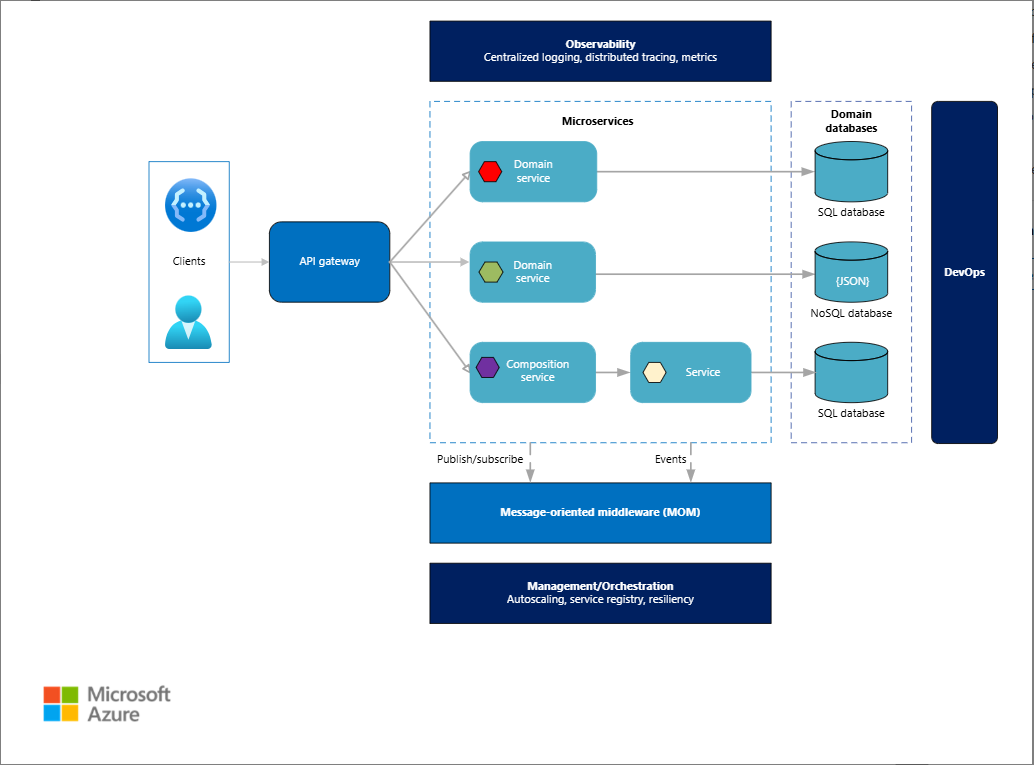
Instead of one massive platform, functionality is broken into smaller, independent components each responsible for a specific capability like inventory, pricing, checkout, customer data, or analytics.
This shift is what allows retailers to scale without rebuilding their systems every time the business evolves.
Why Microservices are Revolutionizing Retail Software
Microservices architecture means each part of the system can be developed, updated, and scaled independently.
For retailers, this delivers real business benefits:
- Faster rollout of new features
- Lower risk when making changes
- Better system stability during peak traffic
According to Microsoft, microservices help organizations increase system resilience and reduce downtime by isolating failures instead of letting them cascade across the platform.
The Benefits of Modular Retail Solutions
Modular thinking means retailers don’t have to commit to everything at once. They can start with core systems and add capabilities as the business grows.
Modular platforms allow retailers to:
-
Add new sales channels without disruption
- Integrate new tools and partners easily
- Replace outdated components without rebuilding the entire system
How Retailers Can Implement Microservices
Retailers don’t switch to microservices overnight. The transition usually happens gradually.
Common approaches include:
- Breaking out inventory or pricing as separate services
- Introducing APIs between existing systems
- Migrating high-impact features first
According to McKinsey, companies adopting modular and API-driven architectures improve time to market by 30–50% for new digital features.
Microservices vs. Traditional Software Models
|
Traditional Monolithic Systems |
Microservices & Modular Systems |
|
One large, tightly coupled system |
Independent, loosely coupled services |
|
Risky updates |
Safer, isolated changes |
|
Slower feature delivery |
Faster time to market |
|
Difficult to scale |
Scale only what’s needed |
Bottom line:
Microservices reduce long-term technical debt and give retailers freedom to evolve without disruption.
Low-Code: More Power Than You Think
For years, low-code platforms were seen as shortcuts useful for simple tools, but not for serious retail systems. That perception is outdated.
Today, low-code plays a strategic role in how modern retailers move faster, test ideas, and reduce dependency on long development cycles. It doesn’t replace custom development. It complements it.
Used correctly, low-code becomes a speed layer on top of a solid retail software foundation.
What Low-Code Platforms Can Do for Retail
Low-code platforms allow teams to build applications using visual components, reusable logic, and minimal hand-written code.
In retail, this works best for operational workflows that change frequently.
Microsoft positions low-code as a way for business and IT teams to collaborate without compromising security or scalability.
Speed and Efficiency with Low-Code Solutions
Retail is seasonal, regional, and unpredictable. Processes change faster than core systems can be rebuilt.
Low-code helps retailers:
- Adapt workflows without disrupting POS, ERP, or inventory systems
- Reduce reliance on spreadsheets and email-based processes
- Respond faster to operational changes during peak periods
Breaking Down the Myths of Low-Code
Let’s address the common misconceptions directly.
Myth: Low-code can’t scale
Reality: Low-code scales when built on top of strong APIs and core systems.
Myth: Low-code replaces developers
Reality: Developers use low-code to remove repetitive work and focus on complex problems.
Myth: Low-code is only for small teams
Reality: Enterprise platforms like Salesforce actively promote low-code for large organizations.
Where Low-Code Fits in a Retail Software Strategy
Low-code works best when:
- Core retail systems are stable and scalable
- APIs are available for integrations
- Data ownership and governance are clearly defined
- Low-code is used for workflows, not business-critical logic
In other words, low-code should accelerate execution, not define the foundation.
That’s why teams like Mediusware treat low-code as a complementary capability within custom retail software development not a replacement for it.
When combined with modular architecture and integration-first design, low-code becomes a force multiplier.
Off the Shelf Software vs Custom Retail Software Development
This is the point where most retail leaders pause.
Not because something is broken, but because growth starts feeling harder than it should.
At this stage, the question is no longer:
What software should we use?
It becomes:
What kind of software strategy will support where we’re going next?
Retailers usually face two paths:
- Off-the-shelf retail software
- Custom retail software development
Both have value. They solve very different problems.
When off-the-shelf retail software works well
Off-the-shelf retail software is built for speed and standardization.
It’s designed to support common retail workflows with minimal setup.
Off the shelf solutions work best when:
- Business processes are simple and mostly standard
- Speed of launch matters more than flexibility
- Operations run across limited channels
- Custom workflows are minimal or unnecessary
As explained in this retail software overview by Ultracodes, pre-built solutions are often effective for retailers that need reliability and speed rather than deep customization.
Limitations of generic retail software at scale
The problem isn’t that off-the-shelf software is bad.
It’s that it’s built for the average use case.
As retail operations grow, those averages stop applying.
At scale, retailers often face challenges such as:
- Rigid workflows that don’t match real operational needs
- Limited integration capabilities as systems multiply
- Growing dependency on plugins and add-ons to fill gaps
- Rising subscription and licensing costs tied to users, locations, or transactions
- Restricted control over data and product roadmap
These limitations don’t always look dramatic. They show up as daily friction.
Teams rely on spreadsheets for reporting. Inventory logic is handled manually. New channels or locations require complex configurations instead of clean expansion.
The real cost isn’t just technical.
It’s slower decisions, operational inefficiency, frustrated teams, and missed growth opportunities.
Custom software as a long-term advantage
Custom retail software becomes valuable when growth, control, and flexibility are no longer optional.
Instead of asking:
What software can we use?
Retail leaders start asking:
What software can grow with us without breaking everything?
Custom development shifts software from a constraint into infrastructure.
It allows retailers to:
- Build systems around real workflows
- Integrate deeply across inventory, POS, ERP, and fulfillment
- Scale without constant replatforming
- Own data, architecture, and roadmap decisions
Benefits of custom-built Retail Software Solution
Once retailers move beyond generic platforms, the benefits show up quickly and compound over time.
|
Benefit |
What It Means in Practice |
|
Smooth setup |
Systems are designed around existing retail workflows, reducing disruption during rollout |
|
Ownership and autonomy |
Full control over data, integrations, and roadmap without vendor lock-in |
|
Scalability and flexibility |
Add stores, channels, or features without re-architecting the platform |
|
Enhanced customer experience |
Consistent inventory, pricing, and loyalty across all touchpoints |
|
Alignment with business objectives |
Software evolves with business strategy, not generic platform constraints |
Why this matters:
Custom software removes the quiet inefficiencies that slow growing retailers down. Fewer workarounds. Less manual effort. More confidence in decisions.
Retail Software Development for Different Business Models
Retail isn’t one industry. It’s a collection of very different business models operating under the same label. And this is exactly why generic retail software so often falls short.
The way you sell, fulfill, price, and serve customers directly shapes what your software must do. When software ignores this, complexity turns into friction.
Let’s break this down by business model.
Software needs of eCommerce-first retailers
E-commerce first retailers are built around speed, volume, and automation.
Their challenge isn’t selling. It’s managing scale without losing control.
Key software priorities include:
- Real-time inventory visibility across warehouses and fulfillment partners
- Order management that handles high transaction volumes
- Seamless integrations with marketplaces, payment gateways, and logistics providers
- Centralized customer data across digital touchpoints
This is where many E-commerce brands move beyond plugins and start to build retail software components tailored to their operations.
Challenges in omnichannel retail environments
Omnichannel retail adds complexity fast.
Customers expect:
- Buy online, pick up in store
- Consistent pricing and promotions across channels
- Unified loyalty and customer experience
Behind the scenes, this requires systems that can:
- Synchronize inventory in real time across locations
- Maintain a single customer profile across channels
- Coordinate POS, ecommerce, and back-office systems
Off the shelf tools often struggle here because omnichannel logic is highly contextual. That’s why many omnichannel retailers invest in custom retail software development to connect systems cleanly instead of relying on fragile integrations.
Retail software for franchises and multi-location stores
Franchise and multi-location retailers face a different challenge:
central control with local flexibility.
Their software must support:
- Centralized reporting and governance
- Location-level pricing, promotions, and inventory rules
- Role-based access for store managers and regional teams
Too much rigidity slows local operations.
Too much freedom creates inconsistency.
Custom retail software allows franchises to scale locations while maintaining operational standards without forcing every store into the same rigid workflows.
Software requirements for wholesalers and distributors
Wholesale and distribution-focused retailers operate on margins, volume, and efficiency rather than impulse buying.
Their software needs typically include:
- Bulk and contract-based pricing models
- Advanced inventory and demand forecasting
- Supplier and vendor management
- Integration with logistics and warehouse systems
Generic retail tools rarely support these requirements out of the box. Custom development enables tighter control over supply chains, fulfillment accuracy, and margin management.
Features That Matter Most to Retail Leaders
Retail leaders don’t look for long feature lists. They look for control, visibility, and confidence.
The right features reduce uncertainty, remove manual effort, and make growth predictable instead of stressful.
These are the capabilities that consistently separate strong retail systems from fragile ones.
Inventory accuracy and demand forecasting
Inventory problems rarely start in the warehouse. They start with poor visibility.
Retail software must provide:
- Real-time stock levels across all locations and channels
- Clear demand trends, not just historical reports
- Early warnings for stockouts and overstock
When leaders can trust inventory data, they can:
- Reduce lost sales
- Free up cash tied in excess stock
- Plan promotions and replenishment with confidence
This is foundational. Without accurate inventory visibility, every other decision becomes a guess.
Seamless system integrations
Modern retail doesn’t run on one system. It runs on many.
Retail leaders prioritize software that integrates cleanly with:
- POS and ecommerce platforms
- ERP and accounting systems
- Logistics and fulfillment providers
- Marketing and customer platforms
The goal isn’t “more integrations.” It has fewer gaps.
When systems don’t talk to each other, teams fill the gaps manually. That’s where errors, delays, and frustration creep in.
Strong integration turns retail operations into a single, connected flow instead of disconnected tools.
Customer data, loyalty, and personalization
Customer data is only valuable if it’s usable.
Retail leaders look for systems that:
- Centralize customer profiles across channels
- Track behavior, preferences, and purchase history
- Support personalized offers, loyalty, and engagement
This isn’t about aggressive marketing. It’s about relevance.
When customer data is unified, retailers can deliver consistent experiences whether a customer shops online, in-store, or across both.
Automation that reduces manual effort
Automation is one of the fastest ways retail software delivers ROI.
High-impact automation includes:
- Inventory replenishment triggers
- Order routing and fulfillment workflows
- Pricing and promotion rules
- Reporting and performance monitoring
The goal isn’t to remove people. It’s to remove repetitive work.
Retail leaders value software that allows teams to focus on strategy, customer experience, and growth instead of constant operational firefighting.
Where Retail Software Decisions Often Go Wrong
Most retail software projects don’t fail because of bad technology.
They fail because of bad decisions made early, often with good intentions.
These mistakes don’t show up immediately. They surface months later as delays, rework, frustration, and missed growth opportunities.
Here are the patterns retail leaders repeatedly run into.
Choosing software without a long-term retail strategy
One of the most common mistakes is selecting software based only on current pain points.
The questions asked are usually:
- Will this solve today’s problem?
- How fast can we launch?
- What’s the lowest upfront cost?
What’s often missed:
- Where the business will be in 2–3 years
- How operations will expand across channels or locations
- How data, reporting, and integrations will evolve
When software is chosen without a growth lens, it becomes a temporary fix not a foundation.
The result is re-platforming, patchwork solutions, or costly rebuilds sooner than expected.
Ignoring integration, scalability, and data ownership
Retail systems rarely operate in isolation. Yet many decisions treat software as if it will.
Common oversights include:
- Weak or limited APIs
- No clear integration plan with POS, ERP, or logistics systems
- Vendor-controlled data structures
- Scalability limits hidden behind pricing tiers
These issues don’t hurt on day one. They hurt when:
- New channels are added
- Data needs to flow faster
- AI and analytics become priorities
At that point, lack of control becomes a serious operational risk.
Building features that teams don’t use
Another frequent mistake is building software based on assumptions, not real workflows.
This happens when:
- Store and operations teams aren’t involved early
- Features are copied from competitors
- Complexity is mistaken for capability
The outcome is predictable:
- Teams avoid the system
- Spreadsheets reappear
- Manual processes run in parallel
Results of Retail Software Built the Right Way
When retail software is designed around real operations, aligned with long-term goals, and adopted properly, the impact shows up quickly and compounds over time.
These results aren’t abstract. They’re operational, measurable, and felt across the business.
Smoother operations and fewer surprises
Well-built retail software brings predictability back into day-to-day operations.
Leaders gain:
- Clear visibility into inventory, sales, and performance
- Fewer last-minute firefights
- Less dependency on manual checks and corrections
Instead of reacting to problems after they happen, teams can spot issues early and address them before they escalate.
Operations feel calmer, even as the business grows.
Better control over costs and performance
One of the biggest advantages of doing retail software right is financial clarity.
With connected systems and reliable data, retailers can:
- Identify cost leaks in inventory and fulfillment
- Track performance by channel, location, or product line
- Make informed decisions about pricing, promotions, and expansion
Manual work decreases. Errors drop. Reporting becomes trustworthy.
Over time, this leads to stronger margins and more confident investment decisions.
Consistent customer experience across channels
Customers don’t think in terms of systems. They think in terms of experience.
When retail software is built correctly:
- Pricing stays consistent across channels
- Inventory availability is accurate
- Loyalty and personalization work everywhere
Whether customers shop online, in-store, or across both, the experience feels unified instead of fragmented.
That consistency builds trust, and trust drives repeat business.
What Sets Mediusware’s Retail Software Approach Apart
Most retail software vendors talk about features.
Mediusware focuses on outcomes.
The difference shows up not in pitch decks, but in how retail systems perform once they’re live under real traffic, real inventory pressure, and real growth demands.
Here’s what actually sets the approach apart.
Industry Experts Who Understand Retail Operations
Retail software fails when it’s designed without understanding how retail actually works.
Mediusware’s teams bring hands-on experience across:
- E-commerce and omnichannel retail
- Inventory-heavy and catalog-driven businesses
- Multi-location and franchise operations
- Retail analytics, fulfillment, and performance optimization
This industry-first perspective ensures:
- Software aligns with real retail workflows, not assumptions
- Inventory, pricing, and fulfillment logic reflects operational reality
- Reporting supports leadership decisions, not just dashboards
Retail isn’t theoretical. Neither is the software Mediusware builds.
Custom-Built Retail Software Solution
Mediusware specializes in custom retail software development built around how each business operates.
Instead of forcing retailers into rigid platforms, systems are designed to:
- Integrate seamlessly with existing POS, ERP, and ecommerce platforms
- Support custom inventory, pricing, and fulfillment rules
- Scale across stores, warehouses, and digital channels
- Evolve without constant replatforming
Proven Results in Retail and E-Commerce Environments
This isn’t theoretical.
In a marine retail ecommerce transformation, Mediusware helped turn a low-performing online catalog into a data-driven retail platform within weeks.
Measured outcomes included:
- Mobile performance score reached 94
- Conversion rate improved from 0.10% to 1.80%
These gains were driven by software-level improvements, performance optimization, analytics integration, ecommerce logic, and system reliability, not surface-level changes.
In another retail-adjacent project, Amplify RHS, Mediusware built a custom ecommerce and catalog platform for a parts-based retail business. The focus wasn’t just selling products, but enabling:
- Fast product discovery across complex catalogs
- Reliable inventory representation
- Scalable architecture to support growth
Both projects reflect the same principle: retail software must support how customers shop and how teams operate, at scale.
Architecture designed for long-term growth
Across retail projects, Mediusware consistently applies:
- Modular, scalable architecture
- API-first integrations
- Flexibility to extend systems without rewrites
This allows retailers to add new capabilities, channels, or workflows without destabilizing existing operations.
Retail software becomes a foundation, not a bottleneck.
Ongoing support beyond launch
Retail software doesn’t stop evolving after launch.
Mediusware supports clients through:
- Performance optimization as usage grows
- Workflow refinements as operations change
- Continuous improvements across integrations and automation
- Strategic guidance as new retail capabilities are introduced
The goal isn't delivery.
It's long-term operational alignment.
Let’s Build the Next Era of Retail
If retail operations start feeling harder to manage as the business grows, that’s not a failure. It’s a signal.
A signal that your systems were built for an earlier stage, and the business has moved beyond them.
By now, you’ve seen how modern retail software:
- Replaces disconnected tools with a single operational flow
- Reduces manual effort and hidden inefficiencies
- Scales with growth instead of slowing it down
- Supports better decisions through real-time visibility and data
Before investing in retail software development, the most important work isn’t choosing tools.
It’s asking the right questions:
- Which processes cause the most friction today?
- Where does manual work still dominate?
- What will break first if the business doubles?
- Which systems must integrate seamlessly to support growth?
Clear answers here prevent wasted effort later.
So, are you planning your next bold step with confidence?
If you're ready to build a retail software foundation that supports where your business is going. Not just where it's been, that's the conversation worth having.

I work with founders and leadership teams when growth moves faster than their systems, teams, or decisions. I’ve led 850+ projects for 750+ clients across 20+ countries, working across 100+ technologies and counting. I care about ownership, clarity, and building things that last beyond the launch.
Featureblogs
Relatedblogs
01
From Complexity to Clarity: Organizing Variant-Wise Product Storage for Your Online Store02
The Ultimate Framework to Boost Your e-commerce Business03
Shopify vs WooCommerce: Which Platform Is Right for You?04
Everything You Need to Know About AI-Driven Inventory Management Systems05
Agentic E-Commerce: Implementing Low-Code for Personalized Shopping ExperiencesAuthorblogs
01
SaaS MVP Development: A Founder’s Guide for 202702
Zero Clicks, Falling Traffic: How to Win Back Revenue03
Ranking on Google in 2026: What Matters in the Age of AI Search04
How to Choose an API Development Company for Your SaaS Product05
Why Software Companies Are Turning to Strategic Partnerships for Faster Growth