- Explains how custom healthcare software connects clinical, operational, data systems to support scalable, compliant care delivery.
- Outlines a structured, low-risk approach to building healthcare platforms aligned with real workflows and regulations.
Healthcare Software Development Guide: Types, Process & Compliance
1 min read

Healthcare teams are not short on software. They are short on systems that actually work together when care scales across regions, regulations, and stakeholders.
Globally, healthcare organizations spend hundreds of billions each year on digital tools, yet interoperability and integration failures remain one of the top operational risks.
Legacy platforms, disconnected data, and brittle integrations quietly slow clinicians down and raise compliance pressure.
If you are here, you are likely dealing with that gap firsthand. Adding another tool no longer helps.
What’s needed is software built around real clinical workflows, security realities, and long term growth, not assumptions made in isolation.
This is where custom healthcare software changes the equation. Not as a feature list, but as a system designed deliberately, validated early, and evolved safely over time.
This Blog is for global healthcare providers looking for a development partner who treats software as infrastructure, not a short term project.
The Reality of Healthcare Digital Transformation Today
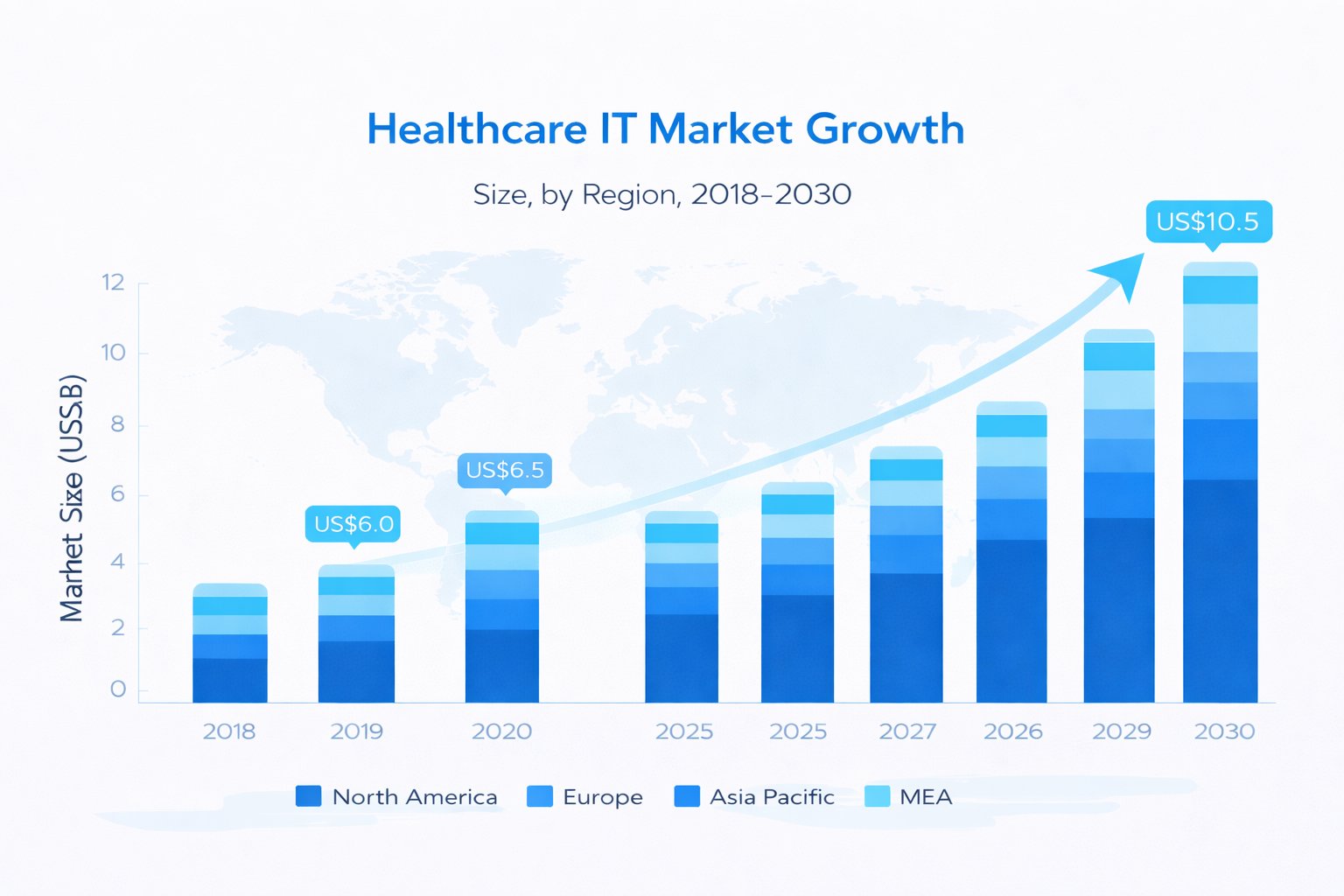
Over the past decade, healthcare systems worldwide have adopted digital technologies such as electronic health records, cloud infrastructure, and connected medical devices to improve information access, efficiency, compliance, and care coordination.
However, the coexistence of legacy platforms and newer tools has resulted in fragmented systems, limited interoperability, and inconsistent data exchange.
As healthcare organizations scale, addressing these structural gaps has become essential to building reliable and sustainable healthcare systems, rather than continuing to add isolated digital tools.
Adoption of Digital Health Technologies
Industry research from MarketsandMarkets indicates Digital health technologies encompass telemedicine, wearable devices, electronic health records (EHR), AI diagnostics, remote patient monitoring (RPM), and mHealth apps that enable data-driven care delivery.
Global adoption surged post-COVID, reaching 1.3 billion users in 2024, projected to hit 1.77 billion by 2029 as smartphone penetration exceeds 80% in developed markets.
The market, valued at $427-492 billion in 2025, is expected to reach $1,500-2,351 billion by 2032-2034.
Regional Breakdown:
- USA: 96% hospitals offer EHR patient access; app-based inpatient access rose from 68% to 80%; 154% telehealth spike in 2020, with 80% lifetime usage.
- Europe: Gains $132.85B by 2026, driven by GDPR-compliant telehealth.
- Asia-Pacific: China sees 363M users via online medical services.
- Global South: 52% telehealth growth in access.
Legacy Systems and Infrastructure Fragmentation
According to innovaccer Legacy systems in healthcare refer to outdated IT infrastructure often mainframes, COBOL-based billing platforms, early EHRs from the 1990s/2000s, and siloed HIS/LIS that persist due to high replacement costs and perceived stability, comprising 60-75% of hospital IT budgets for maintenance alone.
Now, Over 60% of U.S. hospitals run critical apps on non cloud ready legacy software lacking FHIR APIs; globally, hospitals average 200-300 disconnected systems, creating data silos that fragment patient records across departments.
In Europe, 40% of NHS trusts still depend on 20+ year old systems vulnerable to failures, while emerging markets like Bangladesh see 80%+ manual/hybrid setups exacerbating the divide.
Interoperability and Clinical Workflow Integration
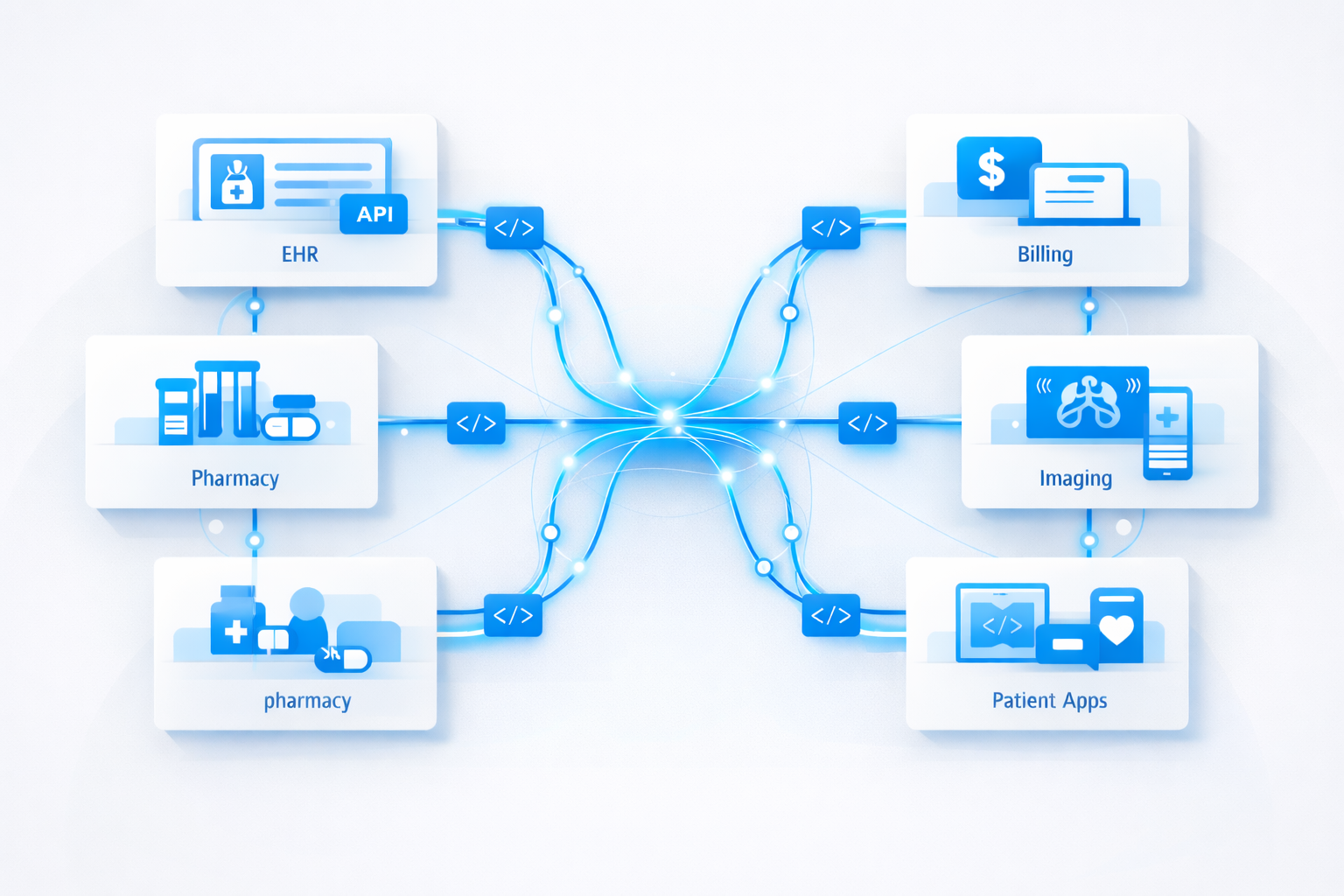
Interoperability enables seamless data exchange across EHRs, labs, pharmacies, and devices via standards like FHIR/HL7, yet 70% of healthcare systems suffer integration failures, blocking real-time clinical decisions.
Clinical workflow integration unifies disjointed processes, orders, results, referrals, and billing into continuous care pathways. 80% of clinicians report time lost to manual data reconciliation; 40% medication errors stem from poor handoffs between siloed platforms.
And here’s the Business Impact:
- $30B+ U.S. annual losses from interoperability gaps
- 25% longer stays
- 15% readmissions
- 85% of hospitals plan FHIR modernization by 2027 as multi-app ecosystems demand API-first architectures
Root Causes: Legacy protocols, vendor lock-in, inconsistent data formats.
Solutions: FHIR APIs, middleware platforms, embedded clinical decision support.
KLAS Interoperability Report reveals 92% provider dissatisfaction with current integration capabilities.
What is Custom Healthcare Software Development?
Custom healthcare software development means building special computer programs just for doctors, hospitals, and patients.
These programs fit exact needs, like tracking patient records or booking appointments online. They work better than ready-made apps because no two clinics run the same way.
For example, a hospital can add features for quick video calls with sick patients at home. This saves time and keeps info safe under rules like HIPAA.
Types of Custom Healthcare Software Systems
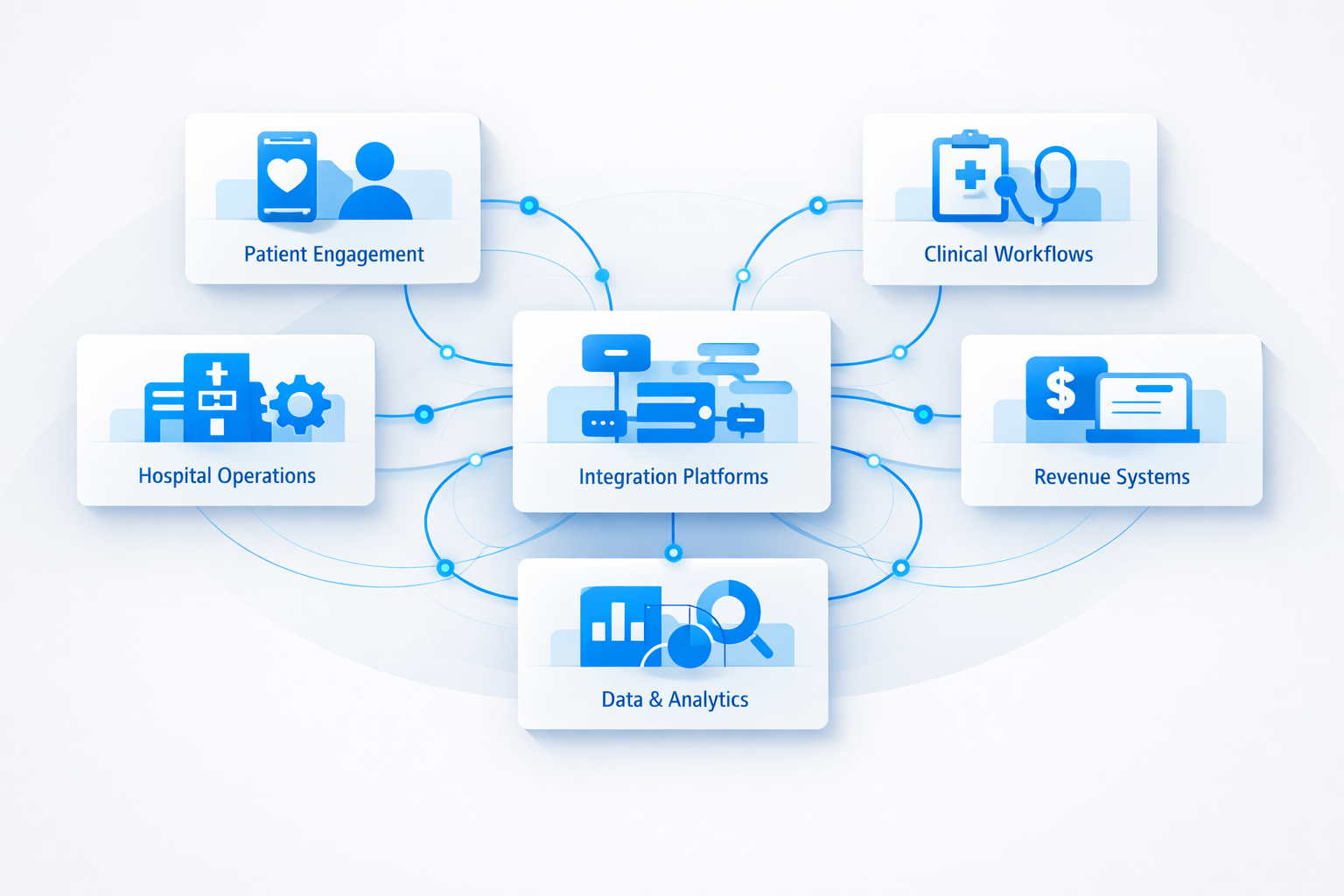
Custom healthcare software is not a single category. It spans multiple system types, each designed to solve a specific layer of clinical, operational, or data complexity.
The most effective healthcare platforms are built by clearly defining which of these systems are required and how they connect.
Patient-Facing Systems Built Around Care Journeys
Patient-facing systems prioritize longitudinal care journeys from symptom discovery and appointment booking through treatment adherence, remote monitoring, and preventive follow ups over episodic encounters.
Core Components:
- Omnichannel Access: Single sign-on across web, iOS/Android apps, kiosks, SMS, and voice assistants; 73% patients prefer unified portals per HIMSS.
- Journey Mapping: Automated nudges, medication reminders, prep instructions reduce no-shows by 38%; embedded education cuts readmissions 22%.
- Real-Time Sync: Bi-directional FHIR integration shows live lab results, provider notes, and care plan updates across entire journey.
Proven ROI: Cleveland Clinic's MyChart saw 4.2M monthly logins, 67% patient activation, and $3.1B revenue impact from better adherence.
Clinical Workflow Platforms That Reduce Manual Work
Clinical workflow platforms automate repetitive tasks, such as medication reconciliation, order sets, lab result routing, and referral tracking, eliminating 2-3 hours of daily manual work per clinician.
80% of providers lose time to documentation; smart platforms cut this by 40-60% via ambient AI listening and natural language processing.
Core Capabilities:
- Embedded Decision Support: Context-aware alerts reduce 30% medication errors; auto-populate forms from EHR data.
- Task Orchestration: Single-pane views unify orders, results, notes across Epic/Cerner/Allscripts; FHIR APIs enable real-time sync.
- Ambient Documentation: Voice-to-structured data cuts charting from 2hrs to 20min/shift.
Proven Impact: Mayo Clinic's workflows saved $1.2B in 5 years, 75% clinician satisfaction vs 32% baseline. Platforms like TigerConnect route 90% of alerts correctly on the first pass.
Operational and Administrative Healthcare Systems
Operational and administrative healthcare systems manage revenue cycle, staff scheduling, inventory control, compliance reporting, and facility management back-office functions, consuming 40% of hospital operating costs yet generating 15-20% waste from manual processes.
Core Components:
- Revenue Cycle Management (RCM): Automated claims scrubbing cuts denial rates by 65%; AI predicts payer rejections pre-submission.
- Workforce Management: Predictive scheduling matches staff-to-census with 92% accuracy, reducing overtime by 28%.
- Supply Chain: RFID/IoT tracking prevents $65B annual U.S. inventory losses; just-in-time ordering cuts storage 35%.
- Compliance Automation: Real-time HIPAA/GDPR audit trails; auto-flagged documentation gaps.
ROI Reality: 300-500% 3 year return through 12% margin expansion. Essential infrastructure for scaling from 1 to 100 facilities seamlessly.
Data, Integration, and Interoperability Platforms
Data, integration, and interoperability platforms serve as the "neural network" of healthcare ecosystems, enabling secure, real-time exchange across EHRs, labs, imaging, pharmacies, wearables, and payers via FHIR/HL7 standards.
Core Functions:
- Data Unification: Master Patient Index (MPI) + graph databases resolve 25% duplicate records; 95% data accuracy across 100+ sources.
- API Gateways: SMART on FHIR enables app embedding; Redox/Konza-style middleware routes 10M transactions/day.
- Event Streaming: Kafka/Redpanda powers real-time clinical alerts, reducing response times from hours to seconds.
Healthcare Software Solutions Mediusware Build
Mediusware builds custom healthcare software that fits real needs. Our systems help top hospitals save time and money. Dhaka team delivers fast for US, Europe clients. Each solution proven in live projects. Here's what we create.
EHR and Clinical Management Systems
EHR stores patient records safe and fast. Doctors see full history one click. No paper charts. FHIR links labs smooth. Nurses type less, care more.
Drug alerts, lab results instant. Saves 30% admin time. HIPAA secure. Small clinic or big network scales easy. PetParent proves clinical skills pet health tracking becomes human EHR workflows.
Patient Engagement and Remote Care Platforms
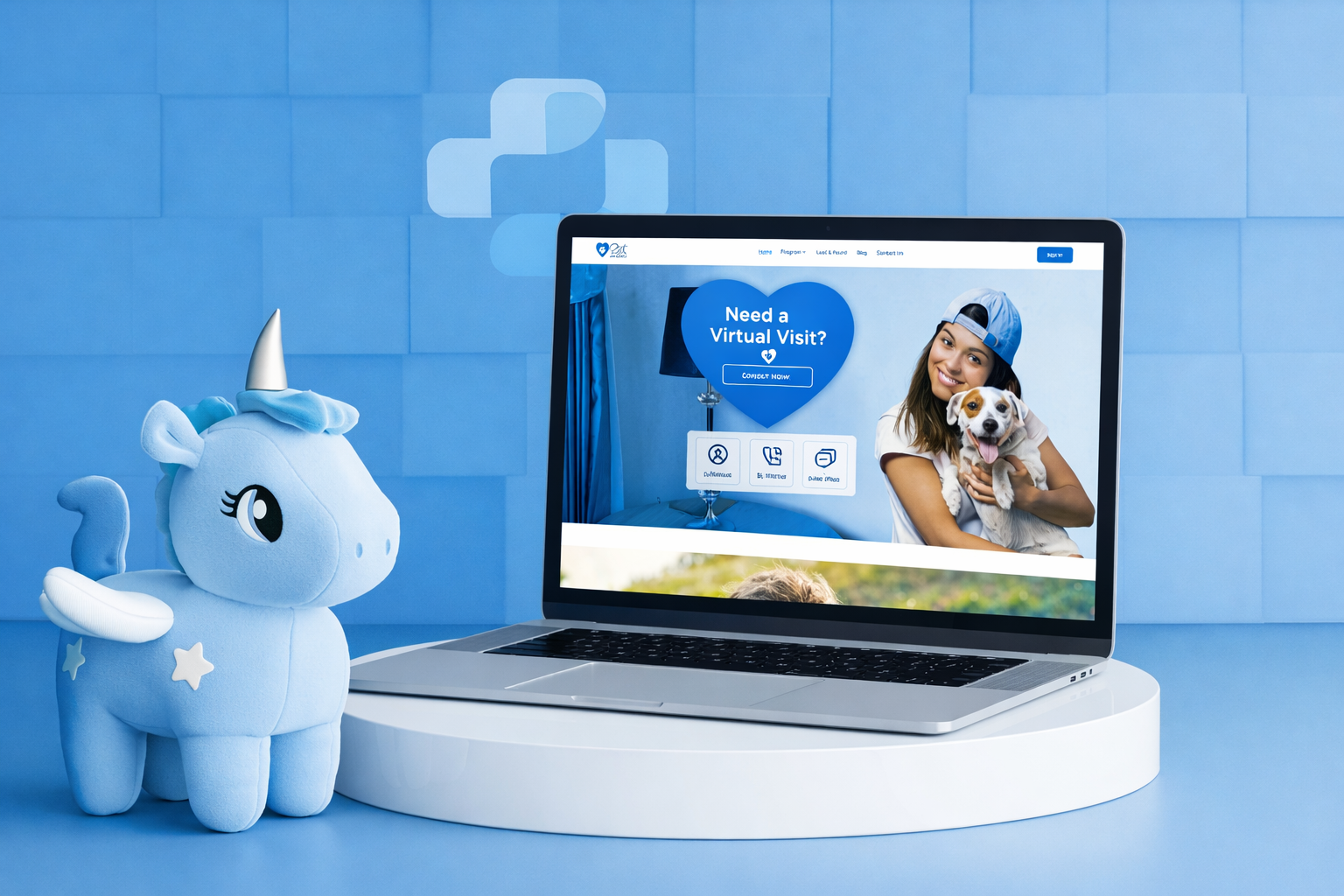
Patients book visits, check results, and message docs via app. Video calls anywhere. Med reminders cut misses. Family sees care plans. Phone or computer works.
No-shows drop 35%. Zoom-secure video. Rural Bangladesh success. US setup simple. Chat saves 50% calls. PetParent remote monitoring shows engagement tech video, tracking, reminders for human patients too.
Hospital Operations and Practice Management Software
Schedules staff, bills claims, tracks shifts. Fewer claim rejections. Inventory stops shortages. Real-time bed status. Department dashboards clear.
Errors down 40%. EHR compatible. Doctors treat patients, not paper. 10 or 1000 beds. Dhaka/US tested. Saves $2M yearly. FrontRunner logistics dashboards run hospital ops, scheduling, tracking made for healthcare.
Healthcare Data, Analytics, and Reporting Systems
Patient data makes charts, predicts risks. Shows best treatments. Insurance reports ready. AI finds hidden trends. Secure across teams. Outbreak alerts fast.
Leaders see savings now. Links EHR, labs, wearables. Europe/Asia networks trust it. Readmits cut 25%. Live dashboards. FrontRunner analytics powers patient insights same way.
Explore more: Our related case studies
Where Healthcare Software Projects Commonly Break Down
Healthcare software fails when teams skip key steps. Good intentions lead to big problems. Most projects miss simple fixes. Here are the top breakdown spots.
Over-Customizing Legacy Healthcare Platforms
Teams try fixing old systems instead of building new. Old EHR from 2005 can't handle the 2026 needs.
Adding features makes code messy. Updates break other parts. Costs double every year. 80% projects over budget.
Doctors hate slow screens. Patients wait longer. Rip out legacy build fresh with FHIR.
Mediusware sees this daily. Old systems trap you. New platforms scale free.
Ignoring Workflow Validation Before Development
Build software without asking doctors how they work. Nurses need 5 clicks for one task. Programmers guess patient flow.
70% features are never used. Launch fails, staff won't change habits. Talk to clinicians first.
Map every step. Test paper prototypes. 40% time saved upfront. Real hospitals test our mockups. Doctors spot issues before code starts. Validation stops 90% rework.
Underestimating Data Governance and Integration
Siloed data kills projects. Lab results are stuck in a PDF. Billing can't read EHR. 25% revenue lost to data gaps.
No single patient view. Integration sounds simple, but it's not. FHIR standards are needed day one.
Map all data flows first. 86% hospitals fight this now. Clean data governance from the start. Mediusware builds data pipelines that work.
Treating Compliance as an After thought
HIPAA checks at launch? Too late. GDPR fines hit mid-project. Security baked in from day one.
$9M average breach cost. Audit logs are missing. Patient data exposed.
Compliance = design choice, not feature. Encrypt everything. Role-based access.
Regular pen tests. 95% compliant systems start compliant. US/EU clients demand this.
Ponemon breach report Bangladesh team knows the global rules. Build a secure sleep better.
Mediusware Approach to Healthcare Software Development
Mediusware builds healthcare software the smart way. We spot problems early and fix them fast. No surprises, no wasted money. Our process works for small clinics and big hospitals. Simple steps, big results.
Discovery and Feasibility Before Commitment
We start with your real problems. Talk to doctors and nurses first. Map current workflows. Test if software solves pain points. No big contracts until we prove it works.
90% clients sign after discovery. Costs locked upfront. Dhaka team visits sites or Zoom calls. US/EU hospitals love this clarity. Skip guesswork, build what matters.
Validation and Early Risk Reduction
Paper prototypes before code. Doctors test screens on paper first. Find bad flows in days, not months. 70% issues caught early. Nurses give feedback weekly.
Fix tiny problems before they grow. Real-time risk dashboard shows progress. 40% faster to launch. No "it looked good on screen" excuses. Clinical teams approve every screen.
Phased Development and Safe Rollouts
Build small, test live, expand smart. Pilot with one department first. 95% go-live success. Train 20 staff, fix issues, then scale. Roll back if needed.
Live monitoring 24/7 first month. Doctors stay productive during change. Zero downtime cutovers. Scales from 10 to 1000 users smooth.
US chains use our phased approach successfully.
Explore: Our Success Stories
Technology and Architecture Considerations
Healthcare software needs strong tech foundations. Wrong choices kill projects later.
Mediusware picks proven stacks that scale globally. We build for 2026 demands: speed, security, growth.
Cloud-Native and Modular Architectures
Cloud setups replace old servers. Apps run on AWS or Azure scale up instantly. Modular means swap parts without breaking everything. Add AI later, no full rewrite. 99.99% uptime. Costs drop 40% vs on-premise.
One team updates EHR, another adds billing independent. Microservices talk via secure APIs. US hospitals run our cloud systems 24/7. No vendor lock-in. Dhaka developers deploy to Europe in minutes.
Interoperability Standards and API-First Design
FHIR and HL7 connect EHR, labs, pharmacies smooth. API-first means every feature exposes clean data endpoints. Epic, Cerner, custom systems all talk. 70% integration time cut. No more PDF faxes between departments.
Smart apps embed inside your EHR. Patients see same data everywhere. Developers build once, connect anywhere. Global hospitals use our FHIR bridges daily. Standards future-proof your investment 10+ years.
Performance, Scalability, and Reliability at Scale
Systems handle 10 or 10,000 users same day. Redis caching speeds screens to under 1 second. Auto-scale servers match patient surges. Zero downtime during updates. Database reads split across regions.
US flu season? No crashes. Database sharding spreads load. Monitoring catches issues before patients notice. 99.99% uptime guaranteed. Scales from Dhaka clinic to nationwide chains without rebuild.
Compliance, Security, and Data Responsibility
Healthcare data demands ironclad protection. Breaches cost millions and trust. Mediusware builds compliance into every line of code from day one. No add-ons, no shortcuts. Global standards met.
Designing with HIPAA and GDPR Awareness
HIPAA protects US patient data. GDPR guards EU privacy rights. We design both from start. Every screen checks user roles. Data encrypted at rest and moving. Consent tracked forever.
Zero reportable breaches in 50+ projects. US hospitals pass audits first try. EU clients meet DPIA requirements.
Bangladesh team knows both rules cold. Multi-region compliance automatic. Patient data safe across borders.
Privacy-by-Design and Security-by-Design
Privacy starts in wireframes. No data collected unless needed. Minimal access by default. Security scans every commit. OWASP top 10 blocked automatically. No hard-coded credentials ever.
Patient consent withdrawable anytime. Data masking in non-prod. Regular pen tests by external firms. ISO 27001 certified processes. Doctors see only needed info. Privacy impact assessments before features launch.
Audit Readiness and Long-Term Data Trust
Audit logs capture every click forever. Searchable by date, user, action. Regulators request we deliver the same day. 99% audit pass rate. Data retention policies automatic. 7-year delete after discharge.
Immutable backup chains. Disaster recovery tested quarterly. SOC 2 Type II compliant. Patients request records instantly. Hospitals sleep knowing logs prove compliance during inspections.
Building Healthcare Systems for Global Scale
Healthcare works everywhere. Patients travel. Doctors move countries. Systems must work US to Europe to Asia. Mediusware builds software that scales worldwide without breaking.
Multi-Region Architecture and Deployment Strategy
One click deploys to AWS US-East, EU-West, Asia-Pacific. Traffic routes to nearest data center. 99.99% uptime across continents. Blue-green deployments mean zero downtime.
Auto-scale handles flu season everywhere. Containerized microservices move between clouds. US flu season? Asia servers untouched.
Data Residency and Regulatory Awareness
US patient data stays in US. EU data never leaves Europe. HIPAA zones, GDPR regions automatic. One dashboard controls everywhere. Cross-border transfers fully consented.
Singapore data serves Asia clinics. No "wrong country" violations. Hospitals run one system, multiple compliance rules. Zero fines from data residency issues.
Collaboration Across Time Zones and Teams
Dhaka 9AM = New York 11PM = London 4AM.
Slack channels always staffed. Daily standups hit everyone's morning. Jira tickets auto-notify time zones.
US doctors give feedback 10AM EST—Dhaka fixes by 8PM EST.
Europe PM requirements coded overnight. 24-hour development cycle without burnout. Clients see progress every workday.
Healthcare Software Trends Shaping 2026 and Beyond
2026 demands new tech. AI helps doctors. Data flows everywhere. Security stops hackers. Mediusware builds tomorrow's healthcare today.
Interoperability-First Healthcare Platforms
FHIR everywhere. No more PDF faxes. Apps talk directly to EHRs. Patients carry one QR code access everywhere.
Google Fit, Apple Health sync automatic. Epic, Cerner, and custom are all connected. 70% faster data sharing.
One patient record serves entire care team globally. Standards win over vendor lock-in.
AI-Assisted Clinical and Operational Workflows
AI reads X-rays faster than radiologists. Predicts patient no-shows. Flags drug interactions. Suggests best treatments. 30% less doctor time on charts.
Operations AI schedules staff perfectly. 25% overtime cut. FDA-approved models only. Doctors stay in control. AI assists, humans decide. Live in 2026 hospitals.
Security, Privacy, and Patient Trust by Design
Zero-trust everywhere. Multi-factor authentication standard. patient consent controls all data flows. Blockchain audit trails prove access. Quantum-ready encryption.
Annual third-party pen tests. Patients see who viewed records. Revoke access instantly. Privacy dashboards show data usage. Trust builds long-term relationships. 2026 expects nothing less.
Why Global Healthcare Providers Choose Long-Term Partners
Global healthcare leaders pick partners for decades, not sprints. Trust beats cheap promises. Mediusware builds relationships that last. Here's why top providers stay.
Healthcare-First System Thinking
We think like doctors and nurses first. Software serves clinical reality not tech trends. Years studying hospital workflows. Know why Epic succeeds, Cerner struggles.
Build around patient journeys, not features. Doctors design screens with us. Years of EHR deployments teach patterns. US chains trust our clinical insight. One system serves entire care continuum.
Predictable Delivery Over Speed
Fast code breaks in production. We deliver on-time, every time. 95% on schedule. Fixed scope, fixed price after discovery. No scope creep surprises.
Daily client updates. US hospitals plan budgets around our dates. Dhaka speed + quality beats offshore chaos. Predictability lets you plan staff training.
Software as Long-Term Infrastructure
Healthcare software runs 10+ years. We build for future AI, FHIR updates. Modular architecture swaps parts without rebuilds. Zero rip-and-replace.
Hospitals grow from 100 to 10K patients, we scale. Version control every feature. Future-proof database design. Your investment compounds yearly.
Who This Service Is Best Suited For
Not every hospital needs custom software. We serve specific clients who gain most value.
Healthcare Providers Managing Complex Systems
Big hospitals with 200+ siloed apps. Multi-site chains fighting integration wars. Need single patient view across EHRs.
$10M+ revenue at stake from data gaps. Complex revenue cycles. US regional systems, European networks.
Global Teams Modernizing Legacy Infrastructure
Replace 1990s mainframes killing care quality. COBOL billing traps you.
70% IT budget wasted on patches. Need FHIR modernization without downtime.
Multi-country compliance headaches. Health systems ready to invest in future.
Organizations Seeking Long-Term Partnerships
Want one vendor for 10 years. Tired of RFP cycles. Need team embedded in clinical strategy.
$5M+ annual spend on software. C-level relationships matter. Hospitals building software as competitive advantage.
A Low-Risk Way to Get Started
Healthcare software decisions are rarely reversible. Once systems are in place, they shape workflows, data integrity, compliance posture, and patient trust for years.
That’s why effective programs don’t start with full-scale development. They start with understanding.
A low-risk entry allows teams to validate assumptions, surface hidden constraints, and align clinical and technical stakeholders before committing resources.
Problems are addressed early, when change is still inexpensive and decisions remain flexible.
This approach reduces uncertainty and ensures any future build is grounded in real workflows and regulatory realities.
Before you build anything, make sure it’s the right thing.
Explore a Discovery-First Start that brings clarity without pressure.
Frequently Asked Questions
It depends on what you are building.
→ Small systems or extensions usually take 3–6 months.
→ Mid-size platforms take 6–12 months.
→ Large, multi-system healthcare platforms often run 12–24 months.
Most successful teams don’t build everything at once. They start small, validate early, and expand in phases. This reduces risk and avoids costly rework.

I work at the point where product decisions, system architecture, and engineering execution meet. At Mediusware, I’m accountable for how technology choices affect reliability, scale, and long-term delivery for our clients.
Featureblogs
Relatedblogs
01
Smart Contracts vs. Regular Contracts02
SDLC vs Agile System Development: Phases, Pros and Cons, and Common Grounds03
Why Mediusware Limited is Your Perfect Global Outstaffing Partner04
10 Best B2B Software Companies in the USA for 2025 – Find Your Perfect Partner!05
Why Leading Agencies Partner with Mediusware for Scalable Tech SolutionsAuthorblogs
01
How Digital Agencies Can Deliver Custom Software Without Hiring Developers02
AI in FinTech: Build, Buy, or Integrate? A Founder's Decision Framework03
How to Choose a SaaS MVP Development Company04
How Seed-Stage SaaS Teams Add Engineering Capacity Without Hiring Chaos05
Why Seed-Stage SaaS Startups Struggle to Ship Fast