What to Build First in Your SaaS MVP: A Feature Prioritization Guide
Published on: 7 May 2026
Last updated on: 7 May 2026

As a SaaS founder, you're eager to launch your product and make a meaningful impact in your industry.
But before you dive into development, there's a crucial question you must answer: What features should you build first?
The truth is, building an MVP (Minimum Viable Product) is all about focus. It’s tempting to include every shiny feature you've dreamed of, but doing so can lead to feature bloat, wasted resources, and delays in getting to market.
In this guide, we'll walk you through a proven feature prioritization framework to help you focus on what matters most, ensuring that your MVP delivers value to your users without overbuilding.
The Danger of Overbuilding: Why Prioritization Matters
Many startups fall into the trap of trying to pack every feature they think their users might want into their MVP.
But this often leads to diluted focus and slower time-to-market, which could result in losing early adopters.
Common Pitfalls SaaS Founders Face:
- Overbuilding Features: Adding too many bells and whistles, which complicates your MVP and delays feedback.
- Ignoring Core User Needs: Focusing on fancy features instead of solving the primary problem your users face.
- Wasting Resources: Spending time and money on features that won't move the needle for your business.
By prioritizing your features, you can minimize waste, accelerate your launch, and maximize your chances of success.
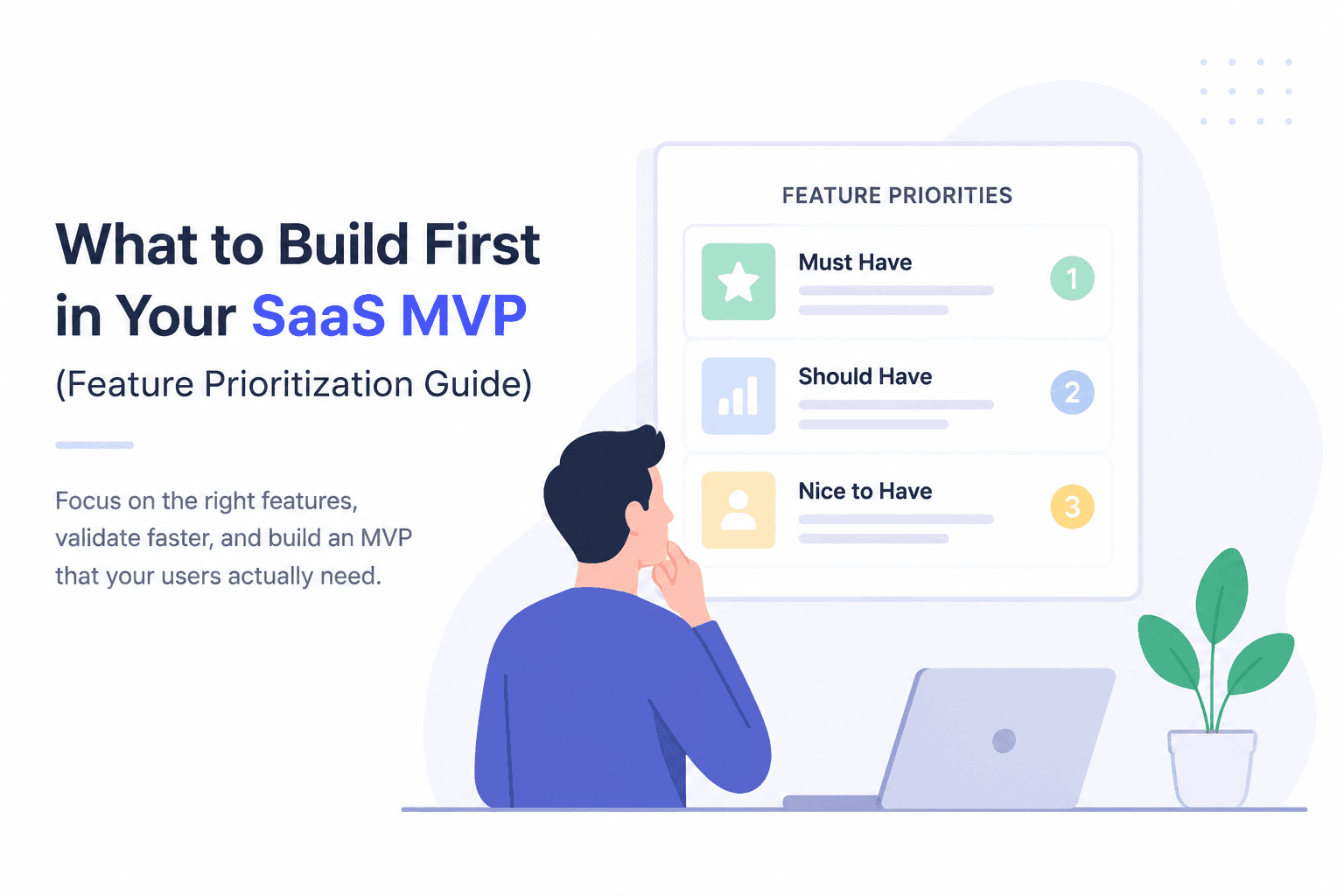
How to Prioritize Your MVP Features: The MoSCoW Method
One of the most effective ways to prioritize features is to use the MoSCoW Method.
This approach helps you categorize your features into four distinct buckets:
1. Must-Have (Critical for MVP)
These features are non-negotiable. Without them, your MVP won’t function or meet the core problem you're solving. Think of them as the foundation upon which your product is built.
Examples:
- User authentication (login/sign-up).
- Core functionality (e.g., search, messaging, payment gateway for a SaaS app).
- A responsive, mobile-friendly interface.
2. Should-Have (Important but not Critical)
These features add significant value and improve the user experience, but your product can still function without them. They should be prioritized after the Must-Have features.
Examples:
- Advanced filters or search options.
- Customizable user settings.
- Reporting tools.
3. Could-Have (Nice-to-Have)
These are optional features that would enhance the product but aren't essential for your MVP's core functionality. They can be added later once you've validated your core product with users.
Examples:
- Additional integrations with third-party tools.
- Aesthetic design updates or additional templates.
- Multi-language support.
4. Won’t-Have (Not for Now)
These features are not needed for your MVP. They often come from visionary ideas that could be useful in the future but won’t provide immediate value or are too far from the core product offering.
Examples:
- Multi-platform support (desktop, mobile, tablet).
- Advanced AI features for prediction or personalization.
- Extra functionalities not directly tied to the MVP’s core promise.
By categorizing your features into these four categories, you'll have a clear roadmap of what needs to be prioritized and what can be deferred.

Why Lean MVP Development Wins
The key to a successful SaaS MVP is lean development, building just enough to solve the core problem, validate the product-market fit, and get valuable feedback.
Here’s why this approach works:
1. Validate Quickly
A lean MVP allows you to get real feedback from users quickly. By launching a simplified version of your product, you can learn what users truly care about and iterate based on that feedback.
2. Save Time and Resources
You’ll avoid spending excessive time or money on features that may never get used. Instead, focus on building only what’s necessary for your first users.
3. Pivot or Persevere
By getting user feedback early, you can decide whether to pivot your product or continue building along the same lines.
This feedback loop ensures that you build what users actually want and not just what you think they need.
Real-World Examples: SaaS MVPs That Got It Right
Let’s look at a few real-world examples to illustrate how effective prioritization can lead to success:
1. Dropbox
Dropbox is a classic example of a SaaS MVP done right. Rather than building a fully-fledged file-sharing platform with all the bells and whistles, Dropbox focused on its core feature: cloud storage.
They built a simple, functional MVP and validated the concept with early adopters, which helped them grow into the powerhouse they are today.
2. Airbnb
Airbnb started as a simple platform that allowed people to rent out their apartments. They focused on solving one core user problem: finding short-term rental options.
It wasn’t until after they gained traction that they began adding more features like ratings, advanced search options, and multiple booking types.
These examples show that prioritizing core functionality and validating with real users first led to the growth and scaling of both companies.
How We Help SaaS Founders Launch Faster (Our MVP Approach)
At Mediusware, we help SaaS founders prioritize the right features for their MVP.
Our team works closely with you to:
- Identify critical features that solve your users’ pain points.
- Implement lean development practices to validate your MVP quickly.
- Provide continuous feedback to help you iterate and grow.
What Our Clients Say About Working with Mediusware.

Final Thoughts: Build Less, Validate Faster
Remember, your MVP doesn’t have to be perfect; it just needs to solve the core problem your users face.
By prioritizing features using the MoSCoW method and focusing on lean MVP development, you can get to market faster and validate your ideas with real feedback.
The journey to a successful SaaS product starts with smart prioritization. Focus on solving the problem that matters most, and build your product step by step.