Quick Summary
- Focus: Preserve familiar user tasks.
- Scope: Separate concepts from releases.
- Access: Explain accounts and data changes.
- Validation: Test before expanding promotion.
Quick Summary

A designer joins a software platform to organize appointments. The business behind that platform sees a larger opportunity involving products, customers, and commerce.
As the vision grows, the team faces a practical question, what happens to the tool people already know?
That question sits at the center of SaaS product evolution. New capabilities create possibilities, but they also introduce decisions about existing workflows, account access, historical information, and rollout timing.
In one designer-software project, the client reported that a free product had launched and that designers used scheduling and basic business modules.
As the direction expanded toward commerce, the client chose to concentrate on a broader successor platform.
Mediusware participated in later transition and outreach planning, including discussion of former-user communication and promotional materials.
This account provides a useful starting point for examining how teams can plan a broader platform while keeping the next step understandable for existing users.
The original product had a focused role: software for designers, with scheduling and unspecified basic business modules reported in use.
The successor represented a broader ambition. The client described adding commerce before deciding to move forward with that platform.
These stages need distinct descriptions. Otherwise, a feature discussed for the successor can easily become attributed to the original product.
A design concept can become a release promise. A proposed transition can sound like a completed migration.
The supplied materials illustrate why that distinction matters. They include project overviews, idea-board layouts, task boards, and navigation pointing toward several business functions.
These screens communicate an intended experience. They do not establish that every visible capability was implemented, tested, or released within the original product.
A useful scope record connects each capability with three things:
| Scope question | What the team needs to establish |
| Which product does it belong to? | Original product, successor, or a separate offering |
| What is its current state? | Proposed, designed, implemented, tested, or released |
| What can users expect? | The specific behavior included in the relevant release |
This gives engineering, design, marketing, and support a shared reference. It also helps prevent campaign copy from getting ahead of the product.
For this project, the evidence supports a change in product direction. The detailed relationship between the original and successor codebases remains unconfirmed.

Scheduling is the clearest documented example of historical use.
That makes it a sensible starting point for understanding continuity. Before deciding how a successor should work, a team needs to examine the tasks people already perform and the information they expect to find.
The client’s account establishes reported usage. It does not establish scheduling frequency, retention, satisfaction, or the relative importance of different modules.
Those questions would require further evidence, such as usage records, support history, interviews, or observation of people completing their work.
Consider an illustrative example: a designer uses the original tool to arrange client consultations. When invited to the successor, that person may first want to know whether appointments remain available and whether the familiar scheduling task still works.
The broader platform vision matters to the business. The immediate task matters to the user.
Connecting the two requires decisions about what to preserve, what to change, and what to explain. Existing behavior provides a starting point for those decisions, while research helps establish which needs deserve priority.

The client described choosing the successor because she considered it more robust.
That is the documented rationale for the direction change. The available intake does not establish a formal feature comparison, engineering assessment, or measured financial benefit from concentrating on one platform.
For teams facing a similar choice, a capability review can make the decision more concrete.
Each existing or proposed capability needs a recorded treatment:
| Treatment | Decision to make |
| Retain | Continue supporting the existing task |
| Adapt | Change the capability to fit the successor |
| Replace | Provide another way to meet the need |
| Retire | End support with an appropriate access and communication plan |
| Defer | Leave it outside the next release until dependencies or priorities are resolved |
This is a recommended planning framework, rather than a reconstruction of completed work on the project.
It helps turn a strategic direction into release scope. For example, deciding to support commerce still leaves questions about which activities belong in the next version: product discovery, inquiry, ordering, payment, or another defined workflow.
Each activity introduces its own requirements. A team needs to specify the behavior before estimating, implementing, and testing it.
The same discipline applies to existing features. Their presence in the original product does not automatically establish how they should appear in the successor.
The supplied project overview brings client information, time billing, transaction summaries, a map, and tasks into one screen. Other designs show idea boards and a task board arranged by status.
These artifacts are useful for discussing how a designer’s work could be organized. Their role in the article is visual analysis, with implementation status kept explicit.
A screen showing an invoice tab does not establish a working invoicing system. A task card with participant avatars does not prove notifications or collaboration behavior. A budget indicator does not establish validated financial calculations.
For delivery planning, each screen needs to be connected with the behavior behind it.
A recommended review could ask:
These questions help move a design toward a testable specification.
For this project, the intake confirms scheduling and basic-module use through the client’s account. It does not verify the complete set of workflows shown across the supplied designs.
Keeping that boundary clear makes the story more accurate and provides a practical lesson for product teams: an interface communicates scope, so its delivery status needs to be visible to everyone making commitments.
Former users bring expectations from the earlier product.
They may expect their credentials to work. They may assume that saved information remains accessible. They may look for a familiar task before exploring anything new.
A transition invitation needs answers to those questions.
The available records do not establish whether original accounts or information moved to the successor. They also do not establish whether the successor was a rebuild, extension, or separate codebase.
For a similar transition, the team should resolve the following before outreach:
| User question | Information the team should provide |
| Can I use my existing login? | Confirmed access instructions |
| Do I need a new account? | Registration requirements and steps |
| Where is my previous information? | Verified availability, export, or recovery options |
| Can I still use familiar features? | Current capability coverage |
| Who can help me? | A defined support route |
These answers should be consistent across the invitation, landing page, onboarding, and support materials.
If re-registration is required, say so directly. If historical information does not appear automatically, explain the actual options available.
Clear access instructions connect the product decision with the user’s first experience of the successor.
The transition discussion included a proposal to introduce the successor to a small pioneer group before broader outreach.
The client’s concern centered on readiness, including bugs and onboarding clarity. This was a plan for the successor; the available evidence does not establish that recruitment or testing was completed.
The approach aligns with established beta guidance. The GOV.UK Service Manual describes private beta as inviting a limited audience, collecting feedback, and improving before wider availability.
Its research guidance includes testing the end to end service and support options.
For a SaaS transition, the complete journey begins before login:
Testing this sequence can reveal problems that isolated screen reviews miss. A usable dashboard cannot compensate for an invitation that sends people to the wrong signup route.
The team also needs a process for acting on findings. Issues require owners, and someone must decide whether the evidence supports expanding access.
Cohort size and readiness thresholds should reflect the product’s users, workflows, and support capacity. They should be defined for the release rather than chosen simply to create a launch target.

The project discussion included preparation for communicating with former users. A contact list was reported ready, and a promotional video was in progress for the successor’s marketing effort.
Those activities establish preparation. They do not establish delivered campaigns, successful onboarding, or commercial conversion.
Once invitations begin, measurement should follow the intended user journey.
| Measure | What it helps the team understand |
| Invitation response | Whether recipients engage with the offer |
| Activation | Whether users complete a defined first useful task |
| Task success | Whether they can complete the agreed workflow |
| Repeated use | Whether activated users return to the relevant activity |
| Support requests | Where problems occur and what assistance is needed |
| Transition completion | Whether users complete the intended access or data process |
Definitions matter. A contact, registered account, active user, and paying customer represent different states.
Activation also needs a specific event. If scheduling is included in the successor release, completing an agreed scheduling task might be a useful activation measure.
The team should define that event and observation period before reporting a rate.
Task success and time on task are established usability measures. Meaningful interpretation depends on the study design; small qualitative sessions can identify problems without supporting population-wide performance claims.
No verified retention, productivity, revenue, or conversion results were available for this project. The measures above describe how a future evaluation could produce useful evidence.
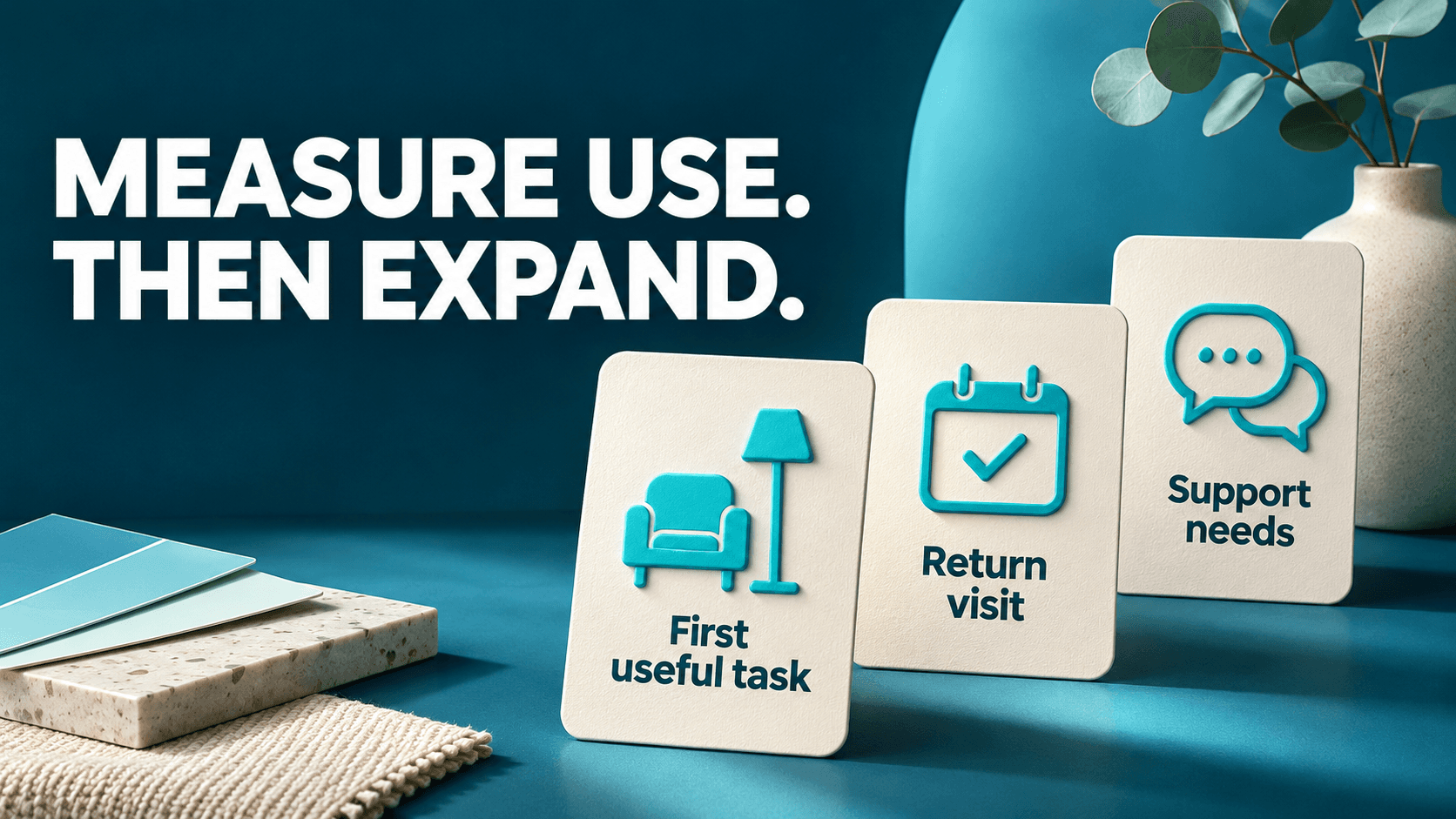
The documented history describes a free designer-focused product with reported scheduling and basic-module use, followed by a decision to concentrate on a broader successor.
Mediusware’s supported involvement in the updated intake centers on later transition coordination and outreach preparation. The original delivery scope, technical transition, and completed migration require further records.
For product leaders, the practical lesson is to connect the larger vision with explicit decisions. Identify which workflows move forward. Establish what happens to access and historical information.
Keep design concepts distinct from release commitments. Test the full journey before widening promotion.
Users need to understand what the next version offers and how they can begin using it. Making that path clear is part of the product work
Expanding or changing a product as its users’ needs and business direction develop.