Fast-growing SaaS startups often struggle to scale development teams because product growth increases technical complexity, coordination overhead, and delivery pressure faster than teams can adapt. Hiring more developers alone rarely fixes the problem, since onboarding, communication, and legacy architecture can slow progress even further. Sustainable scaling happens when companies redesign team structure, improve engineering systems, and add flexible development capacity before delivery starts to break.
Why Fast-Growing SaaS Startups Struggle to Scale Development Teams
1 min read
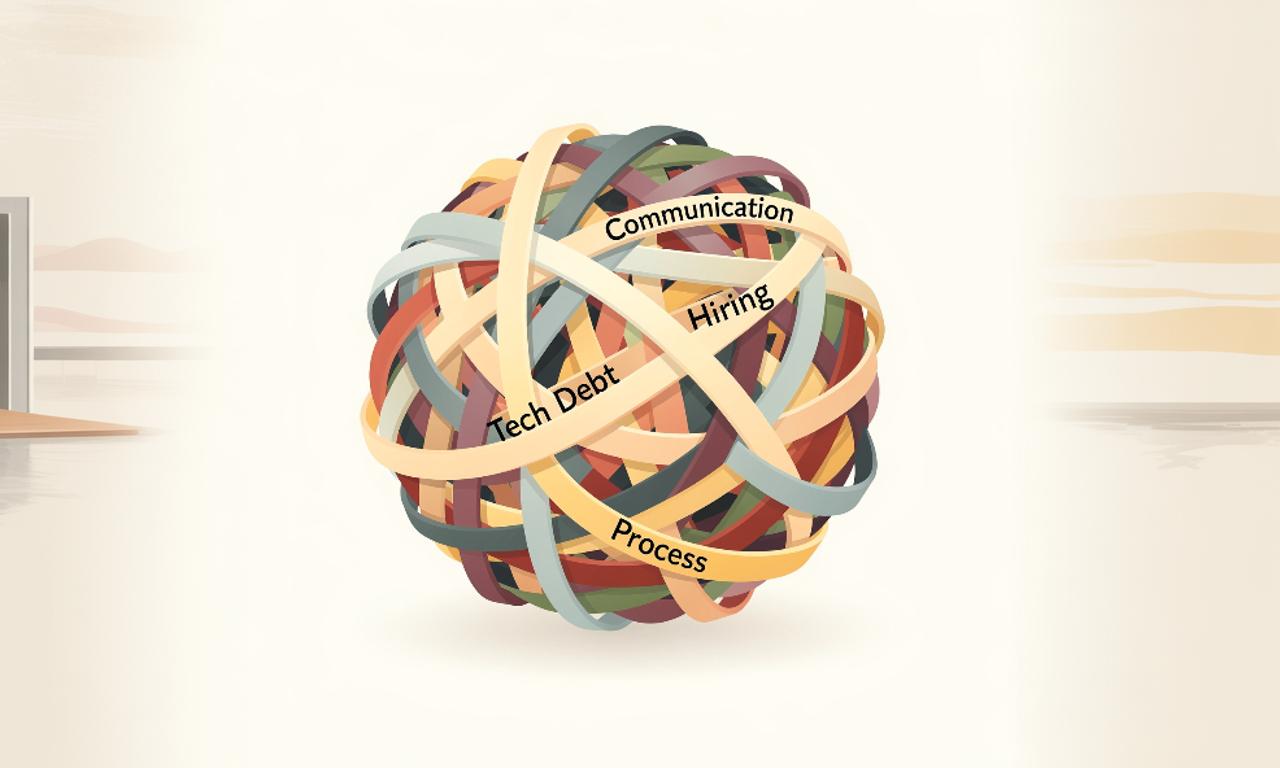
In the early days, everything feels fast.
Small team.
Clean codebase.
Decisions happen in minutes.
You ship features quickly, and progress feels natural.
More users.
More requests.
More complexity.
And suddenly
Delivery slows down.
The Real Problem Most Founders Miss
At first, it looks like a hiring problem.
We just need more developers.
But that’s rarely the real issue.
The real problem is this:
Your engineering system isn’t designed for scale.
Because growth doesn’t just add workload.
It multiplies complexity.
And if your system doesn’t evolve with it, your team slows down, no matter how talented they are.
Growth Doesn’t Scale Linearly, It Compounds Pressure
When your SaaS product grows, engineering pressure increases from multiple directions at once:
- More users → more infrastructure load
- More features → more dependencies
- More customers → more expectations
Suddenly, your team is handling:
- Feature delivery
- System reliability
- Security
- Performance
- Infrastructure
All at the same time.
According to Stripe’s Developer Coefficient Report, developer inefficiencies cost businesses over $3 trillion annually.
That’s not a talent issue.
That’s a system issue.
Why Hiring More Developers Often Makes It Worse
This is where most SaaS companies make a costly mistake.
They try to solve complexity with headcount.
But hiring creates its own friction:
- Long hiring cycles
- Slow onboarding
- Knowledge gaps
- Senior engineers pulled into training
McKinsey research shows it can take months before new developers become fully productive in complex systems.
And during that time?
Your existing team slows down even more.
As Fred Brooks famously said:
Adding manpower to a late software project makes it later.
Why Scaling Internally Always Takes Longer Than Expected
Most CTOs underestimate this part.
Hiring is just step one.
New engineers need to understand:
- Architecture
- Codebase
- Workflows
- Deployment systems
- Product logic
Until they do.
They’re not truly productive.
Meanwhile:
- Roadmaps expand
- Backlogs grow
- Deadlines slip
And the gap keeps widening.
How High-Performing SaaS Teams Actually Scale
The companies that scale successfully don’t just hire more people.
They redesign how engineering works.
1. Modular Teams (Not Big Departments)
Instead of one large team:
They build small, focused teams.
Each team owns a specific part of the product.
Result:
- Faster decisions
- Less dependency
- Higher ownership
2. Clear Development Systems
High-performing teams don’t rely on chaos.
They define:
- Development workflows
- Release cycles
- Documentation standards
This reduces confusion and keeps velocity consistent.
3. Platform Engineering
Instead of every developer solving the same problems:
Platform teams handle infrastructure, tooling, and automation.
This allows product engineers to focus on building features.
4. Flexible Development Capacity
This is where smart companies move differently.
Instead of relying only on internal hiring.
They add flexible engineering capacity when needed.
That could mean:
- Dedicated teams
- Staff augmentation
- External engineering partners
This allows them to scale quickly without slowing down delivery.
What Scalable Systems Actually Look Like (Real Examples)
We’ve seen this pattern across multiple platforms.
For example:
1. CRM Runner unified business workflows into one scalable system, improving operational efficiency and decision-making.
2. Vida Projects used modular architecture and automation to support enterprise-level scaling without breaking delivery.
3. Lensix built automated infrastructure for continuous monitoring and reporting, reducing operational overhead while scaling security systems.
The pattern is always the same:
Scalable products come from scalable systems, not bigger teams.
What Engineering Leaders Already Know
There’s a reason this keeps coming up in engineering leadership conversations.
Martin Fowler and modern frameworks like Team Topologies highlight one key idea:
System design and team design must evolve together.
You can’t scale one without the other.
Final Thoughts
Scaling a SaaS product isn’t just about growth.
It’s about handling complexity without losing speed.
Because what worked at MVP stage.
Will break at scale.
The companies that win understand this early:
- They redesign systems
- They restructure teams
- They expand capacity intelligently
And as a result,
They don’t just grow.
They scale.
Frequently Asked Questions
Because growth increases complexity faster than teams can adapt.
It’s not just more work, it’s more dependencies, systems, and coordination, which slow down delivery if the engineering structure doesn’t evolve.

I work with founders and leadership teams when growth moves faster than their systems, teams, or decisions. I’ve led 850+ projects for 750+ clients across 20+ countries, working across 100+ technologies and counting. I care about ownership, clarity, and building things that last beyond the launch.
Featureblogs
Relatedblogs
01
Introduction to System Design | System Design Course Pro | Part 102
The Art of Simplicity - How Minimalism Improved UI/UX Design03
The Software Development Life Cycle (SDLC): A Complete Guide04
Which Approach Is Best for Your Software Development Team: Scrum vs. Kanban05
How to adapt the Agile process to modern software developmentAuthorblogs
01
SaaS MVP Development: A Founder’s Guide for 202702
Zero Clicks, Falling Traffic: How to Win Back Revenue03
Ranking on Google in 2026: What Matters in the Age of AI Search04
How to Choose an API Development Company for Your SaaS Product05
Why Software Companies Are Turning to Strategic Partnerships for Faster Growth