- Generative AI helps teams move faster across coding, testing, debugging, and documentation.
- It supports engineers, so they can focus on architecture and higher-value decisions.
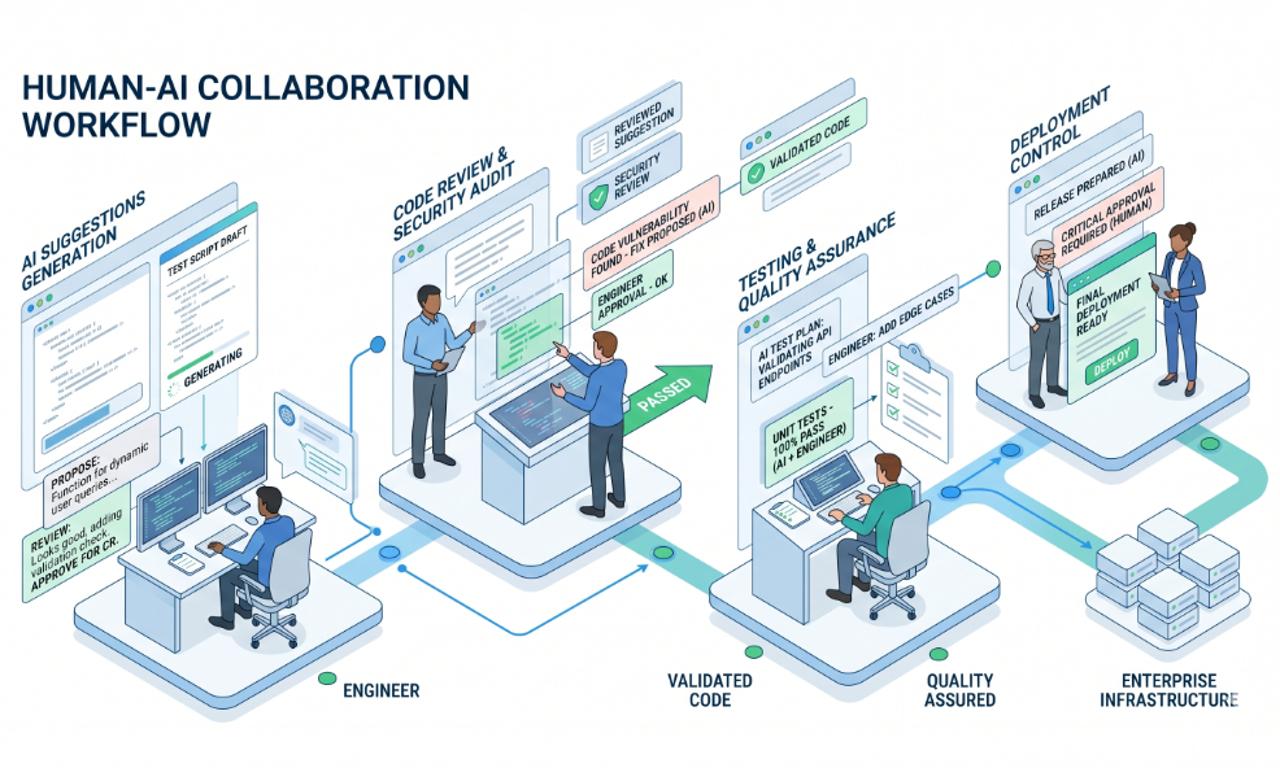
- The best results come from clear guardrails, human review, and practical use.
Generative AI for Software Engineering: Key Benefits and Real-World Use Cases
1 min read
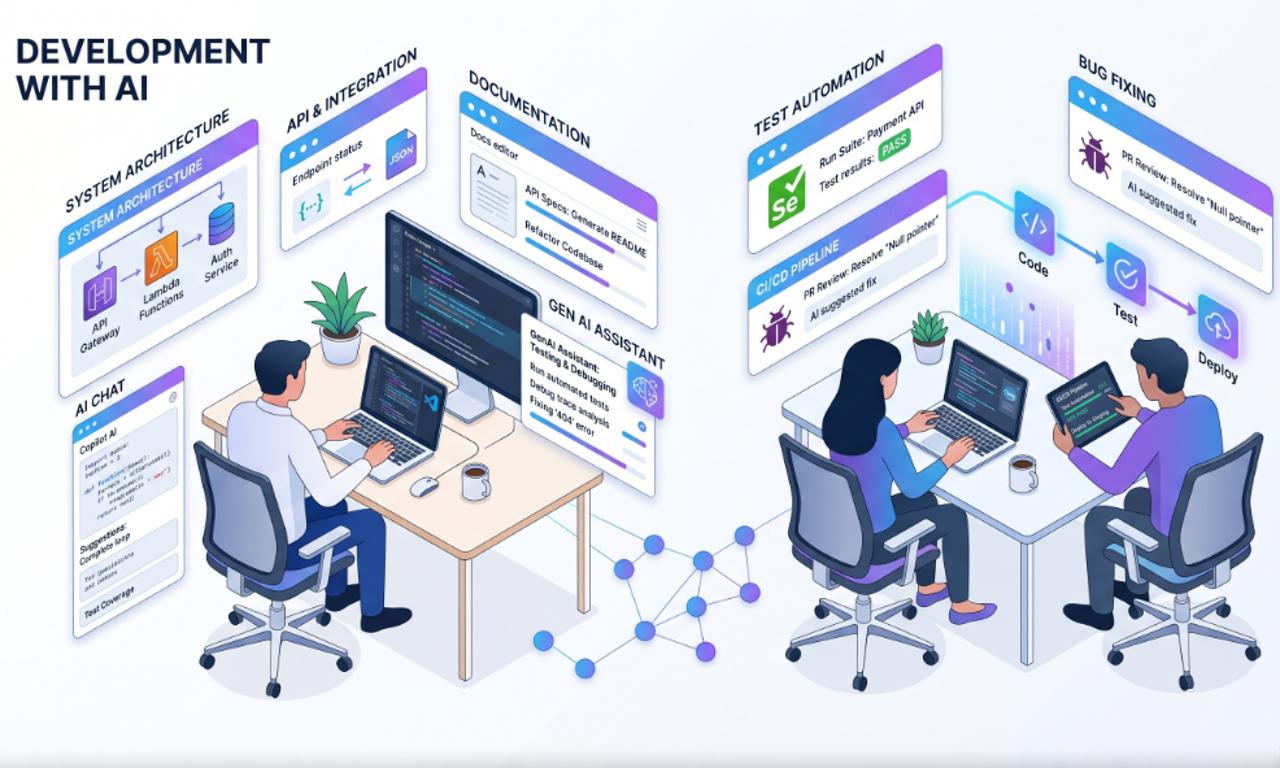
Generative AI helps software teams move faster by reducing repetitive engineering work across coding, testing, debugging, and documentation.
When implemented with clear review processes, it improves delivery speed, code quality, and team efficiency without replacing engineers.
Generative AI for Software Engineering: Key Benefits and Real-World Use Cases
Software teams rarely slow down because they lack ideas.
They slow down because too much engineering time gets consumed by the work around the work.
Writing boilerplate. Fixing repetitive bugs. Explaining old code. Updating documentation. Creating test cases. Answering the same internal questions again and again.
As systems grow, those small frictions turn into serious delivery problems.
That is where generative AI is creating real leverage in software engineering.
Not as a replacement for developers.
Not as a shortcut for architecture.
And definitely not as an autopilot for production decisions.
Used properly, generative AI becomes a practical layer inside the engineering workflow. It helps teams reduce repetitive effort, improve development speed, and free up engineers to focus on the parts of the job that actually require judgment.
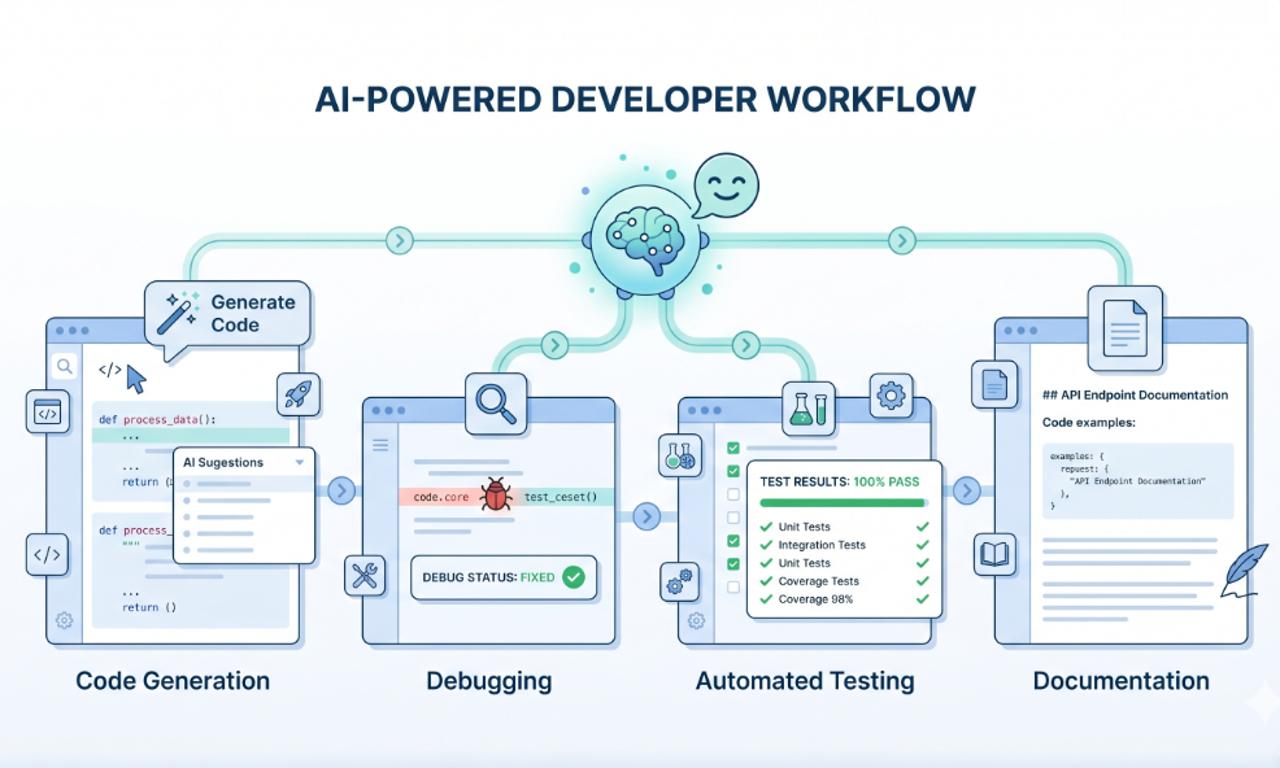
Why Software Teams Are Turning to Generative AI
Most engineering bottlenecks do not come from the hardest technical problems.
They usually come from repeated tasks that quietly drain time every week, such as:
- writing common code patterns
- filling documentation gaps
- drafting test cases
- debugging known issue types
- onboarding new engineers into unfamiliar systems
- hunting for internal knowledge spread across code, comments, and conversations
None of this is trivial. But much of it is repetitive.
That is exactly why generative AI is becoming valuable inside modern engineering teams. It reduces friction around execution, so developers can spend more time on architecture, product logic, and system-level thinking.
Key Benefits of Generative AI in Software Engineering
1. Faster Code Generation
One of the most immediate benefits is speed.
Engineers can use generative AI to draft:
- CRUD operations
- API scaffolding
- validation logic
- database queries
- repetitive frontend components
- internal scripts and helper functions
This does not remove the need for engineering review. It just removes the need to start from zero every time.
When used well, AI helps developers move from blank page to working draft much faster. A task that once took 40 minutes may now take 10, with the engineer focusing more on verification and improvement than raw typing.
That shift matters.
Because the goal is not just faster code. The goal is faster progress with human control still intact.
2. Smarter Debugging and Refactoring
As codebases mature, understanding the system often takes longer than changing it.
Generative AI helps engineers work through that complexity by:
- explaining unfamiliar code
- identifying possible bugs
- suggesting cleaner structure
- breaking large methods into smaller units
- surfacing risky patterns or potential security concerns
This is especially useful in older or enterprise-scale systems where logic is spread across multiple files, teams, or service layers.
Instead of spending hours tracing everything manually, developers can get a structured starting point much faster.
That reduces context-switching fatigue, which is one of the most overlooked costs in engineering work.
3. Faster Test Case Generation
Testing is one of the first things teams value and one of the first things schedules pressure.
Generative AI helps by drafting:
- unit test templates
- edge case suggestions
- integration test scenarios
- missing coverage ideas
- regression test outlines
It does not replace QA thinking.
But it does reduce the time needed to turn good intentions into actual test coverage.
And when teams can ship with stronger test discipline, confidence improves across releases.
4. Better Documentation Without the Usual Delay
Documentation is almost always considered important.
It is just rarely treated as urgent.
That is why it falls behind.
Generative AI helps teams keep documentation more useful by assisting with:
- API documentation
- module explanations
- onboarding notes
- architecture summaries
- code change explanations
- internal knowledge articles
For growing teams, this creates real operational value.
Better documentation means faster onboarding, fewer interruptions, and less dependency on a few senior engineers to explain everything manually.
Over time, documentation stops being a side task and starts becoming infrastructure.
5. Knowledge Amplification Across Teams
In many companies, important engineering knowledge lives in people’s heads.
That works until someone leaves, gets overloaded, or simply becomes unavailable.
Generative AI helps preserve and distribute that context by supporting:
- meeting and discussion summaries
- internal decision logs
- codebase explanations
- searchable engineering Q&A
- onboarding guidance for new team members
This is where AI becomes more than a developer tool.
It starts acting like an internal knowledge layer that makes the whole team more effective.
Real-World Use Cases for Generative AI in Engineering Teams
The value of generative AI becomes clearer when you look at where teams are already using it in practice.
1. AI-Assisted Code Reviews
AI can flag style inconsistencies, logic concerns, obvious performance issues, and missing edge cases before a human reviewer even starts.
That helps reduce review time and lets engineers focus on higher-level concerns instead of low-value cleanup.
2. Faster API Integration Work
Integrating third-party APIs often takes longer than expected because of inconsistent documentation, edge cases, and mapping logic.
Generative AI can help teams:
- interpret documentation faster
- draft integration code
- suggest error handling patterns
- explain request and response flows
This is especially valuable for SaaS products that rely on multiple external systems.
3. Legacy Modernization Support
Modernizing old systems is rarely just about rewriting code. It requires understanding dependencies, risks, and business logic that may not be documented clearly.
Generative AI can help teams analyze legacy codebases, summarize structure, and surface likely refactoring paths before modernization work begins.
That reduces uncertainty and gives teams a more informed starting point.
4. Developer Onboarding
New engineers often lose weeks trying to understand internal systems, conventions, and code ownership.
AI-supported internal knowledge systems can answer contextual questions much faster, helping new team members ramp up with less dependency on senior engineers.
That shortens onboarding time and reduces interruptions across the team.
5. Intelligent Test Coverage Support
Teams can use AI to identify thin coverage areas, suggest missing scenarios, and speed up test writing across new features or older modules.
That improves release confidence without forcing teams to rebuild testing processes from scratch.
Where Generative AI Should Not Be Used Blindly
Generative AI is useful. But it is not autonomous engineering.
That distinction matters.
It should not be used to:
- replace architecture decisions
- make unsupervised production changes
- handle sensitive logic without review
- design security-critical systems alone
- bypass engineering standards for speed
The most effective teams treat AI as augmentation, not authority.
They build clear guardrails around how it is used, where review is required, and what should always remain human-led.
That is usually the difference between teams that gain leverage and teams that create technical risk.
The Real Business Impact
When generative AI is implemented thoughtfully, the impact goes far beyond code completion.
It can lead to:
- faster feature delivery
- lower engineering effort per release
- improved code consistency
- stronger documentation habits
- reduced developer burnout
- faster onboarding for new hires
- better long-term scalability
In other words, the value is not just technical.
It is operational.
AI reduces friction across the engineering lifecycle, and that benefit compounds over time.
How Smart Engineering Teams Are Approaching This
The strongest teams are not asking whether AI can write code.
They are asking better questions:
- Where does AI remove real friction in our workflow?
- How do we integrate it safely into development and review processes?
- How do we protect quality while increasing speed?
- How do we measure whether it is actually helping?
That is the right approach.
Generative AI works best when it is:
- integrated into real developer workflows
- aligned with existing engineering standards
- supported by review and approval layers
- measured against real delivery outcomes
That is where real ROI starts to show up.
The Shift Happening in Software Engineering
Software engineering keeps evolving in layers.
First came automation.
Then cloud infrastructure changed how systems scaled.
Now AI-assisted development is becoming the next serious shift.
The teams that adopt it thoughtfully will not win because they removed engineers.
They will win because they made engineers more effective.
That is the real opportunity.
Final Thought
Generative AI is not valuable because it writes code faster.
It is valuable because it removes repetitive drag from the engineering system.
That gives teams more room to think clearly, build carefully, and ship with less friction.
And in modern software teams, that advantage compounds quickly.
Frequently Asked Questions
No.
Generative AI can speed up parts of engineering work, but it cannot replace real engineering judgment. Developers still need to review code, make architecture decisions, handle security risks, and solve complex business logic.
AI works best as a support tool, not as a replacement.

I work at the point where product decisions, system architecture, and engineering execution meet. At Mediusware, I’m accountable for how technology choices affect reliability, scale, and long-term delivery for our clients.
Featureblogs
Relatedblogs
Authorblogs
01
How Digital Agencies Can Deliver Custom Software Without Hiring Developers02
AI in FinTech: Build, Buy, or Integrate? A Founder's Decision Framework03
How to Choose a SaaS MVP Development Company04
How Seed-Stage SaaS Teams Add Engineering Capacity Without Hiring Chaos05
Why Seed-Stage SaaS Startups Struggle to Ship Fast