- Agentic e-commerce combines AI agents and low-code platforms to deliver shopping experiences.
- Businesses can automate recommendations, pricing, and customer journeys with faster AI development.
Agentic E-Commerce: Implementing Low-Code for Personalized Shopping Experiences
1 min read
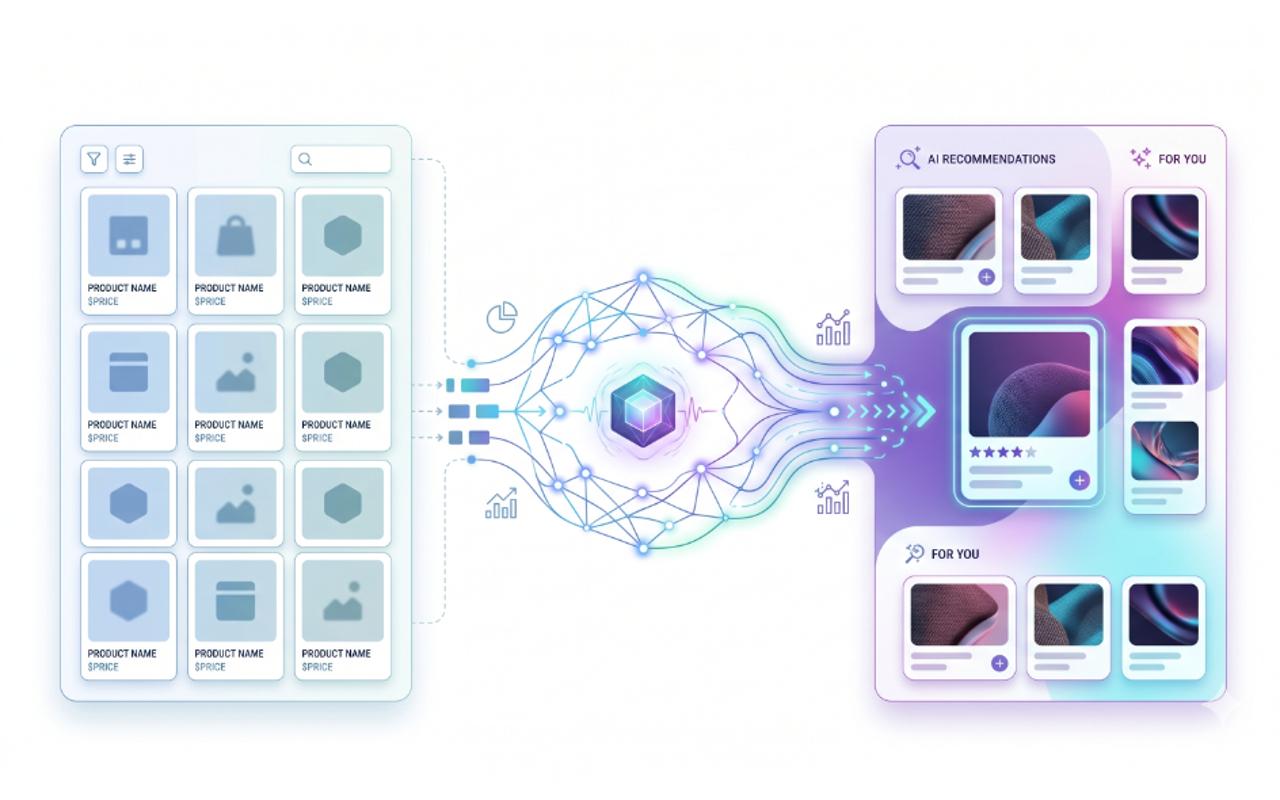
Most e-commerce stores don’t struggle with traffic anymore.
They struggle with relevance.
Customers land on your store… scroll a bit… and leave.
Not because you lack products, but because nothing feels tailored to them.
And in 2026, that’s the real problem.
Personalization is no longer a competitive edge.
It’s the baseline expectation.
The challenge?
Most teams still rely on static systems that can’t adapt in real time.
That’s where agentic e-commerce changes the game.
What Is Agentic E-Commerce?
Agentic e-commerce is built on a simple shift:
Instead of static systems → you deploy AI agents that make decisions continuously.
These agents don’t just recommend products.
They observe, learn, and adapt during the shopping journey.
They can:
- Analyze browsing behavior in real time
- Recommend products dynamically
- Adjust pricing or promotions
- Reorder product listings
- Trigger personalized campaigns
Think of it less like a “store”…
And more like a system that evolves with every customer interaction.
Why Traditional Personalization Falls Apart
Most e-commerce platforms say they offer personalization.
In reality, it’s limited and reactive.
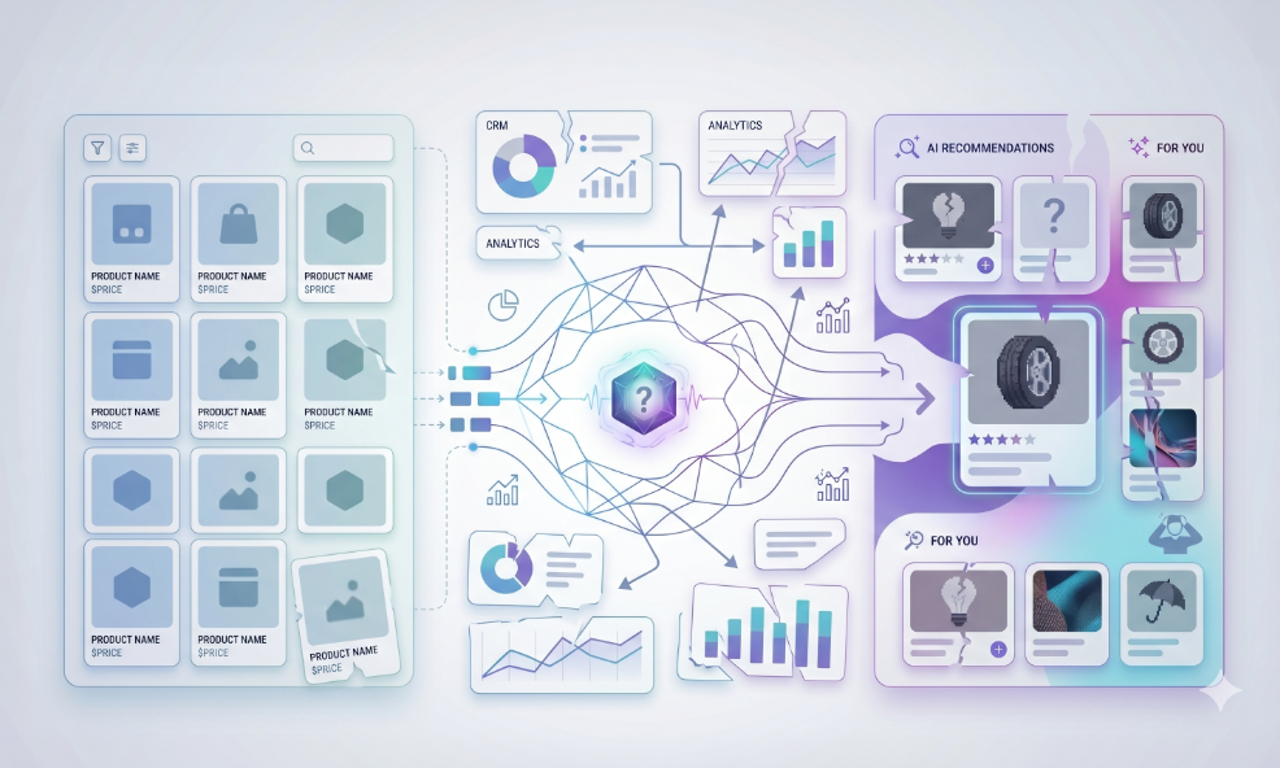
Here’s where it breaks:
1. Static Recommendation Systems
They rely on past purchases, not real-time intent.
So customers see what they already bought, not what they want now.
2. Slow Feature Development
Every new personalization idea requires engineering time.
Which means experimentation slows down.
And by the time you launch, the opportunity is gone.
3. Fragmented Data
Customer data lives everywhere:
- CRM
- Analytics tools
- Marketing platforms
No unified view → no meaningful personalization.
4. No Real-Time Adaptation
Most systems react after the purchase.
But the real conversion happens during the journey.
This gap is exactly why many stores fail to meet modern expectations.
How Low-Code Unlocks Agentic Commerce
This is where things get interesting.
Low-code platforms remove the biggest bottleneck:
dependency on heavy engineering cycles.
Instead of building everything from scratch, teams can:
- Create workflows visually
- Integrate APIs quickly
- Deploy AI-driven logic faster
Here’s what that actually changes:
1. Faster Iteration
You can test personalization strategies in days, not months.
2. Reduced Engineering Load
Product and marketing teams can experiment without waiting for dev cycles.
3. Seamless AI Integration
Low-code tools connect easily with:
- AI models
- Analytics systems
- Customer data platforms
4. Continuous Optimization
You don’t “launch and forget.”
You iterate constantly based on live user behavior.
This shift alone is what makes agentic systems practical, not just theoretical.
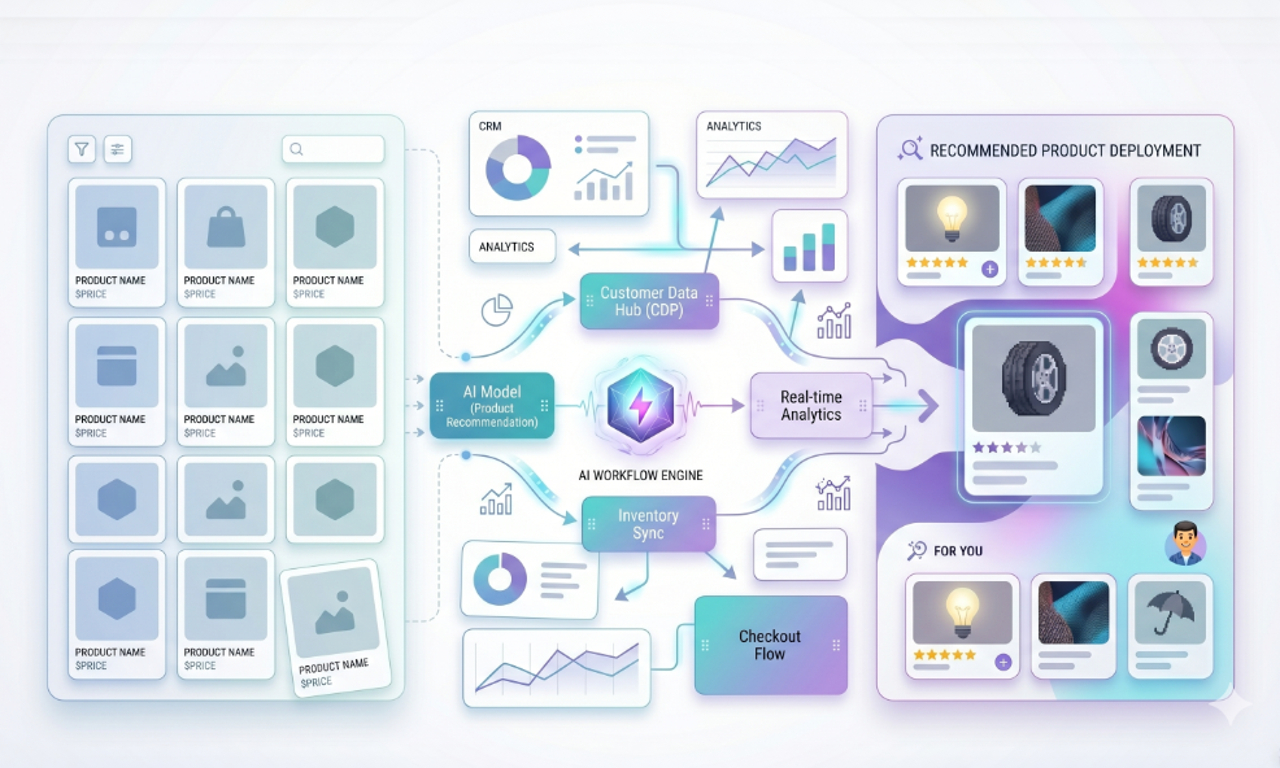
Real Use Cases of Agentic E-Commerce
This isn’t future talk.
These systems are already reshaping how stores operate.
Intelligent Product Recommendations
Products update based on real-time browsing patterns, not just history.
1. Intelligent Product Recommendations
Products update based on real-time browsing patterns, not just history.
2. Dynamic Pricing
Prices adjust based on demand, inventory, or customer segments.
3. Personalized Search Results
Two users search the same keyword and see completely different results.
4. Cart Recovery Optimization
Instead of generic reminders, customers get context-aware incentives.
This is where conversion rates start to shift significantly.
How to Start Building Agentic Commerce
Most teams overcomplicate this.
You don’t need a full AI overhaul from day one.
Start with structure:
1. Centralize Customer Data
Without unified data, nothing else works.
2. Add Behavioral Intelligence
Use analytics + AI to understand intent, not just actions.
3. Introduce Automation Layers
Start small:
- Recommendations
- Email triggers
- Dynamic sorting
4. Scale with Low-Code + AI
Use modern stacks like: Laravel, React, and AI frameworks to build scalable systems.
We’ve seen this pattern across multiple platforms, including e-commerce solutions, where automation significantly improved engagement and decision-making flows.
The key is not tools.
It’s how you structure the system.
Final Thoughts
Agentic e-commerce isn’t about adding AI features.
It’s about changing how your store thinks.
From:
Static pages and predefined logic
To:
Adaptive systems that respond in real time
The companies that win won’t just personalize.
They’ll continuously adapt faster than their customers expect.
Frequently Asked Questions
Agentic e-commerce uses AI agents to automate decisions in online stores. These agents help recommend products, adjust offers, and improve the shopping experience.

I work with founders and leadership teams when growth moves faster than their systems, teams, or decisions. I’ve led 850+ projects for 750+ clients across 20+ countries, working across 100+ technologies and counting. I care about ownership, clarity, and building things that last beyond the launch.
Featureblogs
01
Is Golang Still the Right Choice in 2025?02
Haptic Feedback: Why Touch is Becoming the Most Powerful Experience in Tech03
The 12 Most Powerful LLMs: Powering Tomorrow’s Tech Landscape04
Why Software Companies Are Turning to Strategic Partnerships for Faster Growth05
C# vs. Java: Key Differences, Advantages, and Future Prospects01
Is Golang Still the Right Choice in 2025?02
Haptic Feedback: Why Touch is Becoming the Most Powerful Experience in Tech03
The 12 Most Powerful LLMs: Powering Tomorrow’s Tech Landscape04
Why Software Companies Are Turning to Strategic Partnerships for Faster Growth05
C# vs. Java: Key Differences, Advantages, and Future ProspectsRelatedblogs
01
From Complexity to Clarity: Organizing Variant-Wise Product Storage for Your Online Store02
The Ultimate Framework to Boost Your e-commerce Business03
Shopify vs WooCommerce: Which Platform Is Right for You?04
Custom Retail Software Development: The Must-Have Guide You Need05
Everything You Need to Know About AI-Driven Inventory Management SystemsAuthorblogs
01
SaaS MVP Development: A Founder’s Guide for 202702
Zero Clicks, Falling Traffic: How to Win Back Revenue03
Ranking on Google in 2026: What Matters in the Age of AI Search04
How to Choose an API Development Company for Your SaaS Product05
Why Software Companies Are Turning to Strategic Partnerships for Faster Growth