- AI cost calculators estimate budgets across data, models, infrastructure, and integrations.
- Structured AI cost planning enables scalable systems and optimized infrastructure spending.
Quit Guessing the Price: Use This 2026 AI Cost Calculator Framework
1 min read
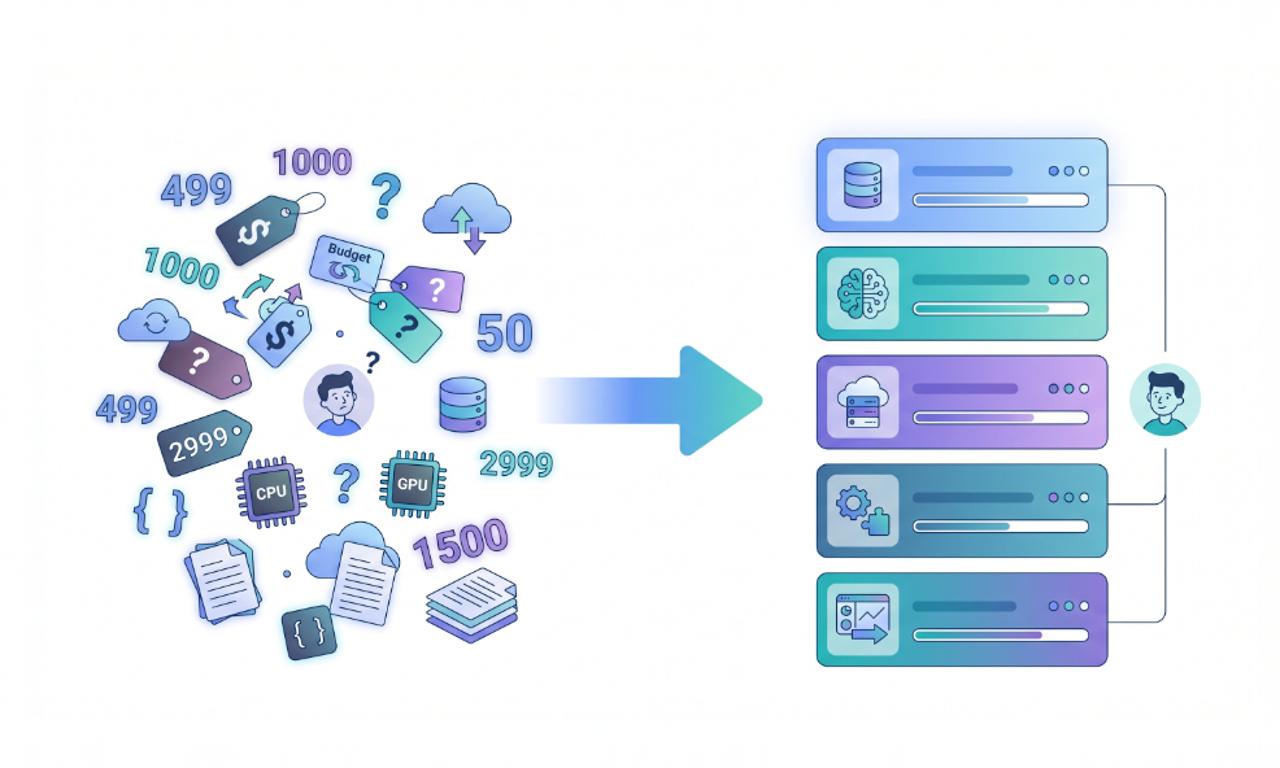
Most AI projects don’t fail because of bad models.
They fail because the cost was misunderstood from day one.
I’ve seen this repeatedly. A team plans an AI product at $30k…
Six months later, it crosses $120k.
Not because of scope creep.
Because AI doesn’t behave like traditional software.
If you’re still estimating AI like a normal app… you’re already off track.
Why AI Project Costs Break So Easily
Traditional software is predictable.
You define features → estimate hours → calculate cost.
AI doesn’t work like that.
Because AI systems include:
- Data pipelines
- Model training cycles
- Infrastructure scaling
- Continuous optimization
And here’s where most teams go wrong:
They estimate only development…
And ignore everything around it.
That’s why many companies exceed AI budgets by 30–50%.
Not because AI is expensive.
Because planning is incomplete.
The Shift: From Guessing to Cost Frameworks
Smart teams in 2026 don’t ask:
How much will this cost?
They ask:
Where will the cost come from?
That’s a completely different mindset.
Instead of one number, they break costs into components.
This reduces uncertainty and improves decisions early.
The 2026 AI Cost Calculator Framework
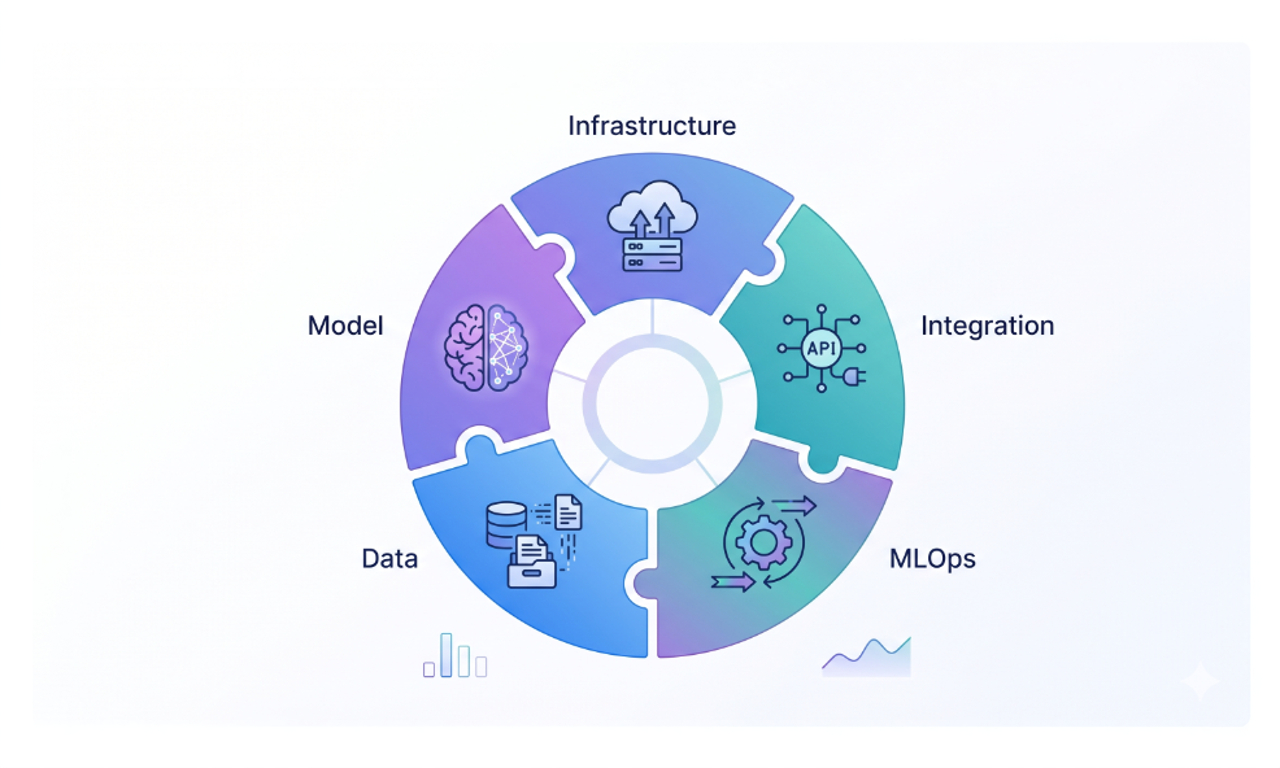
Modern AI cost estimation is built around 5 components.
Each one impacts your budget differently.
1. Data Preparation Cost
AI runs on data.
And data is messy.
Before anything starts, teams need to:
- Collect datasets
- Clean inconsistencies
- Label training data
- Structure everything properly
This alone can take 40–60% of total effort.
And the cost depends on:
- Dataset size
- Complexity (text vs image vs audio)
- Manual vs automated labeling
Simple data → lower cost
Unstructured data → higher cost
2. Model Development Cost
This is where most people think the cost is.
But it’s only part of the picture.
Here, teams:
- Choose model types (NLP, vision, recommendation)
- Run experiments
- Train multiple versions
The key issue?
AI rarely works in one attempt.
Each iteration adds:
- Compute cost
- Engineering time
- Validation cycles
3. Infrastructure & Compute Cost
This is where budgets quietly explode.

AI systems require:
- GPUs
- Cloud compute
- Storage systems
- Real-time processing
Even after launch, infrastructure doesn’t stop.
You still pay for:
- Inference
- APIs
- Data pipelines
That’s why infrastructure planning is not optional.
It’s a core cost driver.
4. Integration & Product Development
A model is not a product.
This is where many AI projects fail.
You still need:
- Backend systems
- APIs
- Frontend interfaces
- Workflow integration
For example:
A recommendation engine means nothing
if it’s not connected to your platform, users, and data.
This is where AI becomes usable.
5. Maintenance & Optimization (MLOps)
AI systems don’t stay static.
They degrade over time.
So teams need:
- Model retraining
- Dataset updates
- Performance monitoring
- Infrastructure tuning
Companies with strong MLOps reduce operational cost by up to 40%.
Without it?
Costs keep increasing silently.
Example: Realistic AI Cost Breakdown
Instead of guessing a number…
Here’s how a structured estimate looks:
- Data Preparation → $15k – $40k
- Model Development → $25k – $70k
- Infrastructure → $10k – $30k
- Integration → $20k – $50k
- Optimization → $10k – $25k
Total: $80k – $215k
That’s not uncertainty.
That’s clarity.
What Most Teams Still Get Wrong
From what we see across AI projects,
the biggest issue is not development.
It’s early decisions.
Common mistakes:
- Choosing the wrong architecture
- Underestimating data complexity
- Ignoring infrastructure scaling
These decisions look small early.
But become expensive later.
The Real Advantage Isn’t AI
It’s planning.
The companies that succeed with AI don’t move faster because they use AI.
They move faster because they:
- Understand cost drivers
- Design scalable systems early
- Avoid expensive rework
That’s the difference between:
A project that “tries AI”
And one that actually benefits from it
Frequently Asked Questions
An AI cost calculator is a structured framework that breaks down AI development costs into key components like data, models, infrastructure, integration, and maintenance.

I work at the point where product decisions, system architecture, and engineering execution meet. At Mediusware, I’m accountable for how technology choices affect reliability, scale, and long-term delivery for our clients.
Featureblogs
01
C# vs. Java: Key Differences, Advantages, and Future Prospects02
Haptic Feedback: Why Touch is Becoming the Most Powerful Experience in Tech03
Is Golang Still the Right Choice in 2025?04
Why Software Companies Are Turning to Strategic Partnerships for Faster Growth05
Top 8 Python GUI Frameworks for Developers01
C# vs. Java: Key Differences, Advantages, and Future Prospects02
Haptic Feedback: Why Touch is Becoming the Most Powerful Experience in Tech03
Is Golang Still the Right Choice in 2025?04
Why Software Companies Are Turning to Strategic Partnerships for Faster Growth05
Top 8 Python GUI Frameworks for DevelopersAuthorblogs
01
How Digital Agencies Can Deliver Custom Software Without Hiring Developers02
AI in FinTech: Build, Buy, or Integrate? A Founder's Decision Framework03
How to Choose a SaaS MVP Development Company04
How Seed-Stage SaaS Teams Add Engineering Capacity Without Hiring Chaos05
Why Seed-Stage SaaS Startups Struggle to Ship Fast