- AI agents automate tasks like data cleaning, feature engineering, and model training, boosting efficiency.
- These AI systems enhance decision-making, reduce cognitive load, and provide faster, scalable insights.
How Autonomous AI Agents are Transforming Modern Data Science
1 min read
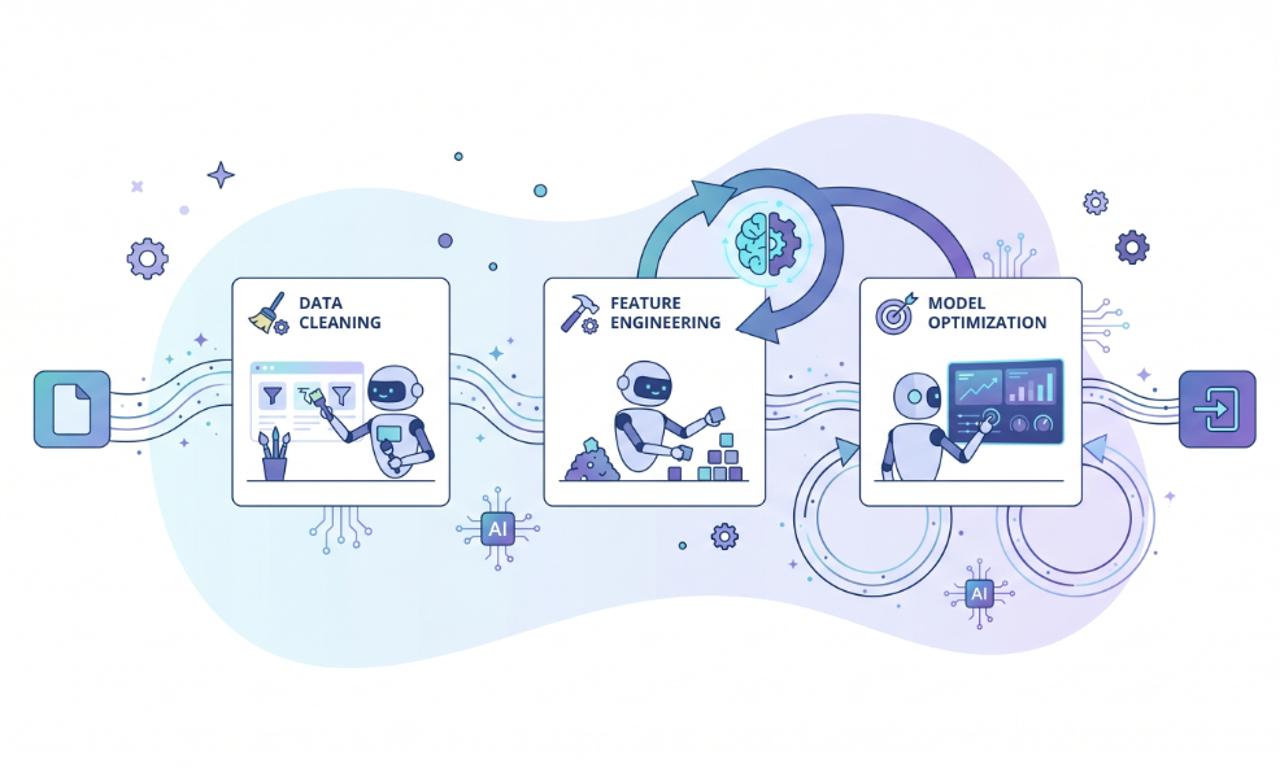
Most data science teams don’t struggle with models.
They struggle with everything around the model.
Cleaning messy data.
Rebuilding pipelines.
Repeating the same experiments again and again.
That’s where things slow down.
And that’s exactly where autonomous AI agents are changing the game.
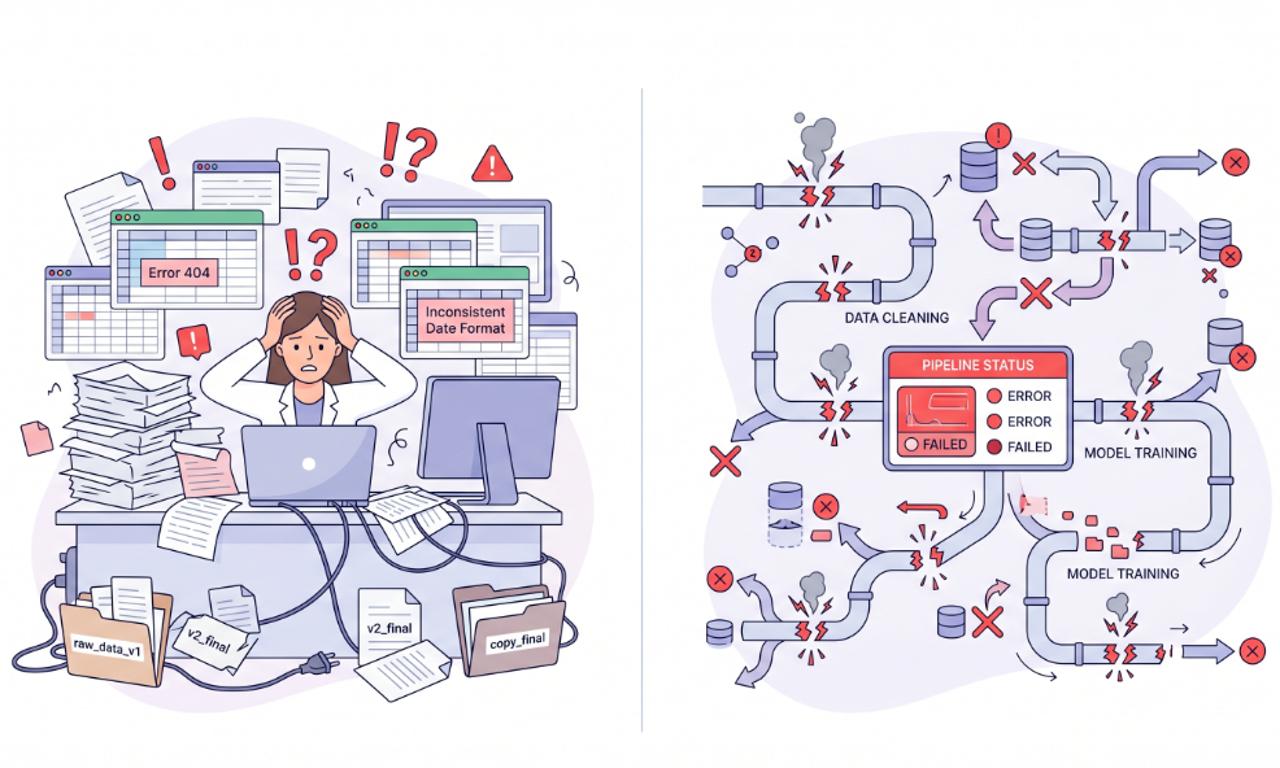
The Real Problem: Data Science Is Still Manual
If you’ve worked with data, you already know this.
Only a small part of your time goes into actual insight.
Most of it disappears into:
- Cleaning broken datasets
- Fixing missing values
- Rewriting feature logic
- Retesting models
According to IBM, data scientists spend up to 80% of their time on data preparation alone.
That’s not innovation.
That’s operational drag.
Why This Keeps Happening
It’s not because teams lack tools.
It’s because most workflows are still human-dependent.
- Pipelines break when data changes
- Features depend on manual decisions
- Models require constant retuning
As data grows, complexity grows faster.
And manual systems don’t scale with that.
What Are Autonomous AI Agents?
Autonomous AI agents aren’t just automation scripts.
They are systems that observe, decide, and act without constant human input.
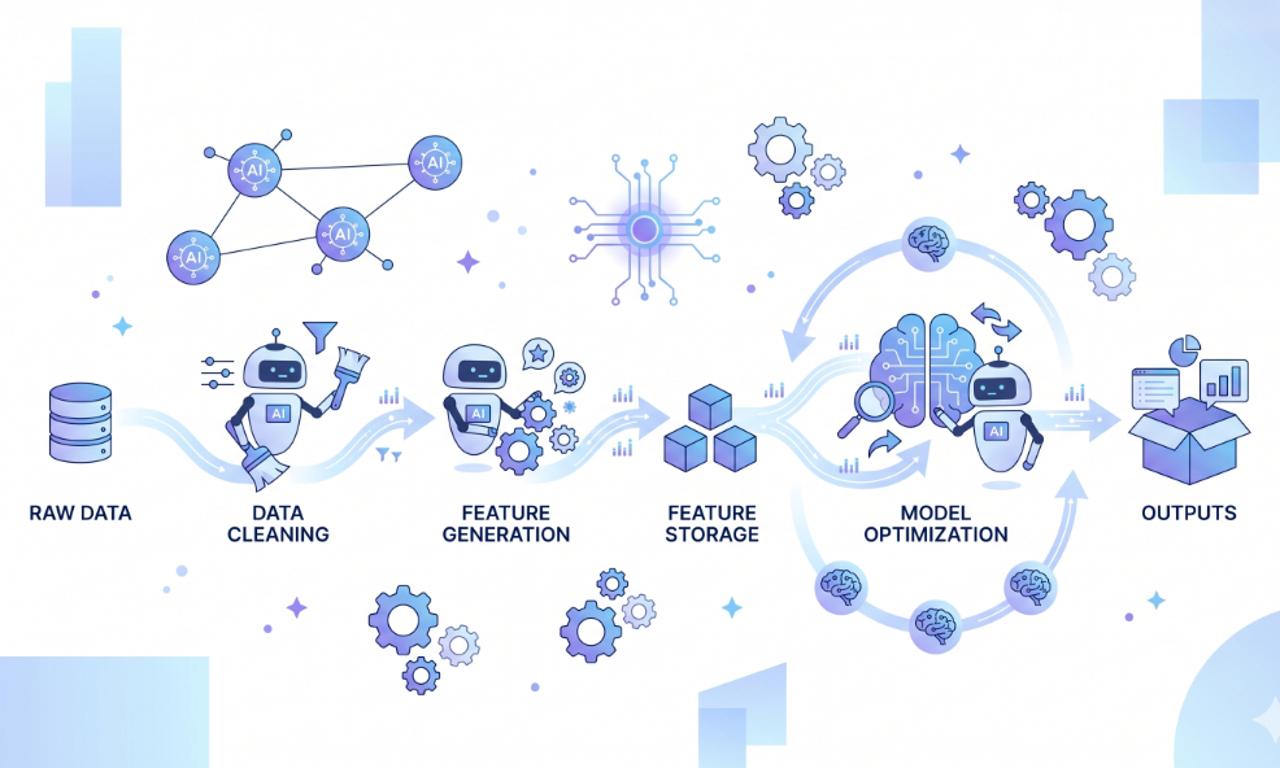
In data science, they handle:
- Data cleaning
- Feature generation
- Model selection
- Continuous optimization
Think of them as self-operating layers inside your pipeline.
What They Actually Do Inside a Data Workflow
Instead of theory, here’s how they show up in practice:
| Data Science Task | Traditional Approach | AI Agent Approach |
| Data Cleaning | Manual scripts | Auto-detect + fix anomalies |
| Feature Engineering | Human-designed | Auto-generated features |
| Model Tuning | Trial & error | Continuous optimization |
| Monitoring | Reactive | Real-time adaptation |
This is the shift.
From manual iteration → autonomous evolution.
How AI Agents Improve Speed and Accuracy
1. Faster Time to Insight
What used to take days now takes hours.
Agents run multiple experiments in parallel.
They don’t wait. They iterate.
2. Reduced Human Error
Humans miss patterns.
Agents don’t get tired.
They maintain consistency across:
- Data transformations
- Feature selection
- Model tuning
3. Built-in Scalability
As your data grows, agents scale with it.
No extra hires. No added overhead.
According to Andrew Ng,
The real advantage of AI is not replacing humans, but removing repetitive work so humans can think.
Where This Creates Real Business Impact
This isn’t just technical improvement.
It directly affects outcomes.
What changes:
- Faster decision-making
- More reliable predictions
- Reduced operational cost
- Higher experimentation velocity
We’ve seen similar patterns in platforms like Greenifyai, where automation removed repetitive workload and improved output efficiency at scale.
Mediusware’s Approach to AI-Driven Data Systems
We’ve worked on systems where the real problem wasn’t the model.
It was the workflow around it.
That’s why we design AI systems that:
- Automate preprocessing pipelines
- Continuously optimize models
- Integrate real-time decision layers
For example, in one e-commerce system:
- Automated segmentation + recommendations
- Reduced manual data work significantly
- Increased conversion by 30%
This is the pattern.
When you remove manual friction, performance improves naturally.
How to Think About Implementation
If you're planning to use AI agents, don’t start with tools.
Start with bottlenecks.
Step 1: Identify repetitive tasks
Where is your team losing time?
Step 2: Automate decision loops
Not just actions, but decisions.
Step 3: Add continuous learning
Systems should improve over time, not stay static.
The Shift Most Teams Miss
Many teams try to “add AI”.
That’s the wrong approach.
The real shift is:
- From tool-based workflows
- To agent-driven systems
Frequently Asked Questions
They are systems that automate tasks like data cleaning, feature engineering, and model tuning without constant human input.

I work at the point where product decisions, system architecture, and engineering execution meet. At Mediusware, I’m accountable for how technology choices affect reliability, scale, and long-term delivery for our clients.
Featureblogs
Relatedblogs
Authorblogs
01
How Digital Agencies Can Deliver Custom Software Without Hiring Developers02
AI in FinTech: Build, Buy, or Integrate? A Founder's Decision Framework03
How to Choose a SaaS MVP Development Company04
How Seed-Stage SaaS Teams Add Engineering Capacity Without Hiring Chaos05
Why Seed-Stage SaaS Startups Struggle to Ship Fast