-
Growing businesses struggle when data and processes live in too many tools.
-
Enterprise software brings finance, operations, customers, and data into one clear system.
-
The right software choices reduce confusion, speed decisions, and support long-term growth.
5 Enterprise Software Solutions That Help You Grow
1 min read

Growth sounds exciting. Until it starts slowing you down.
At first, things work fine. A few tools. A few spreadsheets. People just “know” what to do.
Then the business grows, and suddenly nothing feels clear anymore.
Reports don’t match.
Teams ask for numbers you can’t trust.
Simple decisions take too long because data lives in too many places.
If you’ve ever thought,
“We didn’t plan for this much complexity”, you’re not alone.
Here’s the honest part.
Most companies don’t fail because they lack talent.
They struggle because their systems can’t keep up.
And no, adding more tools doesn’t fix that.
It often makes things worse.
What actually helps is choosing the right enterprise software solutions at the right time. Not everything. Not all at once. Just what removes friction from daily work.
So let me ask you this.
If your business grows again this year, will your systems support that growth or slow it down?
Let’s look at the enterprise software solutions that solve real problems, based on how companies were building in 2025 or beyond and what still matters going into 2026.
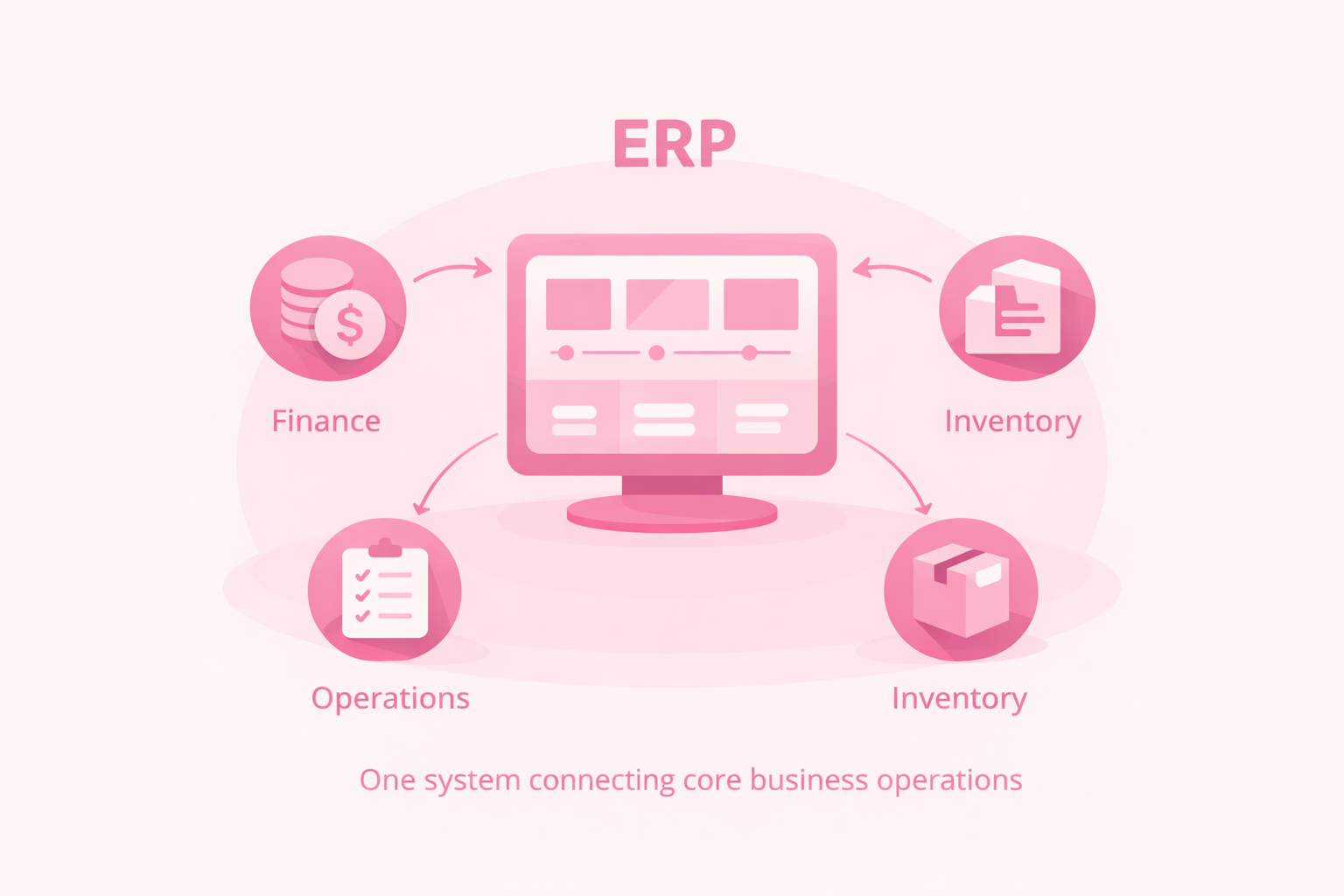
Enterprise Resource Planning (ERP): When Everything Finally Connects
Most growing companies hit the same wall.
Finance has one set of numbers.
Operations has another.
Inventory, vendors, and delivery updates live in different tools.
People spend more time checking data than using it.
That’s where ERP earns its place.
What ERP looks like in real life
Imagine this simple flow:
- A purchase gets approved
- Inventory updates right away
- Finance sees the cost instantly
- Managers don’t wait till month-end to know what happened
No chasing emails. No manual syncing. No “we’ll fix it later.”
That’s ERP doing what it’s meant to do.
Why ERP helps (and when it doesn’t)
ERP works best when:
- Teams follow shared processes
- Data needs to be consistent across departments
- Leaders want control without micromanaging
ERP struggles when:
- Every team wants special rules
- Old habits are forced into new systems
- No one agrees on how work should flow
Here’s a simple way to think about it.
|
Without ERP |
With ERP |
|
Data lives in silos |
One shared system |
|
Manual updates |
Automatic updates |
|
Delayed reports |
Real-time visibility |
|
Guess-based decisions |
Data-backed decisions |
A grounded expert view
According to Gartner, ERP projects succeed more often when companies simplify processes first, then apply technology. Not the other way around.
In plain terms:
ERP doesn’t fix messy operations.
It exposes them so you can fix them properly.
What changed in 2025 and still matters in 2026
By 2025, ERP systems added automation and AI-driven insights. But the companies that saw real value didn’t chase features. They focused on fewer manual steps, clearer approvals, and better visibility.
That lesson still holds.
ERP isn’t about having a bigger system.
It’s about running the business with less noise.
Customer Relationship Management (CRM): When Revenue Becomes Clear
Growth often breaks one thing first.
Customer visibility.
Sales has notes in one place.
Support has tickets somewhere else.
Marketing tracks leads in a different tool.
Nobody sees the full picture.
That’s where CRM makes a real difference.
What CRM looks like in practice
Here’s a simple example.
A sales rep opens a deal and can see:
- past emails
- recent support issues
- product usage
- renewal date
No guessing. No asking around.
That’s how CRM helps teams act with confidence.
Why CRM works so well
CRM helps when:
- leads are handled by many people
- deals take time to close
- retention matters as much as new sales
It turns scattered interactions into one clear customer story.
Where teams usually get stuck
CRM fails when it becomes “extra work.”
If updates feel like admin tasks, people avoid them.
The companies that did well in 2025 connected CRM to billing, usage data, and support. That way, the system stayed useful without constant manual input.
CRM isn’t about tracking people.
It’s about making revenue predictable.

Enterprise Accounting & Finance Systems: Fewer Surprises, More Control
Money problems rarely start with bad intentions.
They start with slow systems.
Invoices get delayed.
Approvals stack up.
Month-end turns into a stressful rush.
Modern finance systems fix that.
A real-world example
Instead of waiting weeks to see financial results:
- Expenses are tracked in real time
- Approvals follow clear rules
- Reports are ready when leaders need them
No panic. No last-minute fixes.
Why this matters as companies grow
As businesses scale:
- Compliance becomes stricter
- Audits become more frequent
- Mistakes become expensive
Strong finance systems create trust. Internally and externally.
What improved in 2025
In 2025, many finance teams used automation to speed up reconciliation and error checks. The ones who benefited most kept humans in control and used automation to reduce routine work, not replace judgment.
The goal isn’t speed alone.
It’s accuracy without burnout.
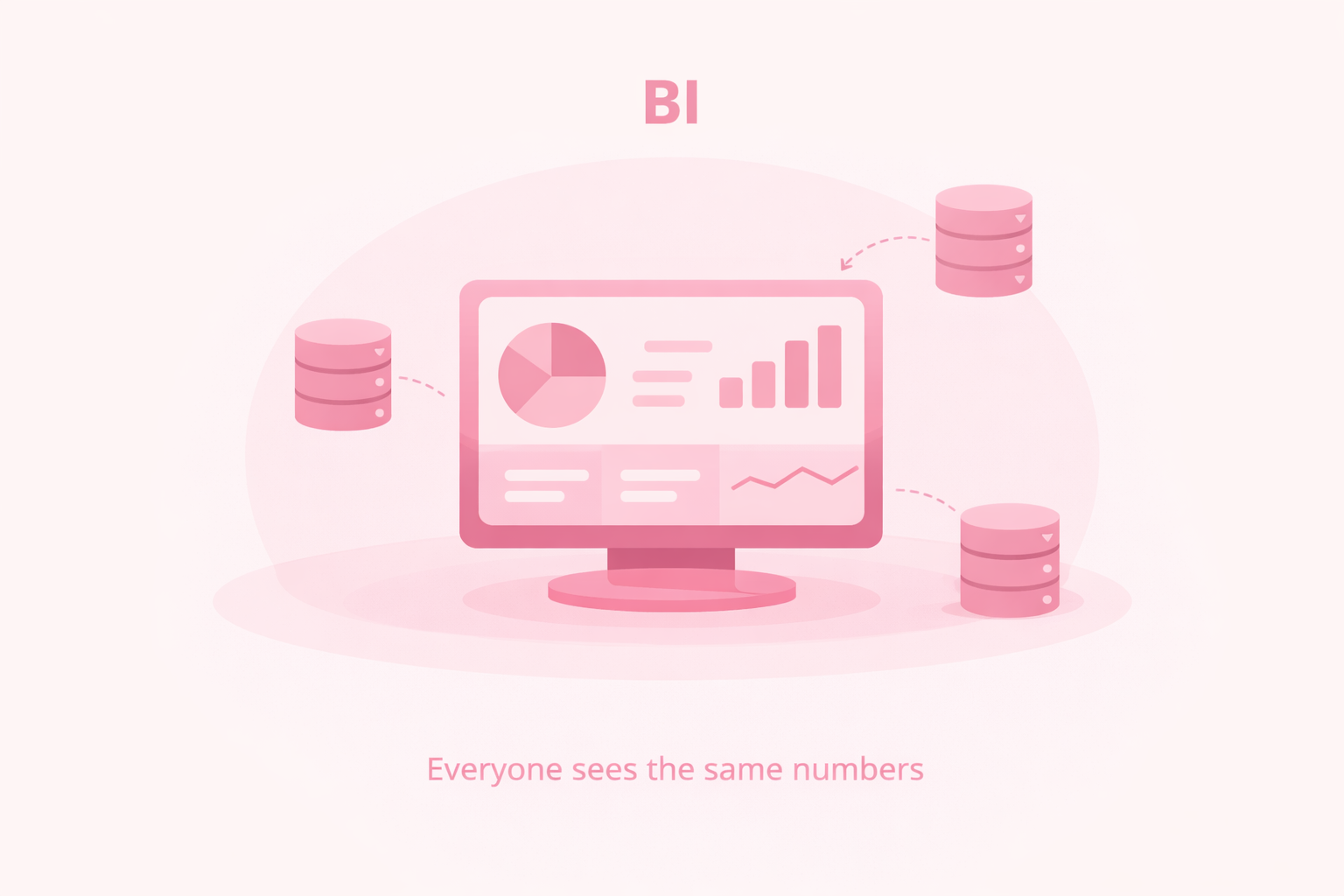
Business Intelligence (BI): One Truth Everyone Agrees On
At some point, every company asks the same question:
Which number is correct?
BI exists to answer that.
What BI does, in simple terms
BI turns data into shared understanding.
For example:
- Leadership sees daily performance
- Teams track progress without manual reports
- problems show up early, not after damage is done
Why BI often fails
BI tools fail when:
- Teams define metrics differently
- Data ownership is unclear
- Dashboards exist without context
Technology isn’t the problem.
Alignment is.
What worked in 2025
The strongest BI setups in 2025 focused on:
- Clear metric definitions
- Limited but meaningful dashboards
- Access based on roles
When everyone trusts the numbers, decisions get faster.
Enterprise Asset Management (EAM): Small Fixes, Big Savings
This one doesn’t get much attention.
But it saves real money.
What EAM does in everyday terms
EAM tracks:
- Equipment
- Maintenance schedules
- Downtime
- Asset lifespan
Example:
A small issue gets fixed early instead of turning into a costly breakdown.
Why it matters more than people think
For asset-heavy businesses:
- Downtime hurts revenue
- Emergency repairs cost more
- Unclear asset data leads to overspending
EAM brings discipline to physical operations, not just digital ones.
It doesn’t feel exciting.
But it protects margins.
How to Choose the Right One First
You don’t need all five at once.
Start where the pain is loudest.
| Your biggest problem | Start with |
| Process chaos | ERP |
| Unclear revenue | CRM |
| Financial stress | Finance systems |
| Slow decisions | BI |
| Costly downtime | EAM |
Simple rule:
Fix the bottleneck, not the wishlist.
Off-the-Shelf vs Custom: A Clear Way to Decide
Here’s a practical way to think about it.
- Buy tools for standard processes
- Configure tools for industry needs
- Build custom software where your business is different
In 2025, the best teams treated custom development carefully. They used it to remove friction, not to reinvent everything.
Custom works best when it solves a real, daily problem.
What This Means Going Into 2026
Enterprise software isn’t about technology anymore.
It’s about clarity.
Less confusion.
Faster decisions.
Systems people actually trust.
The companies that win don’t use more software.
They use better-fit enterprise software solutions.
Final Thought
If your business is growing, your systems must grow with it.
The right enterprise software solutions won’t just support growth.
They’ll make growth feel manageable.
If you’re planning your next system upgrade or unsure where to start, talk to us. A short discussion now can save months of cleanup later.

I work at the point where product decisions, system architecture, and engineering execution meet. At Mediusware, I’m accountable for how technology choices affect reliability, scale, and long-term delivery for our clients.
Featureblogs
Relatedblogs
01
Integrating Redux with React: A Comprehensive Guide02
Laravel pagination and filtering with already loaded data as array in memory03
React + Three.js + React Three Fiber: Crafting Interactive 3D views in Web Applications04
Advanced Caching Strategies for Django Applications05
Implementing Roles and Permissions in Laravel Using Guard-LaravelAuthorblogs
01
How Digital Agencies Can Deliver Custom Software Without Hiring Developers02
AI in FinTech: Build, Buy, or Integrate? A Founder's Decision Framework03
How to Choose a SaaS MVP Development Company04
How Seed-Stage SaaS Teams Add Engineering Capacity Without Hiring Chaos05
Why Seed-Stage SaaS Startups Struggle to Ship Fast