- AI helps investment firms improve analysis, risk monitoring, and portfolio decision support.
- CTOs use AI to build smarter, scalable, and more explainable investment systems.
How Artificial Intelligence is Transforming Investment Strategies in 2026
1 min read
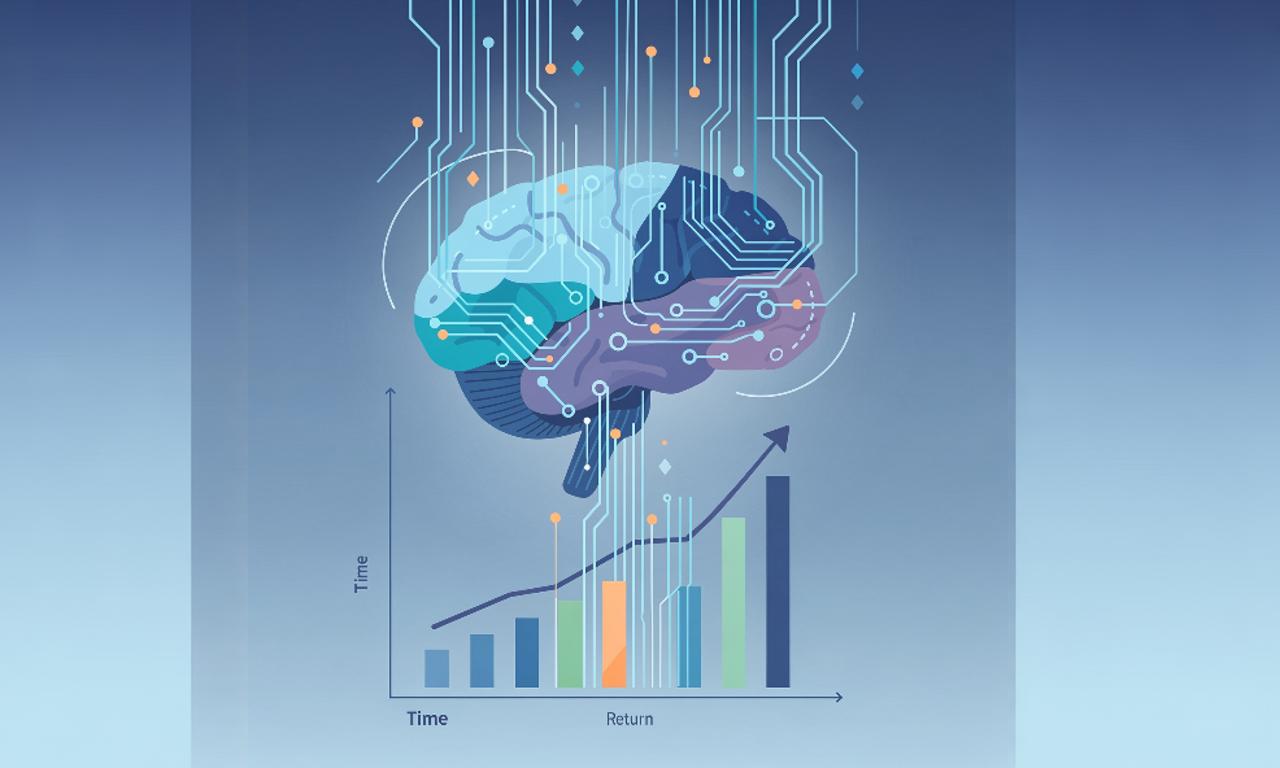
Over the past year, I’ve noticed something interesting when speaking with CTOs in investment firms.
The problem is not lack of data anymore.
It’s the opposite.
There’s too much of it spread across systems, arriving in real time, and moving faster than teams can process.
And that creates a silent bottleneck.
Research teams want faster insights.
Portfolio managers want clearer signals.
Compliance teams want control and explainability.
But the system underneath can’t keep up.
That’s exactly why AI is no longer a “nice-to-have” in 2026.
It’s becoming the operational layer that makes modern investment strategy actually work.

Why Traditional Investment Workflows Are Breaking
Most investment platforms were never designed for today’s speed.
Data is continuous.
Markets react instantly.
Clients expect personalization.
Regulators expect transparency.
But internally?
Teams are still jumping between dashboards, spreadsheets, research tools, and legacy systems.
That fragmentation creates four real problems:
- Data is disconnected
- Decisions are slower than market speed
- Models are hard to explain
- Scaling intelligence becomes expensive
And the industry already knows this.
PwC reports that 80% of asset managers believe AI will drive revenue growth, while 73% see it as the most transformational technology in the next few years.
So the shift is already happening.
The real question is how.
Where AI Is Actually Changing Investment Strategy
The biggest misconception?
AI is not replacing investing.
It’s upgrading the system around it.
1. Faster Research and Signal Discovery
Investment teams are drowning in inputs:
- Earnings reports
- Market sentiment
- Macro data
- Internal research
- Alternative data sources
Manually processing all of this is no longer realistic.
AI helps by:
- Summarizing large datasets
- Ranking relevance
- Identifying patterns
- Surfacing hidden signals
BlackRock has been using machine learning in systematic investing for years.
This is not experimental anymore.
It’s operational.
2. Better Portfolio Decision Support
AI doesn’t make decisions.
It accelerates them.
Portfolio teams can:
- Run scenario simulations faster
- Test assumptions across large datasets
- Identify correlations that humans would miss
But here’s the key:
If outputs are not explainable, they won’t be trusted.
That’s where most systems fail.
Good AI systems don’t just give answers.
They show reasoning.

3. Smarter Risk Monitoring
Risk is no longer static.
Markets shift too quickly.
Traditional models rely on historical data.
AI introduces real-time awareness.
It helps detect:
- Behavioral anomalies
- Hidden correlations
- Early exposure risks
- Scenario-based stress signals
CFA Institute has already emphasized this:
Explainability is critical. Without it, AI increases risk instead of reducing it.
4. More Personalized Investment Experiences
This is where AI moves from backend to product.
Investment platforms are becoming:
- More adaptive
- More contextual
- More user-specific
AI enables:
- Personalized reporting
- Tailored recommendations
- Smart client communication
- Behavioral-based insights
For wealthtech platforms, this becomes a competitive advantage.
Not just an efficiency tool.
5. Operational Efficiency Behind the Scenes
Some of the biggest gains are invisible.
AI improves:
- Compliance workflows
- Document processing
- Reporting automation
- Internal knowledge access
McKinsey estimates AI could impact 25% to 40% of the cost base for asset managers.
That’s not a small optimization.
That’s structural change.
What CTOs Need to Get Right Before Scaling AI
Here’s where most companies get it wrong.
They start with tools.
They should start with systems.
1. Data Quality Comes First
AI doesn’t fix bad data.
It amplifies it.
If your data is fragmented or inconsistent, your outputs will be too.
2. Explainability Is Non-Negotiable
If teams don’t understand the model…
They won’t trust it.
And if they don’t trust it…
They won’t use it.
3. Integration Matters More Than Innovation
A demo is easy.
A production system is not.
AI must work inside:
- Portfolio systems
- Dashboards
- Reporting tools
- Client interfaces
Otherwise, it becomes shelfwa
4. Governance Must Be Built In
AI in finance is not just a tech problem.
It’s a risk problem.
You need:
- Auditability
- Access control
- Monitoring
- Approval workflows
From day one.
What We See Across Real Platforms
Across multiple systems we’ve worked on, one pattern keeps repeating:
AI delivers value only when it’s embedded into workflows.
Not when it’s added as a feature.
For example:
1. In EasyAsk, AI insights helped automate decisions and reduce manual effort inside a unified platform.
2. In Greenify, AI-driven analytics and real-time sustainability insights helped users track impact, make better decisions, and act on data within a single connected system.
Different industries.
Same pattern.
AI works best when it’s part of the system, not sitting on top of it.
The Real Opportunity in 2026
The firms that win with AI won’t be the ones using the most tools.
They’ll be the ones building the best systems.
Systems where:
- Data is connected
- Decisions are supported
- Risk is visible
- Experiences are personalized
That’s the shift.
Not replacing human judgment.
Enhancing it.
Final Thoughts
AI is transforming investment strategy because the old systems can’t handle modern complexity.
But the real advantage isn’t AI itself.
It’s the architecture behind it.
The difference isn’t adoption.
It’s how well your system uses it.
Frequently Asked Questions
AI processes large volumes of data to surface patterns, support decisions, and automate research.

I work at the point where product decisions, system architecture, and engineering execution meet. At Mediusware, I’m accountable for how technology choices affect reliability, scale, and long-term delivery for our clients.
Featureblogs
Relatedblogs
Authorblogs
01
How Digital Agencies Can Deliver Custom Software Without Hiring Developers02
AI in FinTech: Build, Buy, or Integrate? A Founder's Decision Framework03
How to Choose a SaaS MVP Development Company04
How Seed-Stage SaaS Teams Add Engineering Capacity Without Hiring Chaos05
Why Seed-Stage SaaS Startups Struggle to Ship Fast