- Prompt engineering guides AI models to produce accurate, context-aware outputs in modern software.
- Structured prompts enable intelligent automation, coding assistants, and AI-driven development.
Decoding the Neural Spec: Why Prompt Engineering is the New Norm in Software Development
1 min read
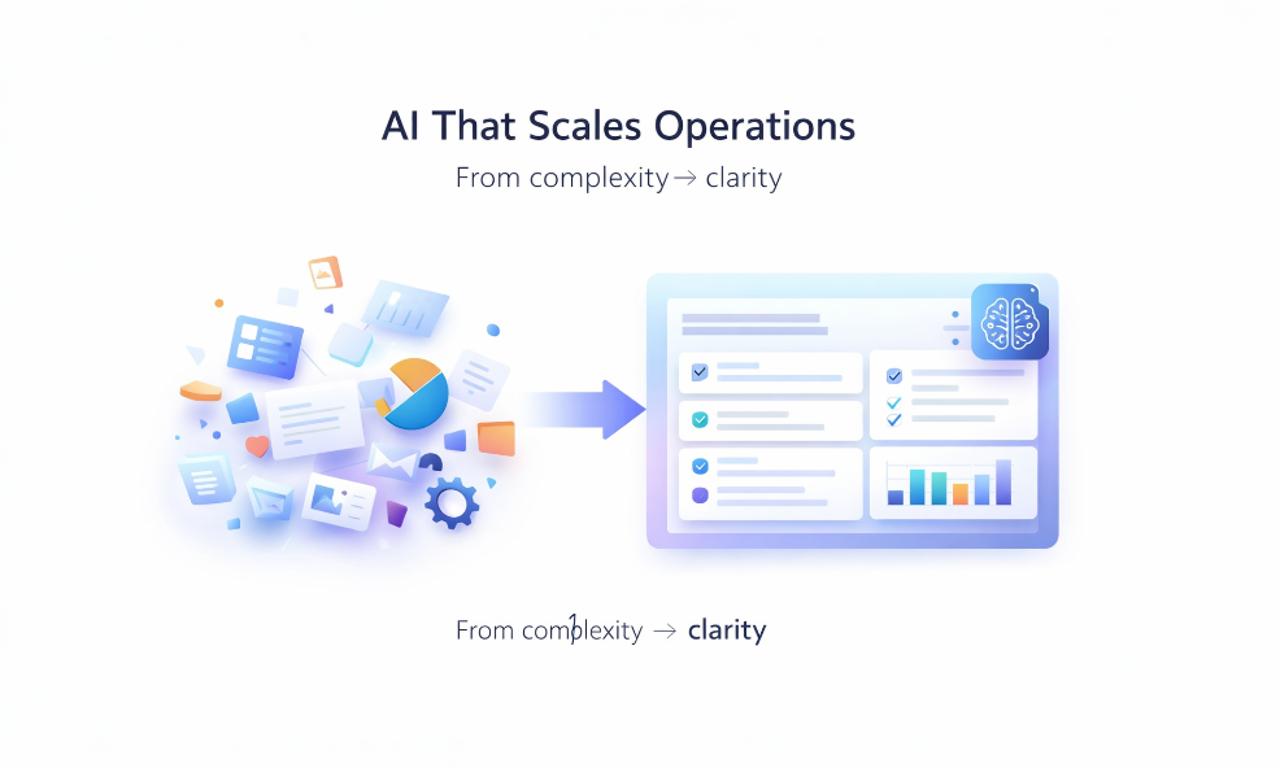
Most developers don’t struggle with writing code anymore.
They struggle with controlling AI.
You can integrate GPT, Claude, or Gemini into your product. That’s not the hard part. The real challenge shows up later:
Why does the output feel inconsistent?
Why does the same input produce different results?
Why does the system behave correctly in testing… but break in production?
That’s not a model problem.
That’s a prompt problem.
And that’s exactly why prompt engineering is quickly becoming a core layer of modern software development.
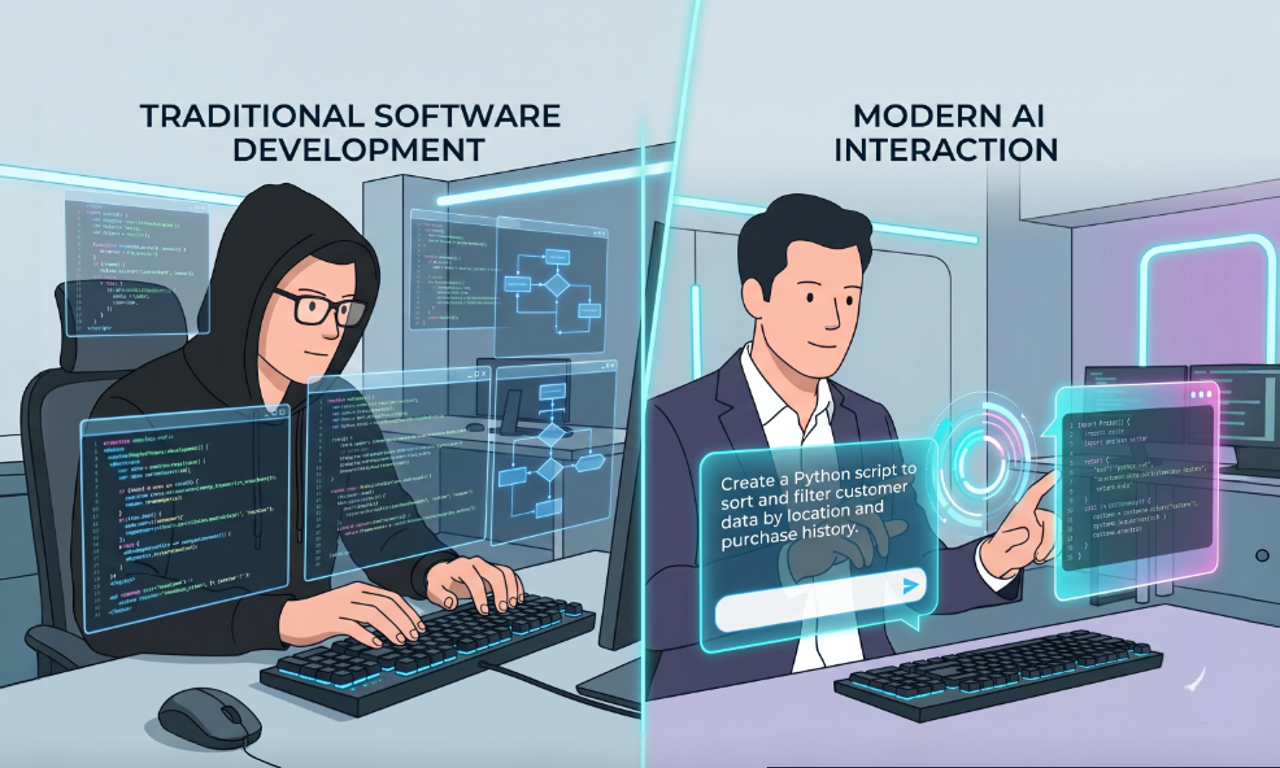
The Shift from Code to Cognitive Interfaces
For years, software followed a predictable pattern:
Write logic → Execute → Get deterministic output
Now that model is changing.
AI systems don’t execute instructions the same way traditional code does. They interpret context, intent, and language. That means developers are no longer just writing logic.
They are shaping behavior.
Instead of defining every rule in code, we now define:
- What context the AI should understand
- What constraints it must follow
- What output format is acceptable
- How it should reason
This is what people mean when they say:
The hottest new programming language is English.
And it’s not just a statement. It’s a shift in how software is built.
What Exactly Is Prompt Engineering?
Prompt engineering isn’t about asking better questions.
It’s about designing structured instructions that produce reliable outputs.
A weak prompt looks like this:
Write a login system.
A strong prompt looks like this:
Generate a secure login system using Node.js with JWT authentication, bcrypt password hashing, input validation, rate limiting, and proper error handling.
Same request. Completely different result.
The difference is structure.
A well-designed prompt usually includes:
- Clear instructions
- Context and constraints
- Output formatting rules
- Examples (when needed)
- Step-by-step reasoning guidance
The goal is simple: reduce ambiguity.
Because ambiguity is where AI systems fail.
Why Prompt Engineering Matters More Than Ever
AI is no longer an experiment.
It’s embedded in real products.
From search systems to customer support, from analytics tools to developer workflows, AI is now part of the core application layer.
But here’s the catch:
AI systems are only as reliable as the instructions they receive.
Without structured prompts, you get:
- Inconsistent responses
- Hallucinated outputs
- Broken workflows
With strong prompt design, you get:
- Predictable behavior
- Higher accuracy
- Better user experience
That’s why prompt engineering is not optional anymore.
It’s infrastructure.
The Rise of Prompt-Driven Development
We’re starting to see a new pattern:
Prompt-driven development.
In this model, prompts are not just inputs. They are part of the system design.
Think about modern AI-powered products:
- Chat interfaces
- Recommendation engines
- Document processing tools
- Internal knowledge assistants
All of them rely on prompts to function correctly.
So developers are now building:
- Prompt templates
- Prompt pipelines
- Prompt testing systems
- Prompt version control
Some teams even maintain prompt libraries the same way they manage codebases.
That’s a big shift.
Because now, part of your application logic lives in language.
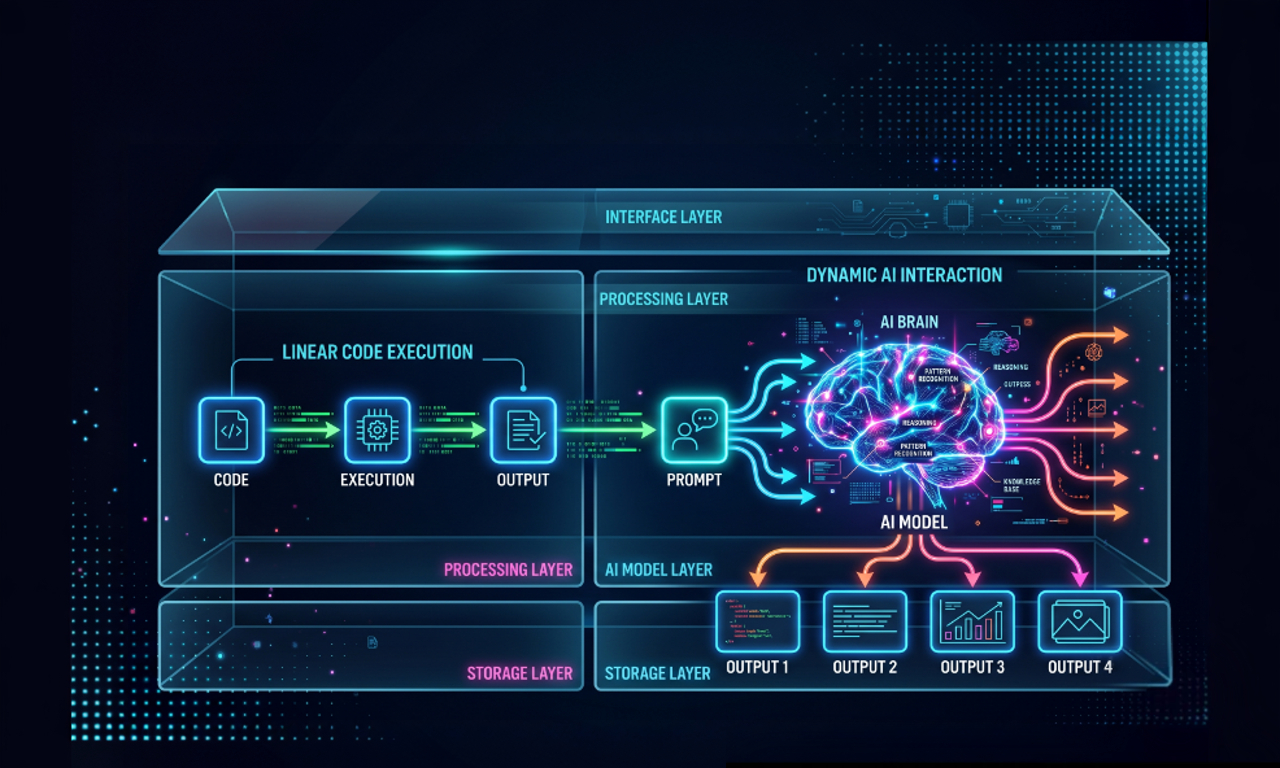
Prompt Engineering as an Architecture Layer
One of the biggest mindset shifts is this:
Prompts are no longer just inputs. They are part of your architecture.
In AI-powered systems, prompts sit between:
- Data
- Models
- Application logic
And they control how everything connects.
A well-structured system usually includes:
- Prompt templates
- Context injection layers
- Output validation rules
- Structured response formats
Frameworks like LangChain and LlamaIndex exist for one reason:
To manage prompts at scale.
Because once your system grows, managing prompts manually breaks down fast.
The Skills Developers Need Now
This is where things get real.
Traditional coding skills are still important. But they’re not enough anymore.
Developers working with AI need to understand:
1. Context Design
What information does the model actually need?
2. Prompt Structuring
How do you guide output without over-constraining it?
3. Iteration & Testing
What happens when the prompt fails? How do you refine it?
4. System Integration
How do prompts connect with APIs, databases, and workflows?
This is less about writing code…
And more about designing behavior.
Where This Is Going
Prompt engineering is still early.
But it’s evolving fast.
We’re already seeing:
- AI agents making decisions
- Multi-agent systems collaborating
- Prompts adapting based on user behavior
- Automated prompt optimization
The future isn’t just AI generating outputs.
It’s AI working alongside systems and humans to make decisions.
And prompts will be the interface that controls all of it.
Final Thoughts
AI isn’t changing software development because it replaces code.
It’s changing it because it introduces a new layer of control.
Prompt engineering is that layer.
The teams that understand this early won’t just build AI features.
They’ll build systems that behave correctly, consistently, and at scale.
Frequently Asked Questions
Prompt engineering is the process of designing structured inputs that guide AI models to generate accurate and useful responses. It helps developers control how AI systems interpret instructions and produce outputs.

I work at the point where product decisions, system architecture, and engineering execution meet. At Mediusware, I’m accountable for how technology choices affect reliability, scale, and long-term delivery for our clients.
Featureblogs
Relatedblogs
Authorblogs
01
How Digital Agencies Can Deliver Custom Software Without Hiring Developers02
AI in FinTech: Build, Buy, or Integrate? A Founder's Decision Framework03
How to Choose a SaaS MVP Development Company04
How Seed-Stage SaaS Teams Add Engineering Capacity Without Hiring Chaos05
Why Seed-Stage SaaS Startups Struggle to Ship Fast