- Automate routine tasks to boost operational efficiency and reduce human errors.
- Gain real-time insights into financials, inventory, and sales.
- Make faster, data-driven decisions to drive business growth.
How Modern ERP Systems Drive Business Efficiency
1 min read
Imagine you’re the CEO of a rapidly growing company. Your team is juggling multiple tools. Separate systems for inventory, finance, sales, and customer service.
Everything seems disconnected, and valuable time is being wasted on manual processes. You know there’s a better way, but the road to finding that solution seems unclear.
What if there was a single platform that could unite all these systems, streamline operations, and provide real-time insights at your fingertips?
In 2025, modern ERP systems are doing exactly that. But why does it matter to you? Because ERP isn't just a piece of software. It’s the future of business efficiency.
Why Do Modern ERP Systems Matter to You?
If you’re still relying on outdated, disconnected systems, you’re facing a huge disadvantage.
Manual work, data silos, and lack of integration slow down your ability to make timely decisions.
Worse, your competitors who have adopted modern ERP solutions are already reaping the benefits, faster decision-making, optimized operations, and stronger customer experiences.
Think about it: in a world where speed and agility are key, can you afford to be stuck with inefficiencies?
The key takeaway?
Modern ERP systems automate core business processes, centralize data, and integrate seamlessly across departments. With real-time insights and AI-driven analytics, these systems don’t just improve efficiency—they empower businesses to scale and adapt in an ever-changing environment.
The Benefits of Modern ERP Systems: What’s in It for You?
Let’s be honest—every executive wants their business to run like a well-oiled machine. But how can you achieve that without the right tools?
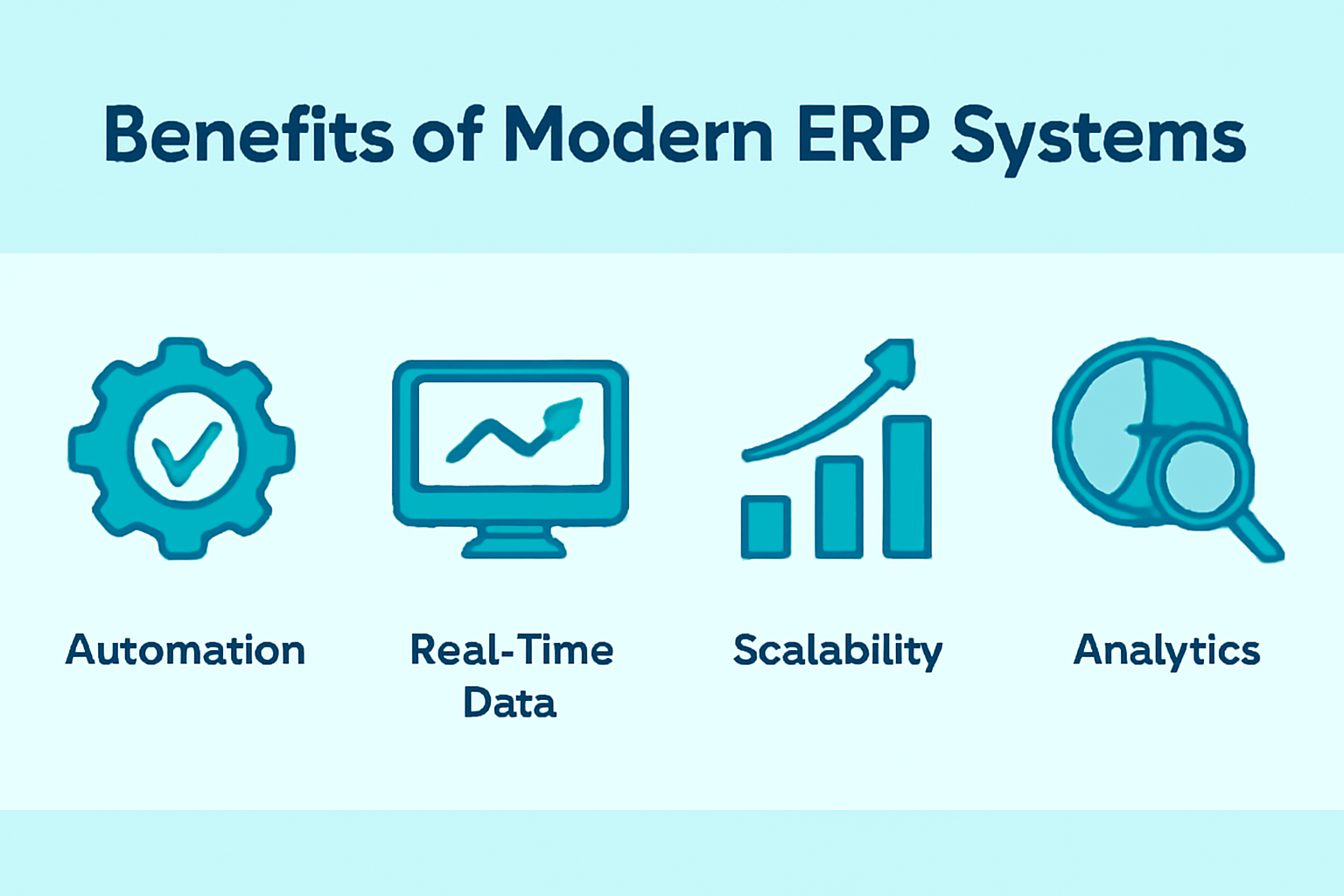
- Automation of Repetitive Tasks
Imagine eliminating the hours spent on manual data entry. Modern ERP systems automate key tasks like invoicing, payroll, and inventory management, freeing up your team to focus on more strategic initiatives. - Real-Time Data and Analytics
Gone are the days of waiting for reports. With real-time data in an ERP system, you get instant insights into financial health, customer trends, and inventory levels. As a result, decisions can be made quickly and with confidence, which drives business agility. - Centralized Communication
No more working with fragmented data across different departments. Modern ERPs integrate everything—from sales and finance to HR and customer service—into one unified platform. This ensures seamless communication and reduces errors caused by data silos. - Scalability to Match Your Growth
As your company grows, so do your needs. A modern ERP system scales effortlessly with your business, handling increased data flow, new teams, and additional operational demands without requiring a full system overhaul.
How Do Modern ERP Systems Actually Drive Efficiency?
1. AI-Driven Automation: A Game-Changer for Efficiency
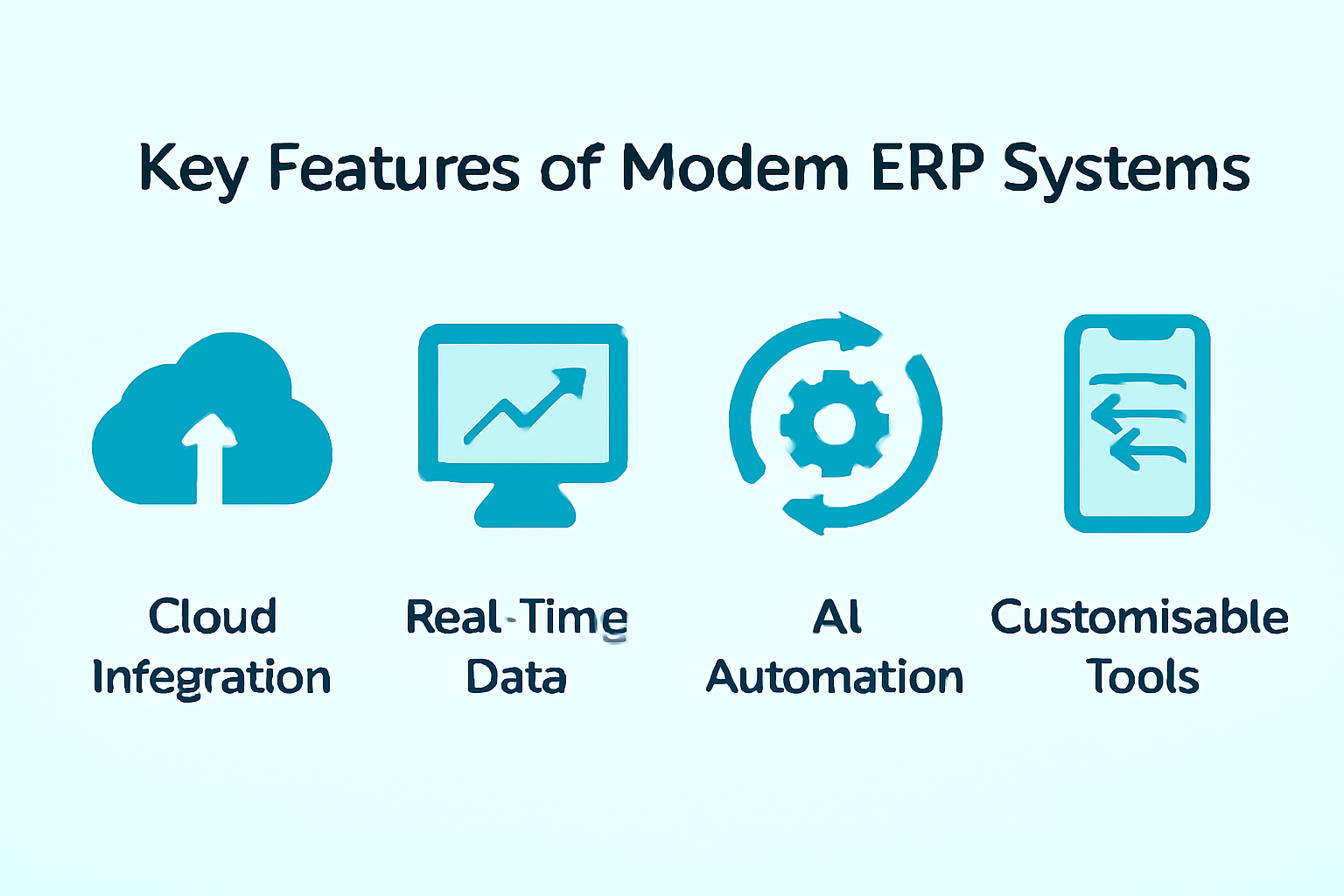
AI in ERP systems isn’t just about automating basic tasks—it’s about intelligent automation. Predictive analytics and machine learning algorithms analyze historical data and anticipate trends, allowing your business to plan ahead and stay ahead of potential challenges.
For example, imagine you’re running a global supply chain. Your ERP system can predict demand fluctuations based on historical sales data, allowing you to adjust inventory levels proactively. This reduces stockouts and overstocking, saving money and time.
2. Real-Time Data Access: Empowering Quick Decisions
In a fast-paced business environment, waiting for reports can be detrimental. ERP systems offer real-time dashboards that provide up-to-date data on sales performance, financial status, inventory, and more. This allows quick decision-making that impacts your business today, not weeks from now.
For instance, consider a retail CEO who needs to make a quick decision on a sales strategy. With a modern ERP system, they can instantly pull up sales data, customer behavior, and stock levels—all in real-time—helping them optimize strategies on the fly.
3. Cloud Integration: Flexibility and Collaboration
What happens when your business needs flexibility in its operations? A modern cloud-based ERP system allows your team to access information anywhere and at any time. Whether you’re working remotely or in a different office, cloud integration ensures that everyone is on the same page.
Consider a multinational business where sales, marketing, and finance teams operate in different regions. With a cloud-based ERP, these teams can collaborate seamlessly, regardless of location, using the same set of real-time data.
Key Features of Modern ERP Systems: What to Look For
1. AI-Powered Predictive Analytics
AI’s role in ERP systems has expanded beyond basic task automation to include predictive analytics. By analyzing historical trends, these systems can forecast future outcomes like customer demand, market trends, and potential operational bottlenecks. This allows businesses to stay ahead by anticipating issues before they arise.
2. No-Code Customization
Not all businesses have dedicated IT teams to implement and maintain their ERP systems. Modern ERP systems offer no-code customization options, enabling businesses to tailor the system to their needs without requiring technical expertise. This ensures that your ERP solution fits your business rather than forcing your business to adapt to a rigid platform.
Future-Proofing Your Business with Modern ERP
The future of ERP is bright. In the coming years, you’ll see ERP systems integrating even more advanced AI, supporting robotic process automation (RPA), and offering no-code platforms for non-technical users.
This will make it easier than ever for businesses to adopt and optimize their ERP systems with minimal effort.
The question is, are you ready for this future?
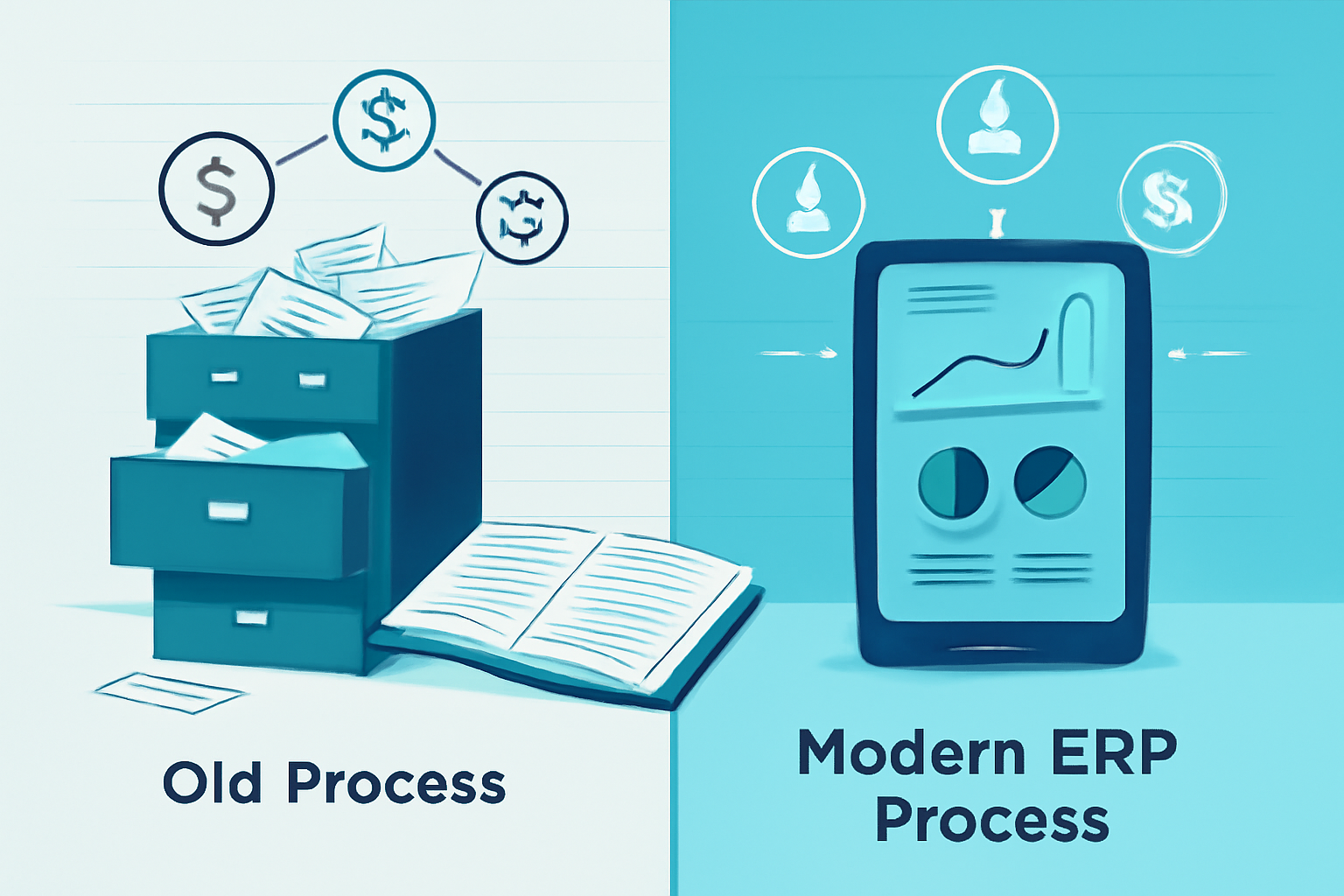
For Example, consider a growing e-commerce company that implemented a modern ERP system. Before the switch, they struggled with manual inventory tracking and slow order processing, which impacted customer satisfaction. After adopting a cloud-based ERP, their inventory management became automated, orders were processed faster, and customer satisfaction improved by 25% in just three months.
Ready to Drive Efficiency with ERP?
A modern ERP system isn’t just about improving your operations; it’s about transforming your business for the better.
If you're ready to take your business to the next level, contact us today to learn how Mediusware can help you implement a tailored ERP system that drives efficiency, growth, and success.

We are the Mediusware Editorial Team, passionate about crafting insightful content on technology, software development, and industry trends. Our mission is to inform, inspire, and engage our audience with well-researched articles and thought leadership pieces. With a deep understanding of the tech landscape, we aim to be a trusted source of knowledge for professionals and enthusiasts alike.
Featureblogs
Relatedblogs
01
Integrating Redux with React: A Comprehensive Guide02
Laravel pagination and filtering with already loaded data as array in memory03
React + Three.js + React Three Fiber: Crafting Interactive 3D views in Web Applications04
Advanced Caching Strategies for Django Applications05
Implementing Roles and Permissions in Laravel Using Guard-Laravel