Logo
Services
Industries
Technologies
About
Case Study
Blog

120+ expert engineers & designers in AI, Web, Mobile.

General Inquiries

hr@mediusware.com+880 1897-661850-51

Discuss Services

sales@mediusware.com+880 1750-020408

Mediusware 2015 - 2026. All Rights Reserved

Company

Our StoriesLeadershipBlogsContactCareerCSR Terms & ConditionsPrivacy Policy

Services

Software DevelopmentWeb DevelopmentMobile App DevelopmentE-commerce DevelopmentQA & DevOpsDigital MarketingArtificial IntelligenceBranding & Visualization

Industries

RetailE-learningTravelHealthcareLogisticsEntertainmentFintechReal Estate

Quick Links

ImpactPartnershipHireToolsPitch DeckEstimatorOur Team

The Hidden Cost of Understaffed Development Teams

Published on: 12 February, 2026

Last updated on: 21 February, 2026

  • Scalable development teams help companies maintain product delivery speed as systems and user demand grow.
  • Balanced engineering capacity enables faster innovation, stable infrastructure, and consistent product improvement.
The Hidden Cost of Understaffed Development Teams image

Table of content

Why Development Teams Become Understaffed

The Hidden Business Costs of Understaffed Development Teams

How High-Performing Companies Solve This Problem

Add External Development Capacity

Signs Your Development Team Is Understaffed

Final Thoughts

You May Also Like

Summarize with AI
ChatGPT
ChatGPT
Google AI Studio
Google AI Studio
Claude
Claude
Grok
Grok
Perplexity
Perplexity

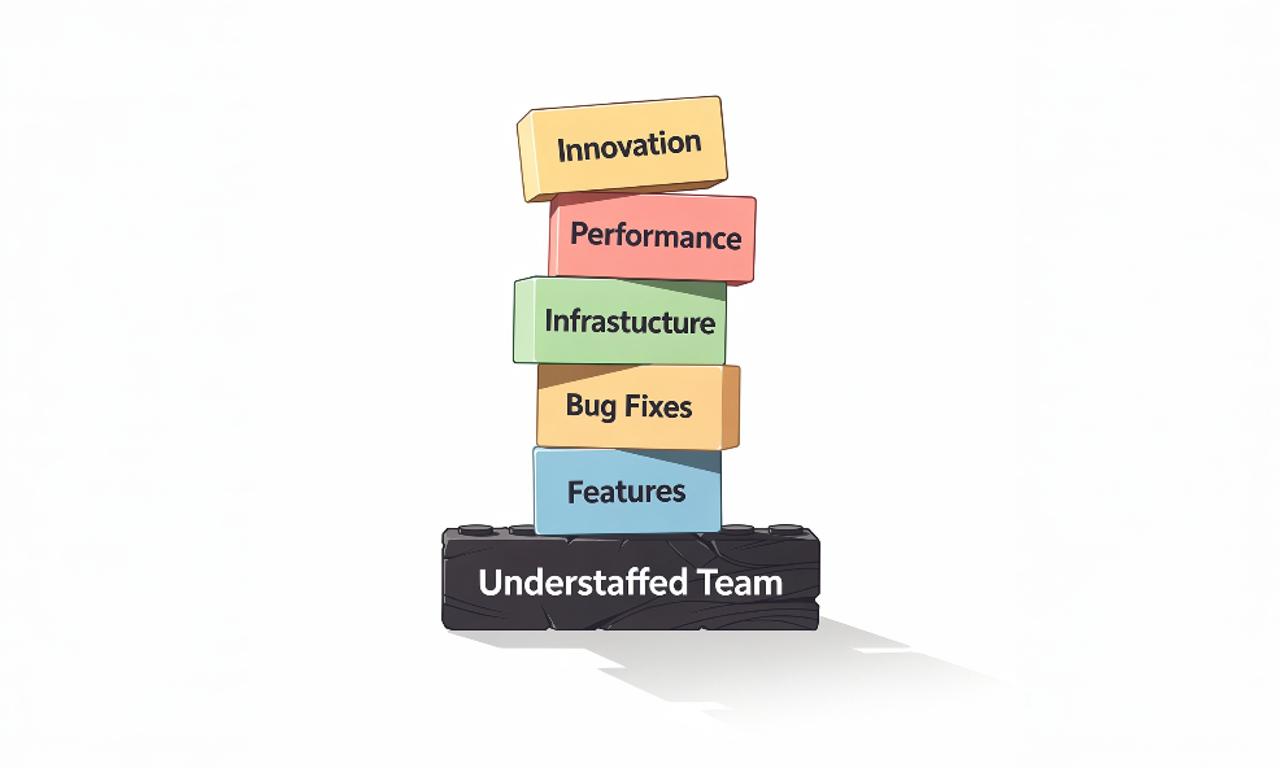
Most product delays are not caused by bad developers. They happen because teams are simply too small to handle the workload. At first, understaffing feels efficient. Founders think a lean team reduces cost and keeps communication simple. But as the product grows, the workload grows faster than the team.


Features start taking longer. Bug fixes pile up. Developers begin juggling too many responsibilities. And slowly, product momentum begins to slow down. According to the 2023 Accelerate State of DevOps Report, high-performing engineering teams deliver software 208× more frequently and recover from failures 106× faster than poorly structured teams.


This difference often comes down to team structure and capacity, not just individual talent. Understaffed teams create hidden operational costs that many companies only notice when growth begins to stall.

Why Development Teams Become Understaffed

Understaffing usually doesn’t happen intentionally. It often starts with reasonable assumptions.


1. Early Success Creates False Confidence

A small team may build the initial product successfully. But maintaining and scaling a product requires very different resources than building the first version.


New demands appear:

  • Infrastructure maintenance
  • Security updates
  • Performance optimization
  • Customer support fixes
  • Feature expansion


Without additional engineers, the same team becomes overloaded.


2. Technical Debt Starts to Accumulate

When teams are small, developers often prioritize speed over long-term structure. This leads to technical debt.


Martin Fowler, a well-known software engineering expert, explains it clearly:

Technical debt is the implied cost of additional rework caused by choosing an easy solution now instead of a better approach that would take longer.

Over time, engineers spend more time fixing old problems than building new features.


3. Product Complexity Increases Faster Than the Team

Every new feature adds complexity:

  • More APIs
  • More integrations
  • More data flows
  • More testing requirements


When a team is understaffed, this complexity becomes a serious productivity blocker.

The Hidden Business Costs of Understaffed Development Teams

Understaffing doesn’t just affect developers. It impacts the entire business.


1. Slower Product Delivery

With fewer engineers, development cycles become longer. Roadmaps slip. Releases get delayed.


In fast-moving markets like SaaS, slower product delivery can mean losing market opportunities.


2. Developer Burnout

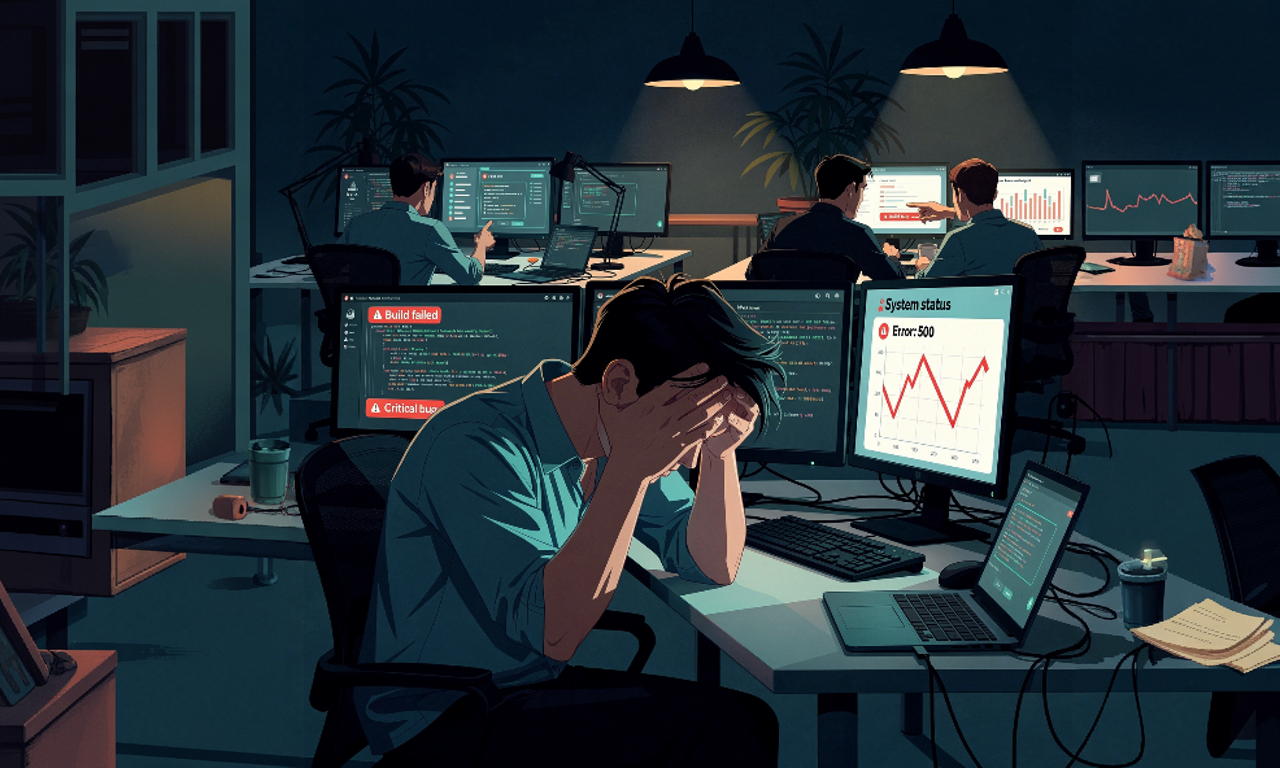
When engineers constantly work under pressure, burnout becomes inevitable.


Burnout leads to:

  • Lower productivity
  • More bugs
  • Higher employee turnover


Replacing experienced engineers is expensive and disruptive.


3. Increased System Risk

Understaffed teams often postpone important tasks such as:

  • Security improvements
  • Infrastructure upgrades
  • Performance optimization


This increases the risk of outages or system failures. In industries like fintech, healthcare, or SaaS platforms, even a few hours of downtime can cost thousands of dollars.


4. Reduced Innovation

When engineers spend most of their time maintaining systems, innovation slows down. New ideas stay in the backlog. Experiments get postponed.


Instead of building competitive advantages, teams become stuck maintaining existing systems.

How High-Performing Companies Solve This Problem

Successful technology companies treat development capacity as a strategic investment, not just an operational cost. Here are a few practices they follow.


1. Build Scalable Development Teams

Rather than relying on a few overloaded engineers, companies build teams designed for growth.


This usually includes:

  • Backend engineers
  • Frontend specialists
  • DevOps engineers
  • QA engineers
  • Product engineers


Balanced teams allow work to happen in parallel instead of sequentially.


2. Use Dedicated Engineering Pods

Many modern tech companies organize teams into small cross-functional pods. Each pod owns a product area and includes:

  • Developers
  • QA
  • DevOps support


This structure reduces coordination bottlenecks and speeds up delivery.

Add External Development Capacity

When hiring internally takes too long, companies often expand through external engineering partners. This allows organizations to scale development quickly without long recruitment cycles.


For example, platforms like Bulk.ly, a social media management tool developed by Mediusware, help teams automate and scale digital workflows efficiently by using modern development frameworks and automation tools.


Similarly, many growing companies scale engineering capacity by working with experienced development teams that already understand modern frameworks, scalable infrastructure, and product architecture. You can explore how development teams build scalable digital platforms through services.

Signs Your Development Team Is Understaffed

Many founders only realize the problem after delays start happening. Common warning signs include:

  1. Roadmaps constantly shifting
  2. Developers frequently working overtime
  3. Bug fixes taking longer than feature development
  4. Infrastructure improvements being postponed
  5. Engineers spending most of their time on maintenance


If these patterns continue, the team likely needs additional development capacity.

Final Thoughts

Understaffed development teams create a hidden cost that most companies underestimate. At first, it looks like cost savings.


But over time, it leads to slower delivery, technical debt, burnout, and lost innovation. The companies that scale successfully understand one important principle:

Product growth requires scalable engineering capacity.


When development teams have the right structure, resources, and support, they can move faster, innovate more, and build systems that last. And that difference often determines whether a product struggles to keep up—or becomes a market leader.

Frequently Asked Questions

An understaffed development team struggles to keep up with product demands. This often leads to slower feature delivery, technical debt accumulation, developer burnout, and increased system risk.

Author
We are the Mediusware Editorial Team, passionate about crafting insightful content on technology, software development, and industry trends. Our mission is to inform, inspire, and engage our audience with well-researched articles and thought leadership pieces. With a deep understanding of the tech landscape, we aim to be a trusted source of knowledge for professionals and enthusiasts alike.
Mediusware Editorial Team

Content Team at Mediusware

Get the best of our content straight to your inbox!

By submitting, you agree to our privacy policy.

Why Development Teams Become Understaffed
The Hidden Business Costs of Understaffed Development Teams
How High-Performing Companies Solve This Problem
Add External Development Capacity
Signs Your Development Team Is Understaffed
Final Thoughts
Navigate
Why Development Teams Become UnderstaffedThe Hidden Business Costs of Understaffed Development TeamsHow High-Performing Companies Solve This ProblemAdd External Development CapacitySigns Your Development Team Is UnderstaffedFinal Thoughts

Get the best of our content straight to your inbox!

By submitting, you agree to our privacy policy.

Featureblogs

01Top 8 Python GUI Frameworks for Developers02C# vs. Java: Key Differences, Advantages, and Future Prospects03The 12 Most Powerful LLMs: Powering Tomorrow’s Tech Landscape04Is Golang Still the Right Choice in 2025?0512 Best AI Tools to Outperform ChatGPT

Authorblogs

01How CTOs Can Scale Engineering Teams Without Breaking Delivery02How AI Is Transforming Hollywood After the Oscars 202603Why Product Roadmaps Get Delayed Even With Good Developers04Google Messages Copy and Paste Update: Why This Small Change Matters More Than It Looks05How SaaS Companies Scale Development Without Increasing Overhead