-
QA needs vary across industries like healthcare, finance, e-commerce, automotive, and retail.
-
Each sector has unique challenges, from data security to real-time performance.
-
Customized QA ensures compliance, reliability, and seamless user experience.
-
Tailored testing reduces risks, prevents critical failures, and builds long-term trust.
Industry-Specific QA: Tailoring Quality Assurance for Different Sectors
5 min read
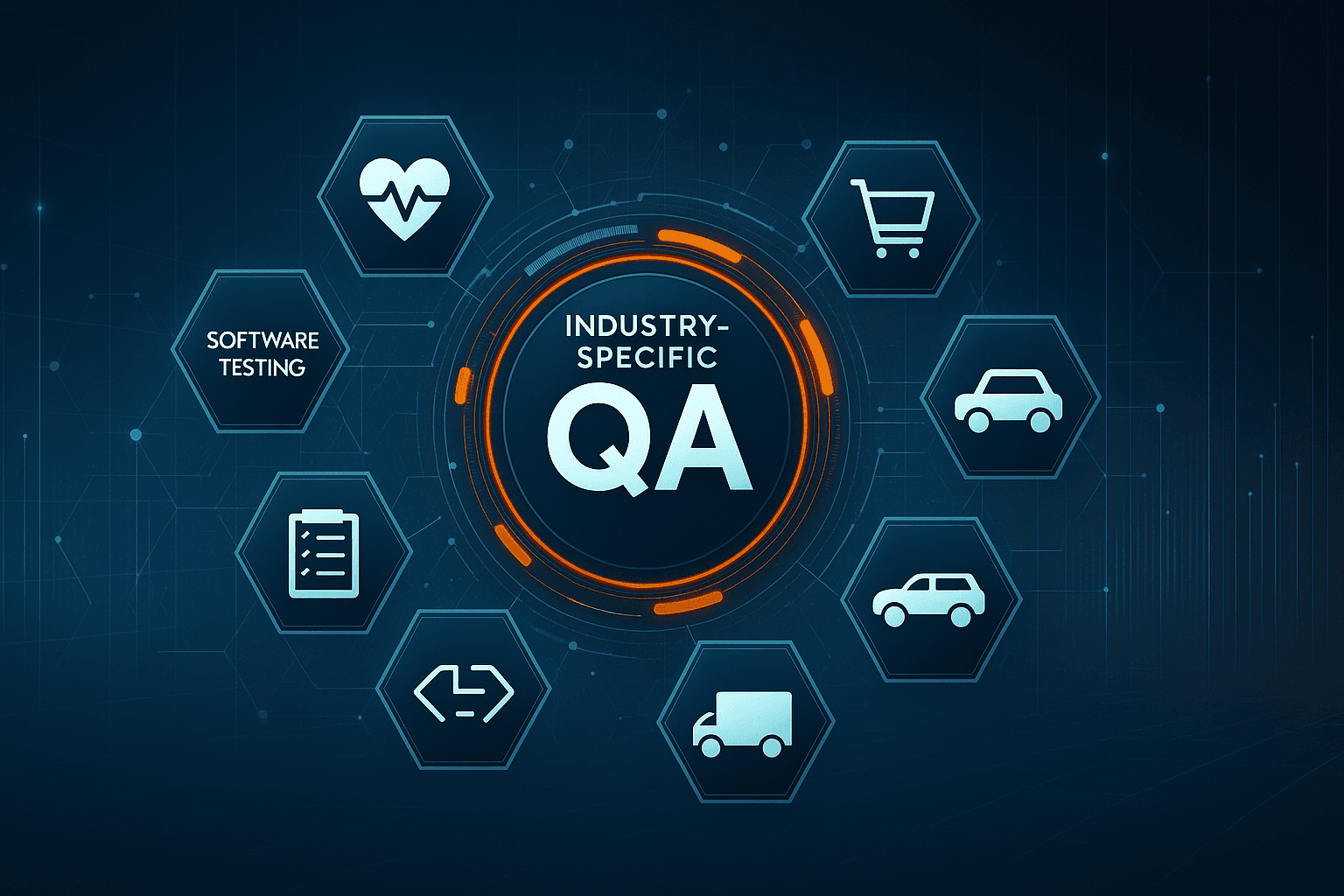
In today’s fast-paced digital world, Quality Assurance (QA) is more than just testing—it’s about ensuring that software and applications meet industry-specific standards and user expectations.
While general QA practices apply across industries, each sector presents unique challenges and requirements. Let’s explore how QA differs across key industries and why customization is essential.
1. Healthcare
Particular Difficulties:
Data security and privacy: Adherence to laws such as GDPR (in Europe) and HIPAA (in the United States) is essential.
Accuracy & Reliability: Inaccurate diagnosis or treatment might result from small bugs.
Interoperability: Healthcare systems often have to interface with various operating systems and devices.
QA Focus: Protecting patient data through security testing.
Software must go through functional testing to make sure it operates as intended.
Testing for regulatory compliance in order to meet industry requirements.
2. Finance
Particular Difficulties:
Data Sensitivity: Security is essential when financial applications handle highly sensitive data.
Real-Time Transactions: Low-latency systems are required for rapid trading and payment processing in real time.
Keeping up with standards such as PCI-DSS, SOX, and AML is part of a complex regulatory environment.
QA Priority:
Penetration and security testing to guard against online threats.
Performance testing to manage a great deal of transactions.
Compliance testing to fulfill legal requirements.
3. E-Commerce
Particular Difficulties:
High User Expectations: Users expect seamless transactions, quick load times, and user-friendly interfaces.
Seasonal Traffic Spikes: Traffic spikes can happen at events such as Black Friday.
Payment Gateway Integration: Making payments securely and efficiently is crucial.
QA Focus: Stress and load testing to handle spikes in traffic.
To guarantee a flawless user experience, conduct usability testing.
Payment testing ensures trustworthy and safe transactions.
4. Automotive
Particular Difficulties:
Safety-Critical Systems: Vehicle safety is seriously affected by automotive software.
Hardware Integration: Sensors, recording devices, and management units must all be integrated with software.
Real-Time Performance: Real-time data processing is essential for connected and autonomous cars.
QA Focus: To guarantee seamless hardware-software integration, use embedded system testing.
Testing for responsiveness and durability in real time.
Safety testing in accordance with ISO 26262 alongside additional standards.
5. Retail
Unique Challenges:
- Omnichannel Experience: Integration across online, mobile, and in-store platforms.
- Inventory Management: Real-time updates are crucial for stock accuracy.
- Customer Engagement: Loyalty programs and personalized recommendations require seamless functionality.
QA Focus:
- Integration Testing across various sales channels.
- Performance Testing to handle peak shopping times.
- Functional Testing for inventory and customer engagement features.
Why Industry-Specific QA Matters?
Compliance: Guarantees that industry rules and guidelines are followed.
User Experience: Provides a product that satisfies the particular requirements and demands of users within that sector.
Risk Mitigation: Reduces the risk of critical failures that could harm users or damage a company’s reputation.
Final Takeaway
Delivering high-quality, dependable, and compliant software now calls for QA procedures be modified to match the needs of specific organizations.
QA teams can offer rewards beyond bug identification by comprehending the particular difficulties and requirements unique to any industry, assuring that apps are not only functional but also secure, efficient, and easy to use.
Frequently Asked Questions
Industry-Specific QA makes sure that applications satisfy the specific functional, regulatory, and user requirements of a certain industry in addition to generic quality standards. For instance, banking software must put security and real-time transaction accuracy first, while healthcare apps must abide by stringent data privacy regulations like HIPAA. Matching QA to the requirements of the sector lowers risks, improves consumer satisfaction, and guarantees regulatory compliance.

I work at the point where product decisions, system architecture, and engineering execution meet. At Mediusware, I’m accountable for how technology choices affect reliability, scale, and long-term delivery for our clients.
Featureblogs
Relatedblogs
01
How to Create a Stunning WordPress Website in 2024: Step-by-Step Tutorial02
How Mediusware Empowered Protesters, Strengthened the Economy & Showcased Employee Resilience in the 2024 Movement03
Mastering Error Handling in Rust with Essential Techniques04
Best Practices for Writing Clean Code05
Let's Deep Dive Into Threads with RustAuthorblogs
01
How Digital Agencies Can Deliver Custom Software Without Hiring Developers02
AI in FinTech: Build, Buy, or Integrate? A Founder's Decision Framework03
How to Choose a SaaS MVP Development Company04
How Seed-Stage SaaS Teams Add Engineering Capacity Without Hiring Chaos05
Why Seed-Stage SaaS Startups Struggle to Ship Fast