- RPA automates property management tasks like tenant onboarding, rent processing, and maintenance.
- Intelligent automation improves operational efficiency, reporting, and tenant service management.
Top RPA Applications in Property Management: Workflows and Benefits
1 min read
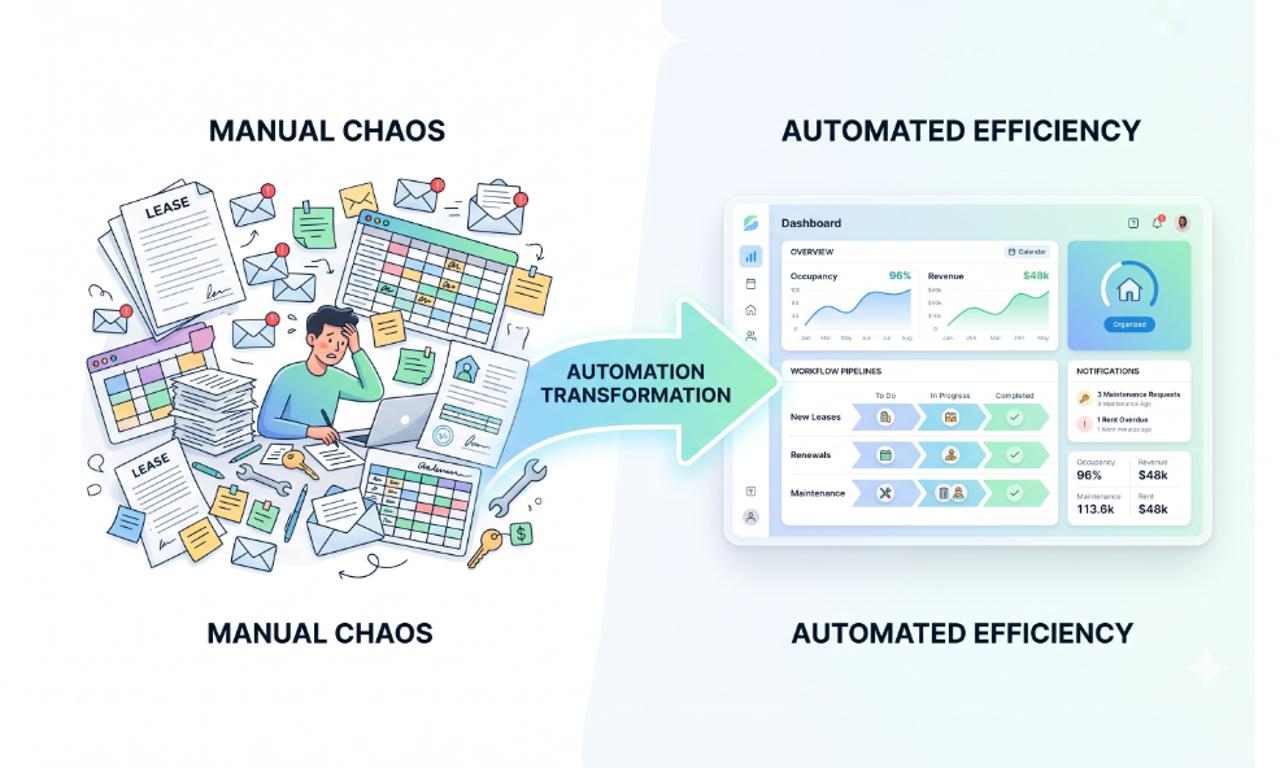
Property management doesn’t break because of complexity.
It breaks because of repetition.
Tenant onboarding, rent collection, maintenance coordination, and reporting are hard individually.
But when you’re managing dozens or hundreds of properties, the volume turns simple tasks into operational bottlenecks.
I’ve seen teams spend hours moving data between systems, chasing updates, and fixing avoidable errors.
That’s where RPA changes the game.
Not by replacing systems, but by connecting and automating everything in between.
Why Property Management Is Perfect for RPA
Most property operations follow predictable patterns.
You process the same types of requests.
You update the same systems.
You follow the same steps again and again.
That’s exactly what RPA is built for.
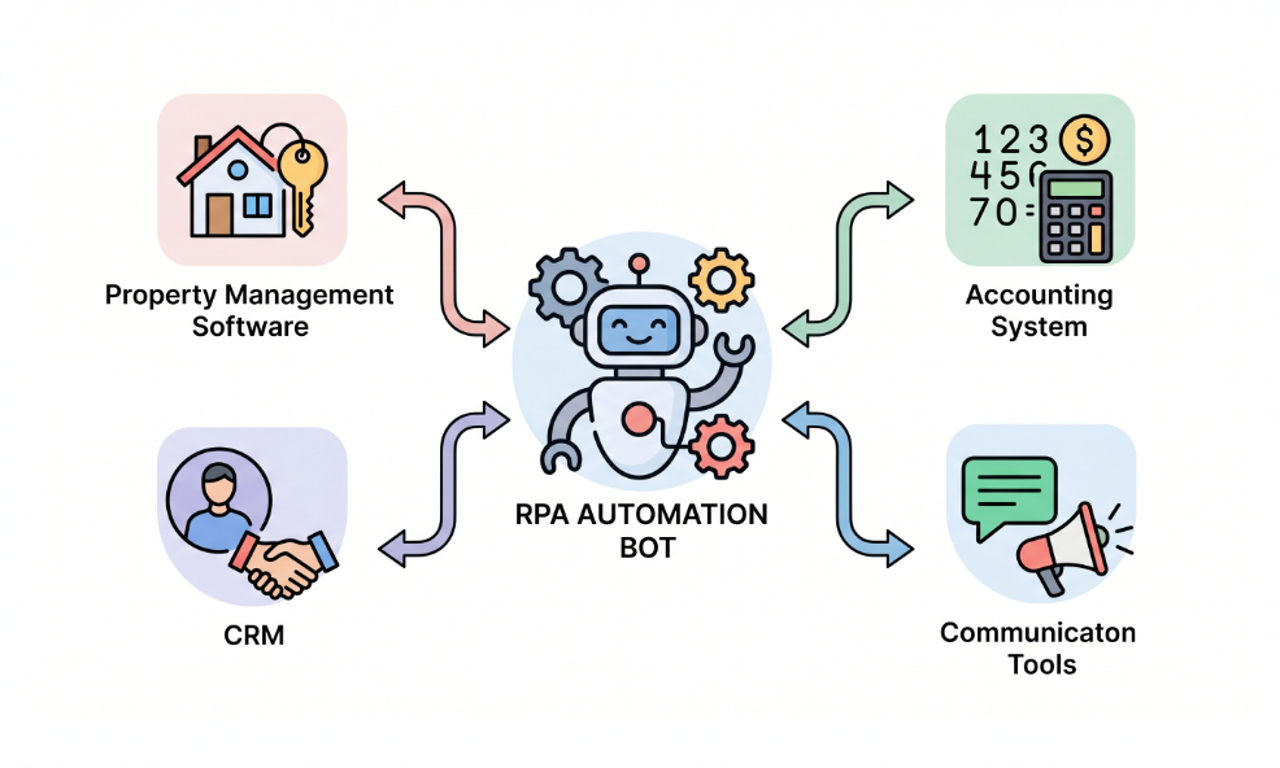
Instead of manually handling workflows like:
- Rent processing
- Lease updates
- Tenant communication
- Maintenance coordination
- Financial reporting
Bots handle them instantly across systems.
No switching tabs.
No manual entry.
No missed steps.
The result is simple:
- Less operational friction
- Faster execution
- Higher accuracy
- Lower admin cost
And at scale, this becomes a serious competitive advantage.
1. Automated Tenant Onboarding
Onboarding a tenant looks simple until you actually manage it.
Applications, verification, documentation, system updates, emails, everything needs coordination.
Where teams struggle
Most teams still handle this manually across emails, spreadsheets, and systems.
That’s where delays and inconsistencies start.
How RPA fixes it
A typical automated flow looks like:
- Tenant submits application
- Bot extracts and validates data
- Background checks trigger automatically
- Lease documents are generated
- Tenant profile is created in the system
- Welcome emails are sent
No back-and-forth.
No missed steps.
Just a consistent onboarding experience every time.
2. Rent Collection and Payment Processing
Rent collection is predictable but still time-consuming.
Tracking due dates, sending reminders, updating systems… it adds up fast.
The real problem
Manual handling introduces delays, missed payments, and reconciliation issues.
RPA workflow
- Bot tracks upcoming payments
- Sends automated reminders
- Captures payment confirmations
- Updates accounting systems
- Generates receipts automatically
Everything runs on schedule.
No follow-ups.
No manual tracking.
3. Maintenance Request Automation
Maintenance workflows are where communication usually breaks.
Requests get delayed.
Vendors aren’t assigned on time.
Tenants stay in the dark.
What’s actually happening
Too many handoffs. Too many tools. No central coordination.
RPA workflow
- Tenant submits request
- Bot categorizes issue
- Checks vendor availability
- Assigns job automatically
- Sends updates to tenant
- Marks completion and updates records
This removes the biggest issue in maintenance: lag.
4. Lease Management and Document Handling
Lease management isn’t just about documents, it’s about timing and compliance.
Missed renewals or expired contracts can create serious risks.
The manual gap
Tracking leases across files and systems increases the chance of human error.
RPA workflow
- Auto-generate lease agreements
- Store documents in structured systems
- Track expiration dates
- Send renewal reminders
- Update lease status automatically
Everything becomes trackable and predictable.
5. Financial Reporting and Accounting Automation
Reporting is where most teams lose hours every month.
Pulling data from multiple systems.
Reconciling numbers.
Building reports manually.
The issue
Data exists, but it’s fragmented.
RPA workflow
- Bots collect data from all systems
- Consolidate financial records
- Generate reports automatically
- Send scheduled summaries to stakeholders
No more manual compilation.
Just real-time visibility.
What Changes After RPA Implementation
Once automation is in place, the shift is noticeable.
1. Operational Efficiency
Teams stop spending time on repetitive work.
2. Accuracy
Data errors drop significantly.
3. Speed
Requests, payments, and updates happen instantly.
4. Scalability
You can manage more properties without growing admin overhead.
5. Tenant Experience
Faster responses = better satisfaction.
Final Thoughts
Property management isn’t getting simpler.
Portfolios are growing. Expectations are rising.
The real question is not whether to automate,
It’s how long you can operate without it.
RPA doesn’t just improve workflows.
It removes the operational drag that slows everything down.
Frequently Asked Questions
RPA uses software bots to automate repetitive tasks like tenant onboarding, rent collection, maintenance coordination, and reporting.

I work at the point where product decisions, system architecture, and engineering execution meet. At Mediusware, I’m accountable for how technology choices affect reliability, scale, and long-term delivery for our clients.
Featureblogs
Relatedblogs
Authorblogs
01
How Digital Agencies Can Deliver Custom Software Without Hiring Developers02
AI in FinTech: Build, Buy, or Integrate? A Founder's Decision Framework03
How to Choose a SaaS MVP Development Company04
How Seed-Stage SaaS Teams Add Engineering Capacity Without Hiring Chaos05
Why Seed-Stage SaaS Startups Struggle to Ship Fast