- A strategic comparison of AWS, Azure, and GCP on team alignment, governance, cost, and flexibility.
- An executive decision matrix to help leaders choose the cloud that fits their operating model and direction.
AWS vs. Azure vs. GCP: Your Executive Decision Matrix
1 min read
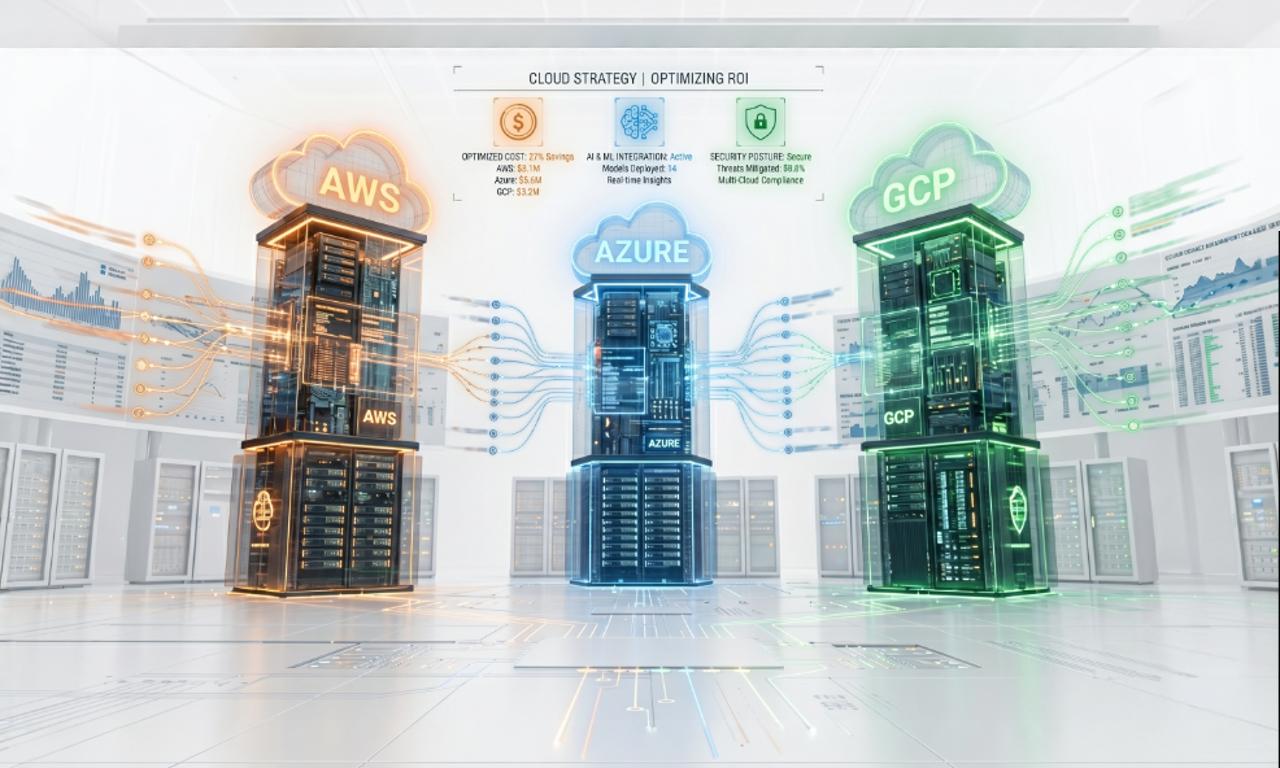
You don’t regret cloud decisions on day one.
You regret them when scaling gets messy, bills become unpredictable, and teams slow down.
I’ve seen this pattern across growing products. The cloud doesn’t fail loudly.
It quietly drains speed, clarity, and control.
So this isn’t a feature comparison.
It’s a decision about how your business operates under pressure.
How Executives Should Actually Evaluate Cloud
Most teams ask the wrong question: What can this cloud do?
The better questions are:
- Can we predict costs when usage spikes?
- Can governance scale without blocking teams?
- Can we change direction without rewriting everything?
Think of cloud like choosing a city.
Every city works. What matters is how livable it is when things change.
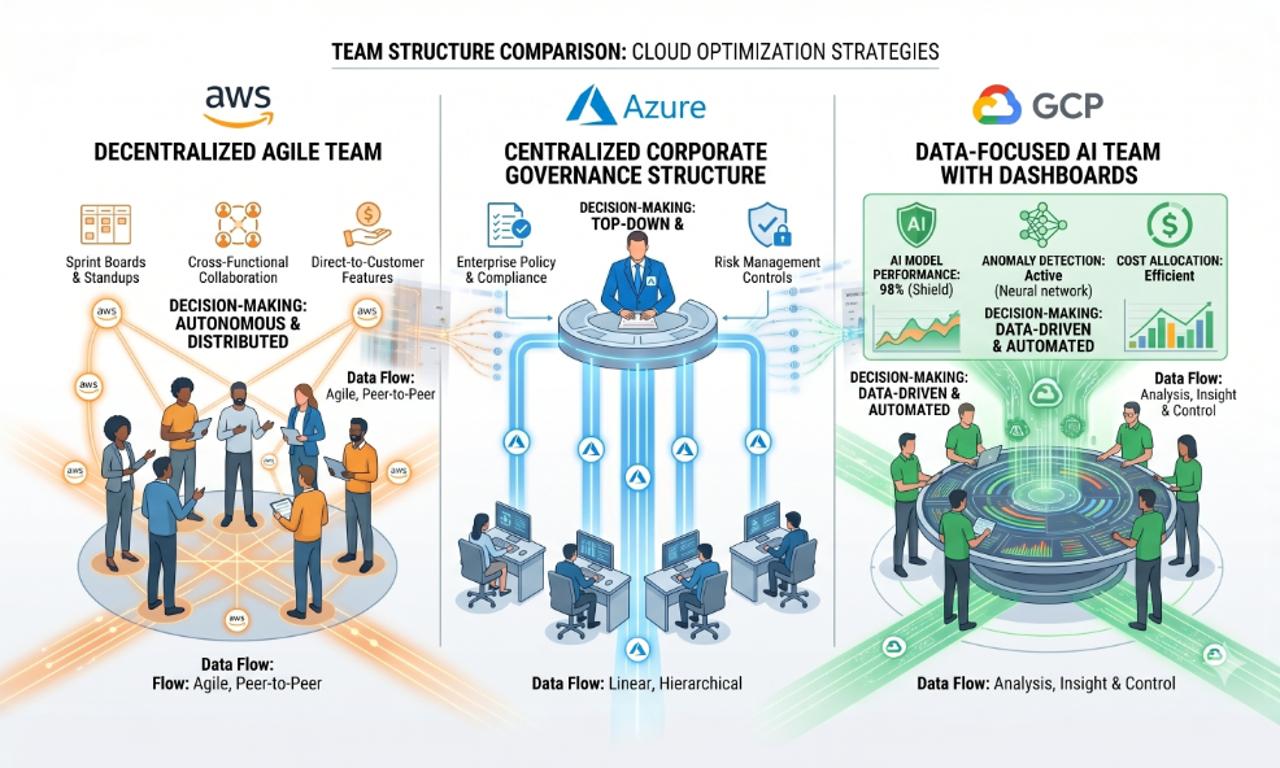
Engineering Alignment: Does the Cloud Fit Your Team?
Cloud platforms don’t fix bad team structures.
They amplify how your teams already work.
According to Melvin Conway,
Organizations design systems that mirror their communication structures.
Platform Alignment Matrix
| Cloud | Engineering Model | Best Fit |
| AWS | Decentralized, service-owned | Independent product teams |
| Azure | Centralized, policy-driven | Enterprise platforms |
| GCP | Data-first, automation-led | Analytics & ML teams |
What this means in practice:
- AWS works best when teams move independently
- Azure works when governance is centralized
- GCP works when data is the core asset
If your structure and cloud don’t match, friction builds fast.
Security & Compliance: Can You Prove It Fast?
Security features look similar across clouds.
But audit readiness is where the difference shows.
Governance Behavior by Cloud
- AWS → Decentralized ownership + guardrails
- Azure → Strong identity + policy inheritance
- GCP → Zero-trust + data perimeter model
According to Microsoft’s official documentation, Azure’s EU Data Boundary clearly defines where data is stored and processed.
The real question:
Can your team produce compliance evidence in hours, not weeks?
Cost Predictability: Where Most Decisions Break
Executives don’t worry about pricing.
They worry about unexpected spikes they can’t explain.
Cost Governance Comparison
| Cloud | Cost Model | Executive Impact |
| AWS | Flexible, granular | Powerful but requires discipline |
| Azure | Built-in governance | Predictable for finance teams |
| GCP | Transparent pricing | Clear unit economics |
The FinOps Foundation reports that strong cost allocation can reduce cloud waste by up to 30%.
Reality check:
- AWS gives control, but demands discipline
- Azure aligns better with finance processes
- GCP makes costs easier to understand
AI Infrastructure: Where Lock-In Starts
AI changed everything.
Now cloud decisions are long-term financial bets.
AI Strategy Differences
- AWS → Custom chips (Trainium, Inferentia) for cost efficiency
- Azure → GPU access + enterprise AI ecosystem (OpenAI, etc.)
- GCP → TPU + large-scale training optimization
McKinsey highlights that AI infrastructure now drives cloud strategy more than traditional workloads.
The risk isn’t capability.
It’s how hard it becomes to leave once AI spend dominates.

Hybrid & Multicloud: Real Flexibility or Illusion?
Everyone says “multi-cloud.”
Few actually achieve real reversibility.
Hybrid Strategy Comparison
| Cloud | Hybrid Approach |
| AWS | Outposts (extend AWS on-prem) |
| Azure | Arc (central governance everywhere) |
| GCP | Distributed Cloud (Kubernetes-first) |
Key insight:
Reversibility isn’t about using multiple clouds.
It’s about having leverage when decisions change.
The Executive Decision Matrix
|
Priority |
AWS |
Azure |
GCP |
|
Team autonomy |
High |
Medium |
Medium |
|
Audit simplicity |
Medium |
High |
High |
|
Cost predictability |
Discipline-dependent |
High |
High |
|
AI flexibility |
High |
High |
Specialized |
|
Hybrid control |
Native |
Governance-first |
Kubernetes-first |
|
Reversibility |
Medium |
Medium |
High (cloud-native teams) |
There’s no winner.
Only alignment.
Where Most Companies Get This Wrong
In our experience working with platforms handling automation, analytics, and large-scale systems, the biggest issue isn’t choosing AWS vs Azure vs GCP.
It’s this:
Teams choose a cloud before understanding how they operate under pressure.
We’ve seen platforms like CRM Runner streamline operations and decision-making by aligning architecture with workflow, not tools.
That same principle applies here.
Cloud is not infrastructure.
It’s an operating model decision.
Final Thought: Choose the Cloud That Fights You Least
AWS won’t fix broken delivery.
Azure won’t clean identity chaos.
GCP won’t solve poor data strategy.
Cloud platforms magnify your strengths and weaknesses.
The real question is simple:
Which cloud lets you stay in control as your business evolves?
That’s the decision that holds.
Frequently Asked Questions
There is no universal best. The right choice depends on your team structure, compliance needs, and cost control.

I work at the point where product decisions, system architecture, and engineering execution meet. At Mediusware, I’m accountable for how technology choices affect reliability, scale, and long-term delivery for our clients.
Featureblogs
Relatedblogs
01
How to Create a Stunning WordPress Website in 2024: Step-by-Step Tutorial02
How Mediusware Empowered Protesters, Strengthened the Economy & Showcased Employee Resilience in the 2024 Movement03
Mastering Error Handling in Rust with Essential Techniques04
Best Practices for Writing Clean Code05
Let's Deep Dive Into Threads with RustAuthorblogs
01
How Digital Agencies Can Deliver Custom Software Without Hiring Developers02
AI in FinTech: Build, Buy, or Integrate? A Founder's Decision Framework03
How to Choose a SaaS MVP Development Company04
How Seed-Stage SaaS Teams Add Engineering Capacity Without Hiring Chaos05
Why Seed-Stage SaaS Startups Struggle to Ship Fast