- Laravel Cloud removes deployment and infrastructure friction for growing Laravel applications.
- Compared to VPS, it trades server control for speed, stability, and managed scalability.
- The right choice depends on your team’s focus: product delivery vs infrastructure management.
Laravel Cloud: Features, Benefits, and Comparison
1 min read

A few months ago, a Laravel team I spoke with shipped a feature they were proud of.
Clean code. Solid reviews. Real users waiting.
Then deployment day came.
Environment mismatch. Queue workers misbehaving. A sudden traffic spike they didn’t plan for. What should have been a calm release turned into hours of firefighting.
If you’ve built anything serious with Laravel, you know this moment.
Not because Laravel failed you, but because everything around the code demanded attention.
So here’s the question worth asking now:
Should Laravel teams still be spending time managing servers, or is that chapter finally closing?
Laravel Cloud didn’t appear out of nowhere. It showed up because teams wanted fewer late nights, fewer fragile deployments, and a clearer path forward as applications scale.
Let’s talk honestly about what it offers, what it gives up, and where it fits in the future of Laravel development.
Why This Shift Matters More Than It Looks
For years, Laravel teams accepted infrastructure work as “part of the job.”
Provision servers. Tune PHP. Secure endpoints. Scale when things break.
But here’s what quietly changed:
- Products move faster than infrastructure plans
- Teams are leaner
- Downtime costs more than ever
- DevOps knowledge is uneven across teams
The result?
Good products slowed down by operational friction.
Laravel Cloud exists because the cost of not simplifying deployment is now higher than the cost of changing how we deploy.
What Laravel Cloud Really Is
Instead of starting with a definition, let’s start with a situation.
You’re running a SaaS built on Laravel:
- One production app
- A staging environment
- Background jobs
- Scheduled tasks
- A growing user base
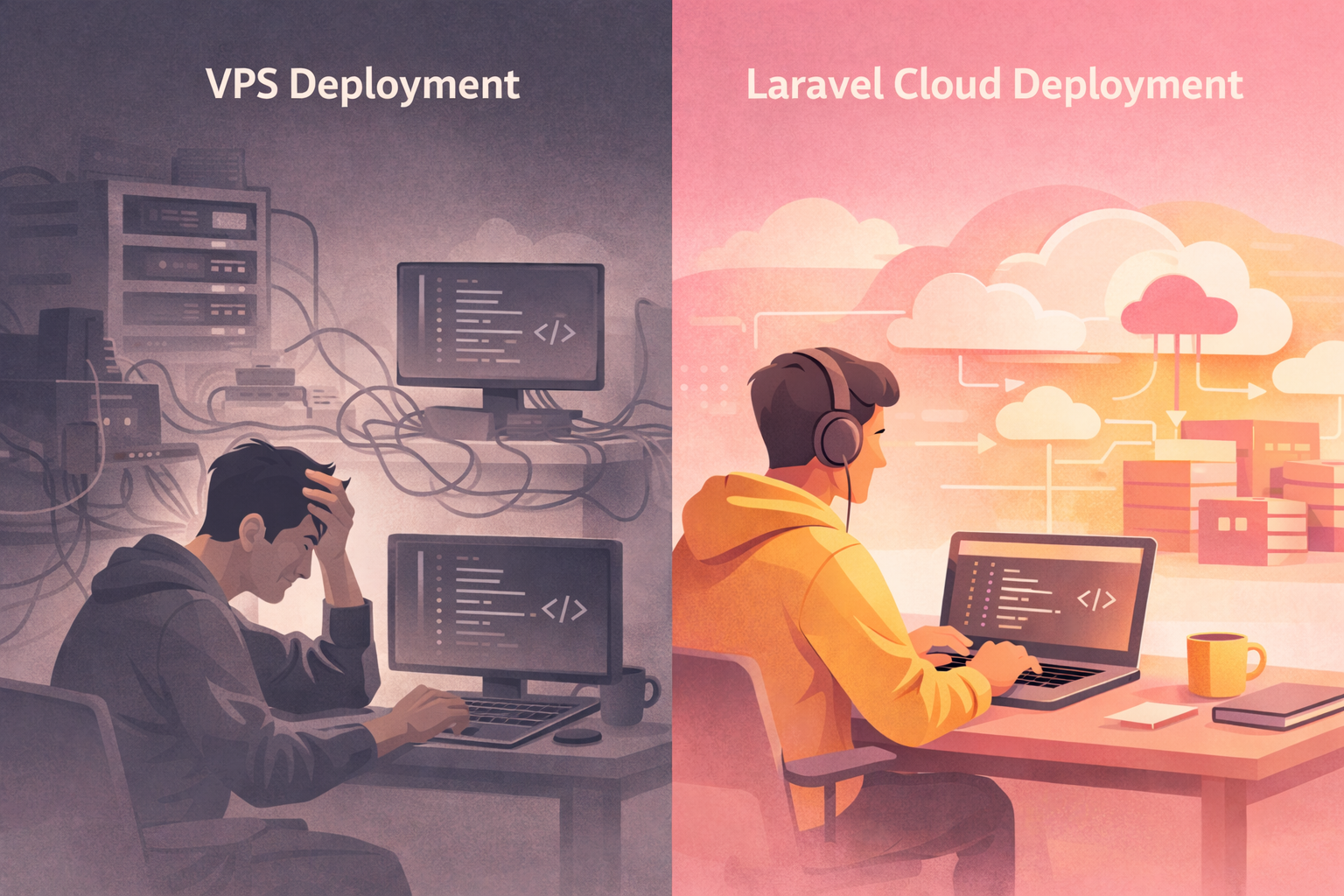
Traditional setup
You:
- Provision a VPS
- Configure Nginx, PHP, queues, cron
- Set up SSL and firewalls
- Monitor resource usage
- Manually scale when traffic spikes
With Laravel Cloud
You:
- Connect your Git repository
- Define environments
- Deploy
- Let the platform handle scaling, security, and runtime management
Laravel Cloud is a first-party managed platform built by the Laravel ecosystem itself, not a generic hosting layer. You can see how it positions itself directly on the official Laravel Cloud site:
Same Laravel app.
Completely different operational weight.
The Features Teams Actually Feel Day to Day
Not every feature matters. These do.
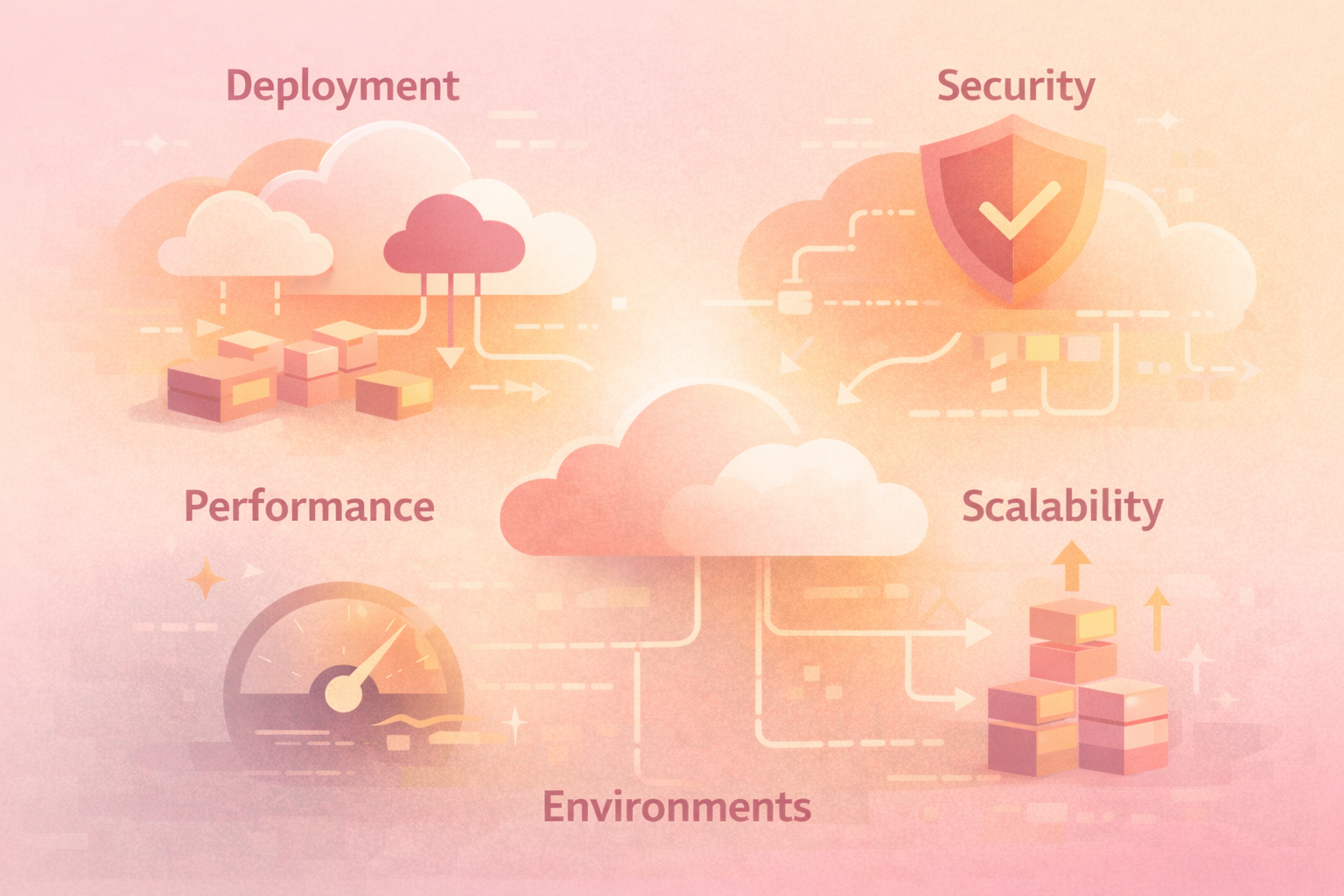
Deployment Without Anxiety
Deployments stop being events.
They become routine.
Code goes in. The platform handles the rest. No fragile scripts. No guessing.
Performance Tuned for Laravel
This isn’t generic PHP hosting.
Laravel Cloud is built around:
- Laravel’s lifecycle
- Caching expectations
- Queue handling patterns
Laravel Cloud is optimized around how Laravel actually runs in production, including queues, caching, and job execution.
For example, Laravel’s own queue system plays a major role in real-world performance and background processing
The result shows up in stability, not marketing claims.
Scaling Without Guesswork
Traffic spikes don’t send you into panic mode.
Resources scale automatically, which means fewer emergency fixes and fewer performance surprises.
Security That Isn’t an Afterthought
Security defaults matter.
SSL, DDoS protection, and updates are handled at the platform level, reducing human error and missed patches.
Environment Consistency
Development, staging, and production stay aligned.
That alone removes an entire category of bugs teams quietly accept today.
Laravel Cloud vs Traditional VPS Hosting
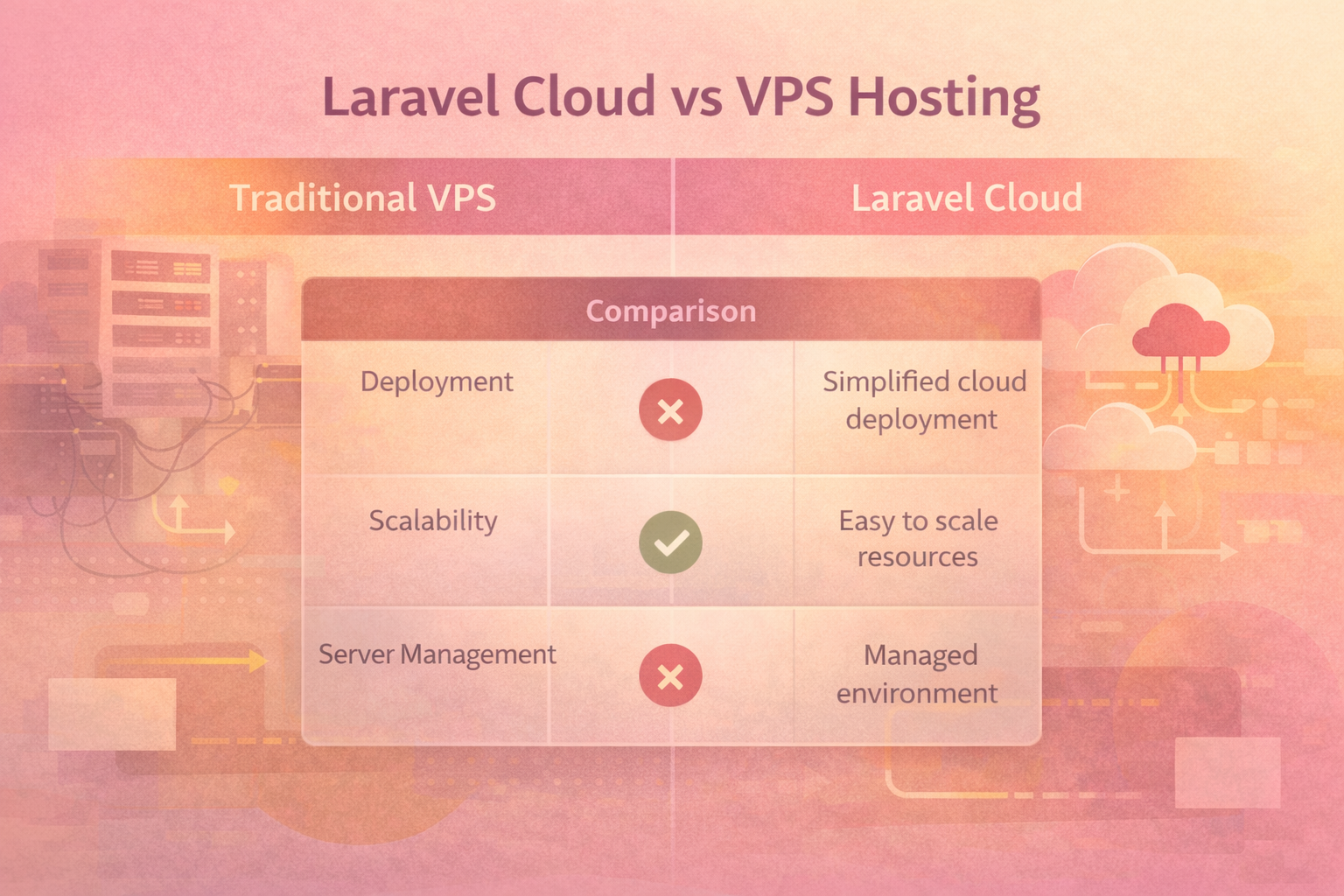
This is where decisions get real.
|
Area |
Laravel Cloud |
Traditional VPS |
|
Setup time |
Minutes |
Hours or days |
|
Scaling |
Automatic |
Manual |
|
Security updates |
Managed |
Your responsibility |
|
Laravel optimization |
Built-in |
Custom |
|
Operational overhead |
Low |
High |
|
Server-level control |
Limited |
Full |
There’s no universal winner here.
Laravel Cloud trades deep server control for speed, safety, and focus.
VPS setups trade convenience for flexibility and control.
The right choice depends on what slows your team down today.
When Laravel Cloud Makes Sense
Laravel Cloud is a strong fit if:
- You’re building a SaaS or internal product
- You want faster releases with fewer operational risks
- Your team prefers shipping features over managing servers
- You don’t want DevOps complexity to grow with your user base
It may not be ideal if:
- You need low-level system customization
- You run highly specialized workloads
- You already operate a mature DevOps pipeline
Being clear about this isn’t a weakness.
It’s how trust is built.
Where Laravel Cloud Fits in the Future of Laravel
Laravel has always moved in one direction:
remove friction, improve developer experience, enforce good defaults.
Laravel Cloud follows that path.
Instead of every team reinventing deployment patterns, the ecosystem moves toward:
- Faster onboarding
- Fewer production incidents
- More predictable scaling
- Cleaner handoffs between teams
For many organizations, this isn’t about convenience anymore.
It’s about reducing operational risk as the product grows.
Getting Started Without Overthinking It
Trying Laravel Cloud doesn’t require a full migration plan on day one.
Most teams:
- Create an account
- Connect a Git repository
- Configure environments
- Deploy
- Observe performance and workflow changes
You learn more in one week of use than in hours of theoretical comparison.
Final Thoughts
Laravel Cloud isn’t about hype.
It’s about deciding where your team’s energy should go.
If infrastructure work is slowing delivery, increasing risk, or pulling focus away from the product, Laravel Cloud is worth serious consideration.
The strongest teams don’t just write clean code.
They choose systems that let that code reach users reliably.
At Mediusware, we help teams build and run production-ready Laravel applications. That includes choosing the right deployment approach, setting up Laravel Cloud properly, and making sure performance and scalability don’t break as products grow.
If you’re considering Laravel Cloud or revisiting how your Laravel app is deployed, it’s worth reviewing the foundation first. A small adjustment early can save a lot of friction later.
Frequently Asked Questions
Yes. It’s designed for real world production use with built-in scaling, security, and monitoring.

I work at the point where product decisions, system architecture, and engineering execution meet. At Mediusware, I’m accountable for how technology choices affect reliability, scale, and long-term delivery for our clients.
Featureblogs
01
Haptic Feedback: Why Touch is Becoming the Most Powerful Experience in Tech02
The Top 10 Most Popular Java Frameworks03
12 Best AI Tools to Outperform ChatGPT04
The 12 Most Powerful LLMs: Powering Tomorrow’s Tech Landscape05
Why Software Companies Are Turning to Strategic Partnerships for Faster Growth01
Haptic Feedback: Why Touch is Becoming the Most Powerful Experience in Tech02
The Top 10 Most Popular Java Frameworks03
12 Best AI Tools to Outperform ChatGPT04
The 12 Most Powerful LLMs: Powering Tomorrow’s Tech Landscape05
Why Software Companies Are Turning to Strategic Partnerships for Faster GrowthRelatedblogs
01
How to Create a Stunning WordPress Website in 2024: Step-by-Step Tutorial02
How Mediusware Empowered Protesters, Strengthened the Economy & Showcased Employee Resilience in the 2024 Movement03
Mastering Error Handling in Rust with Essential Techniques04
Best Practices for Writing Clean Code05
Let's Deep Dive Into Threads with RustAuthorblogs
01
How Digital Agencies Can Deliver Custom Software Without Hiring Developers02
AI in FinTech: Build, Buy, or Integrate? A Founder's Decision Framework03
How to Choose a SaaS MVP Development Company04
How Seed-Stage SaaS Teams Add Engineering Capacity Without Hiring Chaos05
Why Seed-Stage SaaS Startups Struggle to Ship Fast