- Multi-agent systems replace one AI with specialized agents that follow workflows, reducing errors.
- They work best for complex tasks where clear roles, shared state, and guardrails make the system reliable.
How Multi-Agent Systems (MAS) Work: Architecture, Protocols, and Use Cases
1 min read
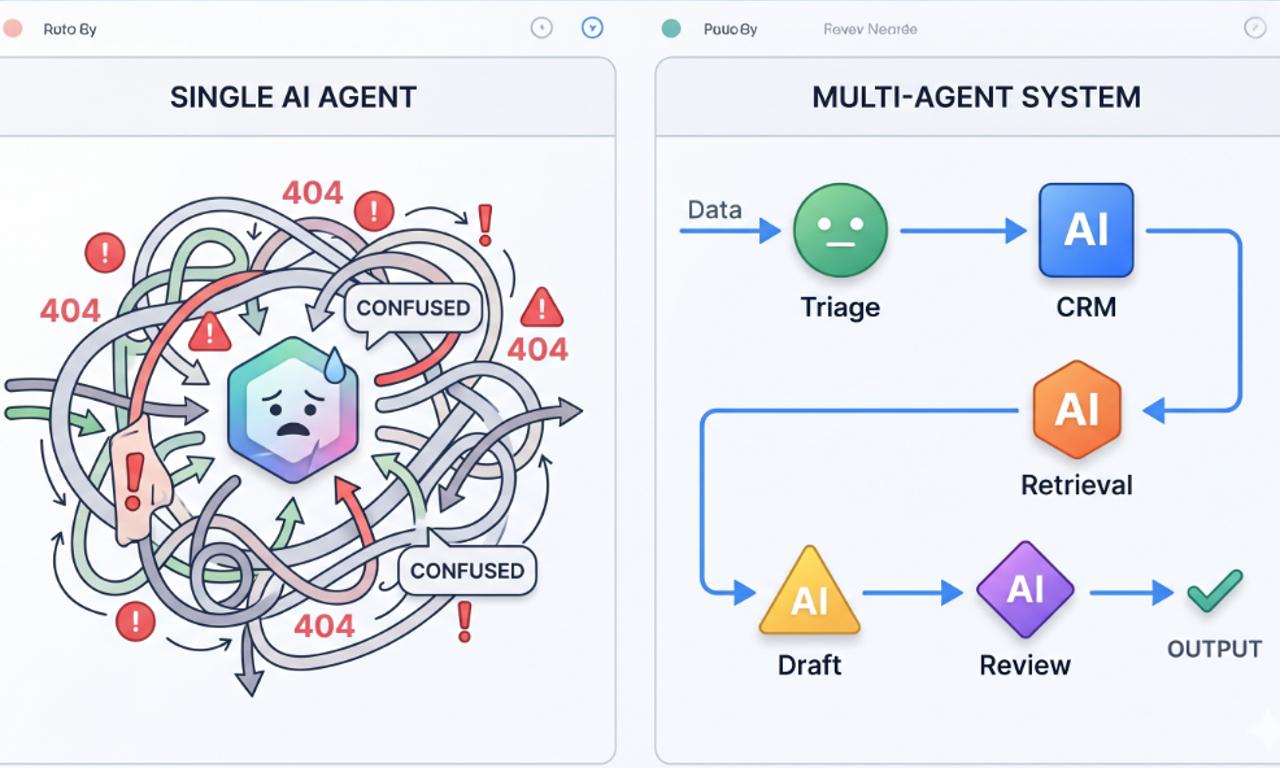
A single AI agent looks powerful in a demo.
In production, it breaks.
It loops.
It guesses.
It calls tools in the wrong order.
And sometimes, it answers confidently when it should escalate.
That’s where the real cost shows up, not in API usage, wrong decisions, slow support, and broken trust.
Multi-agent systems solve this by turning one overloaded agent into a structured team.
Not smarter AI.
Better system design.
Why Single-Agent Systems Fail in Real Workflows
Most real workflows are not one step.
They require:
- understanding intent
- fetching real data
- validating policies
- generating responses
- deciding risk
A single agent tries to do all of this at once.
That’s where things break:
- Loops → no clear “done” state
- Tool chaos → repeated or wrong tool calls
- Fake confidence → answers without real data
As Anthropic notes, complexity grows fast when agents handle too many responsibilities without clear boundaries.
What a Multi-Agent System Actually Is
A multi-agent system (MAS) is a group of specialized agents working together.
Each agent:
- has one job
- has limited tool access
- writes to shared state
Instead of one brain doing everything, you get a coordinated system.
IBM defines MAS as agents that interact, share information, and collaborate to solve tasks collectively rather than independently.
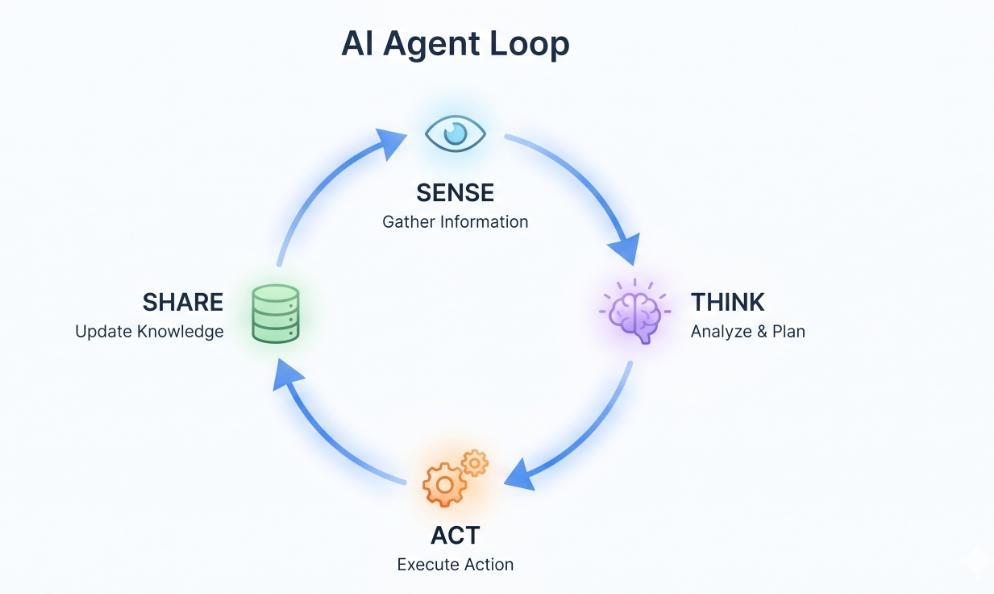
The Core Loop
Every MAS follows a basic loop:
- Sense → read input + state
- Think → decide next step
- Act → call tool or produce output
- Share → update system state
That’s it.
The power comes from how clean each step is, not how complex it looks.
A Real Example: Support Copilot
User says:
I was charged twice.
A weak system guesses.
A strong system routes.
Agents involved:
- Triage agent → detects billing issue
- CRM agent → checks transactions
- Retrieval agent → pulls refund policy
- Draft agent → writes response
- Policy agent → checks compliance
- Escalation agent → decides send vs human
Each agent does one thing well.
That’s the difference.
Architecture That Actually Works
Most teams overcomplicate this.
You don’t need many agents.
You need clear boundaries.
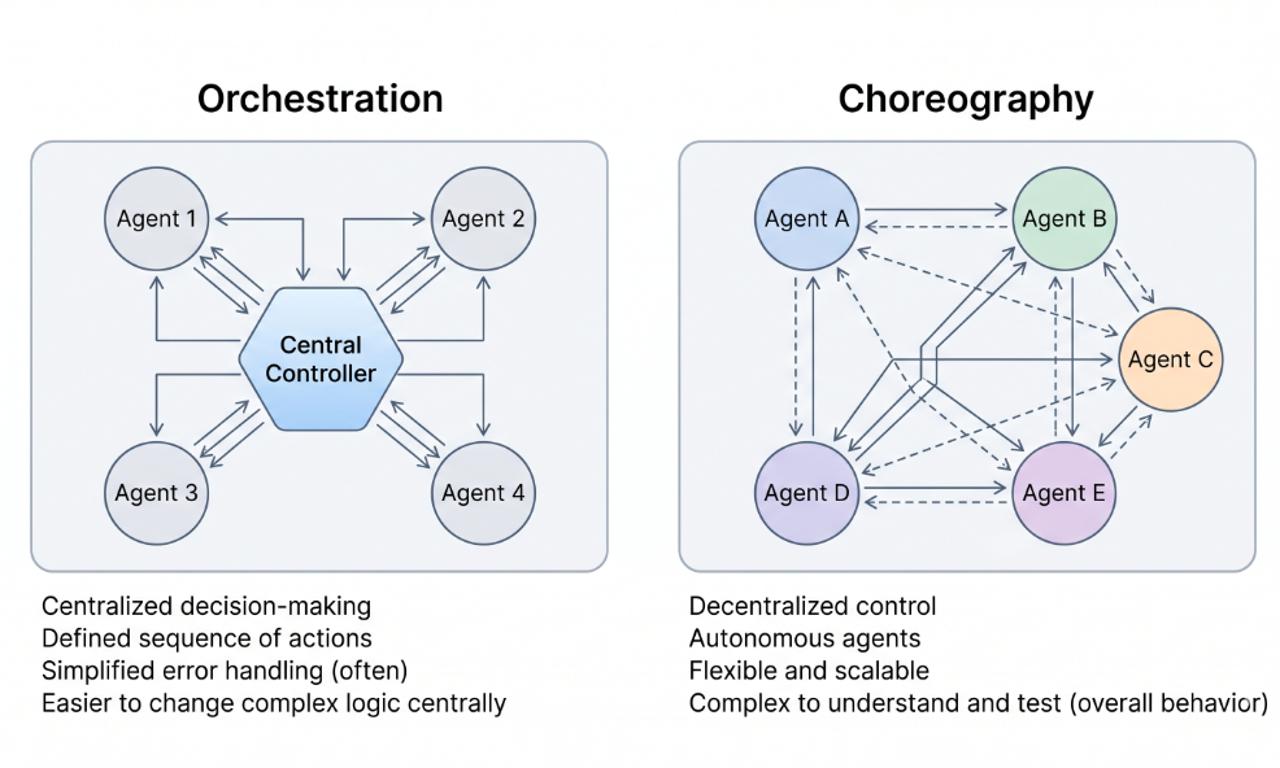
1. Orchestration (Start here)
- One controller decides the flow
- Easy to debug
- Easy to scale
2. Choreography (Later stage)
- Agents talk to each other
- Flexible but harder to control
Start with orchestration. Always.
3. Tool Design (Critical)
If a response depends on truth:
It must come from a tool.
Not memory.
Not guesswork.
Typical tools:
- CRM lookup
- knowledge base search
- ticket history
- escalation trigger
Bad tools = broken system.
4. Shared State (The Backbone)
Without shared state:
- agents duplicate work
- decisions conflict
- context is lost
You need:
- short-term state (current task)
- long-term data (customer history)
- shared workspace (everything agents see)
5. Guardrails (Non-Negotiable)
Production systems fail without these:
- tool permissions
- structured outputs
- token/time budgets
- fallback rules
- escalation triggers
Anthropic strongly recommends guardrails + human review for real-world deployment.
Communication Protocols That Prevent Chaos
Architecture alone is not enough.
Agents need rules.
1. Handoff protocol
Every handoff must define:
- input
- expected output
- completion condition
No ambiguity.
2. Reviewer loop
- agent drafts
- reviewer checks
- one revision
- then decision
More than one loop = inefficiency.
3. State machine
Example:
received → triaged → fetched → drafted → reviewed → sent
This makes systems observable and debuggable.
Where Multi-Agent Systems Work Best
Strong fit:
- customer support systems
- internal operations
- incident response
- research workflows
Why?
Because these need:
- tools
- verification
- structured steps
Where MAS Is a Bad Idea
Don’t use MAS when:
- task is simple chat
- no tools are needed
- no real data exists
- no clear workflow
Anthropic is clear:
Start simple. Add complexity only when needed.
A Simple MAS Comparison
| Approach | Strength | Weakness |
| Single Agent | Fast, cheap | Breaks in complex workflows |
| Multi-Agent | Reliable, structured | Higher setup complexity |
How to Start Without Overengineering
Keep it small.
Start with:
- 2–3 agents
- orchestrated flow
- strict tool access
- shared state
- one reviewer
- one fallback
Then improve with:
- logging
- evaluation
- cost control
- failure tracking
This is where real system maturity comes from.
Mediusware Perspective
In real-world systems like CRM platforms, AI-driven tools, and automation products, one pattern keeps repeating:
- clear role separation
- real-time data access
- structured workflows
That’s what makes systems scale.
Not bigger models.
Better architecture.
Final Takeaway
Multi-agent systems are not about adding more intelligence.
They are about reducing chaos.
If your workflow has:
- multiple steps
- real data dependencies
- decision points
You don’t need a smarter agent.
You need a better system.
Frequently Asked Questions
A system where multiple AI agents work together, each handling a specific task.

I work with founders and leadership teams when growth moves faster than their systems, teams, or decisions. I’ve led 850+ projects for 750+ clients across 20+ countries, working across 100+ technologies and counting. I care about ownership, clarity, and building things that last beyond the launch.
Featureblogs
01
C# vs. Java: Key Differences, Advantages, and Future Prospects02
Why Software Companies Are Turning to Strategic Partnerships for Faster Growth03
The Future of NLP: Key Trends04
The 12 Most Powerful LLMs: Powering Tomorrow’s Tech Landscape05
Haptic Feedback: Why Touch is Becoming the Most Powerful Experience in Tech01
C# vs. Java: Key Differences, Advantages, and Future Prospects02
Why Software Companies Are Turning to Strategic Partnerships for Faster Growth03
The Future of NLP: Key Trends04
The 12 Most Powerful LLMs: Powering Tomorrow’s Tech Landscape05
Haptic Feedback: Why Touch is Becoming the Most Powerful Experience in TechRelatedblogs
Authorblogs
01
SaaS MVP Development: A Founder’s Guide for 202702
Zero Clicks, Falling Traffic: How to Win Back Revenue03
Ranking on Google in 2026: What Matters in the Age of AI Search04
How to Choose an API Development Company for Your SaaS Product05
Why Software Companies Are Turning to Strategic Partnerships for Faster Growth