- Roadmaps slip due to technical debt, architecture limits, and shifting priorities, not developer skill.
- Strong teams maintain speed with clear requirements, scalable systems, and lean engineering.
Why Product Roadmaps Get Delayed Even With Good Developers
1 min read
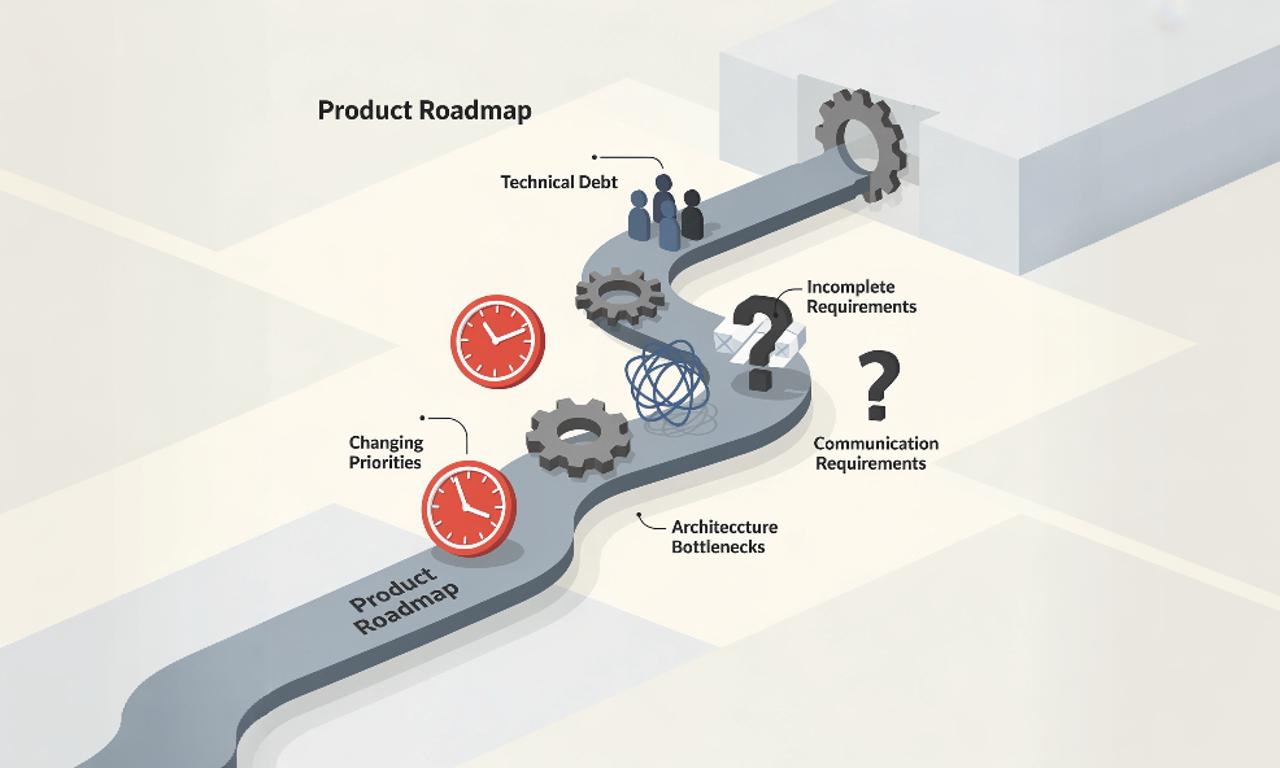
Most founders assume roadmap delays happen because of bad developers.
In reality, it’s usually the opposite.
You can have a strong team, clean code, and experienced engineers…
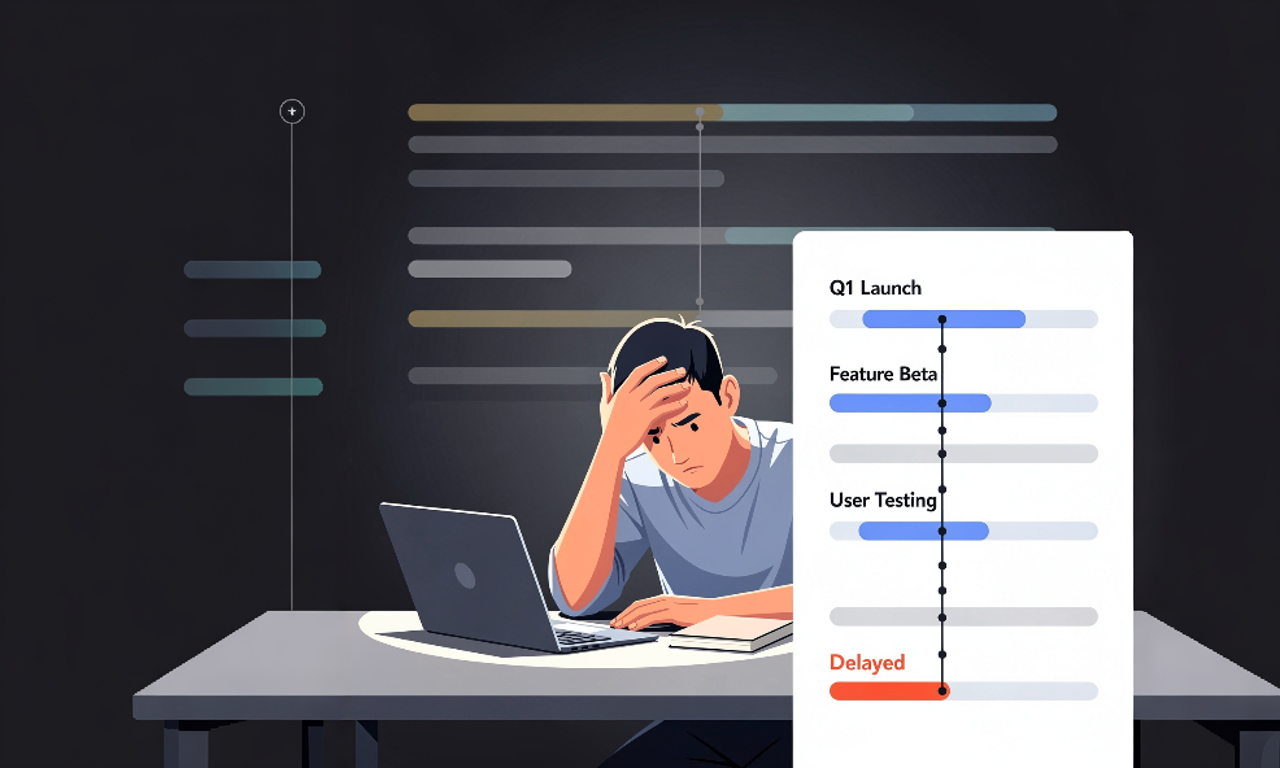
and still watch your roadmap slip quarter after quarter.
Features get delayed.
Releases move from Q2 to Q3.
Momentum starts fading.
This isn’t a talent problem.
It’s a system problem.
The Real Issue: Good Developers in Broken Systems
From what I’ve seen working with growing product teams, delays don’t come from lack of skill.
They come from:
- Constant priority shifts
- Growing technical debt
- Architecture that no longer scales
- Communication overhead
- Unclear product requirements
Even high-performing teams struggle when the system around them slows them down.
According to the Standish Group CHAOS Report, only around 31% of software projects are delivered on time and on budget.
That gap isn’t about developer quality.
It’s about how the work is structured.
7 Reasons Why Product Roadmaps Get Delayed Even With Good Developers
1. Roadmaps Change Faster Than Teams Can Build
At the early stage, roadmaps feel clear.
Then reality hits:
- Market feedback changes direction
- Investors push new priorities
- Competitors launch faster
Suddenly, your roadmap becomes unstable.
Developers start something… then switch… then switch again.
This constant context switching kills momentum.
McKinsey found that frequent task switching can reduce productivity by up to 20–30%.
So even if your team is working hard, progress slows.
Not because they’re slow.
Because they’re constantly restarting.
2. Technical Debt Quietly Consumes Time
Early-stage startups optimize for speed.
That’s normal.
But over time, shortcuts pile up.
What used to take hours… now takes days.
What used to be simple… now touches multiple systems.
Stripe’s Developer Coefficient Report found that developers spend around 33% of their time dealing with technical debt and maintenance.
That means:
One-third of your engineering capacity is already gone
before roadmap work even starts.
This is where most founders get confused.
They see slow delivery…
but don’t see the invisible work behind it.
3. Architecture Stops Scaling With Growth
What works at 10,000 users rarely works at 100,000.
As systems grow:
- Services become tightly coupled
- Dependencies increase
- Small changes require large effort
Developers spend more time understanding the system than actually building features.
As Martin Fowler puts it:
Any fool can write code that a computer can understand. Good programmers write code that humans can understand.
When systems aren’t built for scale, complexity compounds.
And roadmap timelines expand with it.
4. More Developers = More Communication Overhead
Hiring more developers feels like the obvious solution.
But it often creates a new problem.
More people = more communication paths.
A team of 5 has 10 communication channels.
A team of 15 has 105.
This is exactly what Fred Brooks warned:
Adding manpower to a late software project makes it later.
Instead of moving faster, teams spend more time:
- Aligning
- Coordinating
- Waiting for decisions
This is why many high-performing teams stay small and autonomous.
5. Unclear Requirements Slow Everything Down
This is one of the most underestimated causes.
Development starts…
Then halfway through, questions appear:
- What happens in edge cases?
- How should the system behave with missing data?
- What’s the expected user flow?
Now everything pauses.
According to Atlassian, teams lose up to 14 hours per week due to unclear requirements and poor communication.
Good developers can move fast.
But only when direction is clear.
6. Hidden Work That Never Shows on the Roadmap
Most roadmaps only show visible features.
But developers are also handling:
- Security updates
- Performance improvements
- Infrastructure scaling
- Bug fixes
- Dependency upgrades
This work is essential.
But invisible.
Companies like Google recommend allocating 20–30% of engineering time to maintenance and stability work.
Without it, systems break.
With it, roadmap progress appears slower.
What High-Performing Teams Do Differently
The best teams don’t just add developers.
They improve the system developers work in.
Here’s what consistently works:
1. Stable Priorities
Fewer changes → deeper focus → faster completion
2. Scalable Architecture
Systems designed for growth, not just launch
3. Small, Autonomous Teams
Less communication overhead, faster decisions
4. Clear Product Specifications
No mid-development confusion
5. Dedicated Technical Debt Cycles
Prevent slowdown before it starts
Where Most Growing Teams Get Stuck
At some point, almost every product hits this phase:
- The team is capable
- The demand is growing
- But delivery slows anyway
This is usually when companies start exploring:
Not because they lack developers…
But because they need a better system to scale execution.
Final Thoughts
Product roadmap delays rarely come from bad developers.
They come from structural issues:
- Shifting priorities
- Technical debt
- Scaling architecture
- Communication complexity
- Lack of clarity
Once you see this, the strategy changes.
Instead of asking:
Do we need better developers?
You start asking:
Do we have a system that allows good developers to move fast?
That shift is what separates teams that struggle…
From teams that consistently ship.
Frequently Asked Questions
Roadmaps often slip because of structural issues like changing priorities, technical debt, unclear requirements, or architecture limitations rather than developer skill.

I work at the point where product decisions, system architecture, and engineering execution meet. At Mediusware, I’m accountable for how technology choices affect reliability, scale, and long-term delivery for our clients.
Featureblogs
01
Haptic Feedback: Why Touch is Becoming the Most Powerful Experience in Tech02
The 12 Most Powerful LLMs: Powering Tomorrow’s Tech Landscape03
Why Software Companies Are Turning to Strategic Partnerships for Faster Growth04
The Top 10 Most Popular Java Frameworks05
C# vs. Java: Key Differences, Advantages, and Future Prospects01
Haptic Feedback: Why Touch is Becoming the Most Powerful Experience in Tech02
The 12 Most Powerful LLMs: Powering Tomorrow’s Tech Landscape03
Why Software Companies Are Turning to Strategic Partnerships for Faster Growth04
The Top 10 Most Popular Java Frameworks05
C# vs. Java: Key Differences, Advantages, and Future ProspectsRelatedblogs
01
Integrating Redux with React: A Comprehensive Guide02
Laravel pagination and filtering with already loaded data as array in memory03
React + Three.js + React Three Fiber: Crafting Interactive 3D views in Web Applications04
Advanced Caching Strategies for Django Applications05
Implementing Roles and Permissions in Laravel Using Guard-LaravelAuthorblogs
01
How Digital Agencies Can Deliver Custom Software Without Hiring Developers02
AI in FinTech: Build, Buy, or Integrate? A Founder's Decision Framework03
How to Choose a SaaS MVP Development Company04
How Seed-Stage SaaS Teams Add Engineering Capacity Without Hiring Chaos05
Why Seed-Stage SaaS Startups Struggle to Ship Fast