- Predictive AI forecasts outcomes, while generative AI creates content, serving different business needs.
- Real value comes from combining both models with human oversight for accurate, scalable decisions.
The Primary Differences Between Generative and Predictive AI Models
1 min read

Most companies don’t fail with AI because of bad models.
They fail because they apply the wrong type of AI to the right problem.
One team builds forecasting models.
Another builds content engines.
Both say they’re “doing AI.”
Only one actually drives ROI.
That confusion is expensive.
Two Types of AI. Two Completely Different Jobs.
Inside real engineering teams, the difference is simple:
- Predictive AI → Helps you decide
- Generative AI → Helps you execute
Think of it like this:
- Predictive AI is your compass
- Generative AI is your engine
If you mix them up, you either move fast in the wrong direction…
Or move slowly with perfect insight.
How This Plays Out in Real Teams
Let’s make it practical.
Team 1: Predictive AI (Accuracy First)
They work with:
- Historical data
- Forecasting models
- Risk detection
Their goal is simple:
Be right.
Examples:
- Demand forecasting
- Fraud detection
- Churn prediction
Even a 1% error here can cost millions.
Team 2: Generative AI (Speed First)
They work with:
- LLMs
- Content generation
- Workflow automation
Their goal is different:
Move faster.
Examples:
- Product descriptions
- Customer replies
- Internal reports
Here, speed beats perfection.
The Leadership Mistake That Slows Everything Down
This is where things break.
- Ask Predictive AI to be creative → it struggles
- Ask Generative AI to be precise → it sounds confident but can be wrong
Neither system is broken.
They’re just designed for different outcomes.
Your job as a leader is not to pick “AI.”
It’s to pick the right type of AI for the task.
Side-by-Side: Predictive vs Generative AI
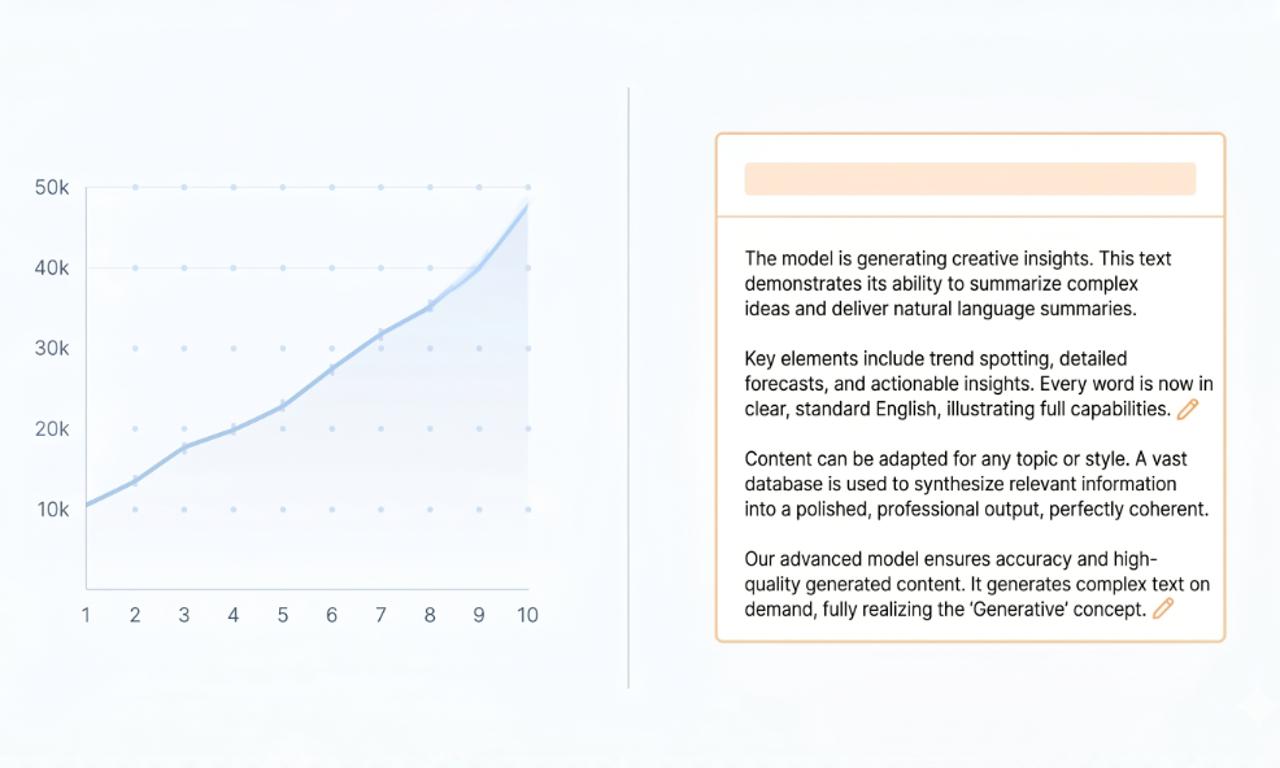
| Aspect | Predictive AI | Generative AI |
| Core Role | Forecast, classify | Create, generate |
| Output | Probabilities, scores | Text, images, code |
| Data Type | Structured, historical | Large, unstructured |
| Strength | Accuracy | Speed |
| Risk | Wrong prediction | Confident hallucination |
The Only Two Questions That Actually Matter
Every AI decision comes down to this:
1. What is likely to happen?
→ Use Predictive AI
Example:
Which customers are about to churn?
2. How do we respond faster?
→ Use Generative AI
Example:
Write a retention email instantly.
The Real Advantage: Using Both Together
The best teams don’t choose.
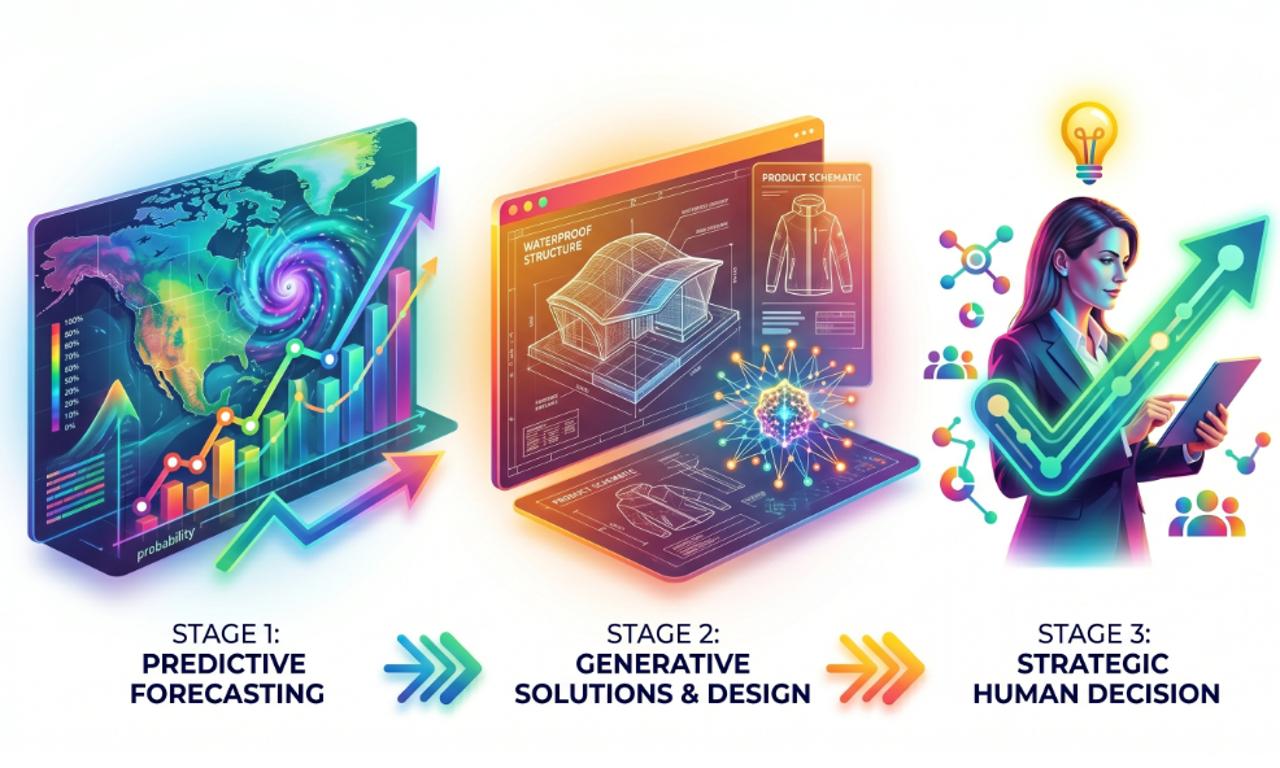
They sequence:
- Predictive AI finds the signal
- Generative AI acts on it
- Humans make the decision
That’s where real leverage happens.
AI Doesn’t Replace Jobs. It Removes Friction.
There’s a common fear: AI replaces roles.
In reality, it replaces tasks.
A better way to think about it:
Break work into 3 categories:
- Dull → repetitive tasks (automate with Predictive)
- Dirty → large-scale content/data handling (use Generative)
- Dear → high-stakes decisions (keep human)
The outcome isn’t fewer people.
It’s better focus.
Where Each AI Type Actually Pays Off
Not all departments benefit equally.
1. Finance & Supply Chain → Predictive Wins
- Forecasting demand
- Managing inventory
- Detecting anomalies
Small mistakes scale fast here.
2. Marketing & Product → Generative Wins
- Content creation
- Idea generation
- Rapid experimentation
Here, speed creates advantage.
The Cost of Getting It Wrong
Each AI type fails differently.
1. Predictive AI Failure
- Caused by data drift
- Leads to inaccurate signals
2. Generative AI Failure
- Produces fluent but incorrect outputs
- Known as hallucination
The Safe Way to Use Generative AI
Treat it like a junior teammate:
- Fast
- Helpful
- Needs review
Never deploy it without:
- Human-in-the-loop
- Validation layers
- Clear boundaries
What High-Performing Teams Do Differently
From what we’ve seen across real projects:
- They don’t “adopt AI”
- They remove one bottleneck at a time
Their principles:
- Fix data before using Predictive AI
- Add review loops for Generative AI
- Focus on tasks, not tools
This is exactly how platforms like CRM Runner improved decision-making using real-time data and automation instead of forcing AI everywhere.
What AI Still Can’t Replace
No matter how advanced it gets, AI lacks:
- Judgment → it predicts, it doesn’t decide
- Empathy → it simulates, it doesn’t feel
- Accountability → it outputs, it doesn’t own
That’s still your job.
Frequently Asked Questions
Predictive AI forecasts outcomes using historical data. Generative AI creates new content like text, images, or code.

I work with founders and leadership teams when growth moves faster than their systems, teams, or decisions. I’ve led 850+ projects for 750+ clients across 20+ countries, working across 100+ technologies and counting. I care about ownership, clarity, and building things that last beyond the launch.
Featureblogs
Relatedblogs
Authorblogs
01
SaaS MVP Development: A Founder’s Guide for 202702
Zero Clicks, Falling Traffic: How to Win Back Revenue03
Ranking on Google in 2026: What Matters in the Age of AI Search04
How to Choose an API Development Company for Your SaaS Product05
Why Software Companies Are Turning to Strategic Partnerships for Faster Growth